

Peru is the home of Machu Picchu, one of the seven modern wonders of the world, which pulls in travelers from every corner of the globe.
But ask any Peruvian and they'll tell you Machu Picchu stands shoulder to shoulder with the Nazca Lines, a stretch of desert landscape in the southern part of the country.
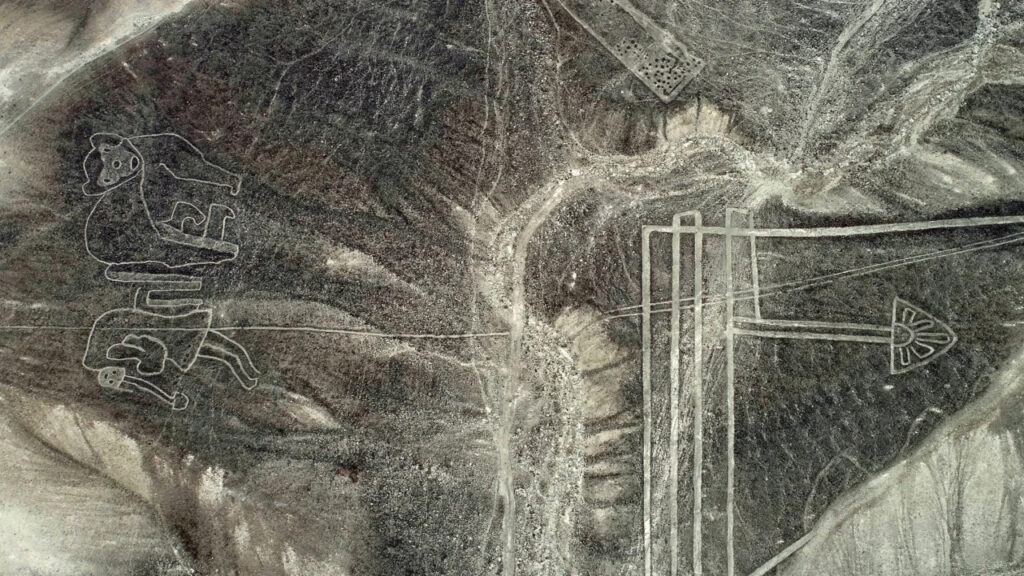
From simple lines to geometric and animal shapes, these etchings are scattered across the arid Pampas de Jumana plateau, some of them running as long as 1,200 feet (roughly the height of the Empire State Building).
Partner links: booking through them supports the blog at no extra cost to you.
Even the national tourism board, PromPeru, works the Nazca figures into its official branding, and the P in Peru echoes one of the iconic spirals.
Despite their enormous historical significance, the number of tourists who visit the Lines each year trails only the crowds who make it to Machu Picchu or the capital, Lima.
That means you can enjoy a specialized experience without spending a fortune, and you won't need to devote days to hiking or acclimatizing to altitude.
Here's what you need to know.
So, what exactly are they?
Part of what makes the Nazca Lines so captivating is their mystery. Although these geoglyphs in the sand were made around the first century AD, they went almost entirely unnoticed until the early 1900s. Countless theories have circulated about how the lines came to be and what they mean.
In 1994, the Lines were named a UNESCO World Heritage Site. At the time, UNESCO wrote that they are "the most outstanding group of geoglyphs in the world and, for their extent, magnitude, quantity, size, diversity and ancient tradition, are unmatched by any similar work in the world."
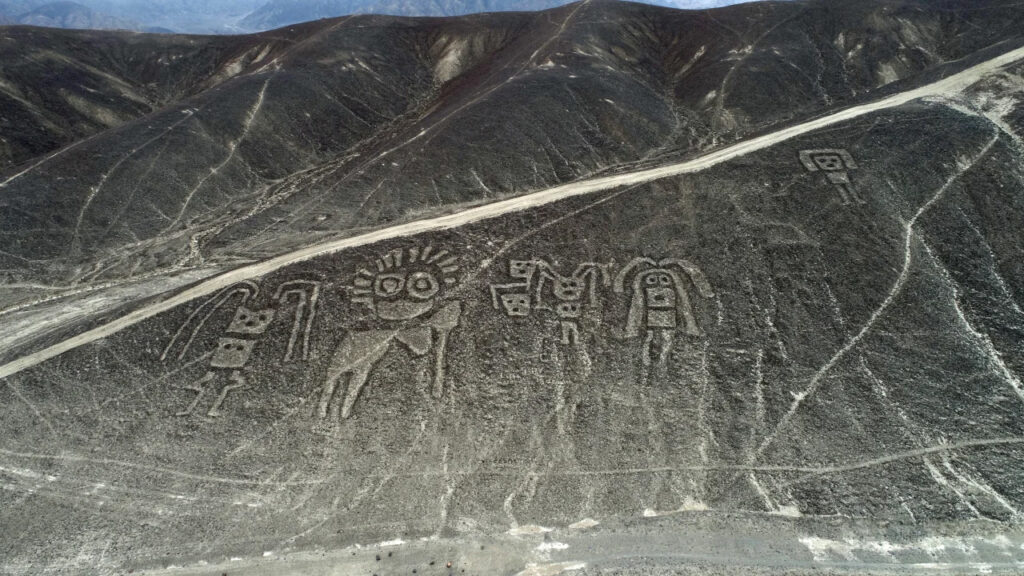
Different people see different things when they look at the Lines from above. Some of the formations have picked up nicknames like the Hummingbird, the Iguana, and the Flower, based on their shapes.
While the Inca are probably the best-known pre-Columbian group to have lived in what is now Peru, the Nazca people ran a thriving civilization in the desert for hundreds of years.
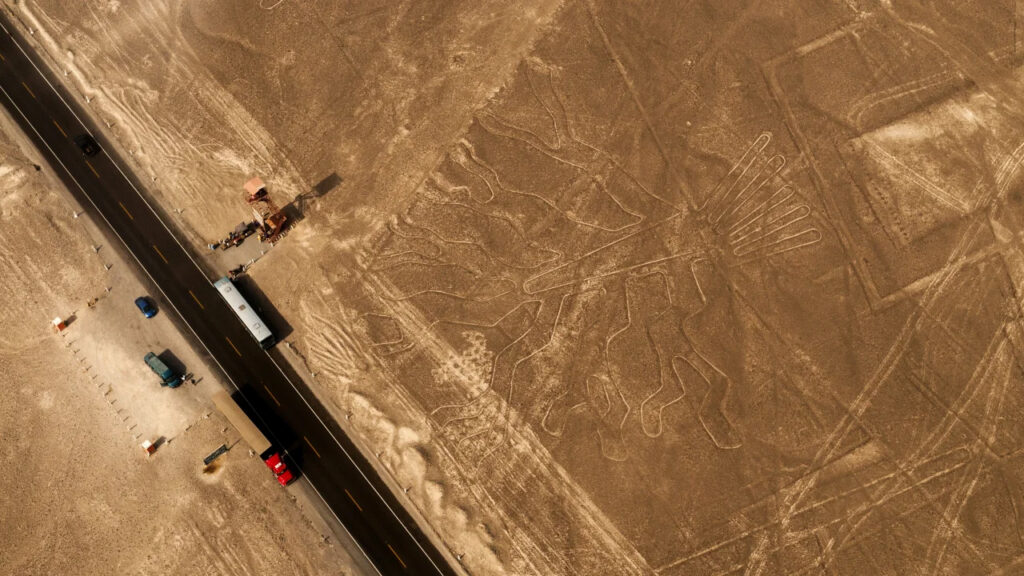
The most fascinating and understated thing about the Nazca Lines is their relative simplicity. The lines aren't carved deep into the earth; they're simply made from the top layer of desert sand, and a group of people could probably recreate them in a matter of days.
That ease of creation makes it all the more remarkable that the Nazca Lines have stayed intact for so long, surviving the region's strong winds.
What do they mean?
"For a long time, many generations of Peruvians and the international community grew up believing that these lines were tied to astronomical cycles, like constellations and the movement of the stars," explains Javier Puente, a specialist at the tour company Incas Expert Guide.
"But recent research has shown that isn't the case. It looks like they're connected to rituals and water."
Puente, a Peru native who is now an associate professor of Latin American history at Smith College in Massachusetts, has heard just about every conspiracy theory about the Nazca Lines.
"They were not drawn by aliens, that much is certain," he says. That theory took hold over time because many people feel that some of the figures, especially one nicknamed the Astronaut, look anachronistic. But creating them required no far-fetched technology or intelligence.
For desert dwellers, water is everything, and many scholars believe these paths may have pointed to places where water sources were found. It's also possible they were part of a spiritual practice, with people walking the same trails again and again to deepen the lines.
How can I see them?
First you need to get to Peru. Fly into Lima, then travel by car or bus 400 km (250 miles) along the Pan-American Highway to the coastal town of Paracas.
This sunny surf town recently hosted sailing competitions during the 2019 Pan American Games, and it has several good hotels, including a DoubleTree by Hilton resort.
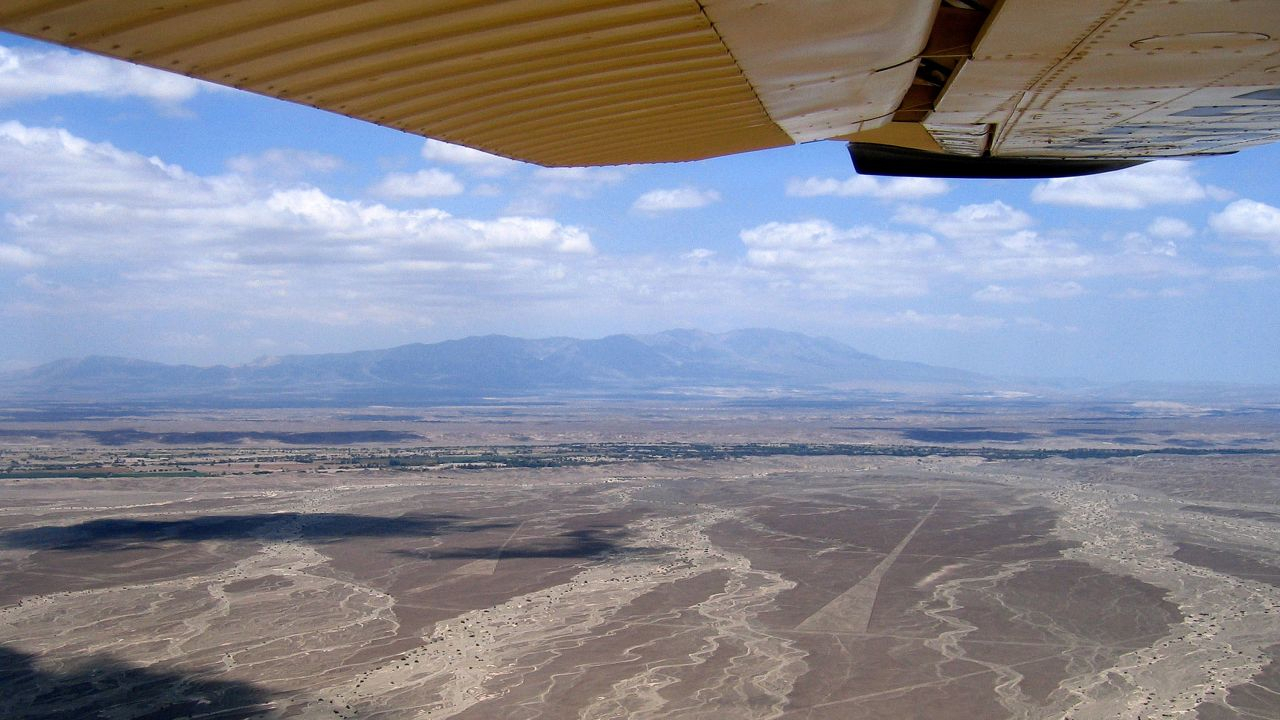
The best way to see the Nazca Lines is from the air. Several flights leave daily from Pisco Airport, each lasting about 75 minutes.
If a long security line at the airport has ever frustrated you, Pisco is about to become your new favorite place. Even though Pisco is fully equipped with all the modern airport technology, it's practically empty apart from these flights out to Nazca. You can clear check-in and security in about two minutes, even if you take your time.
The ease of the airport, however, is offset by the challenge of the flight itself. Each plane holds only 10 to 12 people, and everyone is guaranteed a window seat, so tall travelers or anyone who needs plenty of legroom will feel pretty cramped.
The desert is famously windy around the Lines, and in a small plane you're more likely to feel every bump. On top of that, the pilots dip the plane low so people on both sides can make out the different line formations and take photos.
It feels a bit like a stunt flight, and even the hardiest travelers will probably feel a little green. Before you board, stock up on anti-nausea medication and take note of the plastic bags tucked beside each seat in case you need them.
Still, once you've survived the flight, you'll feel like a fearless explorer the moment you're back on the ground. Especially after you post the photos and get to brag a little.
If you're a nervous flyer, there's another option: an observation tower. You won't be able to see as many formations, but it's a solid plan B, and with far less risk of feeling queasy.
Why should I go?
Like many natural wonders around the world, the Nazca Lines could easily vanish within our lifetime. Even though the lines have endured for thousands of years, a heavy downpour could wipe them out with ease, a real risk in the age of the climate crisis.
The biggest threat to the Nazca Lines, though, is people.
"The danger comes from urbanization, road construction, and modernity," Puente says. "The Nazca Lines are under greater threat from that than from any natural causes."
Perhaps it's this fragility, rather than the symbolism, that makes the Nazca Lines so enchanting.