


Street food is a staple in many countries. But does that mean you should buy your food and eat it right there on the street? Japan is trying to answer that question, especially when it comes to popular tourist spots.
Kamakura, in Kanagawa Prefecture, is one of them.
In April, the city issued an official ordinance asking visitors not to eat while walking.
Partner links: booking through them supports the blog at no extra cost to you.
One of the main concerns is litter from packaging and leftover food, which can attract animals and create a mess that local residents then have to clean up.
Kamakura sits about 30 km southwest of Yokohama. It is known for some of the country's most famous temples, as well as its beautiful beaches.
A representative of the city of Kamakura said the ordinance, posted in public places, was created to raise awareness of the problem rather than to punish travelers. There are no fines or warnings for people who ignore the request.
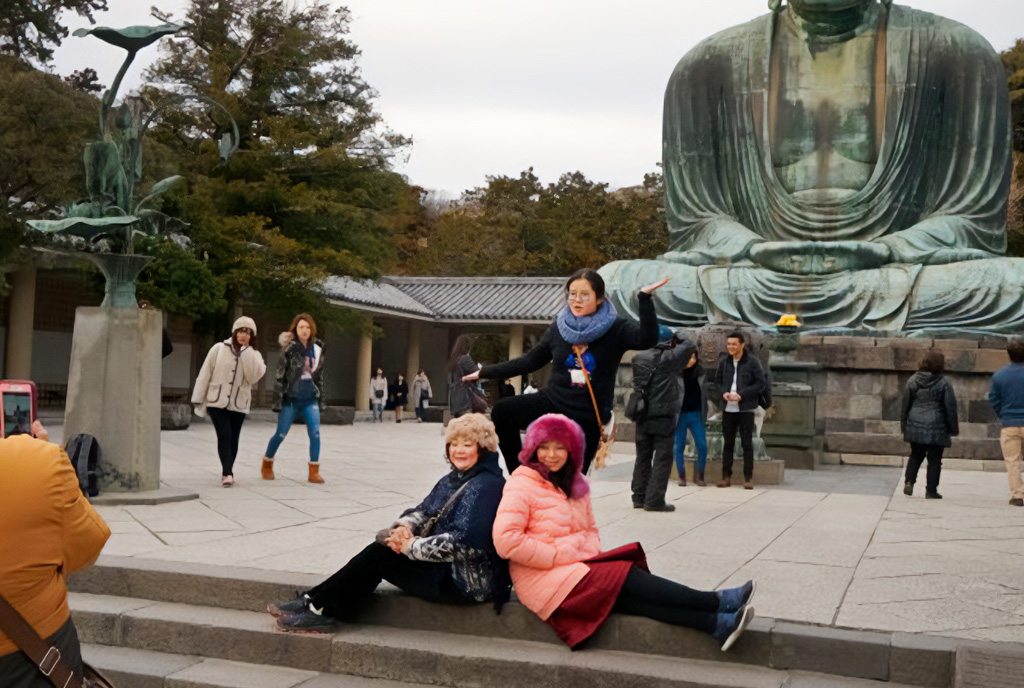
In particular, Komachi-dori, a lively street lined with shops, has become the focus of attention when it comes to eating on the street.
The street is a stop on many local food tours, even though it is also a commercial zone.
Reportedly, 50,000 to 60,000 people visit Komachi-dori every day, which feels even more staggering once you realize the street is only 350 meters long.
That said, the concerns about eating while walking are not only about potential spills and stained clothes.
Many Japanese people believe that eating or doing any other physical activity while eating is bad manners, because it suggests you are not properly appreciating your food. For some, this belief is rooted in World War II, when food was scarce and seen as something to be valued rather than treated carelessly.
The issue of tourists eating on the street is not limited to Japan.
In Florence, Italy, part of the city center has an outright ban on eating "on sidewalks, roads, and on the doorsteps of shops and homes." It is not only about hygiene: this is an extremely busy and crowded part of the city, and people sitting on the sidewalks make it even harder for others to get around.
In Florence's case, the restrictions come with hefty fines, specifically a penalty of 500 euros (581 dollars).
Meanwhile, the city that arguably has the best street food in the world, Bangkok, has been trying for some time to decide what to do about its street markets and food stalls.
Some locals want restrictions or even a shutdown because of the ever-growing crowds, while others believe a happy compromise can be reached between a vibrant street vendor culture and not getting in the way of everyday life, such as blocking traffic lanes.