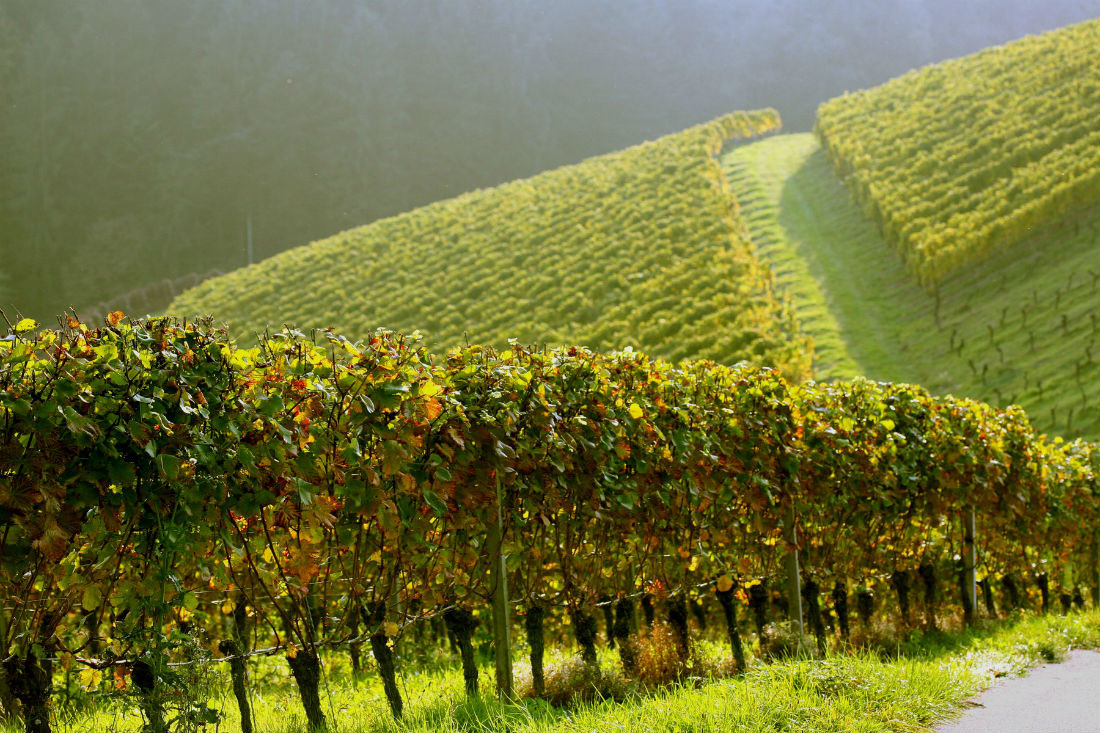


Six thousand years before Christ turned water into wine, the ancestors of today's Georgians were turning grapes into wine. It is thanks to these inventive Stone Age humans that we can now enjoy Gamay from Beaujolais, Chianti from Tuscany, Rioja from Navarre, and Cabernet Sauvignon everywhere from France to New Zealand.
Yet the varieties from the birthplace of wine remained almost unknown to Western palates, until now.
Today Georgian wine is recovering after nearly 100 years of isolation and damage inflicted by a system that industrialized viticulture and institutionalized the practice of making bad wine. The small country, roughly the size of West Virginia, was the main wine supplier for the entire USSR.
Partner links: booking through them supports the blog at no extra cost to you.
But because quantity mattered more than quality to the Soviets, they mostly grew the high-yield red Saperavi and white Rkatsiteli grapes, while dozens of wonderful but low-yield native vines were plowed under.
Although 563 varieties had been recorded, the Communists made wine from only seven of them.
Adding sugar and water to the wine kept the Kremlin's quotas met. Villagers adopted the same trick to stretch out the little wine they could afford to make.
Traditions Lost
Monks have been making wine in Georgia since the sixth century. Today their traditional methods are winning international awards.
"We lost many of our traditions," says Vakhtang Barnovi, a retired agricultural engineer from Akhalkalaki in central Georgia.
"We used to have a 'green harvest,' when we would trim the weak grapes off the vine so the larger grapes could grow stronger and gain more sugar. The Communists paid no attention to that and simply picked every grape, big and small."
When the USSR collapsed, Georgia kept exporting cheap plonk to Russia, its main market.
"Everyone knows the Russians will drink anything," says Barnovi, quoting a common saying. If a drink was bottled in glass, it was bad. The good stuff came in used plastic bottles and jerry cans from friends and relatives in the villages, and a few wineries, such as Sagarejo Georgia, were busy making good table wine for local restaurants.
March 2006 became a turning point, when Russian President Vladimir Putin imposed an embargo on Georgian wine, instantly wiping out 90% of the export market.
The idea was to punish Georgia for its Western ambitions, but the result was that Putin saved the wine industry, because the country was forced to make good wine and seek more reliable trading partners.
"It was a heavy blow for small and large wine companies alike," admits Malkhaz Kharbedia, president of the Georgian Wine Club.
The Revival of Georgian Wine
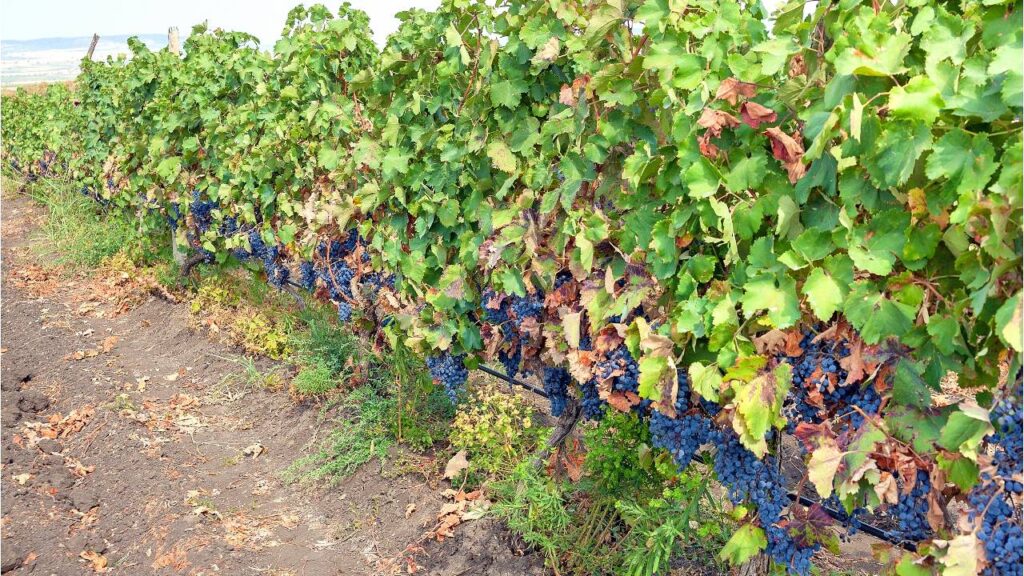
While the large wine companies expanded into China, Central Asia, and parts of Central Europe, small family winemakers began bottling wine for sale. They tapped into a niche no one could compete with: an 8,000-year-old tradition of making natural wines in qvevri, large terracotta amphorae buried in the ground.
"Until 2007 there was practically no bottled qvevri wine in Georgia," says Kharbedia. "People stopped making it during the industrialization of communism."
Although qvevri wine accounts for only about three percent of Georgia's wine exports, it accounts for 100% of the buzz. Nearly every article about Georgian wine mentions qvevri, along with amber wine, a technique for making white wine with skin maceration. It is bolder and more tannic than ordinary white wine.
In the West, where it is called orange wine, it is seen as a new trend. Georgians, however, have used this method since the very beginning of winemaking.
The eastern region of Kakheti is a vast grape basket, home to about 60% of the country's vineyards. Shida Kartli in central Georgia is a little-recognized wine region that was once famous for producing wine for the Georgian kings, whose rule ended in the 19th century.
Imereti in western Georgia has a milder climate: its grapes contain more acidity and are usually pressed into wine without skin contact. Racha, a tiny mountain region, is famous for its refined wines, even though it is the country's smallest wine producer.
The 10 Best Georgian Wines
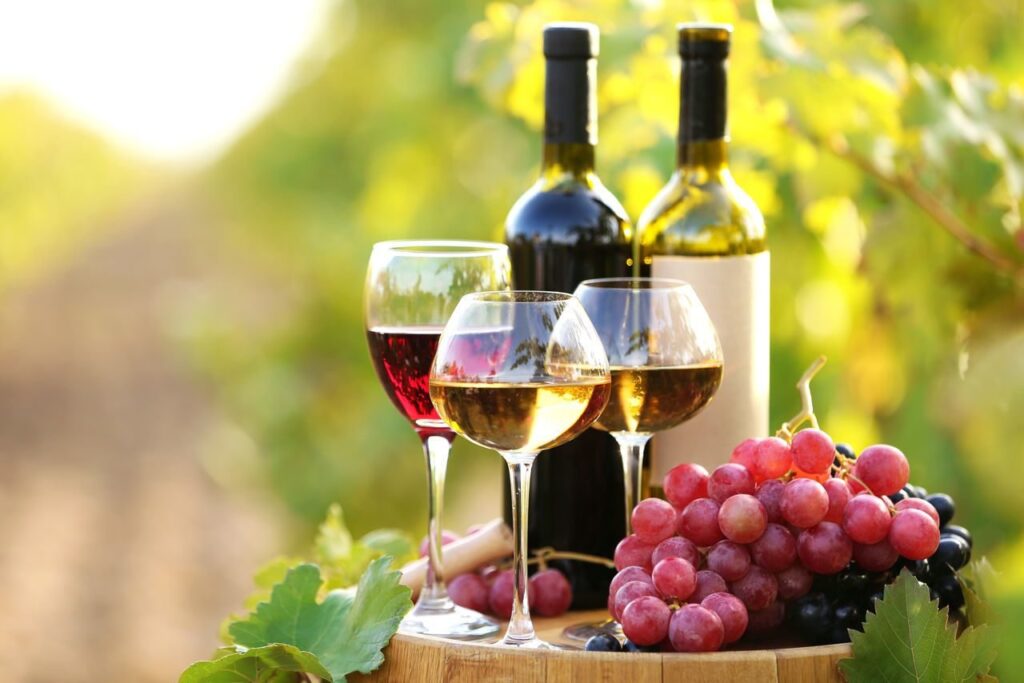
Saperavi
Meaning "dye," this is the mother grape of Georgian wine. Grown mainly in Kakheti, this dry red is called "black wine" because its red flesh and dark skin give it a deep purple color. It is sometimes called "liquid food" for how filling it is.
Rkatsiteli
This is Georgia's most popular white wine, and it too grows in Kakheti. It is traditionally made with long skin contact, which produces a full-bodied, honey-colored wine. It is often blended with Mtsvane, another white, and is sometimes fermented without the skins, which Georgians call the "European" style. Marani, based in Telavi, produces a striking qvevri Rkatsiteli and a Rkatsiteli-Mtsvane blend, both distinguished by a deep floral nose and a nutty finish.
Kisi
A Kakhetian white believed to be a hybrid of Rkatsiteli and Mtsvane, wiped out by the Soviet authorities because of its low yield. Finer than Rkatsiteli, it is sometimes made into a semi-sweet wine. Pheasant's Tears is a small winery producing quality natural wines, including a restrained Kisi that recalls ripe pear and saffron.
Chinuri
Chinuri, also known as Chinebuli (meaning "exquisite"), is the main white variety of Shida Kartli and is often used in the production of sparkling wines. It is usually associated with green apples, wild mint, and honey, and takes on a straw color after skin contact.
Shavkapito
A rediscovered red from Shida Kartli. Depending on where it is grown, the grape can become a full-bodied or a more delicate wine. This is a wine for those who love sour cherry and blackberry.
Tavkveri
Another red variety from Kartli that nearly vanished. It does not self-pollinate, so it must be grown alongside other vines. Growing it with a white variety such as Chinuri gives a light red color, while growing it with Shavkapito produces something richer. It is often made into rose, and sometimes into sparkling wine. The winemakers at Tsedisi are among the few who turn this grape into nectar.
Tsolikouri
A popular white from Imereti, known for its full body, citrus notes, and a bouquet of wildflowers. Local winemaker Gaioz Sopromadze carries on a family tradition of making Imeretian wines that dates back to 1914. Chilled, his Tsolikouri is perfect for a summer day, swaying in a hammock.
Tsitska
One of the oldest grape varieties in western Georgia. Its softness has made it popular in sparkling wines and in blends with Tsolikouri. Baia Abuladze is a 26-year-old winemaker who makes wonderful Imeretian wine. Her Tsitska is crisp, with notes of honeydew.
Khvanchkara
An appellation blend dating back to the 1870s, when Prince Dmitri Kipiani blended the red Aleksandrouli and Mujuretuli into a semi-sweet nectar. Because Joseph Stalin was thought to favor this wine, Soviet citizens developed a taste for semi-sweet wines, and Khvanchkara was faked to meet public demand. Russians still expect sweet wine from Georgia. Royal Khvanchkara bought the former Soviet winery that had been stolen from Kipiani and carried on the work the prince had begun.
Ojaleshi
One of the oldest vines in Samegrelo (western Georgia), its name means "a grapevine that grows on a tree," and it yields a deep, spicy red. In Tbilisi, the family winery Oda is run by Keto Ninidze. Her husband, Zaza Gagua, also makes his own wine, Vino Martville. Both are determined to revive the western Georgian winemaking culture destroyed by the Soviet authorities, and they have planted several rare endemic vines for future bottlings. Their Ojaleshi stands out for its velvety grace.