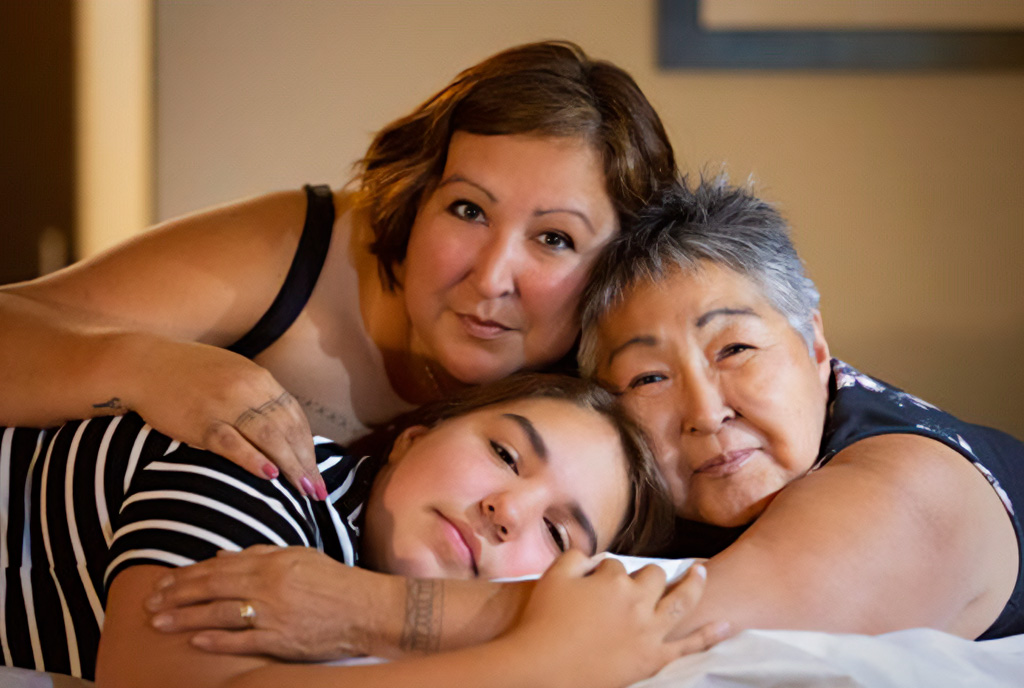


Candice Pedersen remembers hearing about her great-grandmother's tattoos and wanting the same traditional patterns on her own skin.
"She had tattoos on her forehead, cheeks and chin, on her wrists and all the way up her arm. When my mom was a little girl, she would trace each line with her finger and memorize every pattern," said Pedersen, a guide with One Ocean Expeditions in the Arctic.
For thousands of years, Inuit women were tattooed with needles made from bone or sinew soaked in fat. Each tattoo marked a meaningful achievement, perhaps skinning a fox or sewing a parka from seal hide. Pedersen was captivated by these stories, but as a teenager she was almost certain she would only ever see the tattoos "in history books."
Partner links: booking through them supports the blog at no extra cost to you.
When missionaries arrived in Arctic Canada roughly 100 years ago, they declared tattoos evil and forbade women from getting them. The patterns came close to vanishing along with the last elders who wore them.
Call It a Comeback
But thanks to the documentary "Tunniit: Retracing the Lines of Inuit Tattoos" and the Inuit Tattoo Revitalization Project, Inuit tattoos are making a powerful comeback.
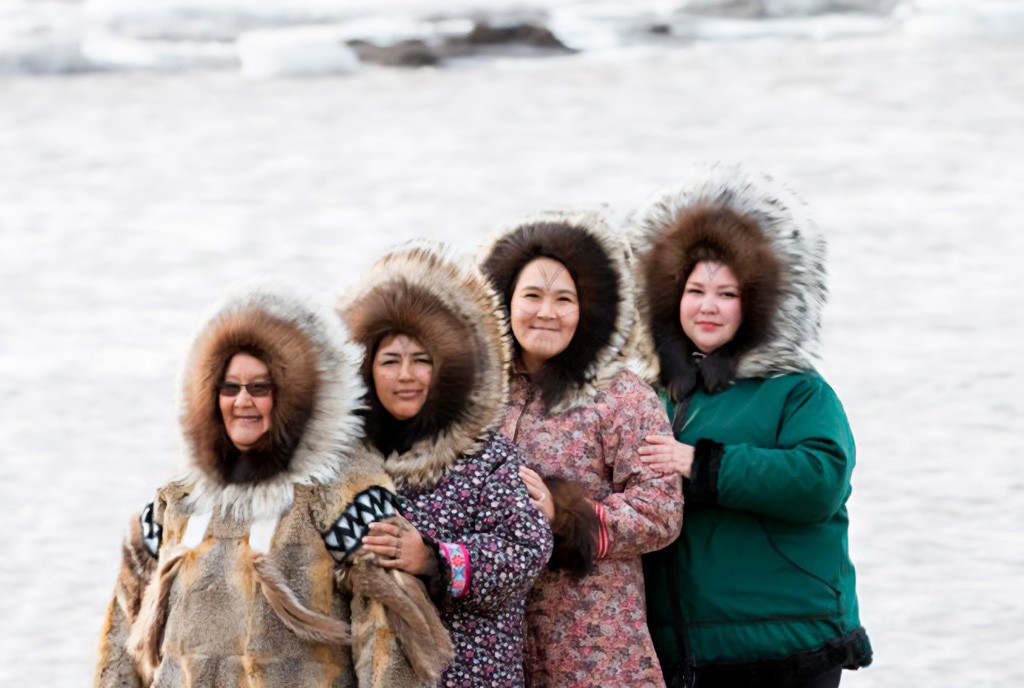
Nunavut's new member of parliament, Mumilaaq Qaqqaq, wears traditional tattoos on her cheeks and chin. Qaqqaq, 25, was elected on October 22.
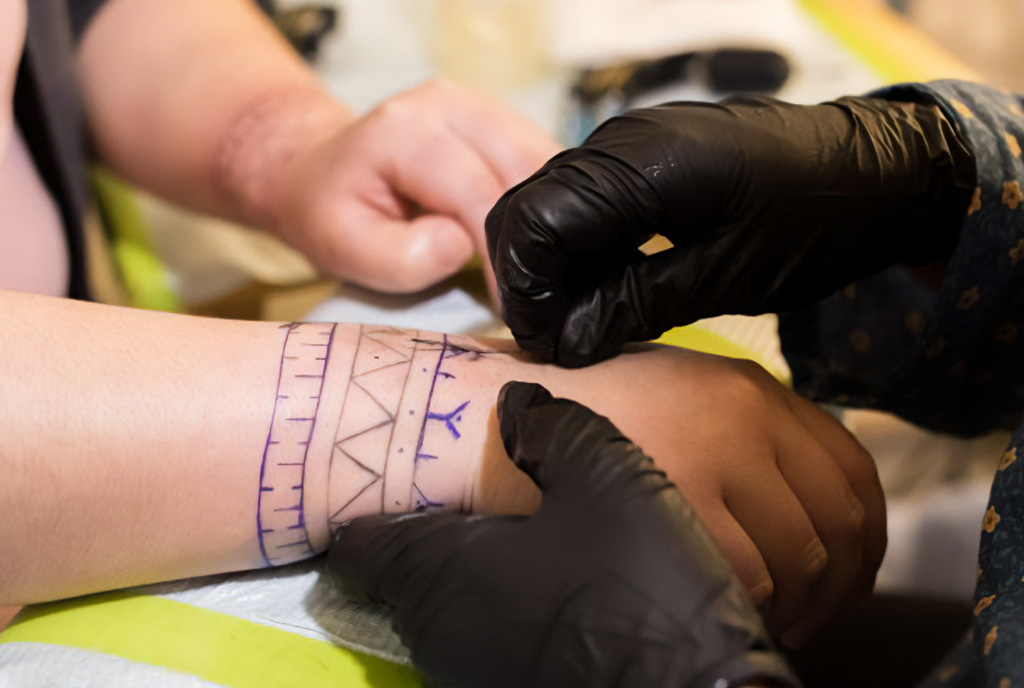
The nonprofit Revitalization Project, led by Inuit tattoo artist Hovak Johnston, has raised funds for trips to tiny communities across northern Canada to give Inuit women traditional tattoos using the traditional poking method. In return, the women give her a gift, anything from handmade earrings to a parka, exactly as their ancestors would have done.

Johnston's friend, photographer Cora DeVos, travels with her to photograph the women. "When the project first began, I think there were only about three Inuit women wearing the traditional patterns," DeVos says. "Now hundreds of women across Canada are wearing them. It is beautiful to watch this come back into our culture."
Shapes That Carry Meaning
The traditional patterns carry deep meanings rooted in the Inuit origin story and in Sedna, the goddess of the sea.
According to legend, Sedna called on her father for help after she married a raven. As they fled in a boat, the raven whipped up a storm. Fearing for his own safety and furious with his daughter for putting them in danger, her father threw her overboard.
As Sedna clung to the side of the boat, he cut off her fingertips, then her knuckles, then her hands, and so on, each piece falling into the sea and turning into seals, whales and other mammals.
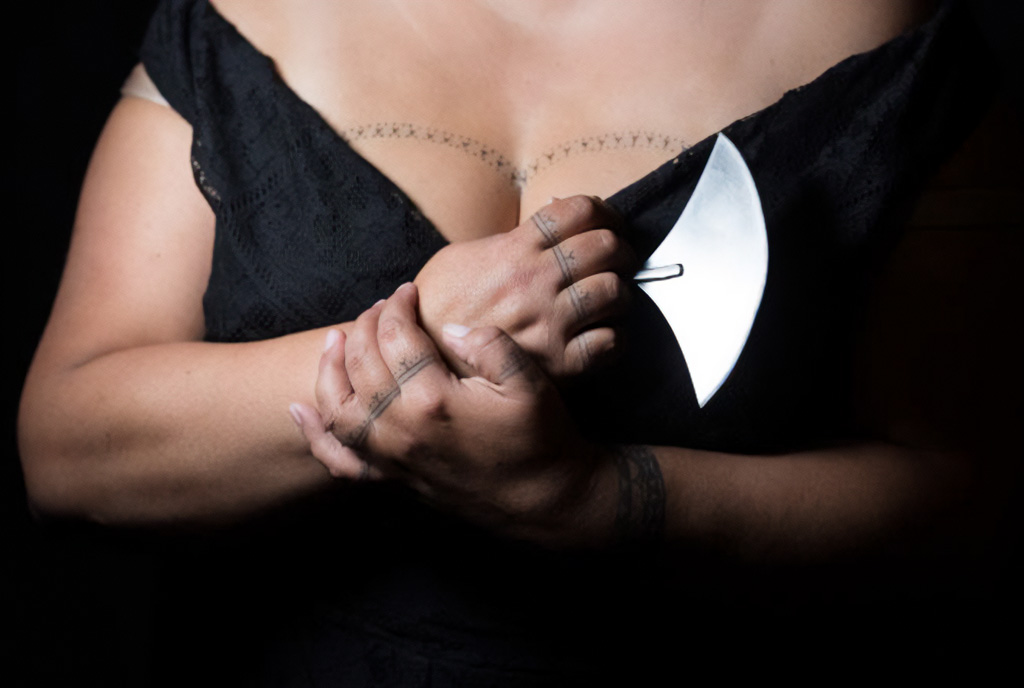
"When you see the tattoos on the hands and forearms, you will see lines that mark where she was cut," says Martha Kyak, an Inuit fashion designer who teaches Inuit history at Nunavut Sivuniksavut in Ottawa. "It is a very spiritual and ancient practice that existed all across the Arctic throughout Inuit territory: Alaska, Canada and Greenland."
A Y among the lines represents an important tool for hunting seals, a staple of the Arctic diet. A V on the forehead marks the passage into womanhood.
Stripes on the chin symbolize a woman's first period. The tattoos "beautify a woman and make her complete," Kyak says. They also ensured that in the afterlife a woman would reach "a place of abundance, happiness and good things."
A Global Revival

Indigenous peoples around the world are known to have tattoos, including patterns on their faces, says Dion Kaszas, a tattoo artist from Nova Scotia of Metis, Salish and Hungarian heritage, who wrote his master's thesis on the global revival of Indigenous tattooing.
"Faces, hands and wrists are very popular, especially on this side of the border, simply because of the reality of the climate," he says. "If our tattoos are meant to say something to the world, and most of the time we are wearing clothing, then they cannot speak and say what they are meant to say."
During colonization, authorities in various parts of North America banned different Indigenous peoples from their cultural practices, including tattooing. Some of these peoples, such as many in the Pacific Northwest, created jewelry bearing the same symbols and patterns to hide their designs while still expressing their culture.
"When you are persecuted, you have to find a way to adapt and become resilient," Kaszas says. "At first, the jewelry was used to conceal tattoos. You could wear your craft, but you could also take it off and avoid persecution."

A few decades later, young Indigenous artisans began selling bracelets, earrings and other jewelry adorned with the once-forbidden ancient symbols. A growing appetite for Indigenous fashion helped fuel the movement.
Unlike tattoos, which are considered appropriate only for Indigenous groups, clothing and accessories can be bought and worn by anyone as a way to celebrate Indigenous art and the artists who create it.

Kyak (under her fittingly named brand Inuk Chic) sells clothing featuring traditional tattoo patterns and incorporates those designs into custom-made parkas that appear on runways in Toronto and on customers from as far away as Denmark and Germany.
"It feels like Indigenous peoples are really rising in the art world," Kyak says. "It is as if Inuit art is shining. And we are such a small population in the world. There are only 155,000 of us across Alaska, Canada and Greenland combined."
A Connection to Mother Earth
Although the traditional patterns differ around the world, they all represent some kind of connection to Mother Earth, Kaszas says.
And these days, Indigenous people getting tattoos from Nunavut to New Zealand are adding an entirely new layer of meaning. "The reality is that we survived a period of genocide, and the patterns themselves are a declaration of our resilience, our independence and our pride," Kaszas argues.
DeVos sees that pride again and again as she photographs women with their newly applied traditional tattoos, women including her own mother.
As a child, her mother was sent to a residential school (government and church institutions across Canada that were notorious for widespread abuse and designed to erase Indigenous culture).
When DeVos and the Inuit Tattoo Revitalization Project arrived in her hometown of Cambridge Bay, her mother did not like the V's tattooed on the foreheads of young women.

But her thinking changed in just one week. "She simply saw how having these tattoos was changing the women in the community," DeVos says. "I came home from the project one night, and my mom was sitting on the couch crying, and she said, 'I am ready to get mine.'"
The older woman got a tattoo on her wrist, and later several patterns on her arms. "She had a couple of lines done to represent her brothers who had passed away," DeVos says. "My mom had never listened to our traditional songs or drum dances, nothing like that. After getting the tattoo, it was as if she found pride in our culture."
Taking It Back
That sense of reclaiming is exactly why Inuit women want to keep the tattoos for themselves. Pedersen spends a lot of time aboard the small One Ocean Expeditions ship in the polar regions with people from all over the world who ask about her tattoos.
"We are taking this back for ourselves," she tells passengers. "I hope people continue to understand that. It would not be right for someone else to get these tattoos, because this is our way of reclaiming what we lost."
Many of the tattoos' meanings faded over the generations, so women are creating new ones. The dashes on Pedersen's hands and fingers stand for the big game she has hunted, the dots are her friends, and the triangles represent the mountains of Baffin Island, where she was born and raised.
"When I first got my patterns, I could not believe they were finally mine," she says. "I was so thrilled looking at my hands and fingers. Every time I sewed or made something with my hands, I would stop and take a moment to admire my tattoos. I still catch myself doing it sometimes."