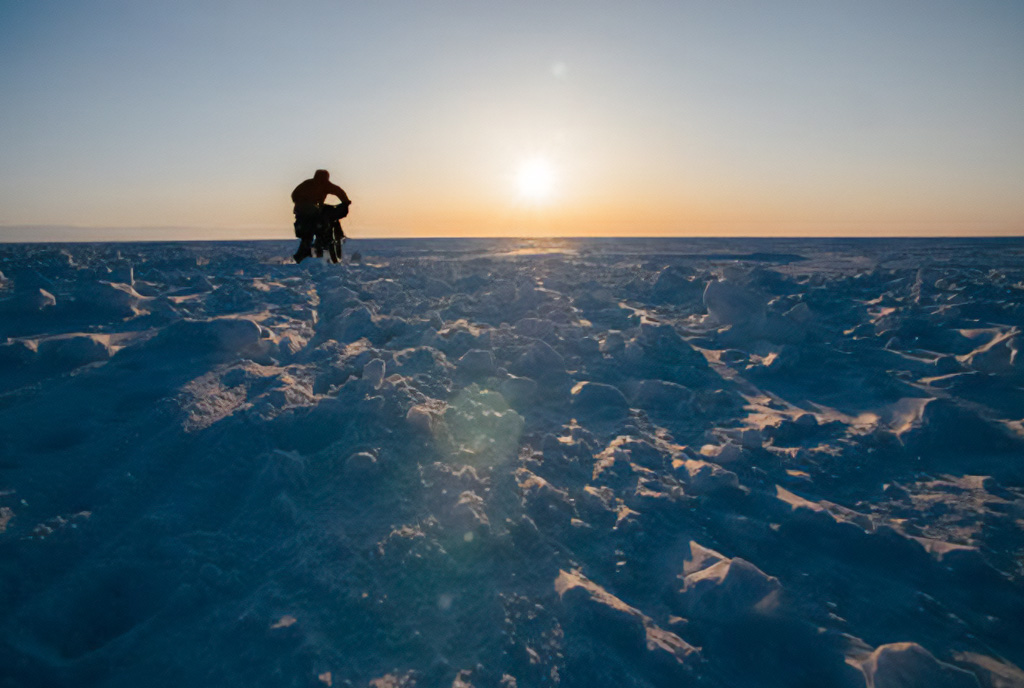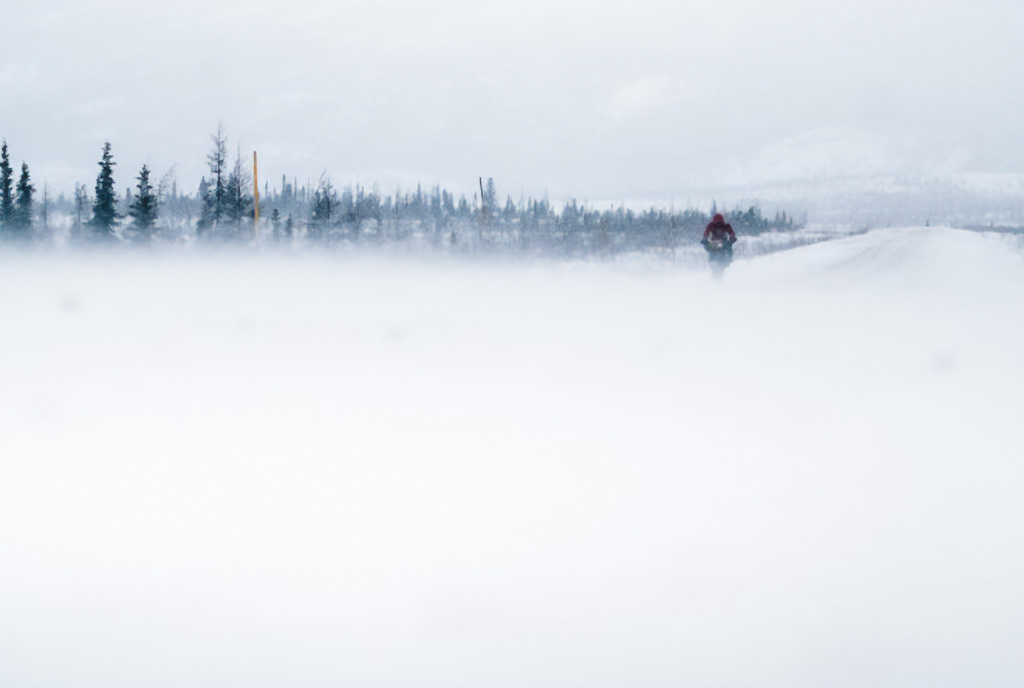


Ben Page set up the shot. He planted the tripod, mounted the camera, hit record.
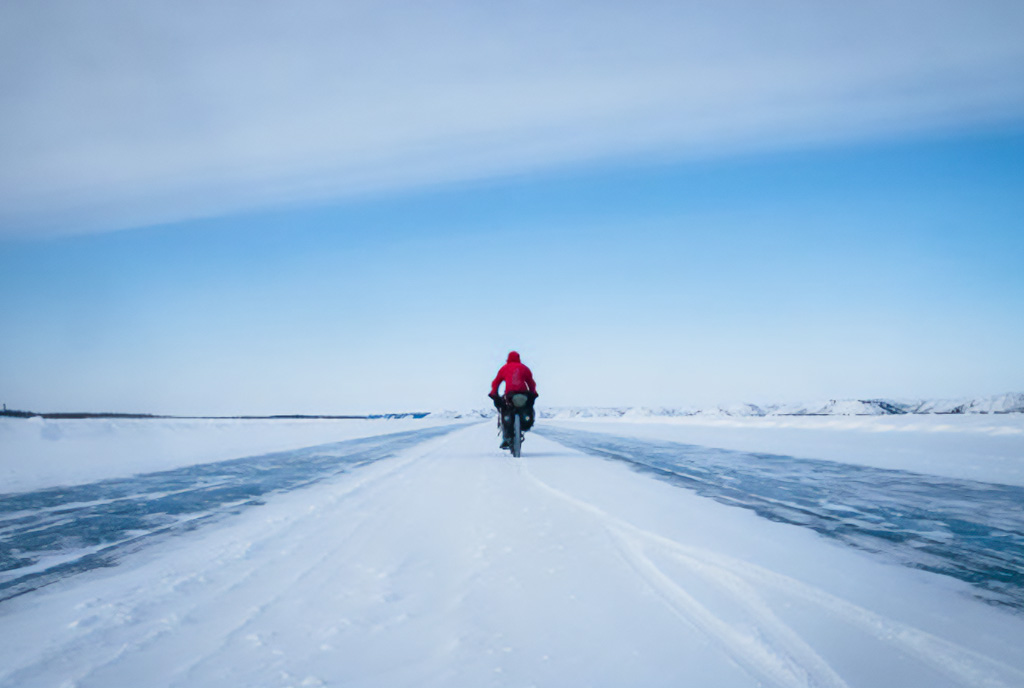
Stepping carefully so his footprints in the snow stayed out of frame, he climbed onto his bike and rode past the lens, his eyes fixed on the vast, untouched landscape ahead.
Page, then 22, was in the Yukon, in the Canadian Arctic, on the most gruelling stretch of a round-the-world bike trip.
Partner links: booking through them supports the blog at no extra cost to you.
He had left the town of Whitehorse and was roughly 1,000 miles (1,600 kilometres) from Tuktoyaktuk, the northernmost tip of the North American continent.
To get there, he faced 30 days of cycling along roads and frozen rivers, battling snowstorms, biting winds and temperatures as low as minus 40 degrees Celsius (minus 40 Fahrenheit).
Before setting off on his round-the-world journey in Ushuaia, Argentina, the southernmost point of the Americas, Page had barely picked up a camera.
But 15 months and more than 10,000 miles later, he found himself in northern Canada, capturing the footage that would become the award-winning documentary "The Frozen Road".
Even though his film earned wide recognition, including "best adventure film" at the 2018 New York WILD Film Festival and "best director" at the Mendi Film Festival in Bilbao, Page admits to an uneasy relationship with the camera.
"It's contrived," he says of his signature shot on the snow. "It cuts together well because it's smooth. But on either side of that shot there's 10 minutes of me walking back and forth to the tripod."
A passion for travel
It was the sense of adventure, not a cinematic vision, that put him on the road. Page had dreamed of cycling around the world, and in 2014, after graduating from Durham University with a degree in geography, he decided to make it happen.
"I was 22, no mortgage, no girlfriend. Nothing was keeping me at home. So I hit the road," he says.
The adventure lasted three years, covering 40,000 miles (64,000 km) and five continents: the Americas, Africa, Europe and Asia. The Arctic was its climax. For Page, it was as much a psychological test as a physical one.
"God knows why we set ourselves these crazy challenges, but we do," he says.
The fear of frostbite

Page is not the first person to cycle across the Arctic, and he will not be the last. There are commercial bike tours from Vancouver to Tuktoyaktuk. Cycle Canada runs a 35-day trip covering 1,935 miles (3,135 kilometres) for a little under 7,000 dollars.
But Page's journey was different.
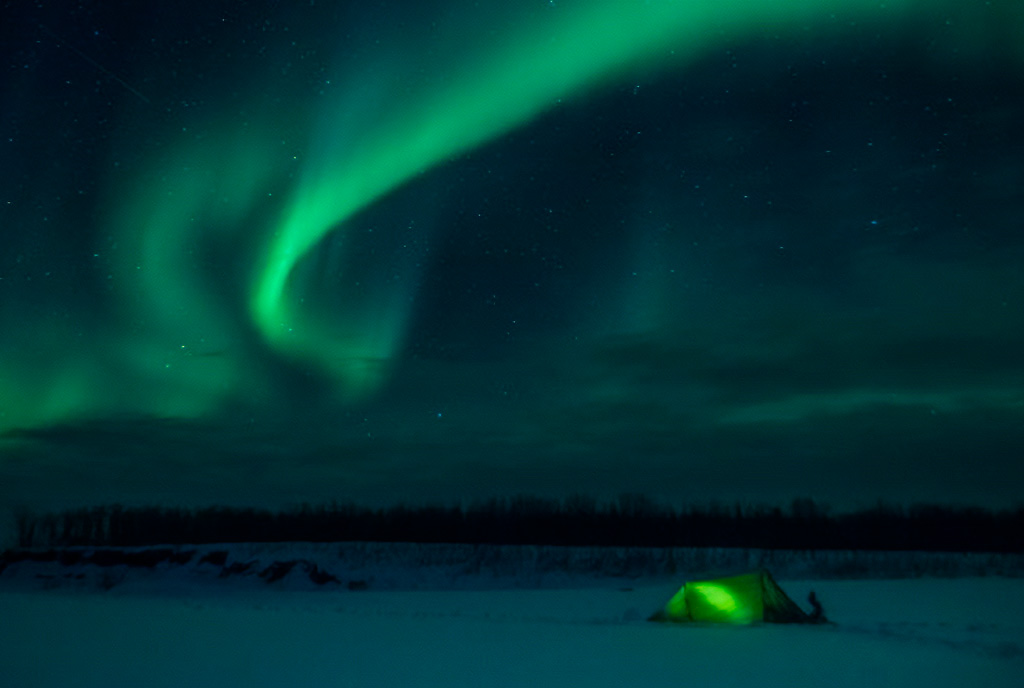
There were no hot showers, no electricity, no luxury of rest days. Page rode alone in late winter, spending most nights in a tent, apart from the rare occasion when he found a cabin to shelter from the merciless wind.
He rationed his food carefully, roughly 4 dollars a day, and prayed his calculations would hold, despite the snowstorms that slowed him down.
"You just have to get up and go," Page says. "It's not exactly steely grit or bravery, there's no choice, so you just do it."
Bud Jorgensen of Cycle Canada would say the opposite, that it takes a great deal of courage. Jorgensen has ridden the route twice himself, but only in summer. He says he knows of only one other person, besides Page, who has dared to go this far north in the winter months.
"But he only made it as far as the Yukon and British Columbia border, and the cold got the better of him," Jorgensen explains, describing how the man suffered a severe case of frostbite.
Page, who is from the UK, had barely seen snow, let alone this much of it. Britain's coldest winters suddenly felt laughably mild.
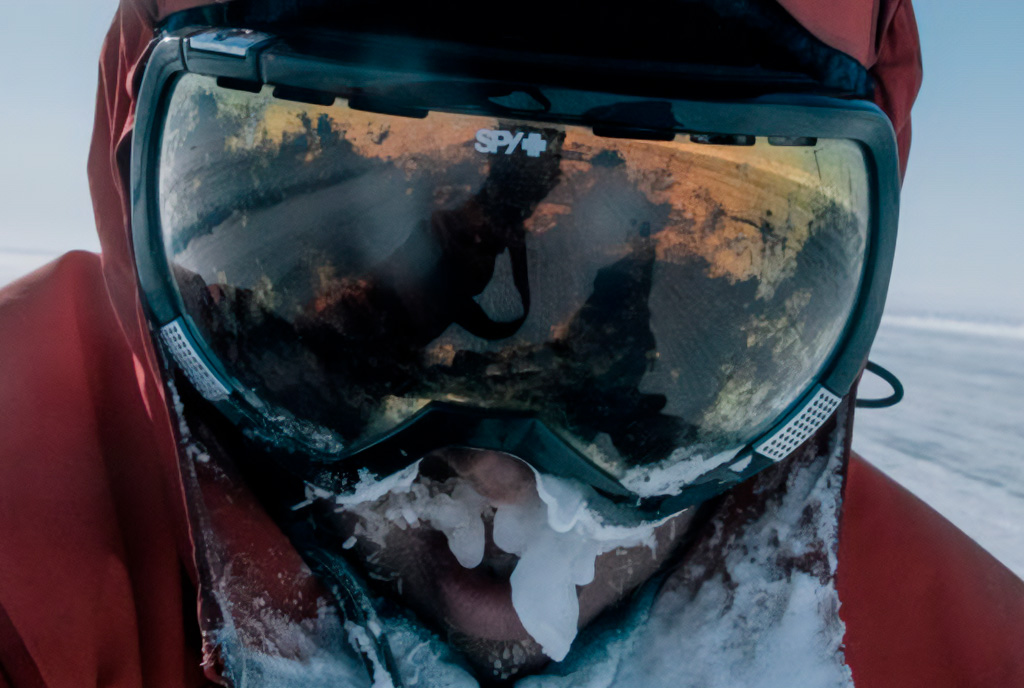
Most days were at least minus 20 degrees Celsius, and those temperatures plunged sharply in strong wind and at night. Page grew a moustache of icicles, and his cheeks still carry faint scars from frostbite.

The cold made the smallest decisions critical. Simply taking off his gloves to film or fiddle with the bike risked exposing his fingers to frostbite. The pain when his frozen hands began to thaw was unbearable, unlike anything he had felt before.
"I'd catch myself just shouting curses," Page says. "There's no one around, and you go a little mad. Then I'd snap out of it and say, 'Ben, easy, easy, be careful.'"
Alone in the Arctic
The isolation took its toll. Page realised there is a fine line between solitude and loneliness, or, as he calls it, a "constant duality".
A craving for solitude drove the trip; Page loves the freedom of being on his own. But there was a flip side too. "There are moments when things start to go wrong, when fear begins to creep in," he says.
"Those are the lonely moments. When you realise you put yourself in this situation. No one really knows where you are, and who even cares?"
The lowest of the low points came when Page found himself trapped on the Peel River, 40 miles from the nearest settlement. He had been following the Dempster Highway, a gravel road that crosses the Arctic, but riding alongside heavy trucks was difficult.
When Page reached the small village of Fort McPherson, locals told him about an off-road route to the next village along the frozen river.
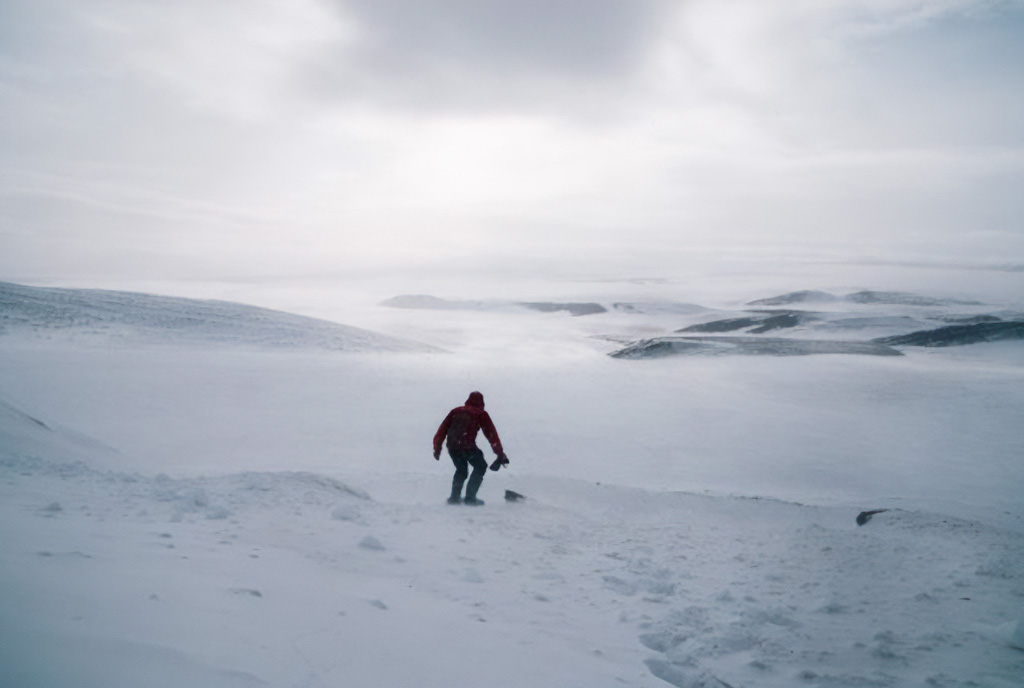
But on the very first night the harsh, unpredictable weather worsened, and he was caught in a snowstorm on the river. His only option was to push his bike and gear along the ice. Fear, hunger and loneliness came flooding in.

Page had only a day and a half of food left. At night he heard wolves howling.
"They don't usually attack people," he says, "but I was afraid because it was the sixth month of winter, so they were very hungry and might make different choices."
Page walked for three days. Then, just six miles from the village, he saw two snowmobiles appear over the horizon. The village had sent out its search-and-rescue team, knowing that a lone British cyclist was somewhere out in the wilderness, unseen since the storm.
Page filmed them approaching, and he spotted a body bag strapped to one of the vehicles. The danger of his situation sank in, along with the irony that he was filming all of it.
"It felt absurd," Page says. "If something bad happened and they found me out here, they'd watch the camera and say, 'This is why he didn't make it, he was too busy filming himself.'"
But filming gave Page a purpose beyond personal achievement. It engaged a different side of his brain. He explains how he usually just wants to get from point A to point B as fast as possible, but with the camera he had to slow down.
"It was like switching on another part of the brain, the director's side: the one that says this is worth capturing, you need to set up these shots, talk about your emotions here," he says.
The finish line

As the trip went on, the filming grew more and more important.
Page realised the long-term opportunities it could bring, and the potential career as a director of adventure films, a career he is now pursuing with purpose, with a trip to Alaska planned for the end of this month and an expedition across Russia on the horizon.
The film also offered an antidote to the loneliness. It gave him a way to share what he had been through.
When the Arctic Ocean finally came into view, it was not the way Page had imagined it. Yes, it was strikingly romantic, the sun going down and the snow glittering, but instead of feeling healed, Page was cold, exhausted and alone.
"Instead of riding off into the sunset, I sat in a bathroom, on a little stool, the only warm spot I could find," he says at the end of the film. "I thought about the lessons this journey had taught me. Maybe I proved something to myself by heading to the edge of my map... But I also realised that maybe finish lines are better shared with someone."