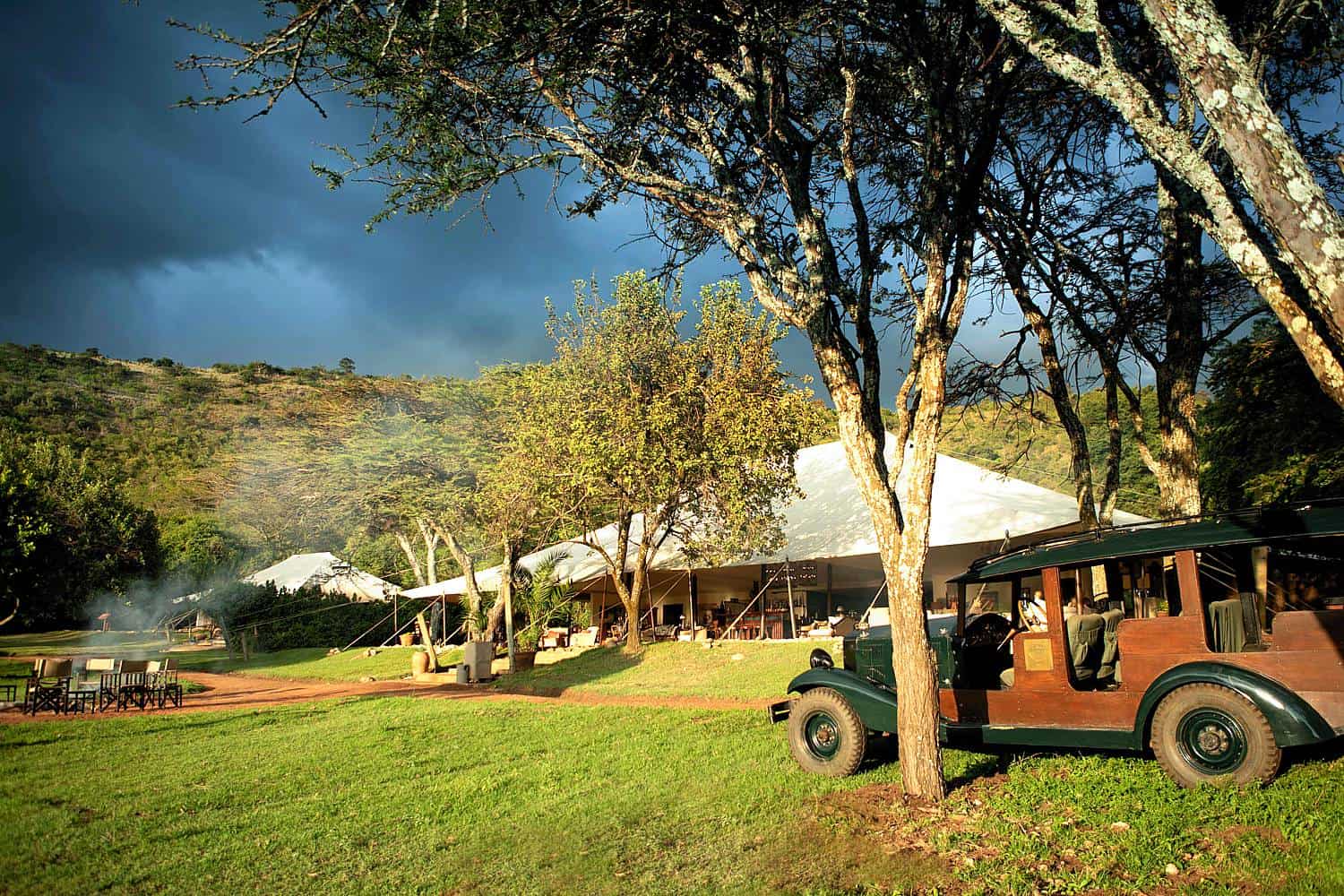


Cottar's 1920s Camp is a favourite with guests who want to recreate the world of Out of Africa, only without the malaria, the lion attacks or the plane crashes.
It is the oldest and most prestigious lodge in Kenya's Masai Mara reserve, a lavish, 100-year-old retreat with Edwardian-style bedrooms, a mahogany bar looking out over open bush and open-air baths that leave you half expecting Robert Redford to stroll in at any moment.
A century after it first opened, the camp is still adored by film stars, royalty and heads of state. One of owner Calvin Cottar's many after-dinner stories tells of an actual queen sprinting back to the jeep after a furious lioness interrupted her mid-toilet.
Partner links: booking through them supports the blog at no extra cost to you.
And yet, with the rise of the Black Lives Matter movement, young Kenyans have started to ask whether white-run lodges should be using Britain's long and often devastating period of colonial rule as a way to sell a holiday at all. The debate is gaining momentum on Twitter and was explored in a recent exhibition at the National Museum in Nairobi.
Perhaps surprisingly, even as his company keeps marketing its upmarket brand of nostalgia, Cottar believes they have a point.
The Cottar family is woven tightly into Kenya's history. His great-grandfather Charles was an American hunter, famous for surviving a leopard attack and for earning a reputation as a good-hearted man among the tribal communities.
His son took up the mantle and opened his own lodge, but was gored to death by a rhino. Calvin Cottar himself feels no fear of the bush, happily wandering alone for hours with no weapon for protection.
The camp is the latest incarnation of a family business in which the Cottar men spent decades inviting royalty to hunt on their land, though it was Calvin who orchestrated the revival of these early, decadent safaris, this time with cameras rather than rifles.
Beasts and Antique Sofas
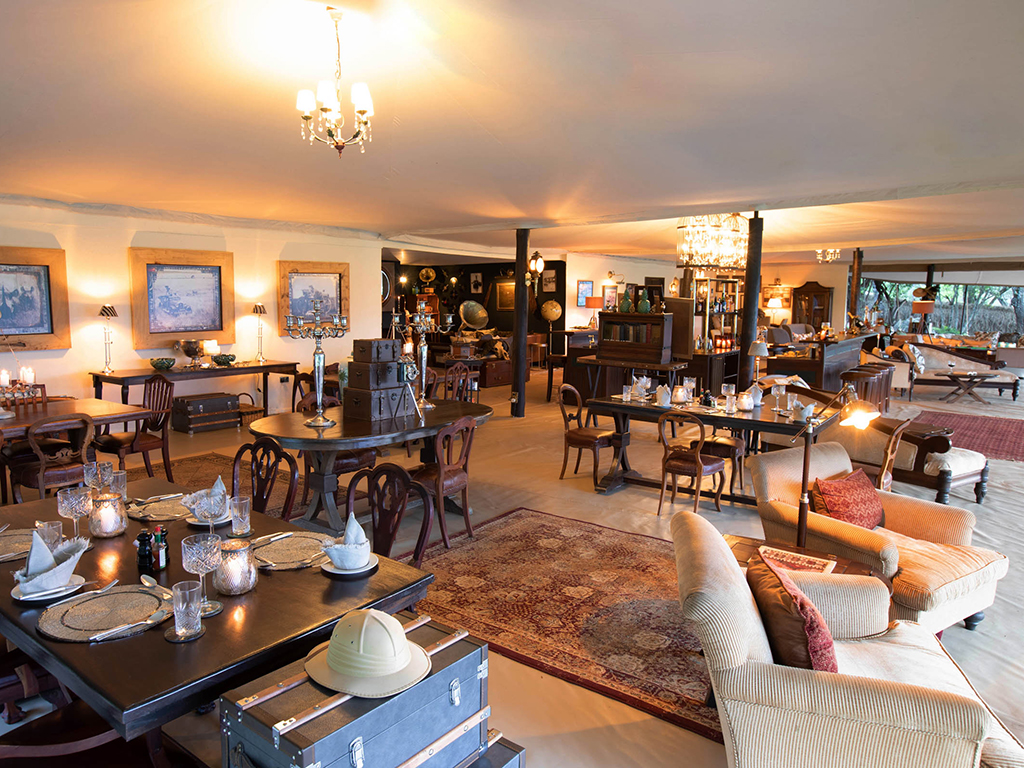
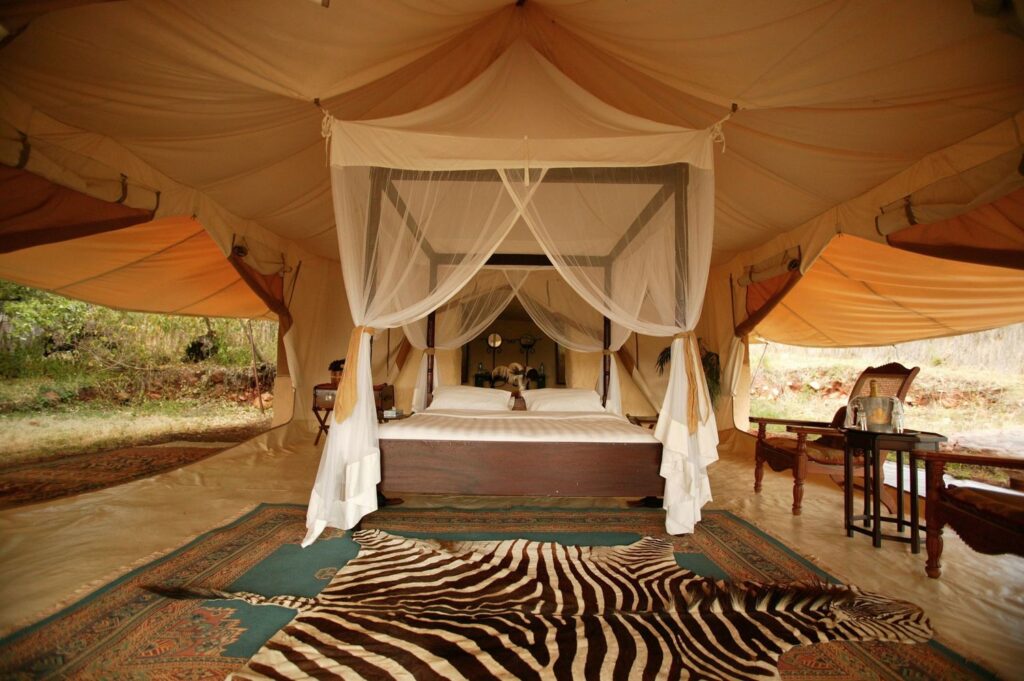
A deeply rooted sense of colonial Kenya is stitched into the fabric of this lodge. Every bedroom holds sumptuous tables and four-poster beds, waiters carry silver trays of gin and tonic to the pool before dinner, and long mahogany tables are laid for supper, when guests are invited to dress up and mingle.
The recently renovated, open-fronted dining hall is a study in luxury: crystal whisky tumblers, oil portraits, antique mirrors and old teak dressers.
But for all the pomp and ceremony, the bush outside is forever muscling its way in. In the evening, guests sit around the fire with local Maasai guides, and more often than not a huge eland antelope, its horns capable of killing, creeps up on Cottar and starts drinking red wine from his glass. He usually laughs, takes another sip and tells everyone not to get too close, because "they really are rather dangerous".
One morning, amid the antique Chesterfield sofas, brass gramophones and antique chandeliers, the body of a dead waterbuck was found.
It was like a scene from an Agatha Christie novel, if she had gone through a surrealist phase. The animal lay in a pool of its own blood among first-edition books and leather armchairs.
"Fighting over breeding rights," said Cottar with a nod, and asked his team to drag it to the waterhole to see what would eat it. (The answer: hyenas, which erupted into eerie laughter and left not a single gnawed bone behind.)
All of it feels very much like an old, largely vanished world, and Cottar cheerfully admits that he too is uneasy about the way colonialism is being sold.
"White Africans in particular have to change," he says, somewhat ironically, over tea in the library one afternoon.
"The whole 1920s decor is a tricky thing, because it is still so appetising, and the guys who work here don't mind, for them it is just theatre, but urban Kenyans are firmly against anything colonial, and I understand that."
Interestingly, although Cottar is well aware of the problems that can come with drawing on this era, he has no plans to change the aesthetic. He believes the far more serious issue facing Kenya is land ownership, and that by drawing high-paying guests to his camp, who mostly want these Edwardian trappings, he will be in a stronger position to change the way upmarket hospitality and local tribes interact.
War With the Animals
At times it seems he is calling for an end to people just like himself. Former colonists still own a startlingly large share of the land here. Hugh Cholmondeley, a British lord, for instance, has 48,000 acres of prime farmland north of Lake Naivasha, which he uses for conservation and cattle breeding, while foreign organisations and hotel groups have bought thousands of hectares around the country's national parks and turned them into wildlife-focused reserves.
Cottar opposes all of this, arguing that buying up land the Maasai have always lived on forces them to farm elsewhere for subsistence and go to war with the animals that eat their crops and kill their livestock.
Wildlife is dying out because fences, simple structures of wood and wire, now cover vast stretches of the Masai Mara. They block every migration and are the reason that, despite poaching figures falling year on year, lion and elephant populations are in free fall.
The solution, according to Calvin, lies in biodiversity easements, which sounds complicated but really just means leasing land from the Maasai rather than owning it. This gives them a steady income every month, and they no longer need to rely on farming to survive. It also means they have an incentive to keep the animals alive rather than hunt them down, since one dead elephant or lion means less rent in their pockets.
As a result, although Cottar comes from a large family of landowners, he himself now holds very little land, having given much of it away. He believes others should follow his lead.
The question of whether he will become popular with the white community, people whose families, like his own, have lived in Kenya since British rule, keeps him up at night. "They all think I'm mad when I suggest they pay rent on their own land," he says.
His desire to work towards a fairer Kenya is clear in the camp too. The entire team is Kenyan, from the camp manager to the top-tier chef. The guides are local Maasai, some of whom now own the land they work on.
A Visionary?
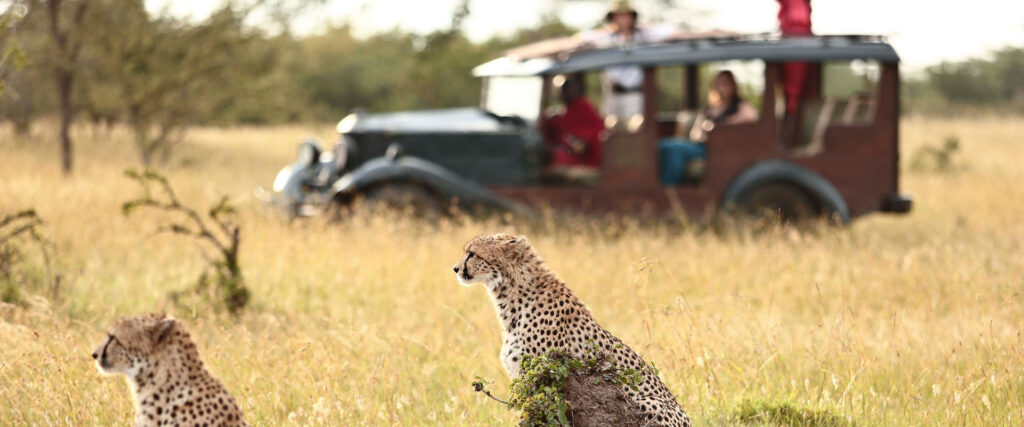
Every day they take his millionaires and celebrities out into the strikingly beautiful reserve that surrounds the camp. It is a world straight out of an Attenborough documentary, where animals roam freely without any human interference: prides of lions with scratched faces after skirmishes with buffalo; young cheetahs, plump and glossy under the blazing sun.
And elephants, wherever you turn, posing against the mountains as professionally as any photographer. Often the jeeps surround breeding herds, and while the more world-weary matriarchs stride ahead, curious youngsters cluster around the vehicle for a closer look.
The strong relationship the family maintains with the tribes means their community projects are impressive too. Guided activities with Maasai guides include foraging for medicinal herbs out in the bush (with a hunter-gatherer from the tribe whose life story has drawn 9.2 million views on YouTube), tracking the vanishing pangolin, and working with a vulture rescue group.
At the end of any trip, the guides usually insist that guests climb out of the metal safety cage that is the jeep and try to understand what the Maasai feel living here, and why it is the whole ecosystem that needs protecting, not individual species.
Tracking through the bush on foot, standing on the same level as the animals, listening for their footsteps or distant alarm calls, touching the damp leaves and smelling the crushed mint and grass underfoot, is an extraordinary sensation that leaves guests unsure whether they are predator or prey.
And it hardly matters whether they are staying at the most cutting-edge camp in Kenya or taking a remarkable journey into Britain's colonial past.