

One of the most fascinating cuisines in Southeast Asia, Peranakan food is found mainly in Singapore, Malaysia and Indonesia.
Rich in both flavor and color, it stands out for the way it blends Chinese, Malay, Indian and Eurasian ingredients and cooking methods.
Main dishes tend to be heavy on sauce and full of herbs and spices (a Malay influence), yet they often rely on pork and fermented soybean paste (a Chinese influence).
Partner links: booking through them supports the blog at no extra cost to you.
Meals were frequently served at room temperature, because people ate with their hands, a Malay custom.
“It's one of the first fusion cuisines,” says Lloyd Matthew Tan, author of “Everyday Nonya: Traditional Recipes for Everyday Meals.”
The Roots of a Culture and Its Menu
Peranakan culture took shape in the 15th century, when Chinese men moved south to seek their fortune and later married local Malay women.
To be “Peranakan” is to be “locally born,” a term the community used to set itself apart from the newer Chinese immigrants who arrived in Singapore and Malaysia during the 19th and early 20th centuries.
The men were called “Baba” and the women “Nonya.” There were also non-Chinese Peranakans, such as the Jawi Peranakans and the Arab Peranakans, but the Chinese Peranakans were the largest group.
By that point, the Chinese Peranakan community had already forged its own identity. Instead of Mandarin, they spoke a mix of English, Malay and Hokkien. They were anglicized and built strong ties with the colonial settlers. Many became civil servants or merchants. Some grew immensely wealthy, a stereotype that persists today, as seen in the film “Crazy Rich Asians.”
Peranakans are known for guarding family recipes fiercely, especially in the past. They spent days cooking and perfecting their dishes. And because the Peranakan women, who didn't work, ran the household, how a dish looked and was presented became a way to show off one's skill.
“We are not zen,” says Alvin Yapp, who runs The Intan, a Peranakan museum in Singapore.
In Singapore, interest in Peranakan cuisine has revived over the past two decades.
You can find Peranakan food everywhere, from hawker centers to upscale restaurants. In 2016 it earned international recognition when Candlenut became the first Peranakan restaurant to win a Michelin star.
Winning the honor was a proud moment for Malcolm Lee, the chef and owner of Candlenut. A fourth-generation Peranakan, he learned to cook from his mother, aunt and grandmother.
“It shows that even simple, home-style dishes can be worthy of praise,” he says.
Here are 10 classic dishes that make a wonderful introduction to Peranakan cuisine.
Ayam Buah Keluak (Chicken Braised with Black Nuts)
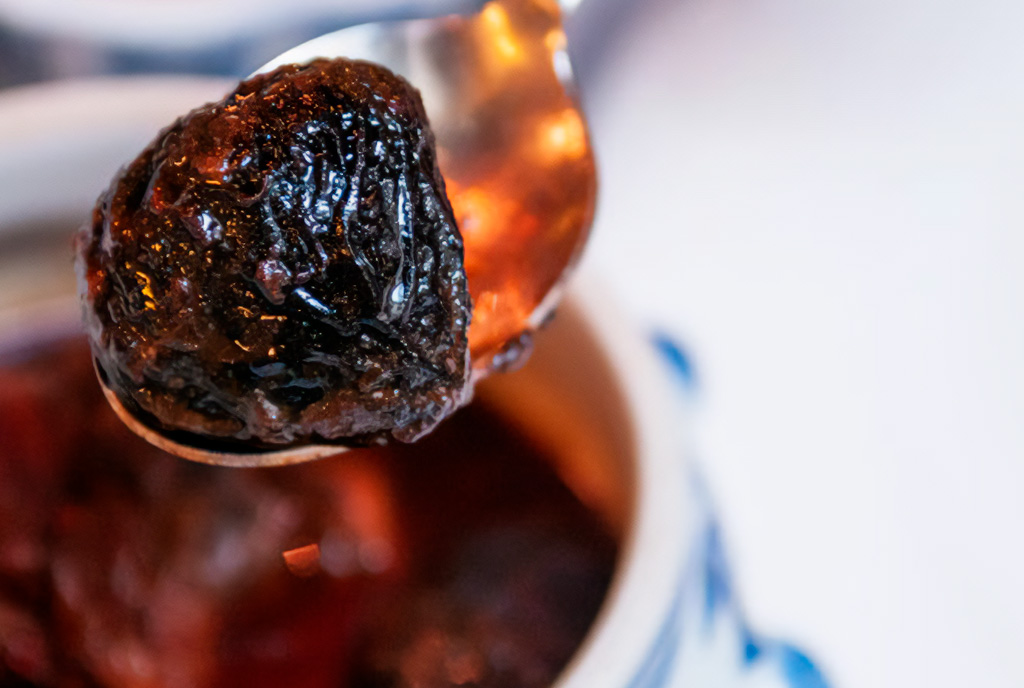
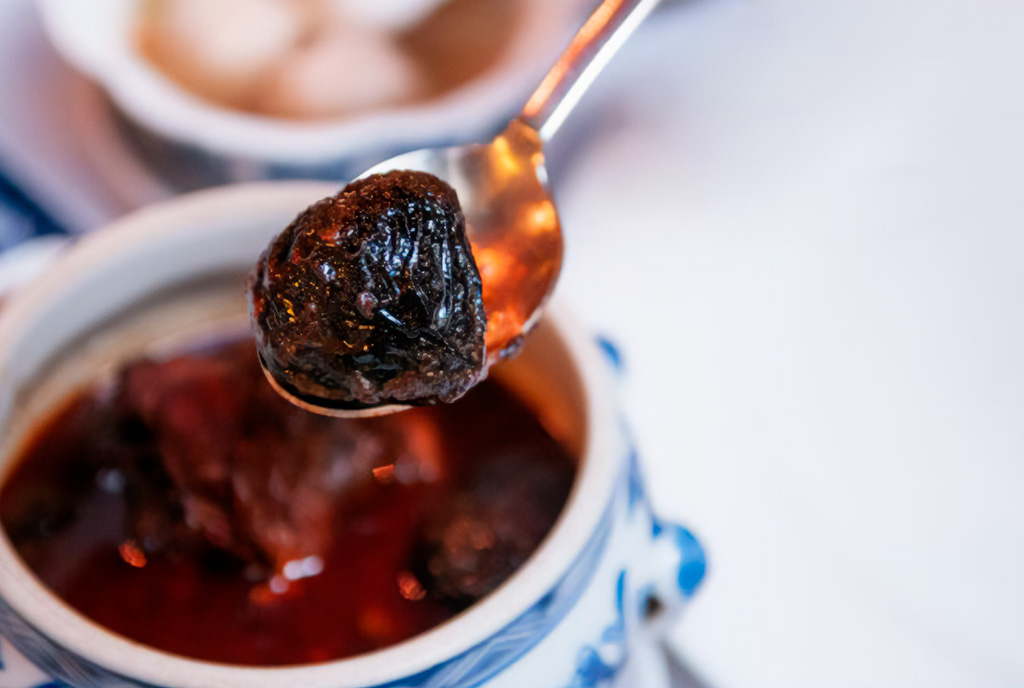
When people think of Peranakan food, ayam buah keluak is the first dish that comes to mind.
The star of the dish is the buah keluak, also known as the “black gold of the east” for its truffle-and-dark-chocolate flavor and a texture reminiscent of foie gras, says Sharon Wee, author of the cookbook “Growing Up in a Nonya Kitchen.”
The nuts are foraged from mangrove swamps in Malaysia and Indonesia. Freshly harvested buah keluak contains cyanide and has to be fermented in soil for several months to reduce its toxicity. Once bought, the nuts must be soaked and scrubbed over several days to get rid of their earthy taste.
Some like to cook the nuts straight with the chicken and sauce, but Wee scoops out the flesh and mixes it with a marinated pork and prawn mince before restuffing the nuts. She then braises them with chicken and a sauce of lemongrass, galangal, turmeric, chili, shallots, candlenuts, tamarind and coconut milk, creating an orange-brown stew that's best served with rice.
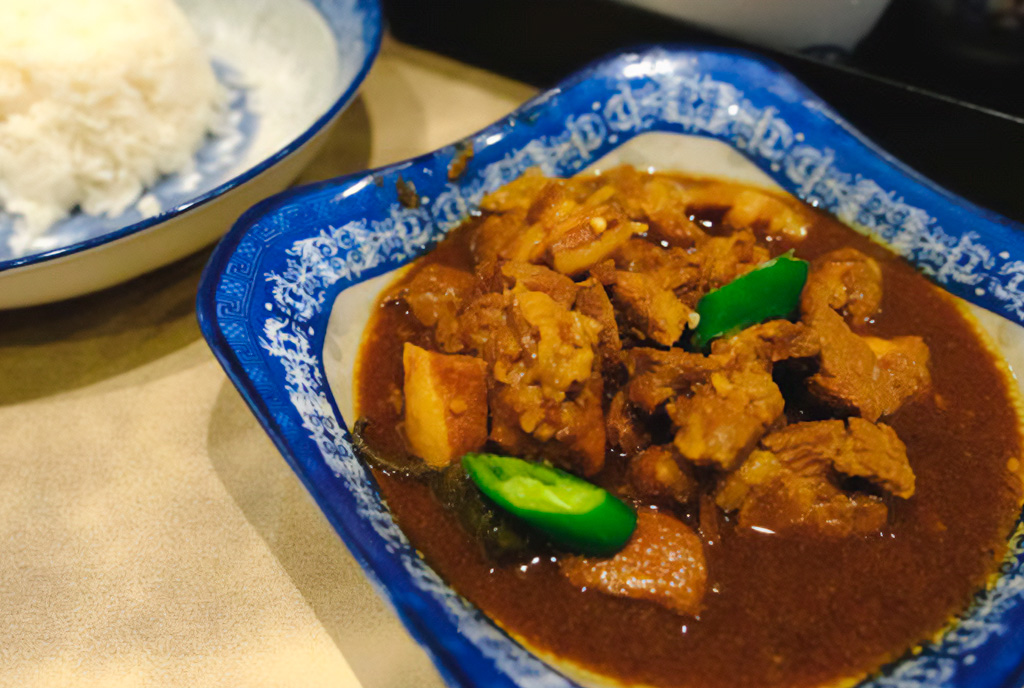
Babi Pongteh (Pork Braised with Fermented Soybeans)
Babi pongteh is another Peranakan classic. Pork belly is braised in a paste of garlic and shallots along with bamboo shoots. Some have swapped the latter for shiitake mushrooms or potatoes, because fresh bamboo shoots are hard to come by.
What makes this dish special is the fermented soybean paste and the toasted ground coriander, says Lee of Candlenut. The paste adds umami, while the coriander powder brings an earthy lift that balances the richness of the pork belly.
The dish is sprinkled with chopped red and green chili, and it can be spooned over rice or scooped up with a buttered baguette.
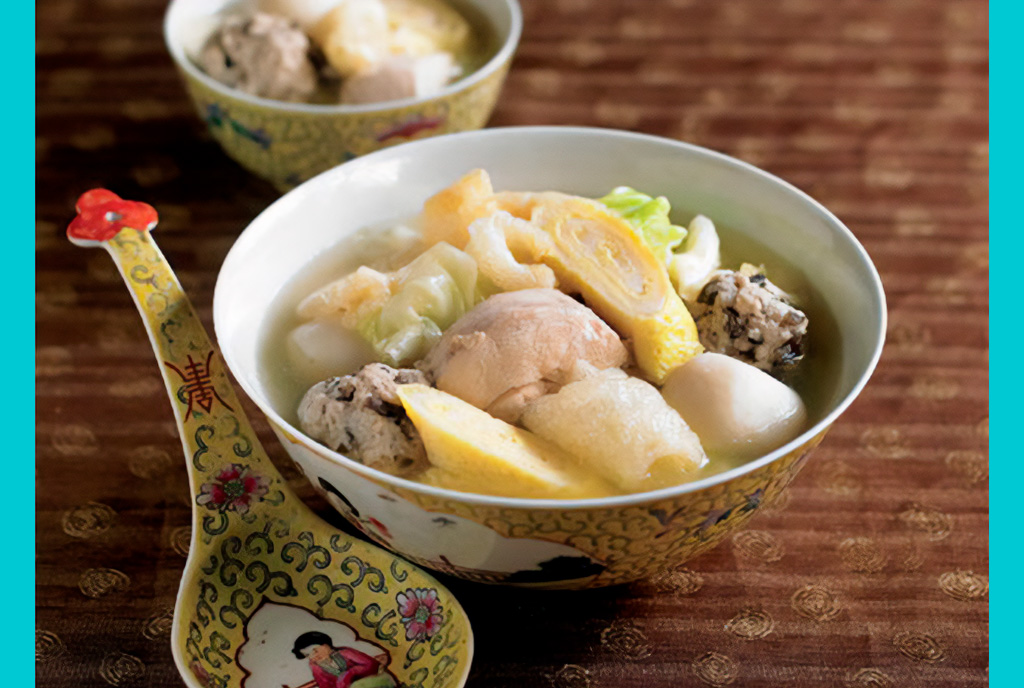
Hee Pio Soup (Fish Maw Soup)
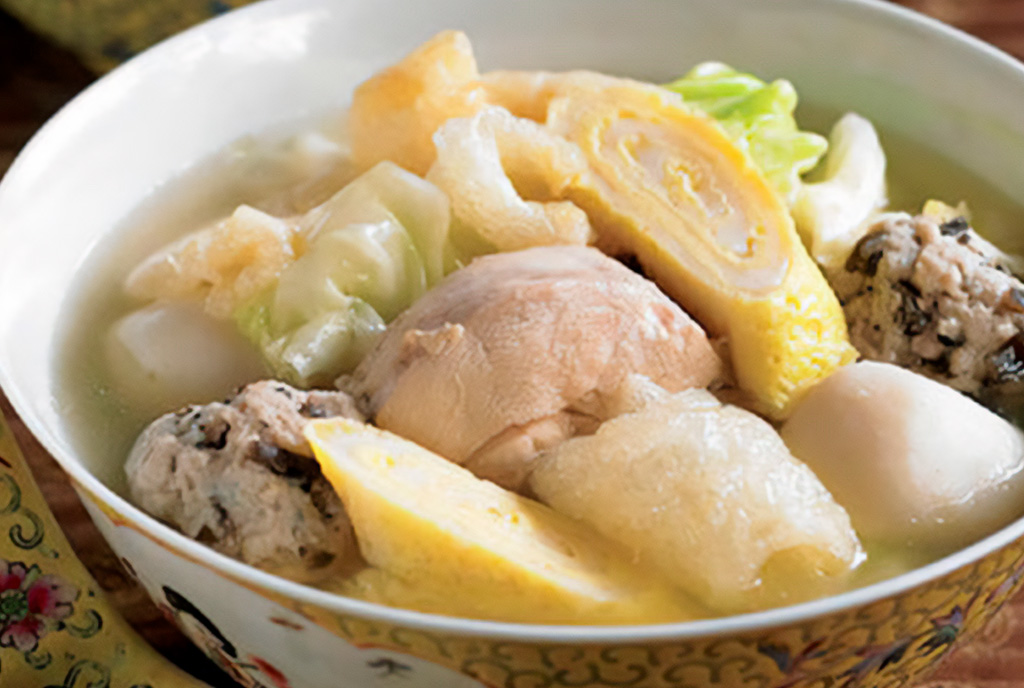
Hee pio soup is far more than just fish maw. It holds a treasure trove of other goodies. Wee makes hers with meatballs, fish balls, chicken, cabbage and fish-paste egg rolls, filling the bowl with a savory pork broth.
Peranakans ate this soup during their Lunar New Year celebrations, she says. It was their fish dish, whereas the Chinese ate a whole fish to invite good fortune.
In Chinese cuisine, fish maw, the swim bladder of a fish, is considered a delicacy alongside abalone and sea cucumber. Wee says the soup, though it looks simple, reflects the Peranakan desire to serve something luxurious.
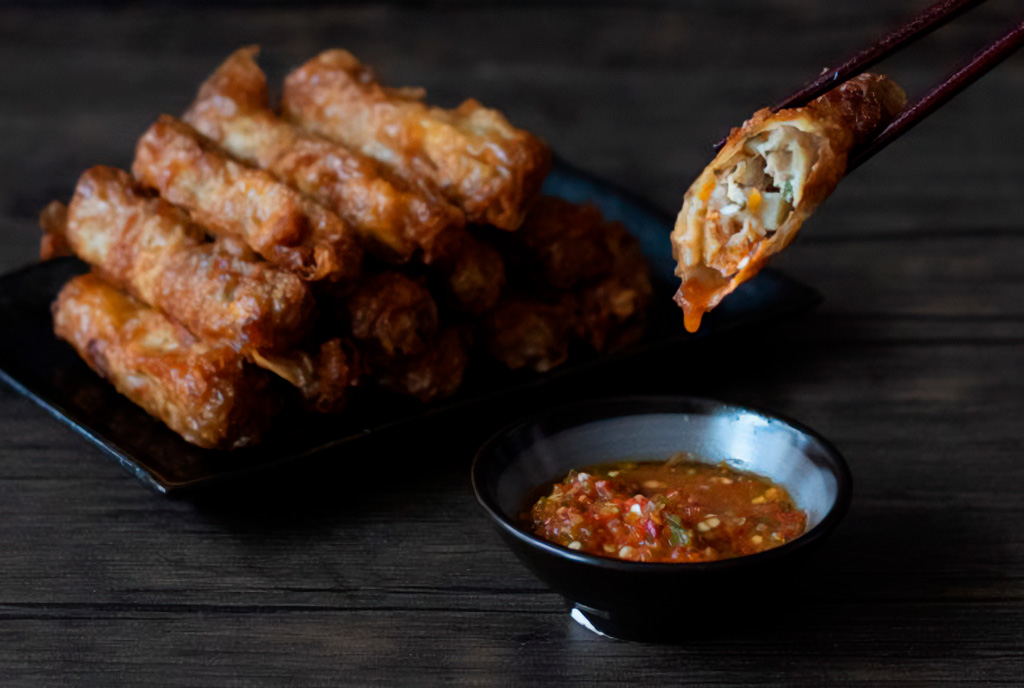
Ngoh Hiang (Beancurd Rolls with Pork and Prawn Mince)
Ngoh hiang is a fried beancurd roll stuffed with a juicy mixture of minced pork, prawns, water chestnuts, onion and ground coriander.
Some like to add carrots, mushrooms and five spice as well. The roll is then steamed and pan-fried.
Lee says he steams his rolls a day ahead of serving and keeps them in the fridge so they turn crispier and browner when fried.
Because they're so labor-intensive to make, Peranakans like to prepare batches of these rolls to freeze and serve as needed.
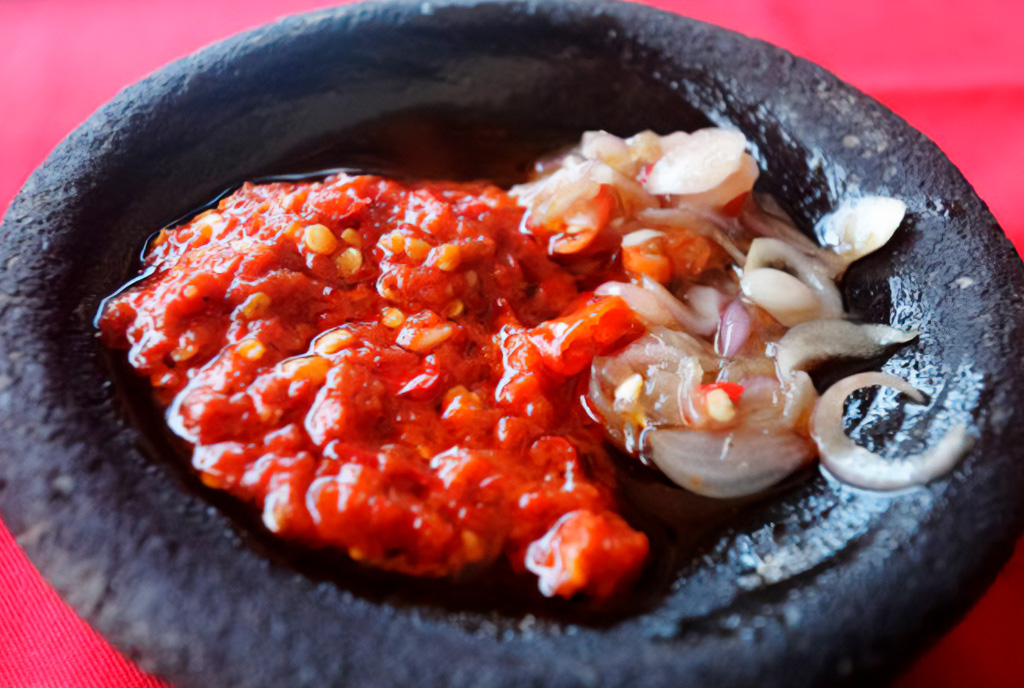
Sambal Belachan (Chili with Shrimp Paste)
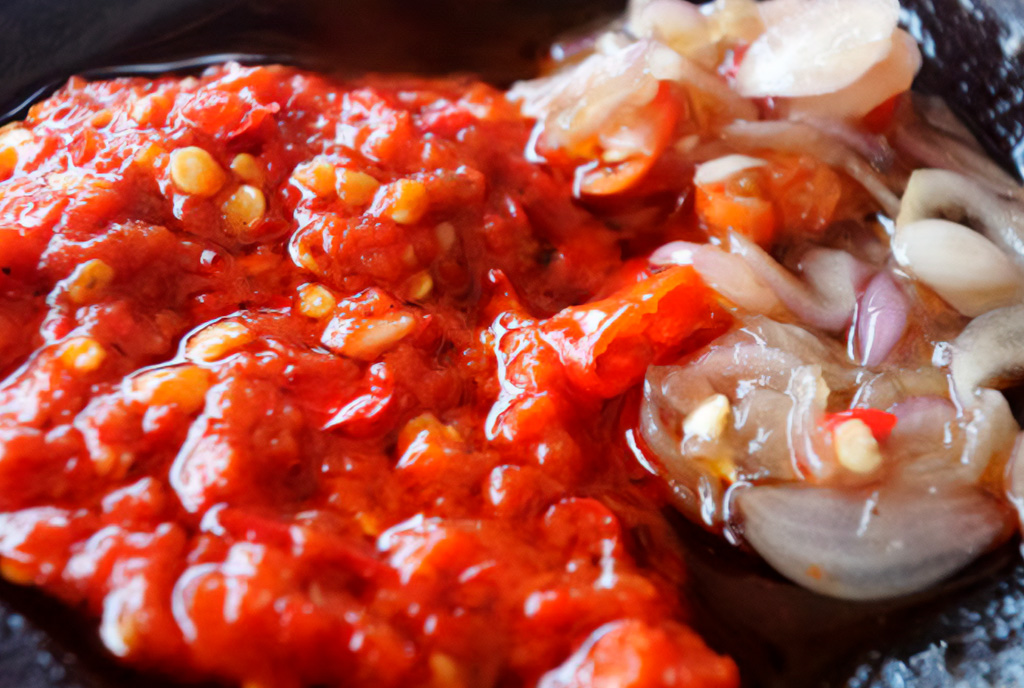
Sambal belachan is an unbeatable spicy bomb. It pairs well with everything, even plain rice.
The chili is made by grinding together belachan (dried shrimp paste), red chilies, kaffir lime leaves and a pinch of sugar. Sometimes fried garlic and shallots are added too.
Traditionally, to make belachan, people sun-dried krill, pounded it, shaped it into cakes and then sun-dried the cakes. These days they're available at the supermarket.
It can be served as a dip with a squeeze of calamansi juice, or used to marinate meat or stir-fry vegetables.
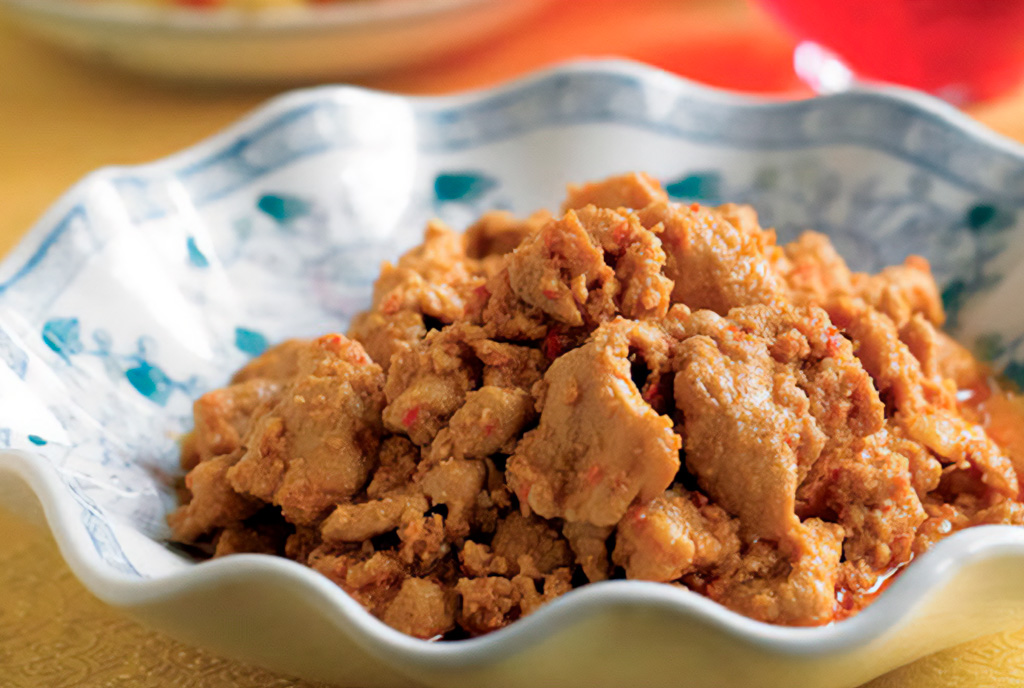
Satay Babi (Pork Fried with Chili)
Satay babi is a dish that clearly shows the fusion of Chinese and Malay cooking, says Wee. It uses pork, which devout Muslims don't eat, and fries it with a chili paste made from local spices and coconut.
Satay babi was one of the first dishes Peranakan girls learned to cook. It was a way for 12- and 13-year-olds to learn how to pound a mixture of lemongrass, candlenuts, chili, shallots and belachan before cooking it with pork and coconut milk.
Because there are only a few steps and ingredients, it was the starting point before learning how to make more complex dishes, such as ayam buah keluak.
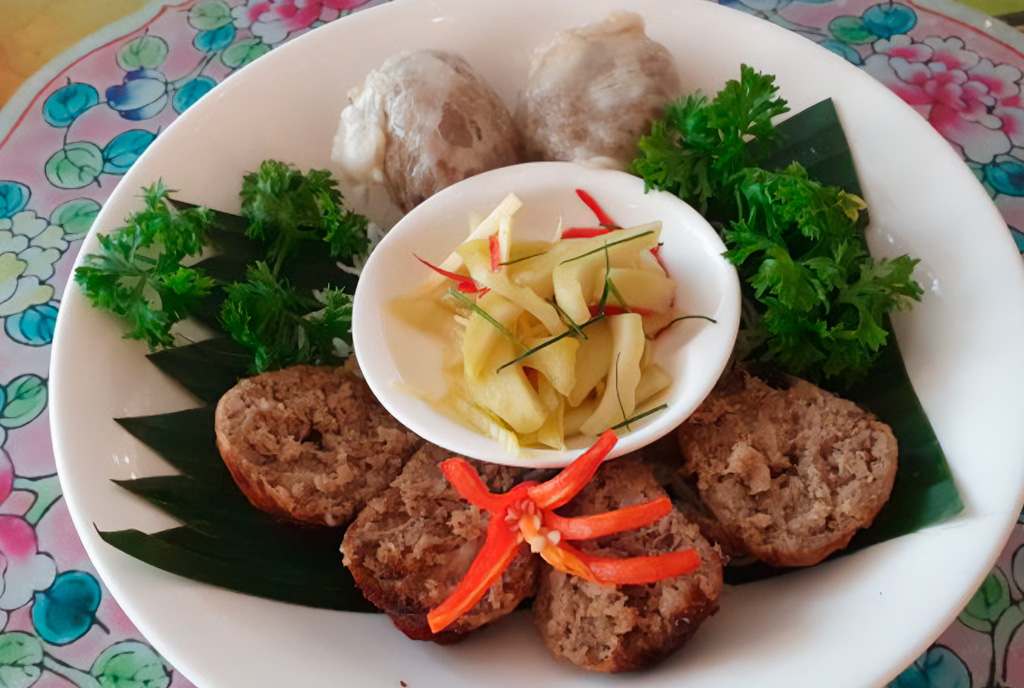
Hati Babi Bungkus (Meatballs of Minced Pork and Liver)
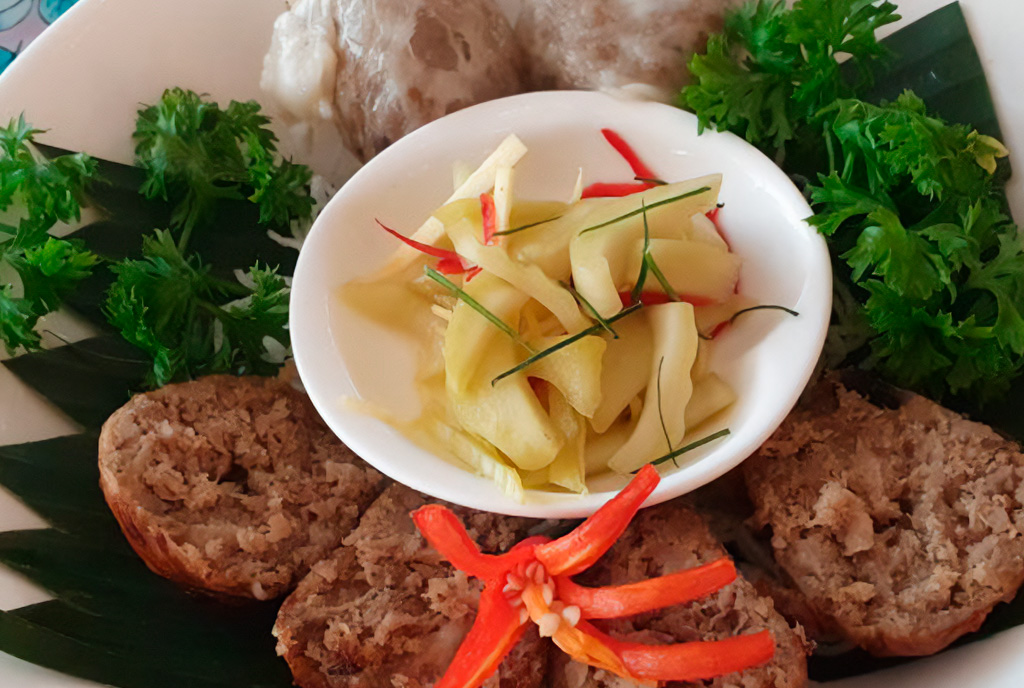
Hati babi bungkus is a rarity in Peranakan homes these days because it's so time-consuming to make, which means you should try this dish of juicy, springy meatballs at a restaurant that serves it.
The pork liver first has to be deveined and diced before being mixed with minced pork, shallots and ground coriander, then wrapped in a caul of pork or beef mesentery. The balls are then steamed, fried and served with pickled mustard greens and chili, says Raymond Khoo, who once ran the Singapore restaurant The Peranakan.
A good relationship with your butcher is also crucial to getting this dish right, Khoo jokes, because you have to talk him into going through the trouble of removing the caul.
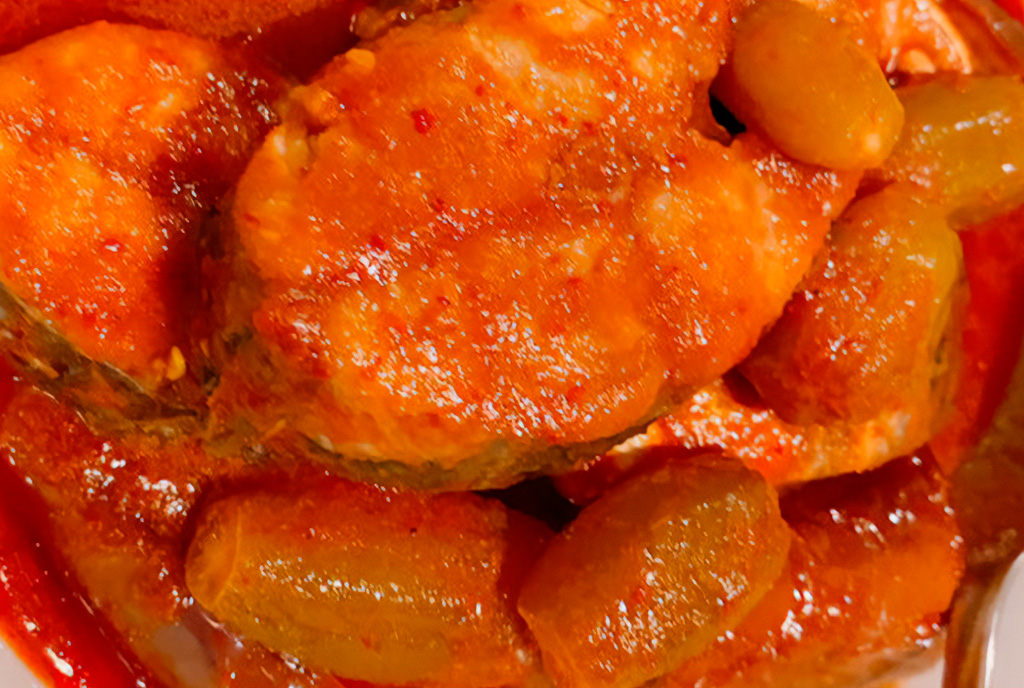
Garang Assam (Sour and Spicy Tamarind Gravy)
Garang assam is one of the everyday Peranakan dishes, made with either fish or prawns.
You begin with a spice paste of shallots, lemongrass, candlenuts, turmeric, blue ginger, red chilies and belachan, then mix it with tamarind juice and a pinch of sugar before stewing the seafood of your choice.
Tamarind, or assam, gives this dish a tangy, fresh flavor that's worth every mouthful.
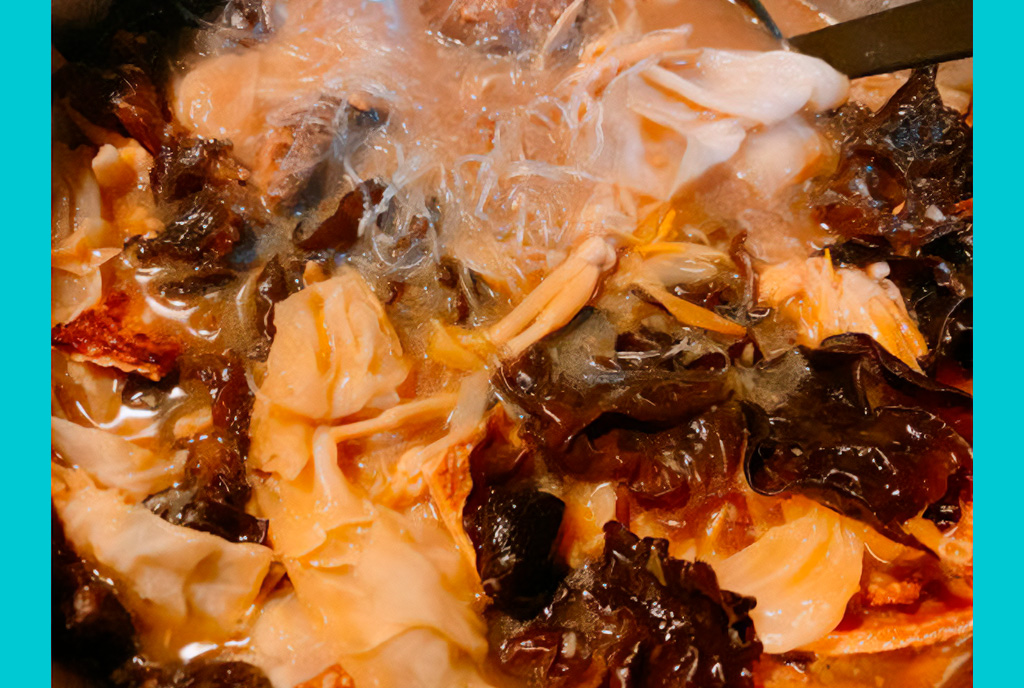
Chap Chye (Mixed Vegetable Stew)
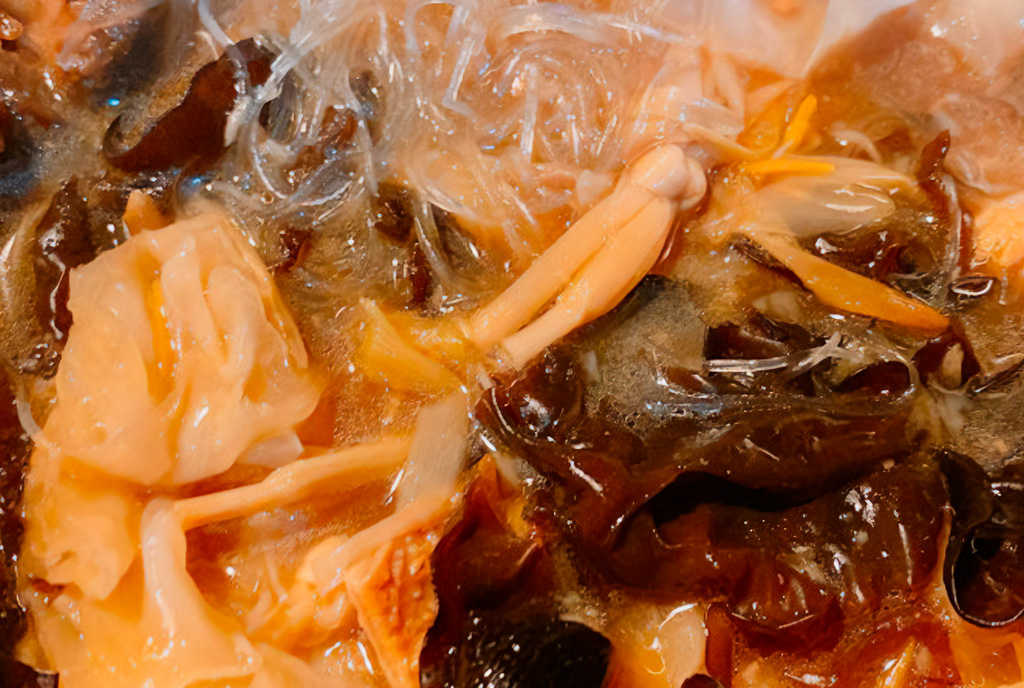
Not a fan of vegetables? Chap chye will change your mind. This mixed vegetable stew is a hearty pot of cabbage, shiitake mushrooms, wood ear fungus, lily buds, soy sticks and vermicelli, cooked with fermented soybean paste and stock.
In the past it was made with pork belly and prawns, but you can easily make it vegetarian. Like babi pongteh, chap chye is a dish used in the worship of ancestors and deities, says Tan.
Chap chye tastes better the next day, once all the ingredients have soaked up the flavors. And in typical Peranakan style, you eat it with sambal belachan.
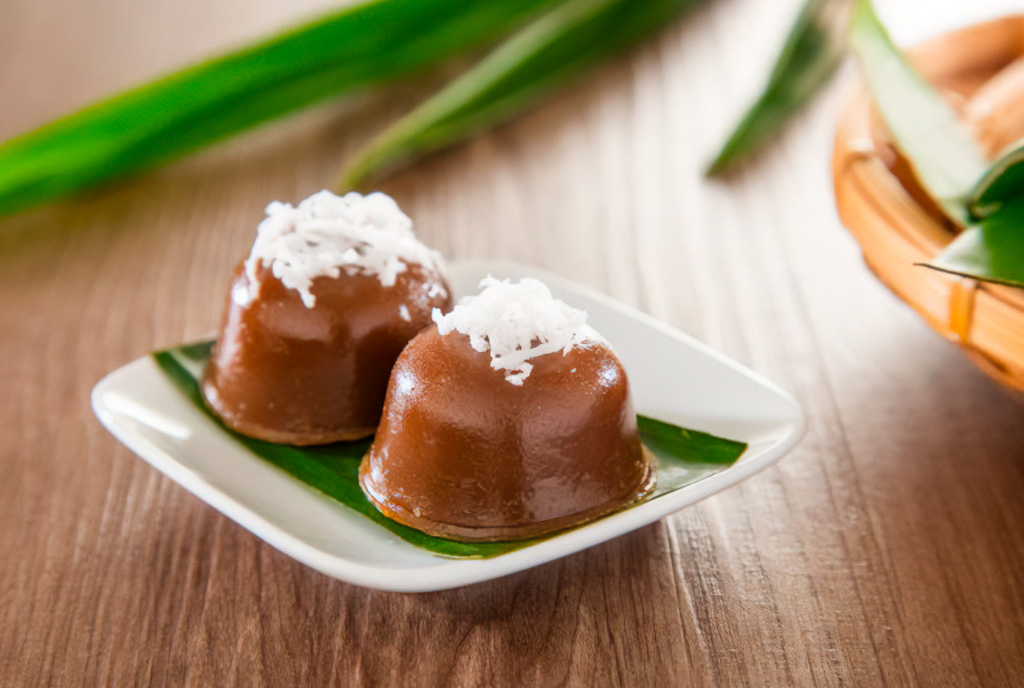
Kueh Ko Swee (Palm Sugar Cake)
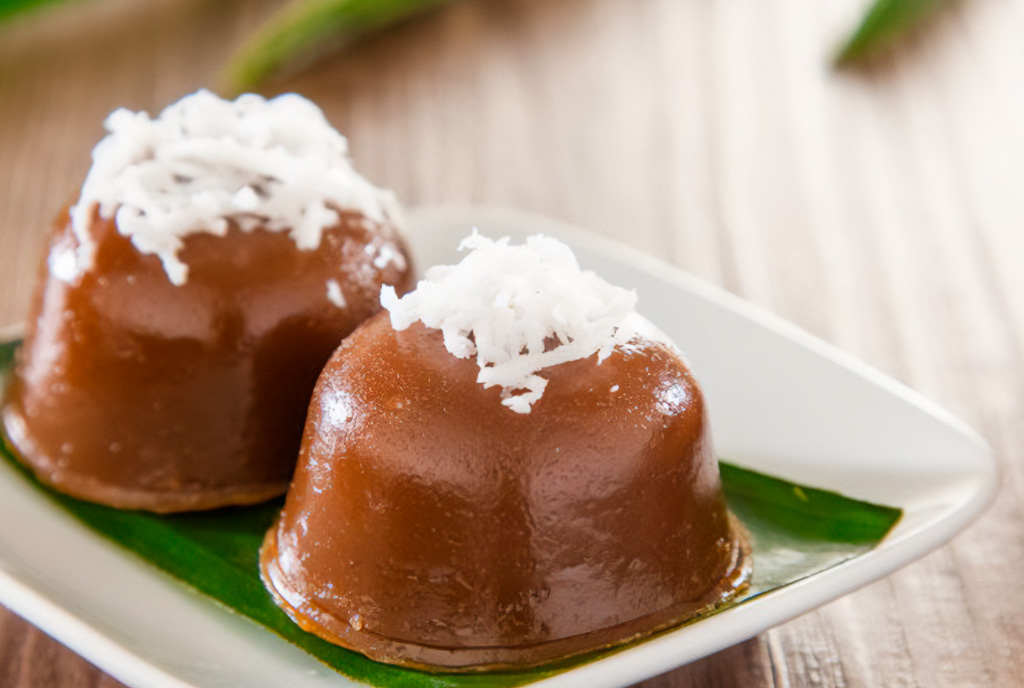
And here comes dessert! Peranakan cuisine offers plenty of sweet treats, and kueh ko swee is one of them. This chewy, wobbly cake is simple to make, but it demands the right ingredients and measurements to get it just right.
The cake is made by combining gula melaka (palm sugar), rice flour, tapioca flour and alkaline water. The mixture is steamed, cut into cubes and rolled in freshly grated coconut.
How springy the cake turns out depends on the ratio of rice flour to tapioca flour, as well as the amount of alkaline water added, says Annette Tan, chef of the private Peranakan dining venue Fatfuku. High-quality gula melaka is also essential to create that slightly smoky flavor, she adds.