

Nearly every capital in Eastern Europe has, at some point, been called the "Paris of the East." Unlike most other cities in the region, though, Budapest has no need for the comparison.
The grand old lady on the Danube is one of Europe's finest capitals by any measure, and a destination well worth the trip in its own right.
The eight iconic buildings described below offer a sense of both Pest and Buda, once separate towns split by the river but united roughly 150 years ago into the modern metropolis.
Partner links: booking through them supports the blog at no extra cost to you.
Visit these landmarks in the order given here and they form a kind of walking tour, though you're always free to hop on public transport or grab a taxi. They're easy to spot thanks to their bright new yellow paintwork.
If you take the metro, you'll be riding the second-oldest underground railway in the world, and Line 1 is a World Heritage Site.
The Parliament
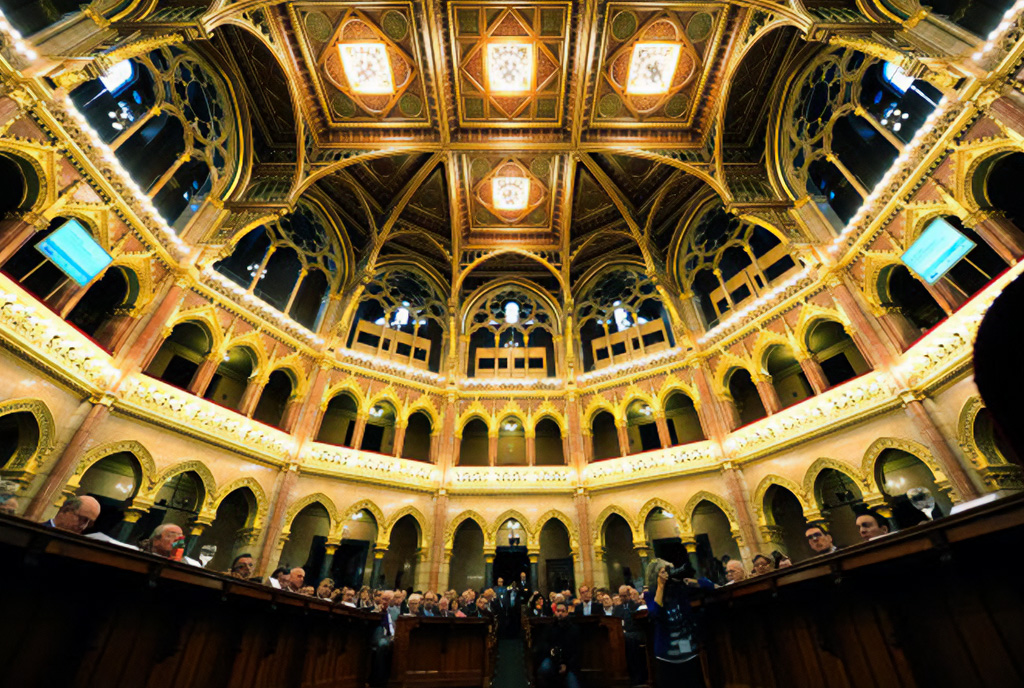
This neo-Gothic building, built over 17 years and completed in 1902, was partly inspired by the Palace of Westminster in the UK. Michael Portillo, the British politician turned TV presenter, memorably described it as "one of the most beautiful legislatures in the world, a cathedral of democracy."
The best views are from Kossuth Lajos Square (in front of the building), from the river (Parliament sits right on the Pest embankment), or from the opposite Buda bank.
Parliament, Kossuth Lajos Square 1-3, 1055 Budapest; +36 1 441 4000
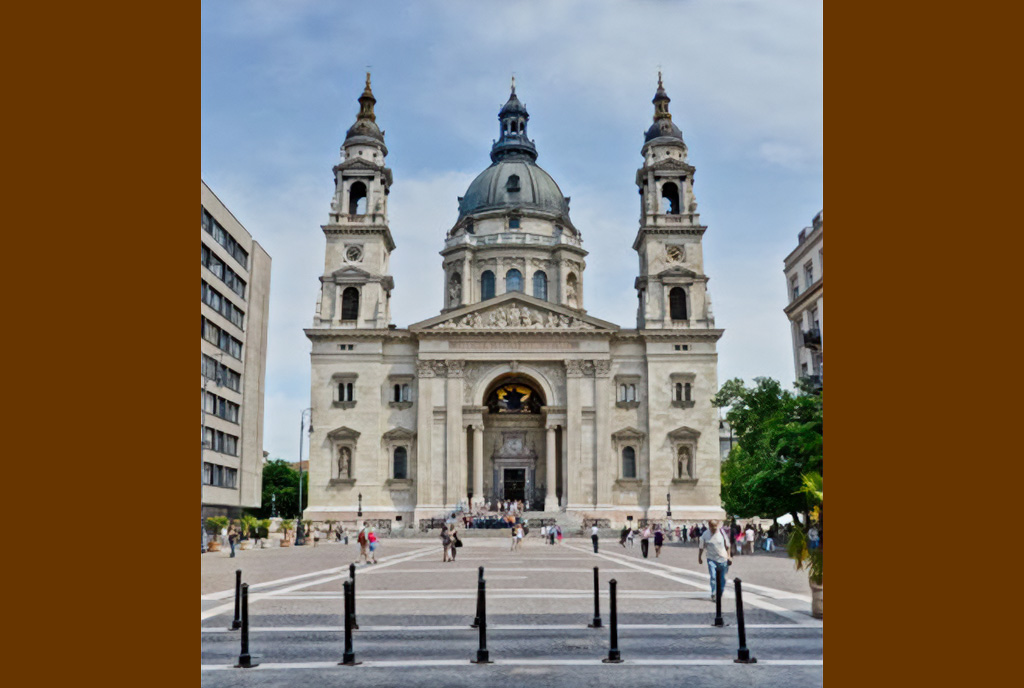
St. Stephen's Basilica
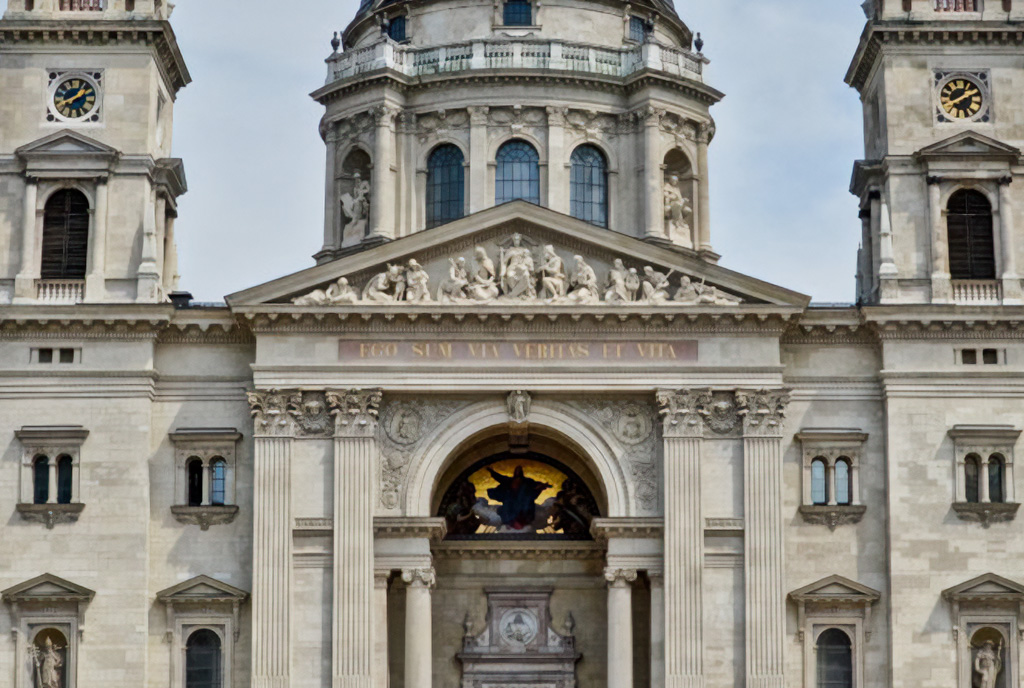
Budapest's largest church, which took even longer to build than Parliament (a full 50 years), finally opened in 1906. During construction the dome collapsed, and two of the three lead architects died.
St. Stephen's Basilica is home to a mummified hand, known as the "Holy Right Hand," belonging to Hungary's founding king, Saint Stephen (Istvan). The dome is the same height as Parliament: current law forbids building anything taller, so Budapest won't be getting its own version of London's Shard any time soon.
Entry to the church is free, though climbing to the viewing platform that rings the 96-meter dome costs 500 forints ($2.30) (closed from November to the end of March).
St. Stephen's Basilica, St. Stephen's Square 1, 1051 Budapest
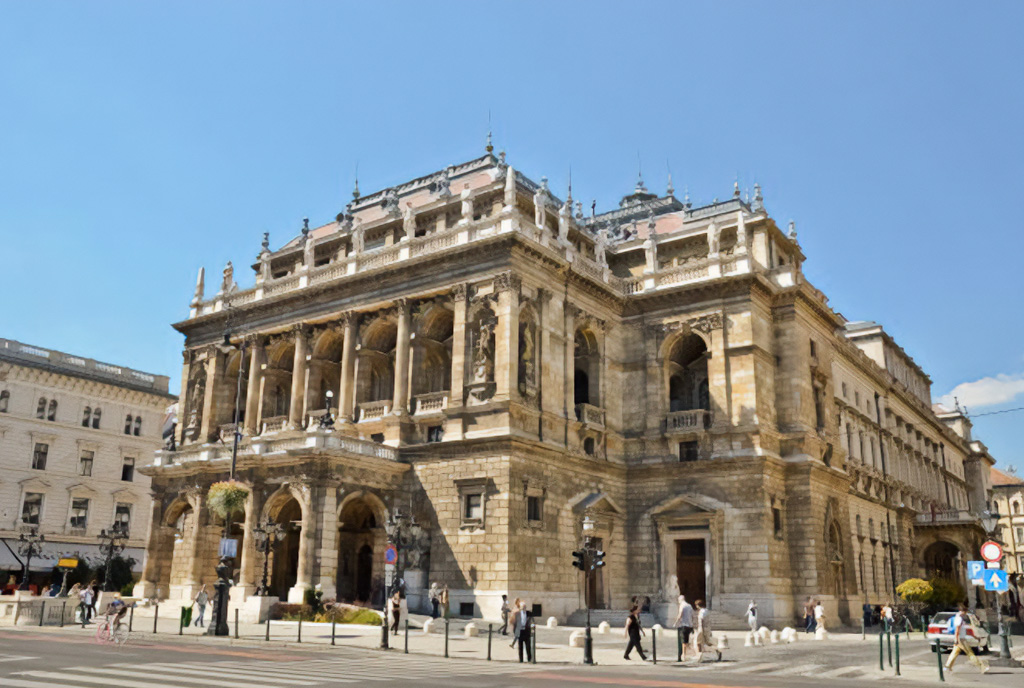
The Hungarian State Opera House
Budapest has seen plenty of architectural rivalry.
The Austro-Hungarian emperor Franz Joseph approved (and partly paid for) the construction of an opera house in the city, on the condition that it be no larger than the one in Vienna.
It may have been smaller, but it was far more lavish. According to legend, the emperor's reaction when he saw it at the grand opening in 1884 was: "These Hungarians!" You can tour this richly decorated building, or, better still, experience it during an opera or ballet performance.
The Opera House stands on Andrassy Avenue (itself a World Heritage Site), Budapest's main boulevard, lined with upscale shops and other magnificent buildings.
Hungarian State Opera House, Andrassy Avenue 22, 1061 Budapest; +36 1 814-7100
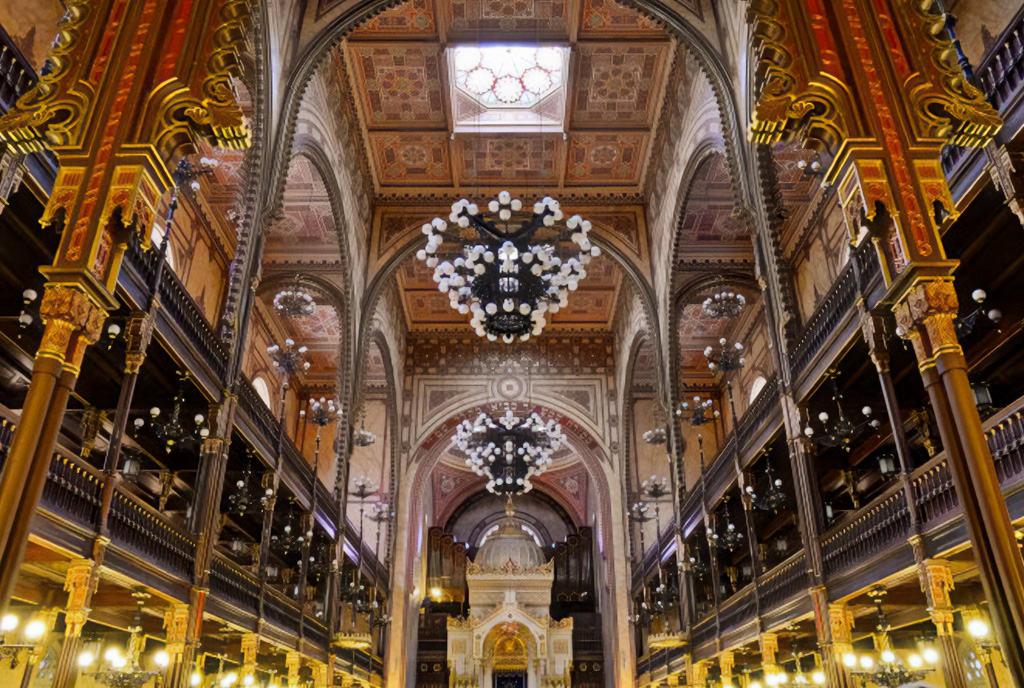
The Dohany Street Synagogue
Also known as the Great Synagogue, it is one of the largest Jewish temples in the world. Consecrated in 1859, the Moorish-style building is the center of Neolog Judaism, a moderately reformed branch of the religion.
The complex includes a museum and, in the inner courtyard, a Holocaust memorial in the form of a weeping willow with the names of the dead and missing inscribed on its leaves. An estimated 565,000 Hungarian Jews were killed in the Second World War, out of a prewar population of more than 800,000.
Dohany Street Synagogue, Dohany Street 2, 1074 Budapest; +36 1 343 0420
The Szechenyi Chain Bridge
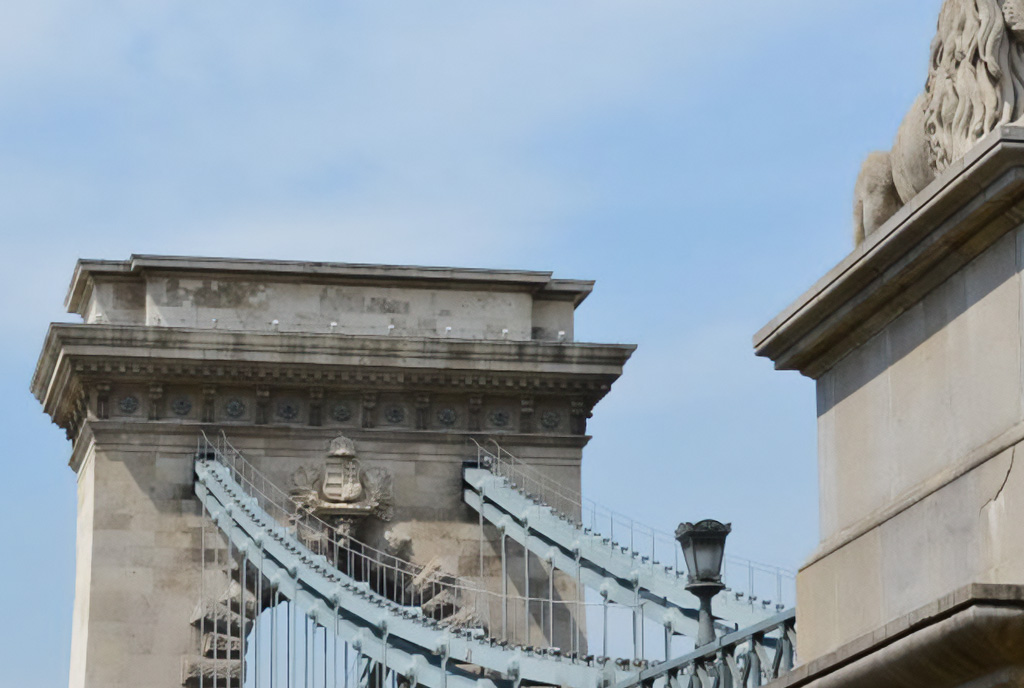
Budapest is a city of bridges, but the Szechenyi Chain Bridge (Szechenyi lanchid) is the most important of them all. In 1849 it became the first permanent bridge to connect Buda and Pest.
Commissioned by the Hungarian count it's named after, the 375-meter suspension bridge was designed by an English engineer and built under the supervision of a Scotsman. Like all of Budapest's bridges, the original was blown up during the siege of the city in the Second World War. A similar replacement opened to traffic in 1947.
The bridge is especially striking at night, when it's fully lit.
The Szechenyi Chain Bridge crosses the Danube between Szechenyi Square on the Pest side and Adam Clark Square in Buda.
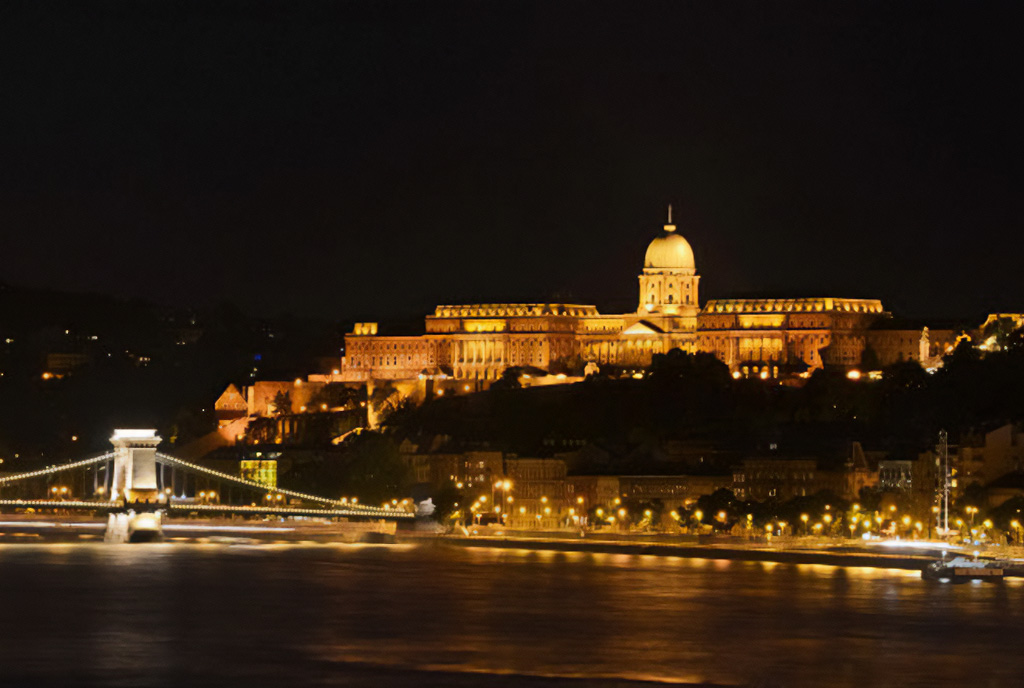
The Royal Palace
The Castle District, another World Heritage Site (why not just declare the whole city a World Heritage Site?), dominates the Buda skyline.
Although there's no actual castle here, the Royal Palace rising at the southern end is magnificent. Serving as a royal residence from the 1300s until the end of the Hungarian monarchy in the early 20th century, it was rebuilt again and again after countless sieges and wars.
Today it houses the Budapest History Museum, the Hungarian National Gallery, and the Szechenyi National Library. Like the Szechenyi Bridge, the palace looks especially enchanting each evening when the lights come on.
Royal Palace, St. George's Square 2, 1014 Budapest; +36 1 224 3700
The Fisherman's Bastion
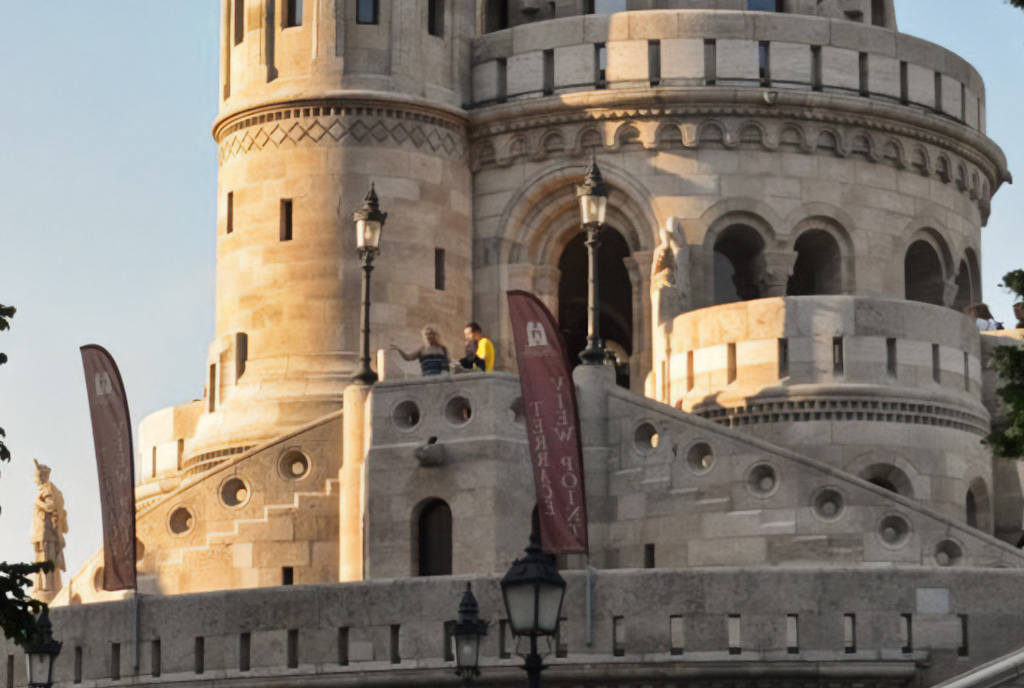
Named for the fishermen's guild responsible for defending this stretch of the medieval fortifications, it's less a building than an ornate wall.
What you see today was built between 1895 and 1902 on the site of a former castle wall and designed to blend with the neighboring Matthias Church. The bastion's seven turrets represent the seven Hungarian tribes.
They weren't designed to keep people out, but to provide a viewing platform: the panorama they offer over the river (both embankments are also a World Heritage Site) is breathtaking.
Fisherman's Bastion, Hess Andras Square 1-3, 1014 Budapest
The National Theatre
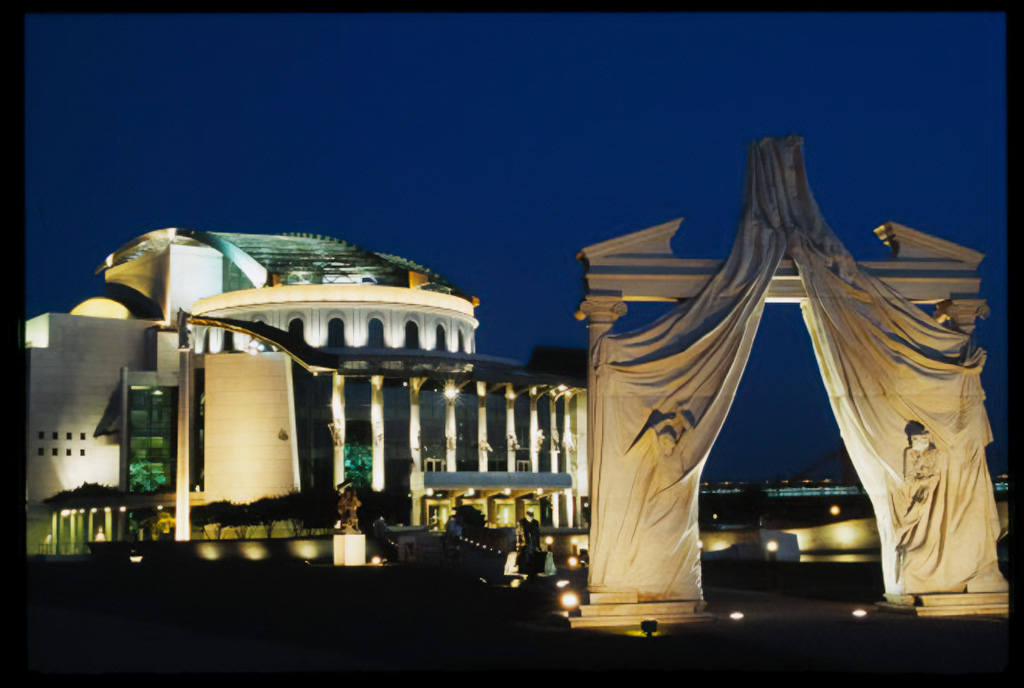
Proof that not every building in Budapest worth a look has to be more than 100 years old, the National Theatre opened on the Pest embankment, next to the Palace of Arts, in 2002. Its eclectic modern design nods to many of the city's historic architectural styles, but also features plenty of glass.
The public park that surrounds the theatre has sculpted entrance gates shaped like theatrical curtains, statues of popular Hungarian actors in their most famous roles scattered around, and a maze, in case you're not yet tired of walking.
National Theatre, Bajor Gizi Park 1, 1095 Budapest; +36 1 476-6868