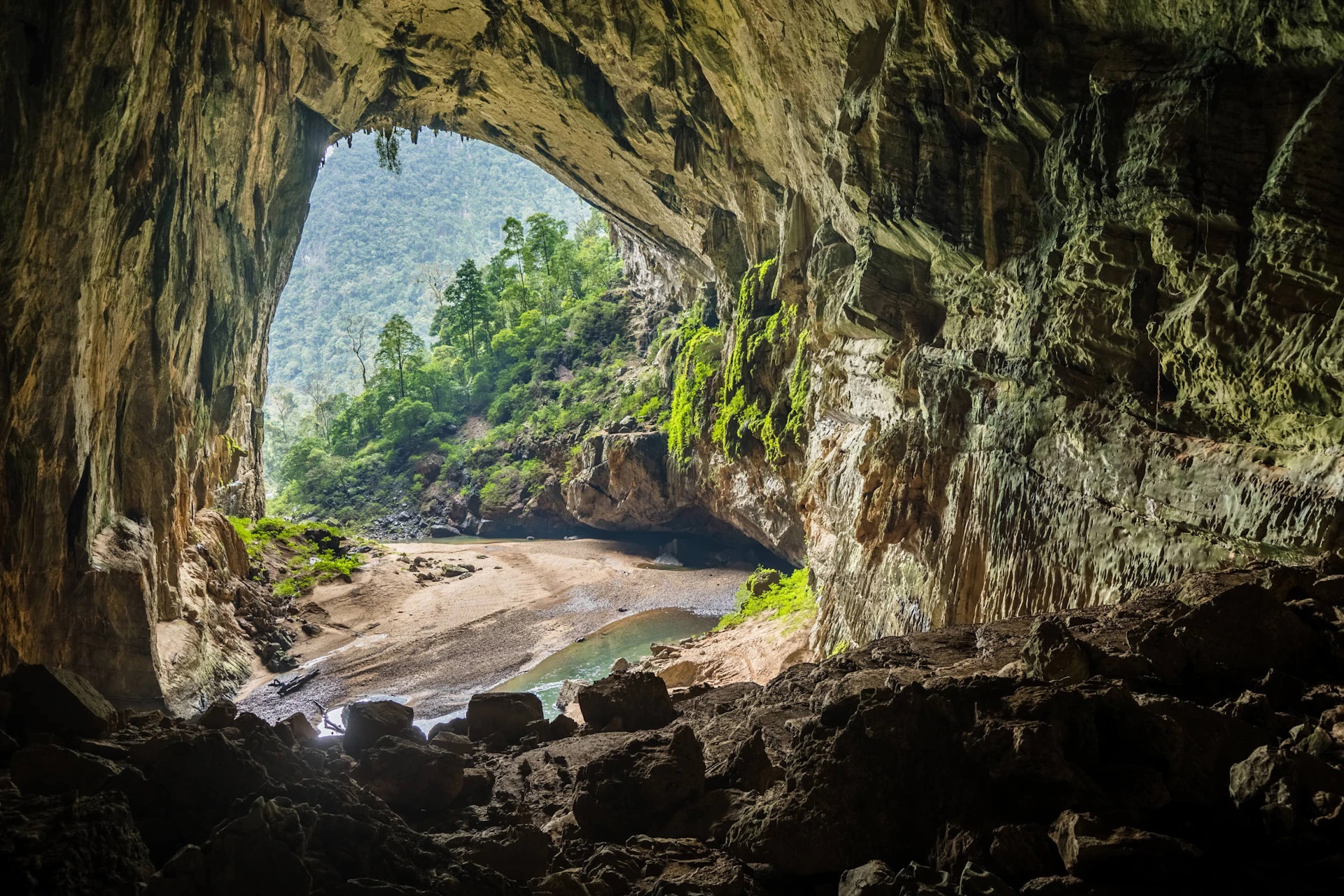


Thanks to discoveries made during a recent expedition in Vietnam, Son Doong, the world's largest cave, appears to be even bigger than previously believed.
Last month a trio of British divers, the same ones who helped rescue the youth football team trapped in Thailand in 2018, set off for Phong Nha-Ke Bang National Park in the jungle-covered province of Quang Binh in central Vietnam to explore its caves.
During a groundbreaking dive, they discovered an underwater tunnel connecting Son Doong (which means mountain river cave) to another vast cave called Hang Thung.
Partner links: booking through them supports the blog at no extra cost to you.
Son Doong currently has a volume of 38.5 million cubic metres (roughly 1.35 billion cubic feet). Once it is officially joined with Thung Cave, its volume will grow by another 1.6 million cubic metres.
"It's a bit like someone finding a boulder on the summit of Everest and making it another 1,000 metres taller," says Howard Limbert, technical adviser to the Quang Binh based Oxalis adventure tour company and one of the caving experts who helped organize the dive.
He explains: "Any cave in the world could comfortably fit inside Song Dong once it's connected. It's simply staggering in scale."
Diving in Son Doong
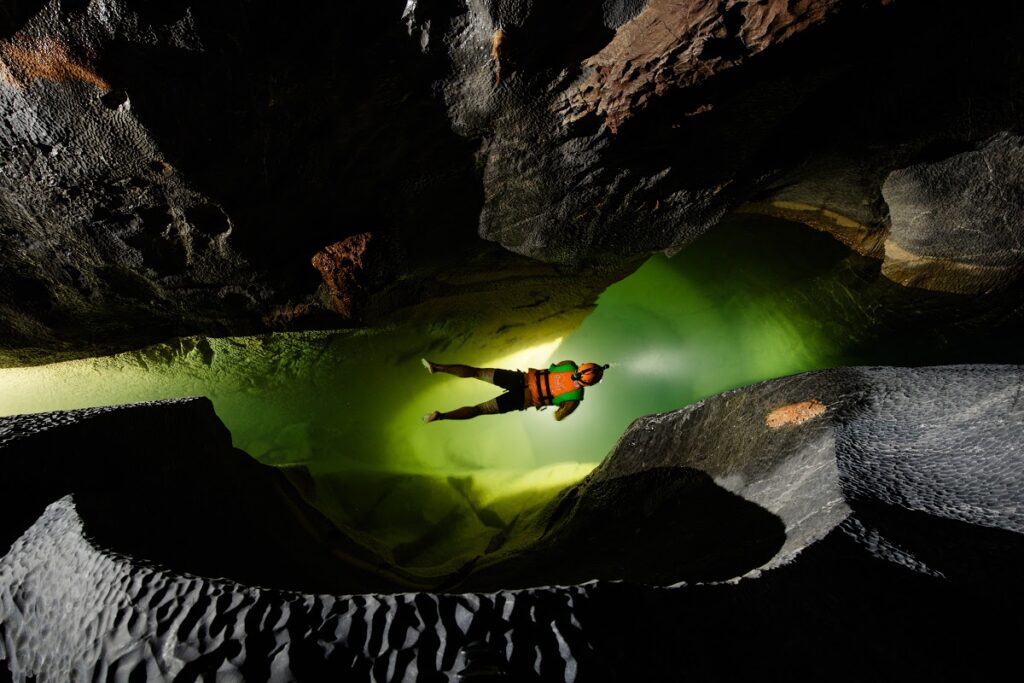
Oxalis, the only company licensed to run dives in Son Doong Cave, invited the British divers, Jason Mallinson, Rick Stanton and Chris Jewell, to visit the cave after the Thai rescue mission.
"The divers did an incredible job rescuing the children in Thailand. We invited them on a trip to Son Doong to thank them for their tremendous work," says Limbert.
"They wanted to do something interesting during the trip, and we came up with the idea of diving in Son Doong, something that had never been done before."
According to Limbert, the Oxalis team already knew that the water from Son Doong connects to Thung Cave, thanks to dye tracing, but no one had ever dived into these underground rivers.
During the expedition, the divers managed to reach a depth of about 78 metres on an air dive (oxygen and nitrogen), after which they turned back.
"When the divers reached 78 metres, they measured the depth using a fishing line and a lead weight. So they believe the passage drops to a depth of 120 metres and continues for about 1 km," Limbert explains.
The team hadn't expected the tunnels to be so deep, since other caves in the area are fairly shallow.
"Now that we know how deep they are, next time we'll bring special gases [an oxygen-helium mix] so we can do longer and deeper dives," Limbert adds.
The divers plan to return next April. It's the best time of year for diving, as the water level is relatively low and visibility is better than usual, though still only 1 to 2 metres.
"I find it incredible that something as significant as the world's largest cave is still being explored and better understood," Limbert says.
"Until 2009 no one had set foot in Son Doong... And this latest discovery shows there's still so much fascinating to learn about our planet. It's really exciting."
Discovering the Cave
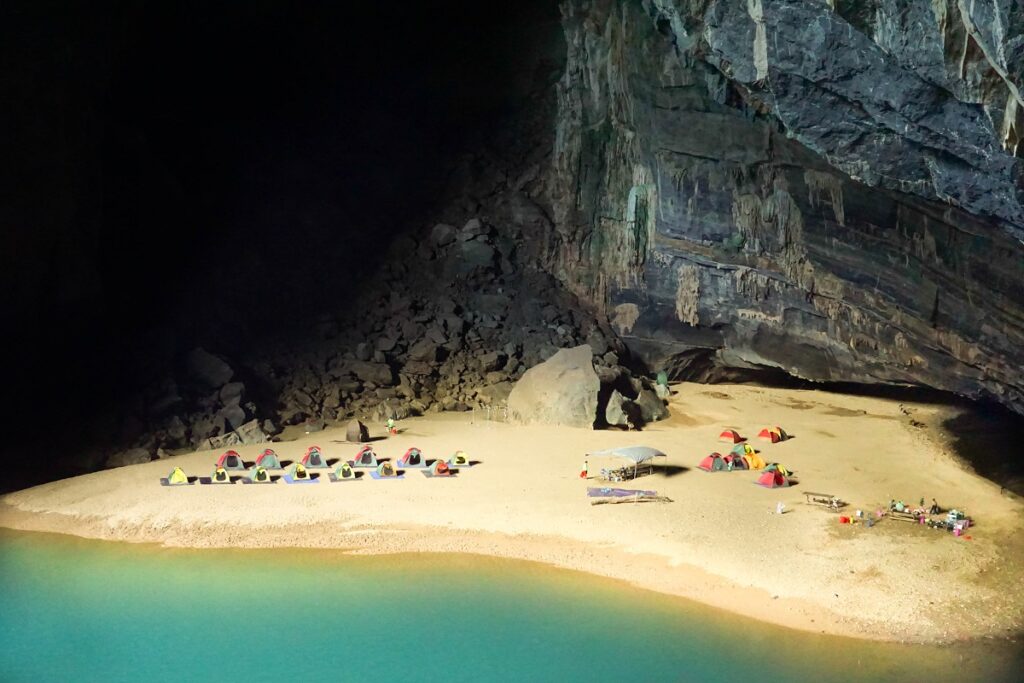
One of nature's most precious wonders, Son Doong was stumbled upon by chance by a Vietnamese local, Ho Khanh, in 1990.
"While hunting in the jungle, Khanh came across an opening. He felt a gust of wind and heard the sound of a river inside... But after he left, he couldn't find it again because it was hidden by leaves," recounts Limbert, who was part of the British Cave Research Association (BCRA) team that first entered Son Doong.
"Khanh spent many years trying to rediscover the mouth of this cave, and finally, in 2009, he led us there. We knew right away that it was hugely important."
After the BCRA explored and measured the cave, in 2010 they declared it the largest in the world, so vast that Oxalis estimates it could hold a New York City block lined with 40-story skyscrapers.
Inside the enormous limestone cave there are various microclimates and diverse landscapes, including two jungles, made possible by dolines (openings formed by collapsed ceilings) that let sunlight pour in.
"So far we've only explored 30% of Phong Nha-Ke Bang National Park, so there's still a lot left to discover," says Limbert.
Seeing It for Yourself
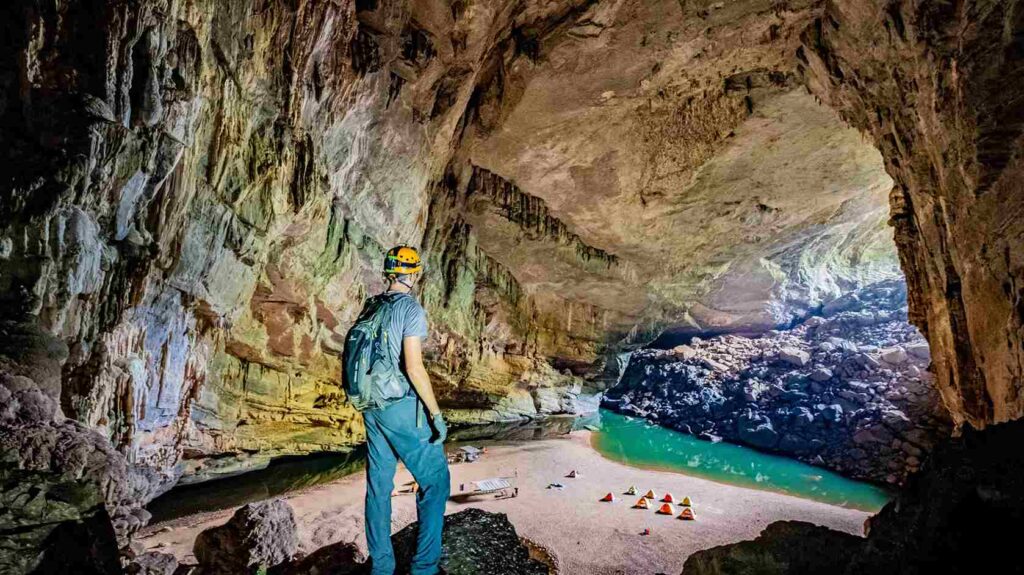
Opened to tourists in 2013, the three-million-year-old river cave is without a doubt one of the most beautiful places on Earth.
"People love this place because they've never done anything like it before," says Limbert. "There are obviously stunning stalactites and the world's tallest stalagmites (up to 80 m high). They're absolutely breathtaking."
To make the journey, travelers have to book a guided tour through Oxalis.
The four-day tour includes 25 km (about 15.5 miles) of jungle trails and 9 km inside the caves: from river crossings to jungle trekking and a climb up the 80-metre "Great Vietnam Wall" using a harness.
"It's definitely not just a stroll. There are plenty of river crossings, gorgeous jungle, mountains and cliffs, plus loads of wildlife... such as birds and monkeys that are endemic to the area," says Limbert. "Many people think the scenery here is every bit as impressive as the cave itself."
It's certainly a physically demanding route, but according to Limbert it's accessible to anyone who is reasonably fit and doesn't mind getting muddy. And muddy you will get.
Into the Wild
The first 1.5 days are spent crossing Hang En Cave, the third-largest cave in the world, to reach the remote Son Doong. The next few days are devoted to exploring the otherworldly landscapes of this astonishing cave, with participants camping at a different site each night.
Limbert says that among the many vivid experiences of the trip, there's one that everyone raves about.
"In one of the passages there are beautiful 400-million-year-old fossils. We take travelers to see these fossils, and as you descend into the darkness there's a spot where you can take a swim," says Limbert.
"Everyone loves swimming in the dark inside the cave. It's a truly extraordinary experience."
Tours cost US$2,990 and run from January to August, capped at no more than 10 people at a time, with a maximum of 1,000 people a year. Each group is accompanied by a strong 27-person support team, including porters, cooks, safety assistants, guides trained by the BCRA, and cavers.
"At this point more people have summited Everest than have visited Son Doong," says Limbert. "And even those who have climbed Everest say that exploring Son Doong is something incredible, that it's the best place they've ever been in their lives."