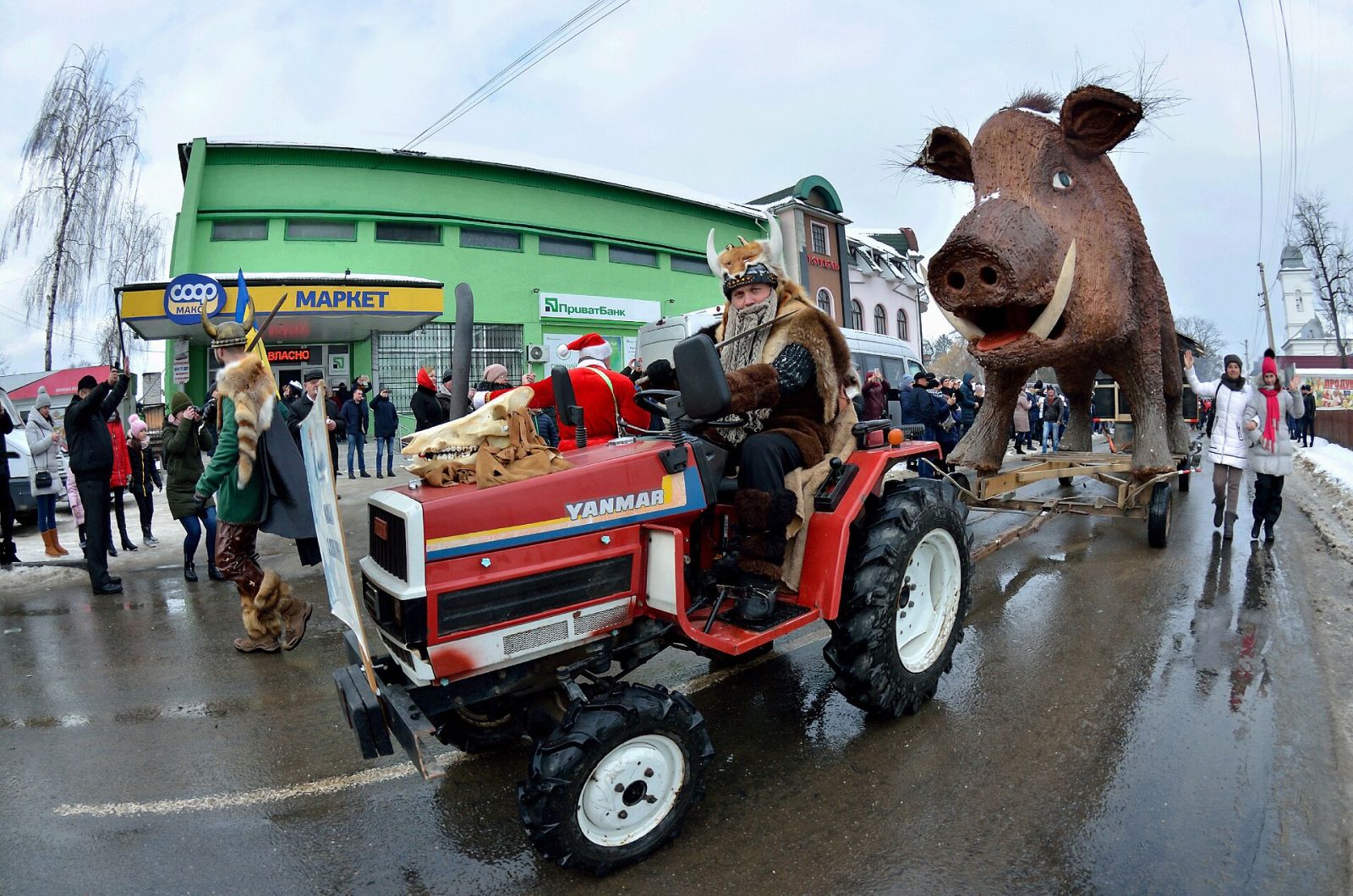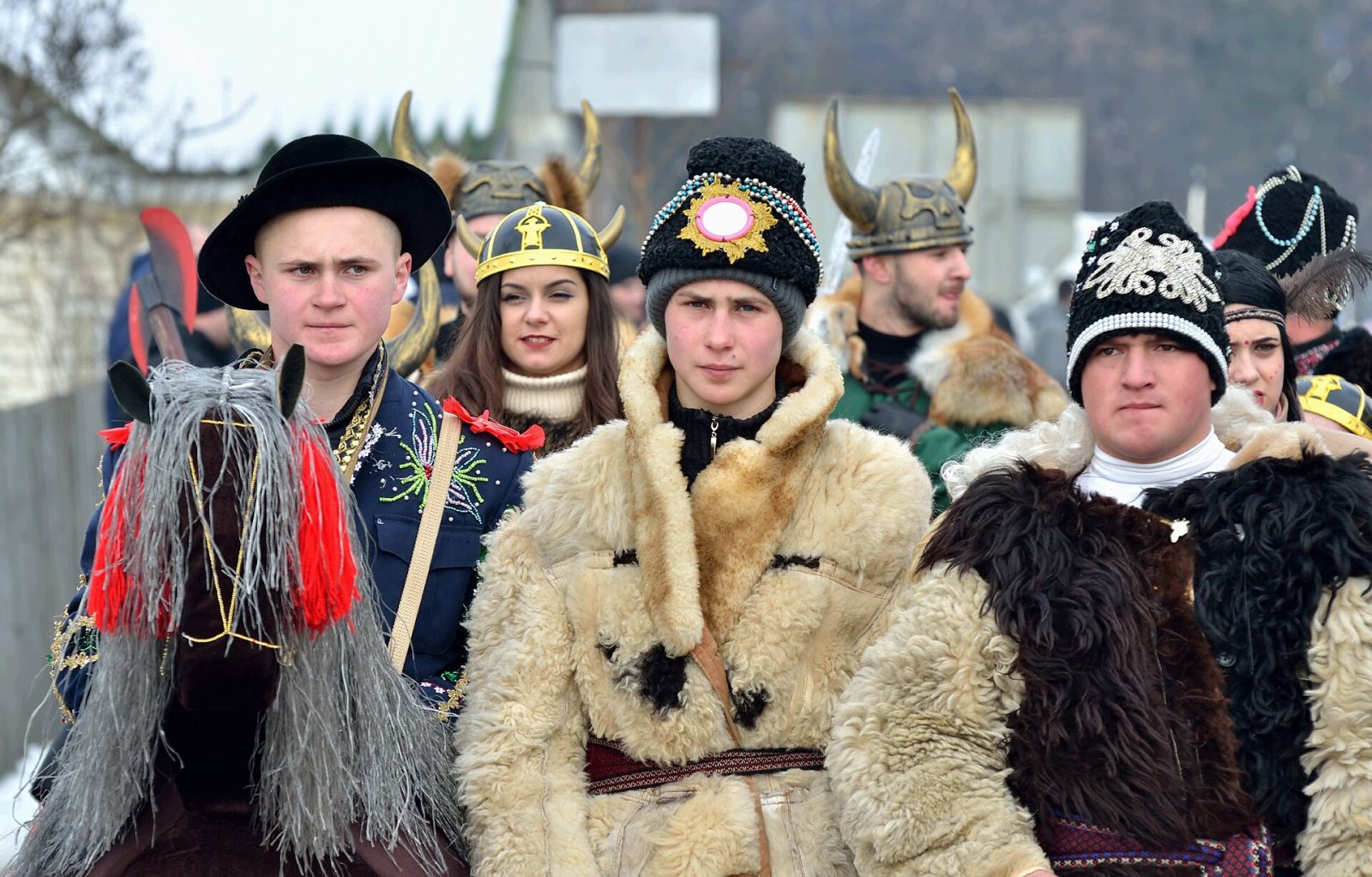


In January 2025, Krasnoilsk brought its bears back onto the streets for the first time since Russia's full-scale invasion: several dozen young people in Malanka costumes, among them bears of straw and reed weighing up to 80 kilograms, went round the settlement's hamlets with Old New Year greetings. Before the war there were hundreds of participants, and that gap says a lot about Malanka in Bukovyna today. It is alive but quieter, with different dates in different communities and rules a guest should know before the trip.
What Malanka is and why it falls on different dates
Malanka is the name for Generous Eve, the night before St Basil's Day, when bands of costumed young men go from house to house with skits, New Year carols and jokes. The name comes from St Melania, whom the church commemorates on the eve of St Basil. In Bukovyna the ritual is openly carnivalesque, and in 2022 the Bukovyna Malanka was added to Ukraine's National List of Intangible Cultural Heritage.
The dates now come with a twist. For decades Malanka was celebrated on the night of 13 to 14 January, by the old calendar. In autumn 2023 the Orthodox Church of Ukraine and the Ukrainian Greek Catholic Church moved to the Revised Julian calendar, so Generous Eve shifted to 31 December and St Basil's Day to 1 January. Some communities followed the church: in Chernivtsi young people took their Malanka out on 1 January. Others keep the familiar date. The head of Krasnoilsk explained that switching is not on the table there, because Malanka would then merge with New Year, and people want to see in the New Year at home and the Old New Year in the street. Vashkivtsi also celebrated on 13-14 January in 2025. There is no right or wrong date, only the custom of a particular village, so for the 2026/27 season look at two possible nights: 31 December 2026 and 13 January 2027.
Krasnoilsk: bears, masks and a Romanian Malanka
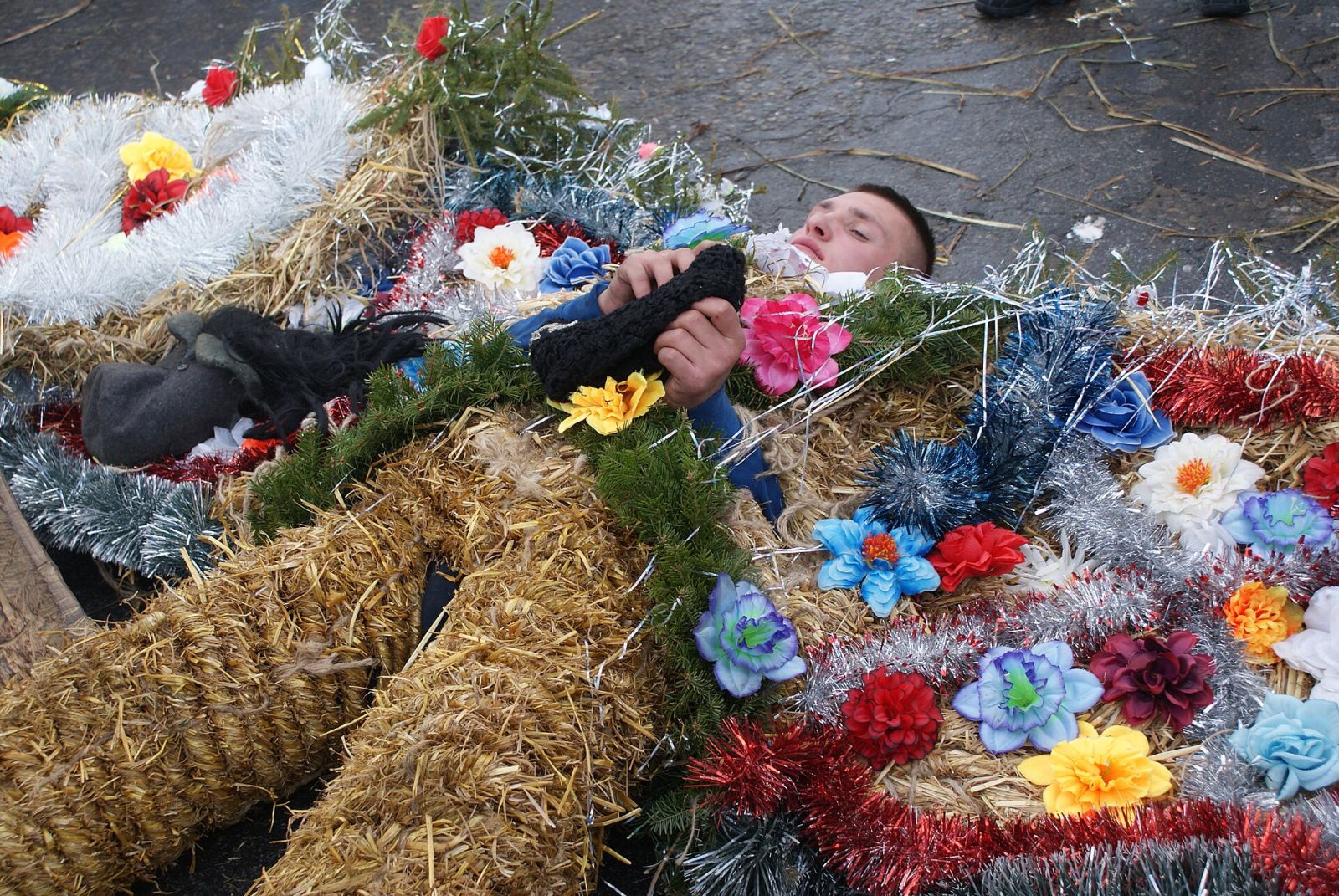
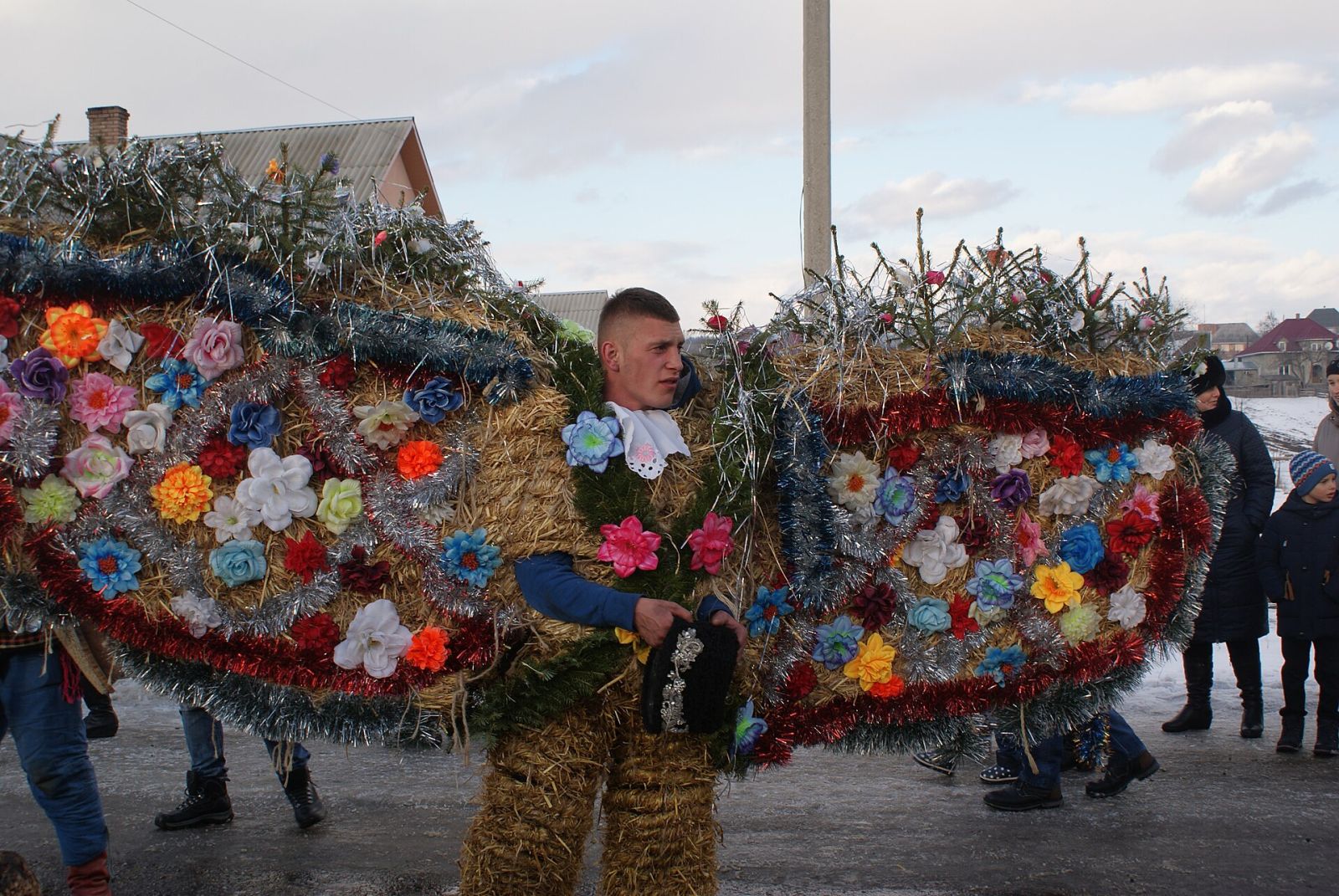
This settlement near the Romanian border, where most residents are ethnic Romanians, is seen as the capital of the Malanka carnival. Each kut, or hamlet, forms its own band, and the bands compete in costumes. Old men and old women lead the way, followed by kings and queens and riders on "horses", while the main character, the bear, differs from hamlet to hamlet. In one, the bears look like huge hearts, in another they have wings several metres long, in a third they are woven from reeds. The bear role traditionally goes to an unmarried young man, and wearing such a costume for hours on end is genuinely hard work.
The old men's masks are the most striking: frightening, made of fur, horns and paint, mostly by hand. On the morning of 13 January small children go round the houses, in the evening the adult bands gather, and the celebration runs through the night and the next day. There are far fewer participants now, because many adults work abroad, so the bands are made up mostly of teenagers and young people.
Vashkivtsi: the Pereberia instead of a festival
In Vashkivtsi, in the Vyzhnytsia district, the celebration is called Pereberia, from a word meaning to dress up. Before the war it was a big carnival with a street procession and a Malanka play on the square. After 2022 the official festival was cancelled, because the town authorities considered a loud celebration inappropriate during the war. It came back in January 2025, when about ten groups took to the town centre in front of several hundred spectators. The bands carolled, danced and played out scenes with the audience, then headed to the pond for the "kupanka", where anyone standing too close gets splashed. Whether the celebration will happen in January 2027, and in what form, the community usually announces in December.
Chernivtsi: from Malanka Fest to a Malanka for donations
Before the full-scale war, Chernivtsi held Malanka Fest every January, with bands from villages across the region parading from the Philharmonic through Theatre Square to Central Square. There are no mass parades now, but a new format has appeared. A youth band with bears, devils and a shandar, the band's leader, walks through the city centre on 1 January singing carols and raising money for the army: in 2025 it was for a drone for a brigade. The city works well as a base, with Vashkivtsi and Krasnoilsk about an hour's drive away. What to see in Chernivtsi itself between Malankas is in our guide Chernivtsi: what to see.
Who is who in a Malanka band
Traditionally only men take part, so Malanka herself is played by a young man in women's clothes. She is a lively, clumsy housewife who "helps" with the cleaning and turns the house upside down while the hosts laugh and offer treats. Beside her is Vasyl, her partner, sometimes a Cossack. The Old Man and Old Woman bicker, make up and pester the audience. The bear dances, "dies" and comes back to life, a storyline that echoes nature renewing itself at the turn of the year. Modern masks have joined in too: gentlemen, doctors, police officers and, in satirical sketches, the occasional politician.
A word about the ethnic masks. Old Malanka troupes include characters still called "Jews" and "Gypsies" in the villages, using older local words. They grew out of life in multi-ethnic Bukovyna, where Ukrainians, Romanians, Jews, Roma, Germans and Poles lived side by side, and they portray traders, musicians and fortune-tellers. To modern ears the names themselves sound offensive, so many Ukrainian media put them in quotation marks or write "Roma" and "Jews" instead. Guests are best off treating them as part of a historical carnival and not carrying those jokes beyond the celebration.
How to behave as a guest at Malanka
- Ask before taking close-ups of unmasked faces, especially children's.
- Expect to be drawn in: a devil may smear soot on your cheek, a bear may hug you, and the "kupanka" may soak you. It is part of the game, and taking offence is not done.
- Do not touch bear costumes or masks without an invitation; they take months to make.
- Carry small cash: bands that come into a yard are thanked with money or food.
- Wear warm shoes with a good grip, because January in the villages means snow, ice or mud.
The main caveat is safety. Under martial law, mass events are restricted, communities announce the format late, and the regional curfew is still in force, so plan your return to where you are staying in advance and check the decisions of the Chernivtsi Regional Military Administration. Install an air-raid alert app on your phone and find out where the nearest shelter is. If the siren sounds, the celebration stops, and waiting for the all-clear in a shelter alongside the band is perfectly normal here.
Table: where to see Malanka in Bukovyna
| Place | When it is celebrated | Format in recent years | What to see | Tip |
|---|---|---|---|---|
| Krasnoilsk | 13-14 January, old calendar | bands going round the hamlets, no big performances | heart-shaped and winged bears, old men's masks | stay in Storozhynets or Chernivtsi |
| Vashkivtsi | 13-14 January in 2025 | Pereberia in the town centre, about ten groups | procession, scenes with spectators, "kupanka" by the pond | watch for the community's announcement in December |
| Chernivtsi | 1 January | youth Malanka for donations | a band with bears and a shandar in the centre | convenient base for village trips |
| Other Bukovyna villages | 31 December or 13 January, depending on the community | bands going house to house | local costumes and carols | ask locals which date the village keeps |
We checked the format of the celebrations against community announcements and regional media in late October 2026, and communities will make final decisions for the 2026/27 season closer to the holidays. To combine Malanka with Christmas, other Ukrainian ideas for a winter trip are in our piece on where to celebrate Christmas in Ukraine. And go to Malanka with respect for the hosts: they are reviving the celebration for their children, and a guest who understands that gets the best spot next to the bear.