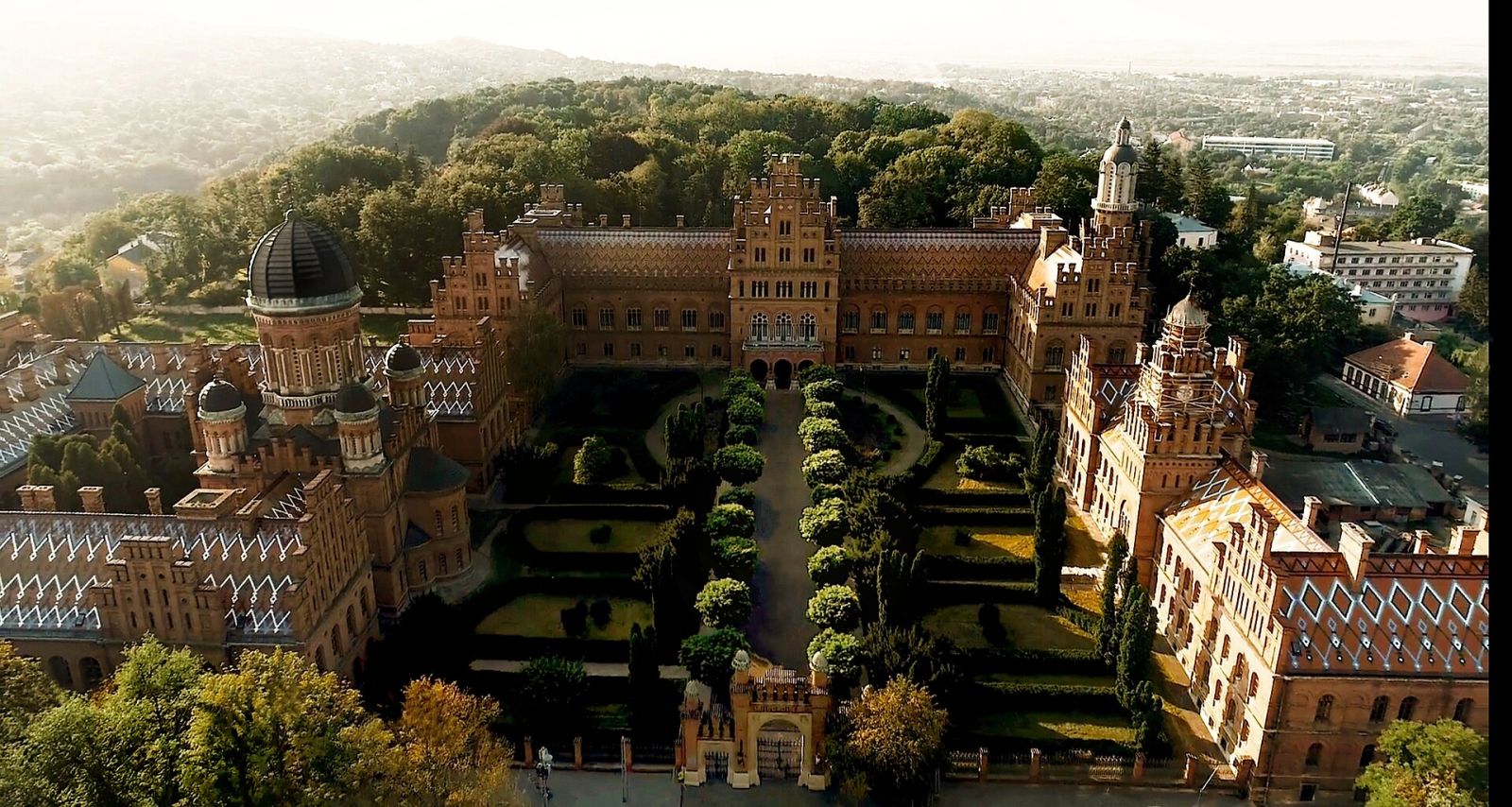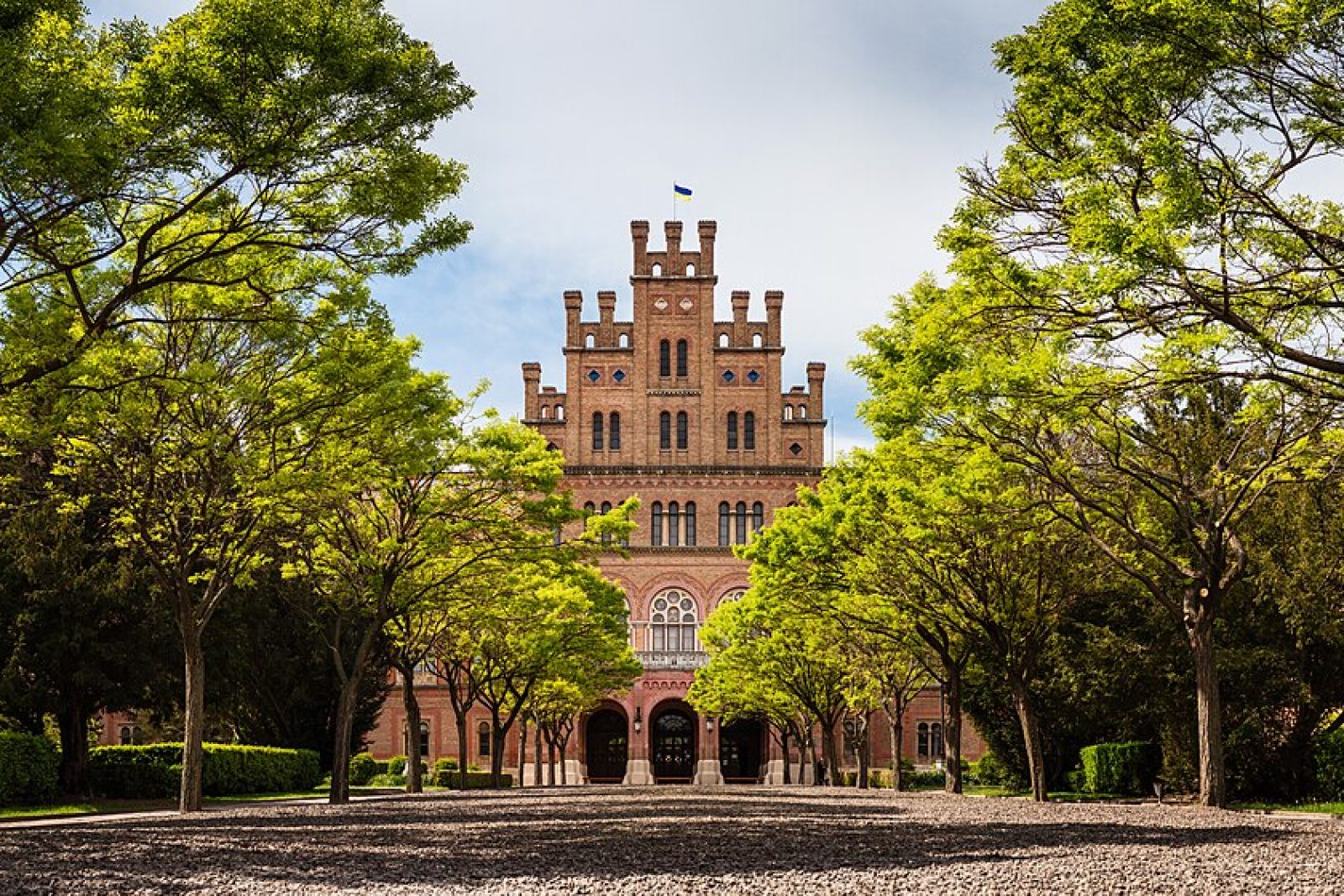


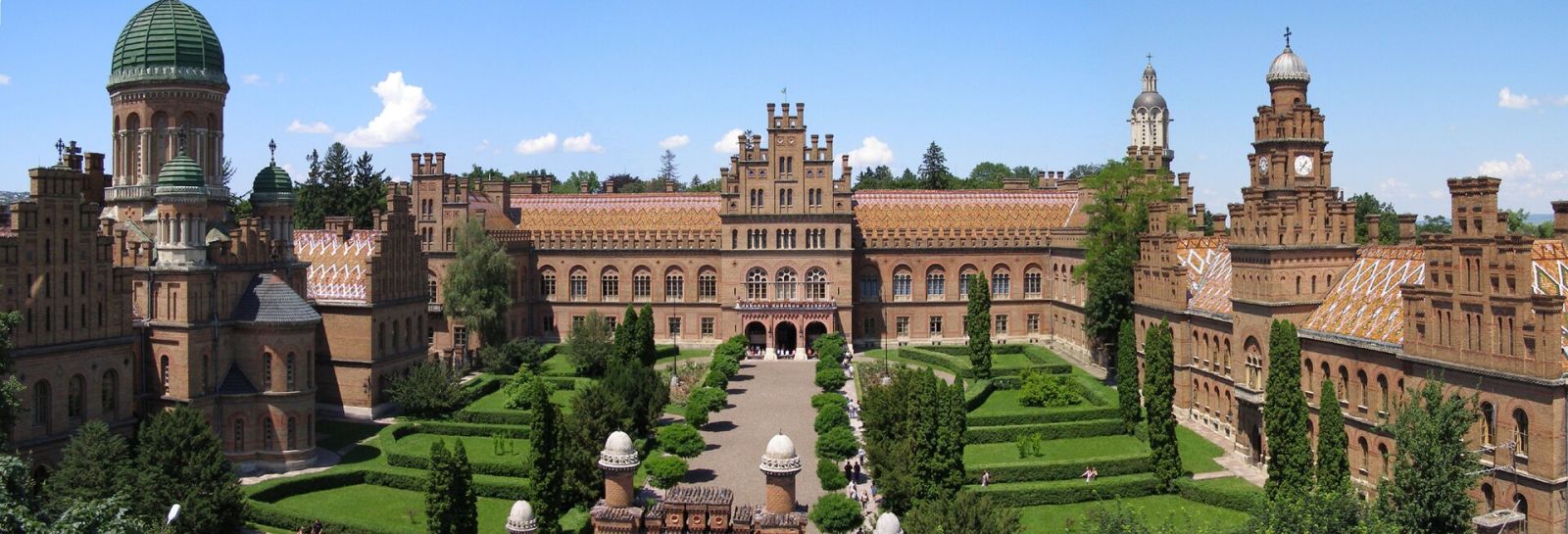
The main reason to come stands on a hill above the centre and takes up a whole university quarter: the Residence of Bukovinian and Dalmatian Metropolitans, a UNESCO World Heritage Site since 2011 and today the main buildings of Chernivtsi National University. If you are deciding what to see in Chernivtsi in a single day, start right here, then walk down into the centre, where a handful of neighbouring streets hold almost the entire history of the city.
Chernivtsi is compact. The historic core can be covered on foot in half a day without rushing, and that is a real advantage over bigger cities where half your time goes on getting around. Below is the practical part: what is essential, how long to allow, how to get there and in what order to walk so you don't double back.
The Metropolitans' Residence: why it is the city's main sight
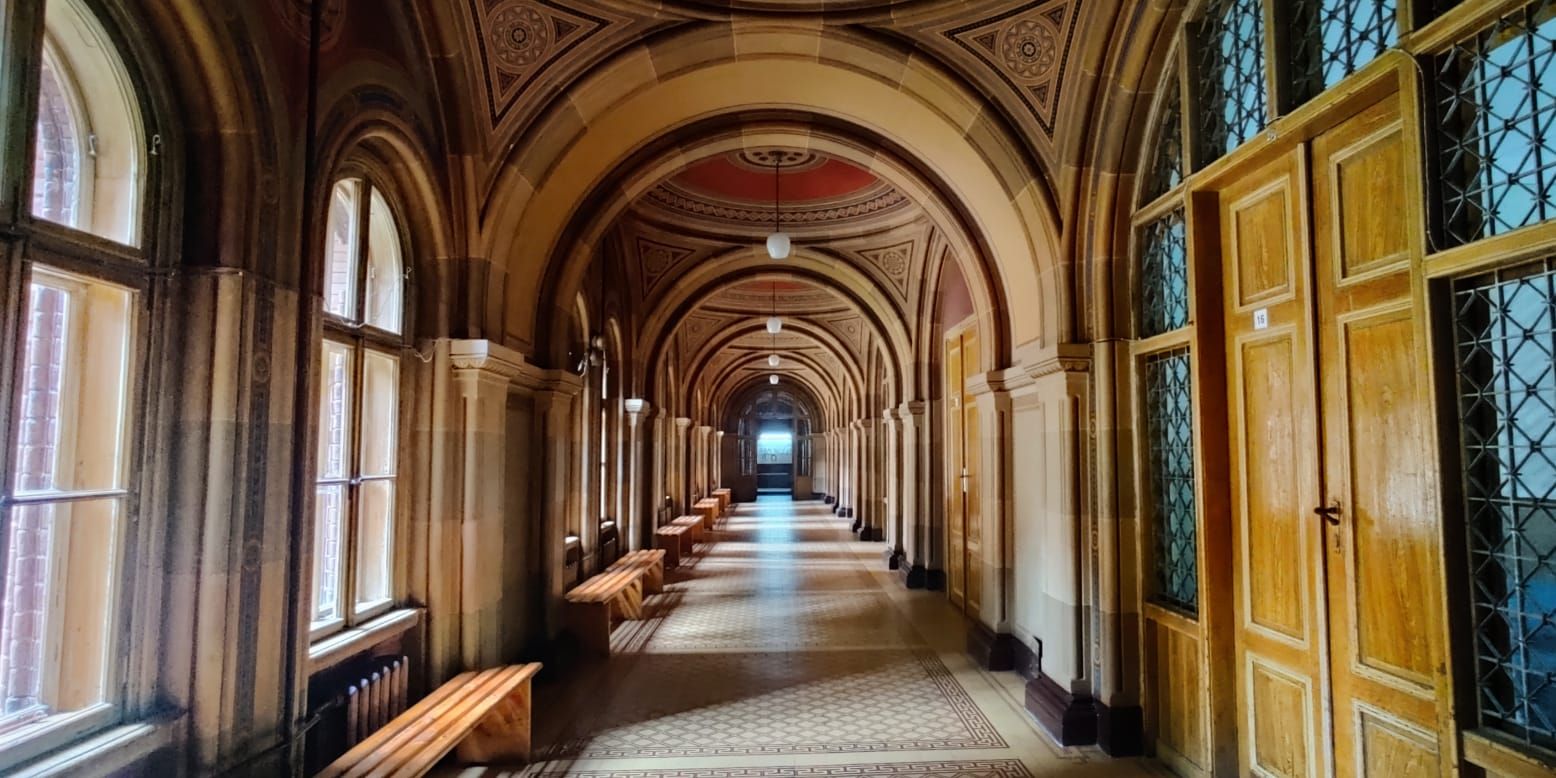
The Residence was built between 1864 and 1882 to a design by the Czech architect Josef Hlávka. It is not a single palace but a whole ensemble of three wings around an inner courtyard: the metropolitan's building, the seminary with its church, and the former monastery block. What impresses most are the roofs, laid in coloured glazed tiles in geometric patterns, and the red brickwork that blends Byzantine, Moorish and Gothic motifs at once. Ukraine has nothing else this eclectic yet this coherent, which is exactly why it made the UNESCO list.
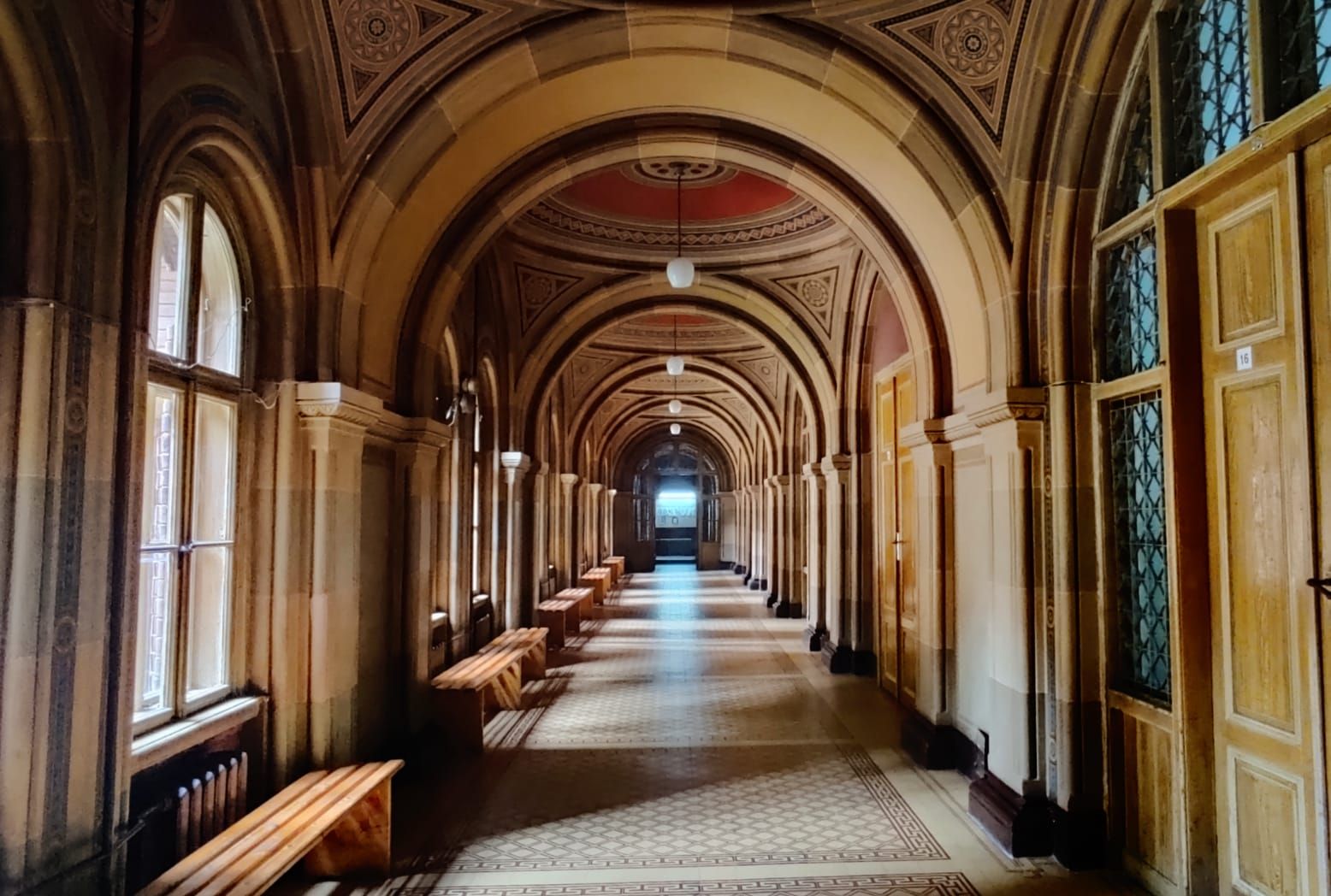
Students study here today, so part of the complex is a working campus rather than a museum. The courtyard is usually open to walk into freely, but full access to the ceremonial halls, the Marble and the Blue rooms, and the Seminary Church comes only with a guided tour. Tour times and ticket prices shift with the season and with whether classes are running in a given wing, so check the current schedule before your trip on the university website. Allow at least ninety minutes, or a full two hours with a tour.
One honest note: the best shots of the roofs are taken not from inside the courtyard but from a little distance, coming up Universytetska Street. And in dull weather the red brick looks flat, so if you have a choice, come in sun or towards evening, when the facade warms up in colour.
Central Square and the Town Hall: where the trumpeter plays at noon
Walking down from the Residence brings you to Central Square with the Town Hall. It was raised between 1843 and 1847 in a classicist style, with a tall tower you can climb on foot for a panorama of the old town's roofs. The main local tradition is right here: every day at noon a trumpeter steps onto the tower balcony and plays a Bukovinian melody, most often "Marichka." A small thing, but worth timing your visit around, because this is one of those rare cases where the tourist ritual is not staged but part of the city's daily life.
The square itself is a handy starting point. The main pedestrian routes fan out from here, cafes cluster around it, and it is the easiest place to orient yourself before deciding where to head next.
Kobylianska Street: the pedestrian heart of "Little Vienna"
The city's main promenade is named after the writer Olha Kobylianska. In Austrian times it was Herrengasse and counted as the cleanest and most elegant street in town. People still like to tell the legend that the cobbles here were once washed with soap and swept with roses on holidays. There is no way to verify that now, but the fact that the story is still told says a lot about the mood of the place.
Today it is a pedestrian zone lined with buildings from the turn of the twentieth century: balconies with stucco, shopfronts, cafes with terraces. You don't need a separate "sight to tick off" here, the street itself is the attraction. Walk it slowly, looking at the facades and the details above the ground floors, where tourists rarely raise their eyes. Set aside a spare half hour for coffee, because hurrying kills the whole point of this quarter.
Turkish Square, the Armenian church and Secession: what else to fit in
Not far from the centre lies Turkish Square, one of the oldest in the city, with distinctive buildings and a well around which trade once thrived. The name nods to old trading links, and it is a spot to drop by for the atmosphere of old Chernivtsi rather than for a single monument.
Worth a stop of its own is the Armenian church of Saints Peter and Paul, another Hlávka work. From outside it is a slender neo-Gothic structure with a tall tower, and inside it now houses the Hall of Organ and Chamber Music. If you can catch a concert, you hear an organ in a space first built as a church, a combination that draws even those generally indifferent to classical music. Check the concert schedule before your trip, it changes week to week.
For architecture buffs there is one more layer: the Chernivtsi Secession, the local take on Viennese Art Nouveau. Scattered across the centre are apartment houses and villas with flowing lines, plant ornament and asymmetric facades. Look out in particular for St Nicholas Church with its spiralling twisted domes, which locals nicknamed the "drunken church," and for the Olha Kobylianska Drama Theatre on Theatre Square, built by the Viennese firm Fellner and Helmer, the same one behind the opera houses of Lviv and Odesa.
| Place | Why it matters | Time to allow |
|---|---|---|
| Metropolitans' Residence (university) | UNESCO site, Hlávka's ensemble, coloured roofs | 1.5–2 hours |
| Central Square and Town Hall | Panorama from the tower, trumpeter at noon | 30–40 minutes |
| Kobylianska Street | Pedestrian heart of "Little Vienna" | An hour with coffee |
| Turkish Square | One of the oldest squares, old buildings | 20–30 minutes |
| Armenian church (organ hall) | Hlávka's neo-Gothic, organ concerts | An hour, more with a concert |
| "Drunken church" and theatre | Secession, twisted domes, Fellner and Helmer theatre | In passing along the way |
Why is Chernivtsi called "Little Vienna"?
Until 1918 the city was the capital of Bukovina within Austria-Hungary, and that is where so much of the Viennese feel comes from. The centre was built up in the same decades and the same styles as the imperial capital: historicism, then Secession. Hence the nickname. The comparison with Vienna flatters the scale a little, but it captures the main thing: Chernivtsi is less about individual monuments than about a continuous urban fabric, where nearly every building in the centre has a face of its own. That is rare for Ukraine, where historic streetscapes more often have to be picked out from among later infill.
How do you get to Chernivtsi?
The city sits in the far south-west of the country, close to the borders with Romania and Moldova, which makes the logistics less than straightforward. The airport is currently closed because of Ukraine's shut airspace, so the realistic options are train and bus. Check the current transport situation before your trip, as it keeps changing.
- By train. From Kyiv there are usually overnight services, and the journey takes roughly 12 to 15 hours depending on the route. The upside is that a night on the train saves you a day.
- From Lviv. The nearest major transport hub, a few hours away by train or bus, which lets Chernivtsi slot neatly into a western Ukraine itinerary.
- Paired with Kamianets-Podilskyi. The famous fortress town is close by, and many travellers link the two into one multi-day trip.
A one-day route you can actually manage
The logic is simple: the high point first, then a downhill walk into the centre. Begin at the Metropolitans' Residence in the morning, while there are fewer people and the light on the brick is better. Then head down to Central Square, timing it to arrive near noon and catch the trumpeter on the Town Hall. From there go to Kobylianska Street, break for coffee, then loop in Turkish Square and the Armenian church. If an evening is left, it fits an organ concert perfectly, or simply a slow walk through the centre once the facades are lit.
What to cut if time is really short: in half a day you can realistically do the Residence, the Town Hall and Kobylianska, leaving the rest for next time. And if you have two days, add a trip to Kamianets-Podilskyi or an unhurried wander through the courtyards and lanes of the centre, because that is where Chernivtsi opens up most fully, not on the headline sights. First-timers will be well served by the basic top-to-bottom loop, which covers the essence without any fuss.