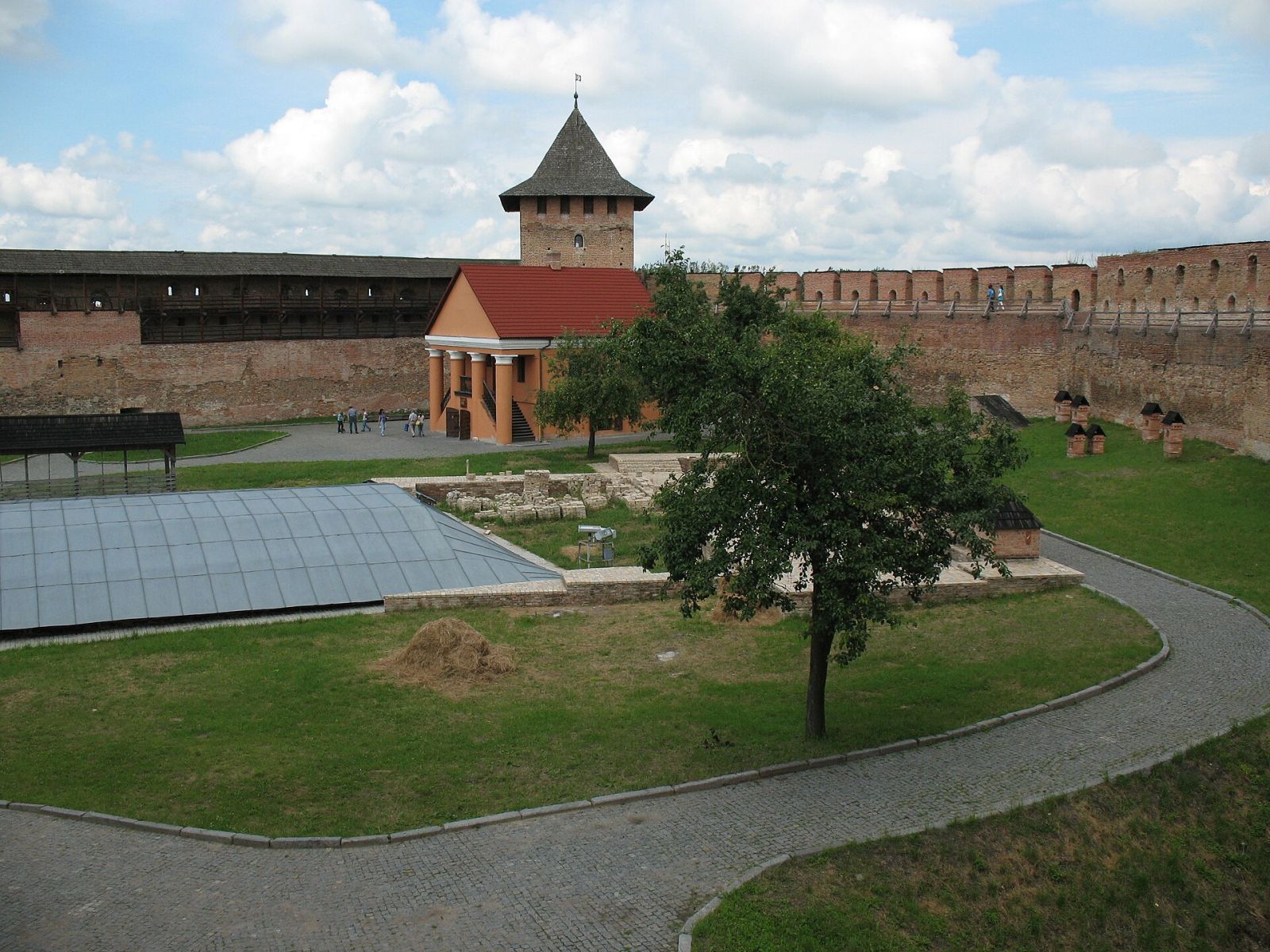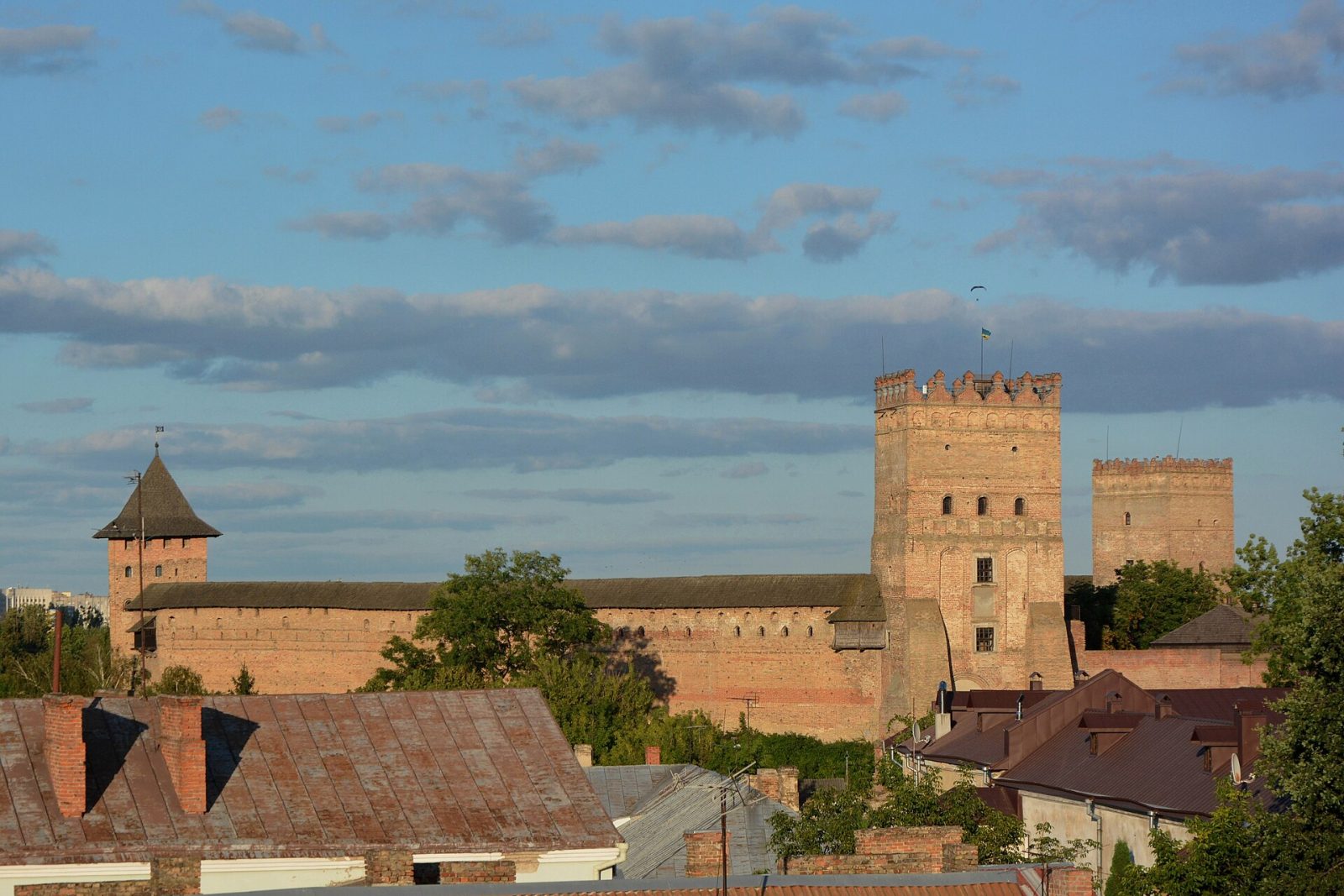


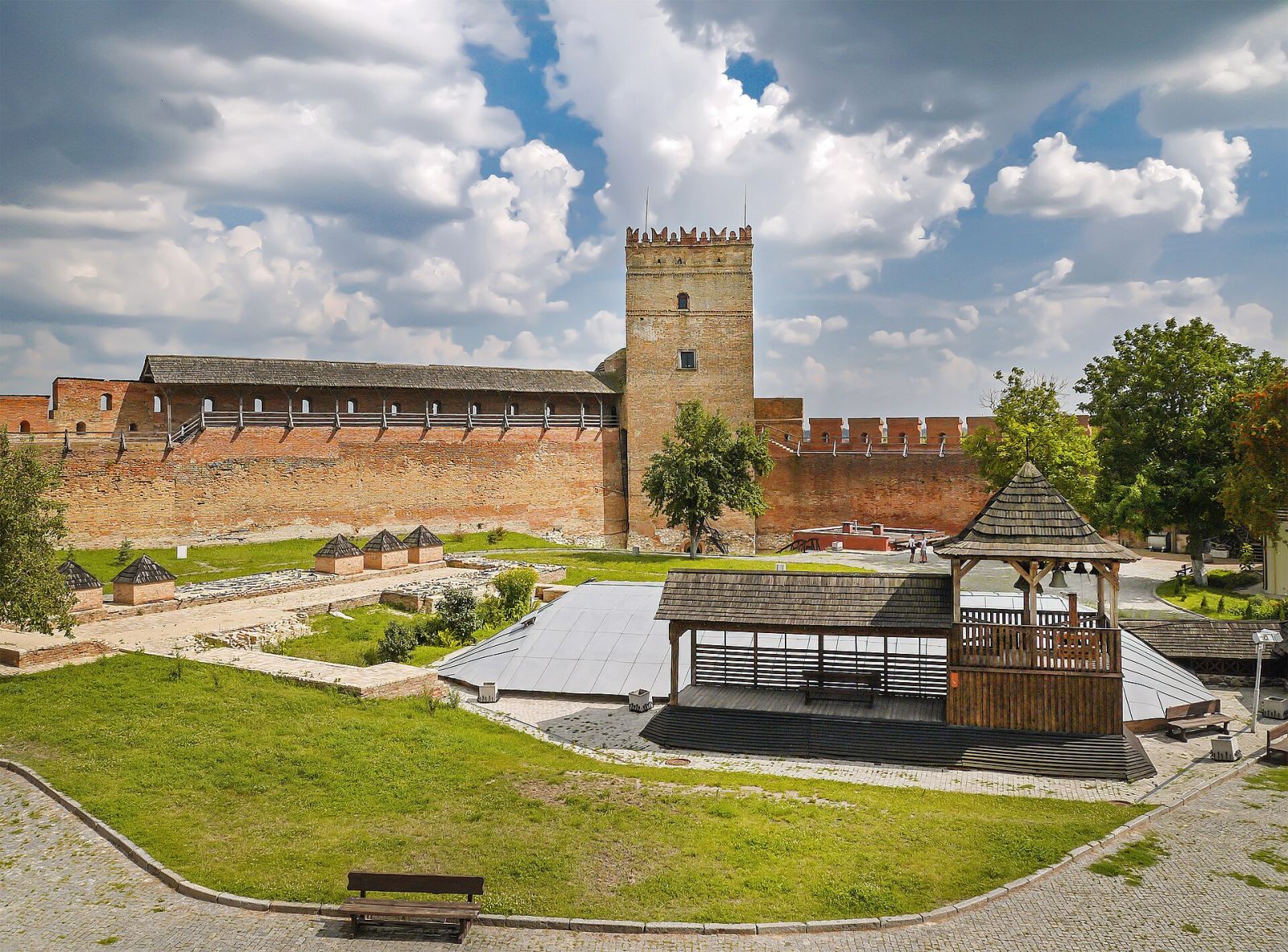
The main reason to come here takes up a whole peninsula between two rivers and looks like it was lifted straight from a medieval engraving: Lubart's Castle, the oldest and best-preserved sight in the city, fourteenth century, red brick, three towers. If you are wondering what to see in Lutsk, start right here and walk the rest of the old town as a loop around it, because the historic core is compact and fits into half a day.
There is a second, oddly practical reason to visit the castle: it is probably already in your wallet. Lubart's Castle is the image on the back of Ukraine's 200-hryvnia banknote, next to the portrait of the poet Lesya Ukrainka. So almost everyone here takes the "banknote against the real thing" photo, and this is one of the rare cases where the obvious tourist shot actually makes sense.
Lubart's Castle: why it is the heart of the city
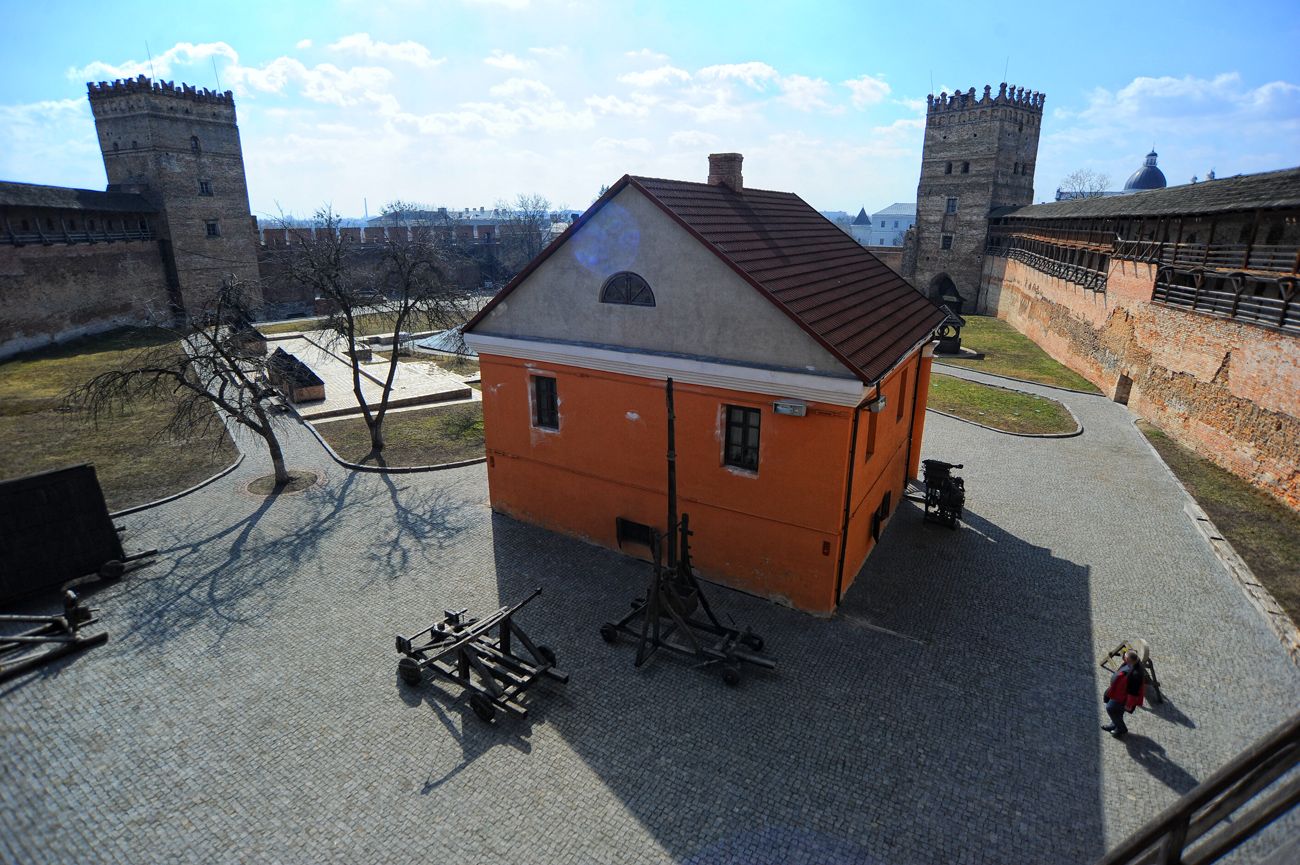
Construction began under the Lithuanian prince Lubart in the middle of the fourteenth century, on the site of earlier wooden fortifications. Wood first, then brick, and it is the brick walls with three towers that have reached us in good shape. This is not a decorative "old-timey" reconstruction but a genuine defensive structure, one of the largest brick fortresses in the Europe of its day. The three towers have names: the Entrance Tower (Lubart's) above the main gate, plus the Styr and Vladycha towers at the corners. You can climb the narrow stairs of the Entrance Tower for a panorama of the old town and the river bend.
The courtyard inside is far from empty. It holds several museums: the castle's own display of archaeology and weapons, a Museum of Bells in one of the towers, an art gallery, and rotating exhibitions in the cellars and casemates around the perimeter. You do not have to see everything, but the Museum of Bells and the tower climb are worth the time even if museums usually leave you cold. Entry to the grounds and the separate museum tickets are inexpensive, but hours and prices shift with the season, so check the current details before your trip on the reserve's page.
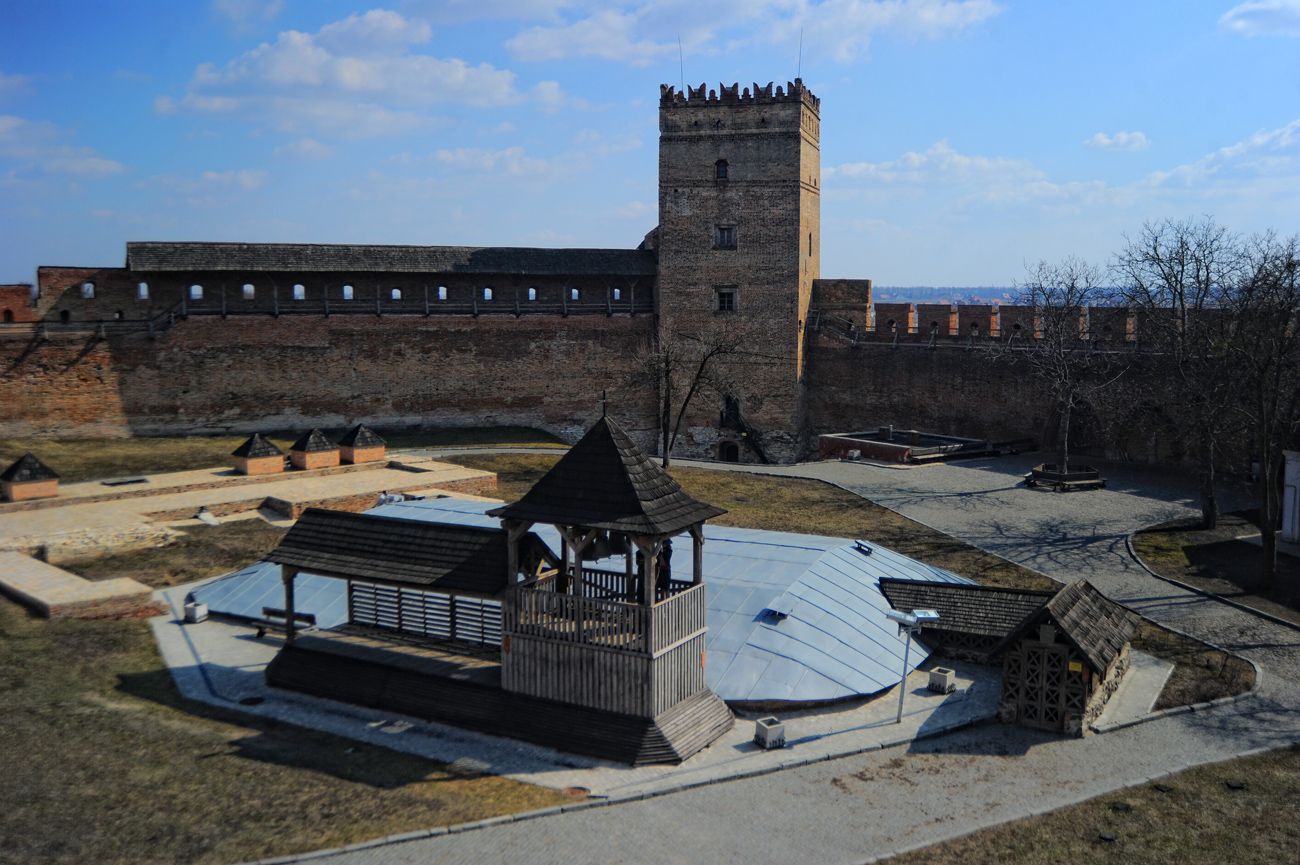
An honest note. The best view of the castle is not from inside but from outside, from the bank of the Styr River and a small rise across from the main gate. That is exactly where the brick was framed for the banknote. And under a grey sky the red masonry looks dull, so if you have the choice, come in sunshine or toward evening, when the wall warms up in colour.
Old Lutsk: what stands next to the castle
The castle does not stand alone; it sits inside the "Old Lutsk" reserve, and the most interesting part begins the moment you step out of its gate. A few paces away, in the cellars of a former Dominican monastery, hides the Museum of the Lutsk Brotherhood, and beside it, in an old underground passage, the Museum of the Book. These are the kind of sights you can walk right past without noticing the door, because everything sits below street level.
Nearby, on Kafedralna Street, stands the Saints Peter and Paul Cathedral, a large Baroque Jesuit building from the seventeenth century with underground vaults that have their own guided tours. Underground Lutsk is a whole theme in itself: a network of passages and crypts runs beneath the old town, and part of it is open with a guide. If that appeals to you, budget two or three hours for the block around the castle rather than one, because the sites are small but densely packed.
Lesya Ukrainka Street: the pedestrian core
From the castle quarter it makes sense to walk out onto Lesya Ukrainka Street, the main promenade of Lutsk. It is a pedestrian zone lined with buildings from the nineteenth and early twentieth centuries, with cafés, benches and street sculptures. You do not need a separate "box to tick" here: the street itself is the attraction, the place where the city looks most like its living self rather than a museum.
Walk it slowly and look at the facades above the ground floors, where tourists rarely raise their eyes. It is also the natural spot for a coffee break between the castle and the rest of the route. The name is no accident: Lesya Ukrainka, of the Kosach family, is closely tied to the Volyn region, and it is her portrait that sits beside the castle on that same banknote, so the loop closes on itself.
The synagogue-tower: an unexpected detail
One of the strangest structures in Lutsk is easy to miss unless you know what to look for. This is the Small Synagogue, also called the Okolny Castle, built in the early seventeenth century as a place of worship that also carried a defensive tower. The Jewish community was allowed to raise the synagogue on the condition that it become part of the city walls, which is why it has a massive corner tower with loopholes, most unusual for a house of prayer. You will hardly find such a fusion of temple and fortress anywhere else in Ukraine.
In Soviet times the building housed a gym, and traces of those alterations are still visible. Getting inside is not always possible, so plan mainly on viewing it from the outside, but do walk around the tower to appreciate how little it resembles an ordinary synagogue. This is precisely the detail that makes a walk through old Lutsk unlike a dozen other city routes.
| Place | Why it matters | Time to allow |
|---|---|---|
| Lubart's Castle | 14th-c. brick fortress, towers, museums, the banknote view | 1.5–2 hours |
| Museum of Bells and Entrance Tower | Bells up close, panorama of the old town | 40 minutes |
| "Old Lutsk" underground sites | Museum of the Book, the Brotherhood, Dominican passages | An hour or more |
| Peter and Paul Cathedral | Jesuit Baroque, underground tours | 30–40 minutes |
| Lesya Ukrainka Street | Pedestrian core, cafés | An hour with coffee |
| Small Synagogue (Okolny Castle) | Temple-fortress with a defensive tower | 20–30 minutes |
How do you get to Lutsk?
Lutsk lies in the northwest, in the Volyn region, and it is not the hardest place to reach, since it sits on the rail network and main roads. The airport is currently closed because Ukrainian airspace is shut, so the real options are train and bus. Check current timetables before your trip, as they change.
- By train. From Kyiv there are usually overnight services, taking roughly 8–10 hours depending on the route. A night on the rails saves you a day on the ground.
- From Lviv. The nearest large hub; from here Lutsk is a few hours by train or bus, and the city fits neatly into a Western Ukraine itinerary.
- Combined with Rivne or Dubno. Volyn and the Rivne region are close by, so many travellers pair Lutsk Castle with the castles of Dubno or Ostroh over a couple of days.
A one-day route you can actually finish
The logic is simple: castle first, while there are fewer people and better light on the brick, then fan out from it in a loop. Begin the morning at Lubart's Castle, climb the Entrance Tower and look into the Museum of Bells. Then drop into the underground sites near the Dominicans and the Peter and Paul Cathedral, all a few minutes away. After lunch head out to Lesya Ukrainka Street, pause for coffee, and from there loop in the Small Synagogue. To finish, come back to the riverbank across from the castle, because that is where the "just like the banknote" shot comes together toward evening.
What to drop if time is really short: half a day is enough for the castle, the underground sites and Lesya Ukrainka Street, leaving the synagogue for next time. And the other way round, if you have two days, add a trip to Dubno Castle or an unhurried wander through the courtyards of old Lutsk, because that, rather than the headline sights, is where the city opens up most fully. For a first visit the basic loop around the castle covers the essence without any fuss.