

Bulgarian food rests on three pillars: vegetables, soured milk and the grill. That sounds modest, yet this is the homeland of Lactobacillus bulgaricus, the bacterium without which real yogurt would not exist, and the local peppers and tomatoes still taste the way northern European supermarkets have long forgotten. Add the portions: an average dinner at a mehana, the traditional tavern, comfortably feeds two people, so order with restraint.
Here is what to try, from the salad to the rakia, with honest pointers on where tourists usually get shortchanged.
Shopska salad: why it sits on every table
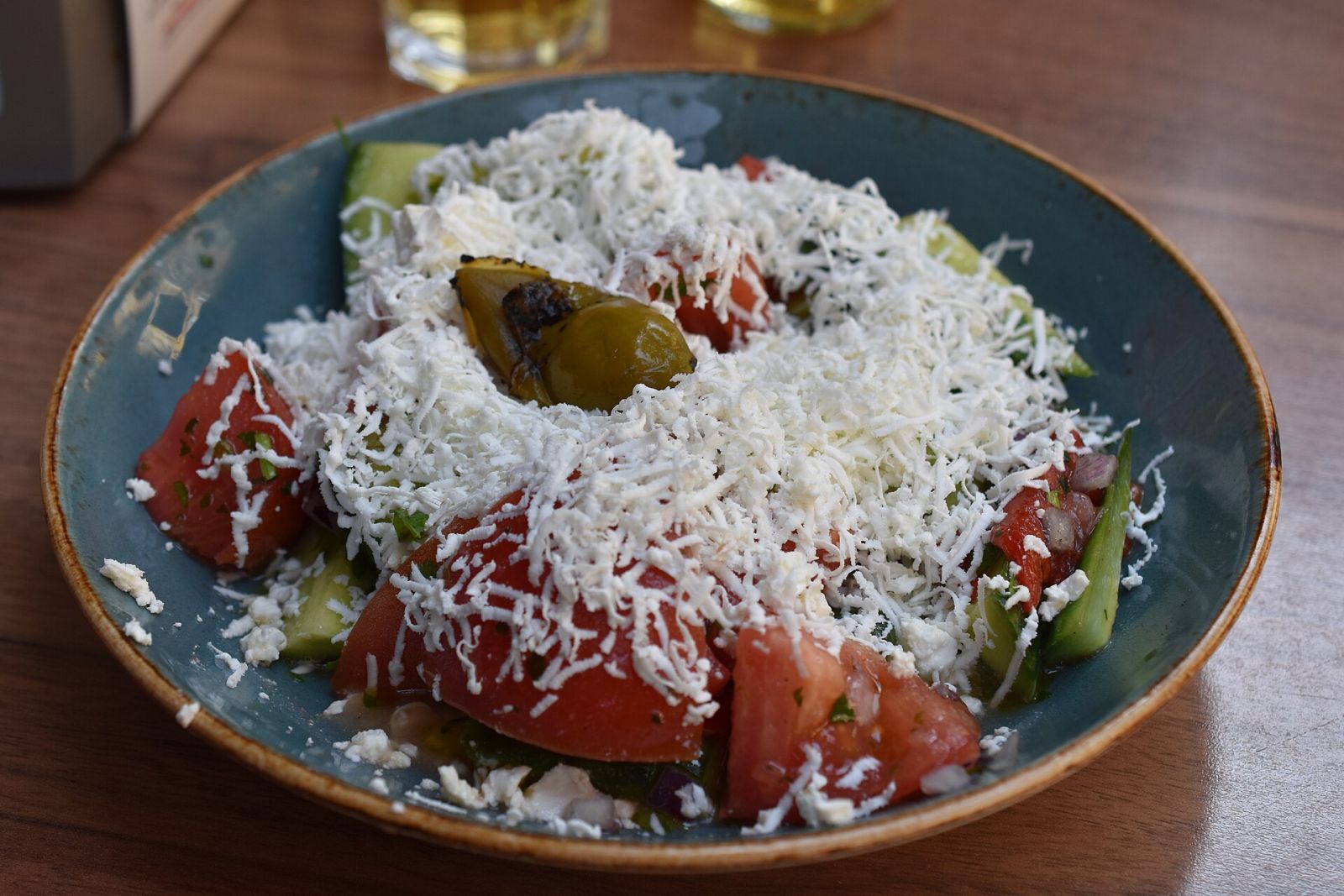
On paper it is just tomatoes, cucumbers, peppers, onion and a mountain of grated sirene cheese on top. In practice shopska salata is a national symbol: the white, green and red on the plate match the flag, and Bulgarians take genuine pride in that. It is ordered as a starter to accompany rakia, and this is not a whim but protocol: first the salad and a shot, then everything else.
The secret is the produce. Roasted and peeled peppers, juicy pink tomatoes of a variety locals simply call "rozova domata", and sirene made from sheep's or cow's milk, salty and crumbly. Fair warning: seaside resort restaurants often assemble the salad from greenhouse vegetables and imitation cheese. The sign of a proper place: the cheese arrives freshly grated in a generous cap, not as three cubes on the side.
Banitsa and tarator: breakfast and the summer lifesaver
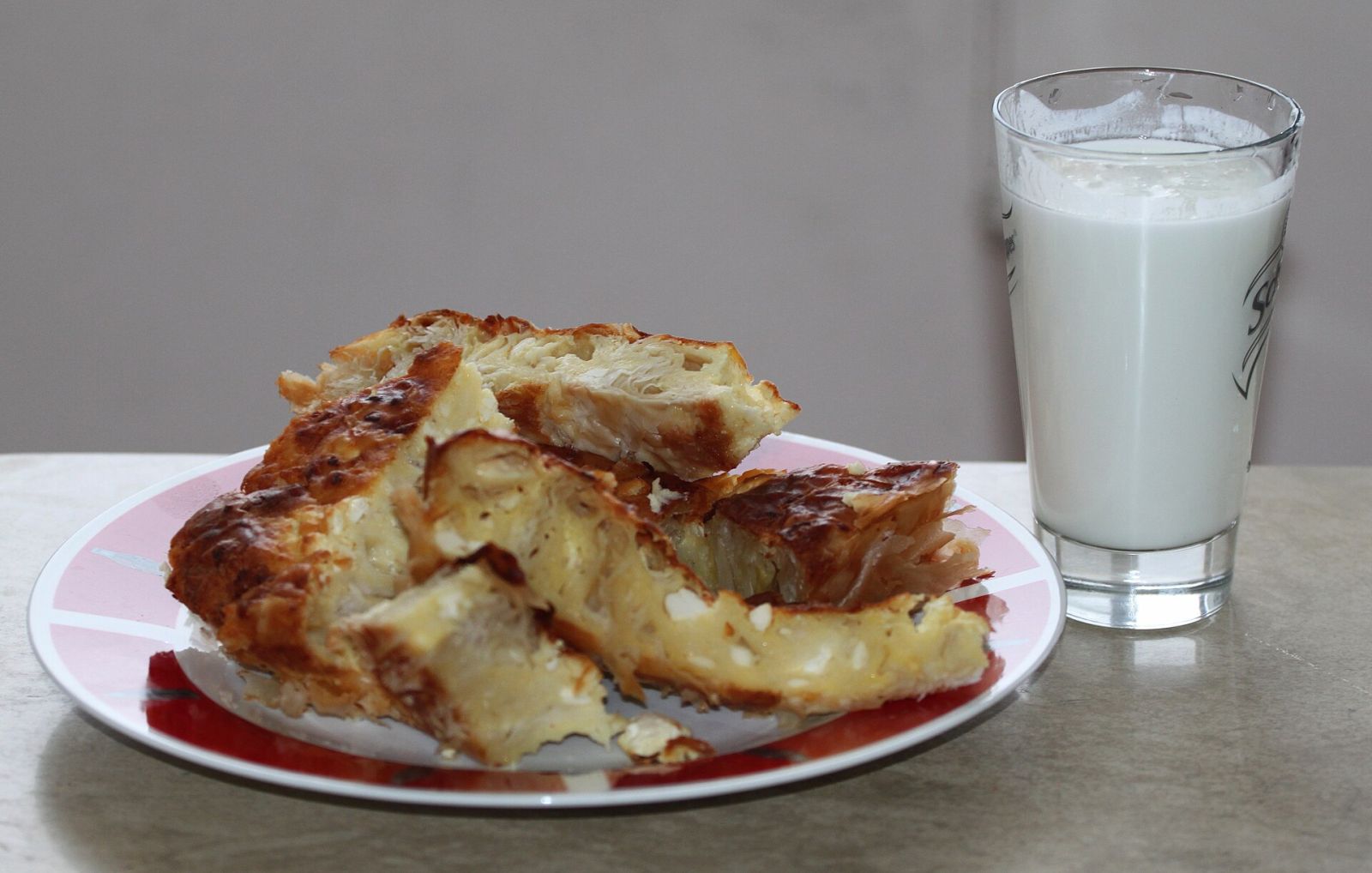
Banitsa is a flaky pastry of thin filo dough filled with sirene and eggs. Bulgarians eat it warm for breakfast, often washed down with boza, a thick, faintly sweet drink made from fermented millet. Boza is an acquired taste, but try the pairing at least once: it has been the classic Bulgarian morning since grandmothers' times. Look for fresh banitsa in bakeries signed "banicharnitsa" before ten in the morning; later in the day only the dried-out leftovers remain.
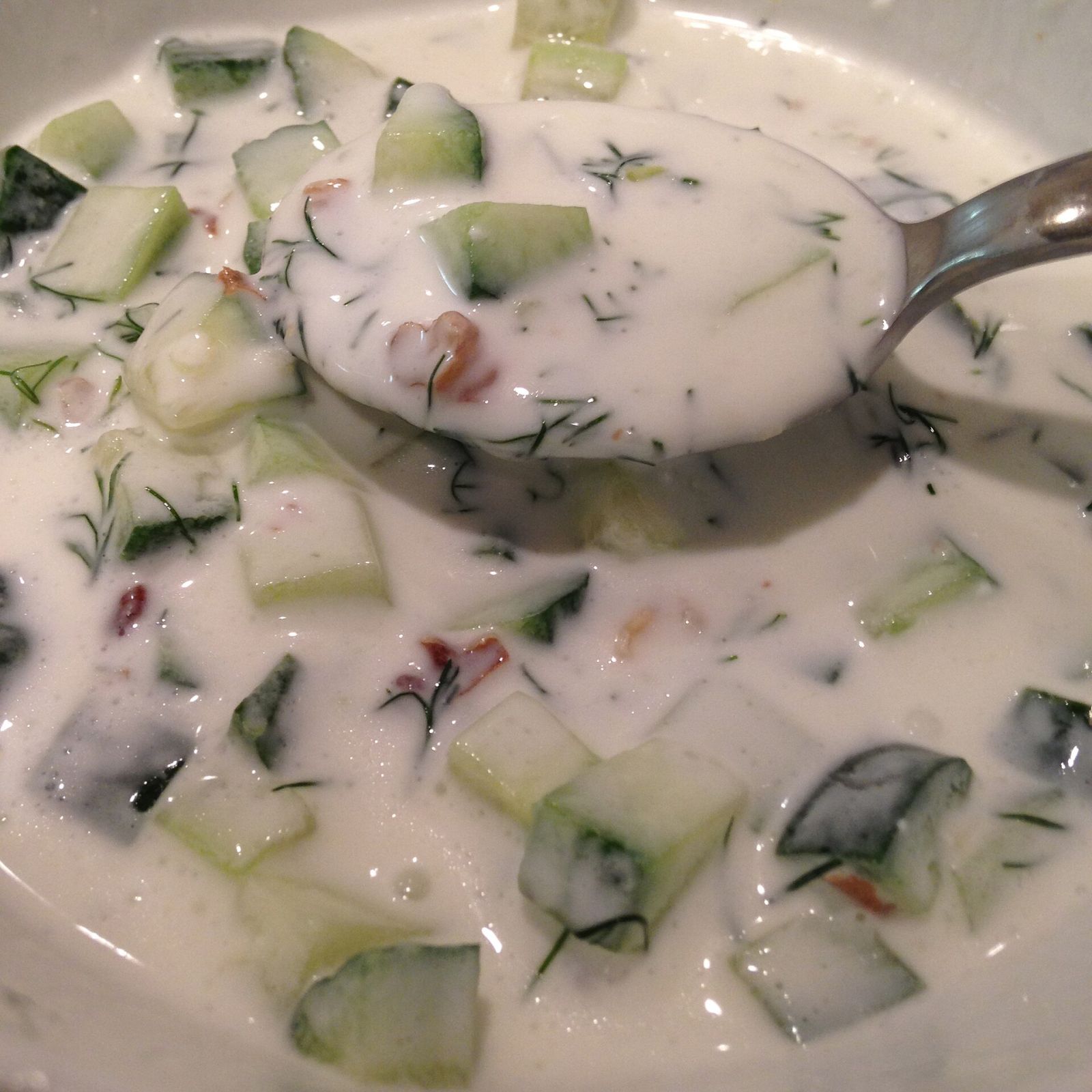
Tarator beats any lemonade in the heat. It is a cold soup of soured milk, grated cucumber, dill, garlic and crushed walnuts, served ice-cold, sometimes simply in a glass as a drink. In a thirty-five-degree July afternoon a bowl of tarator works like air conditioning from the inside, and that exhausts this article's metaphor quota.
Kebapcheta, kyufteta and the rest of the grill
The meat side of the Bulgarian table lives on the skara, the grill. The main characters:
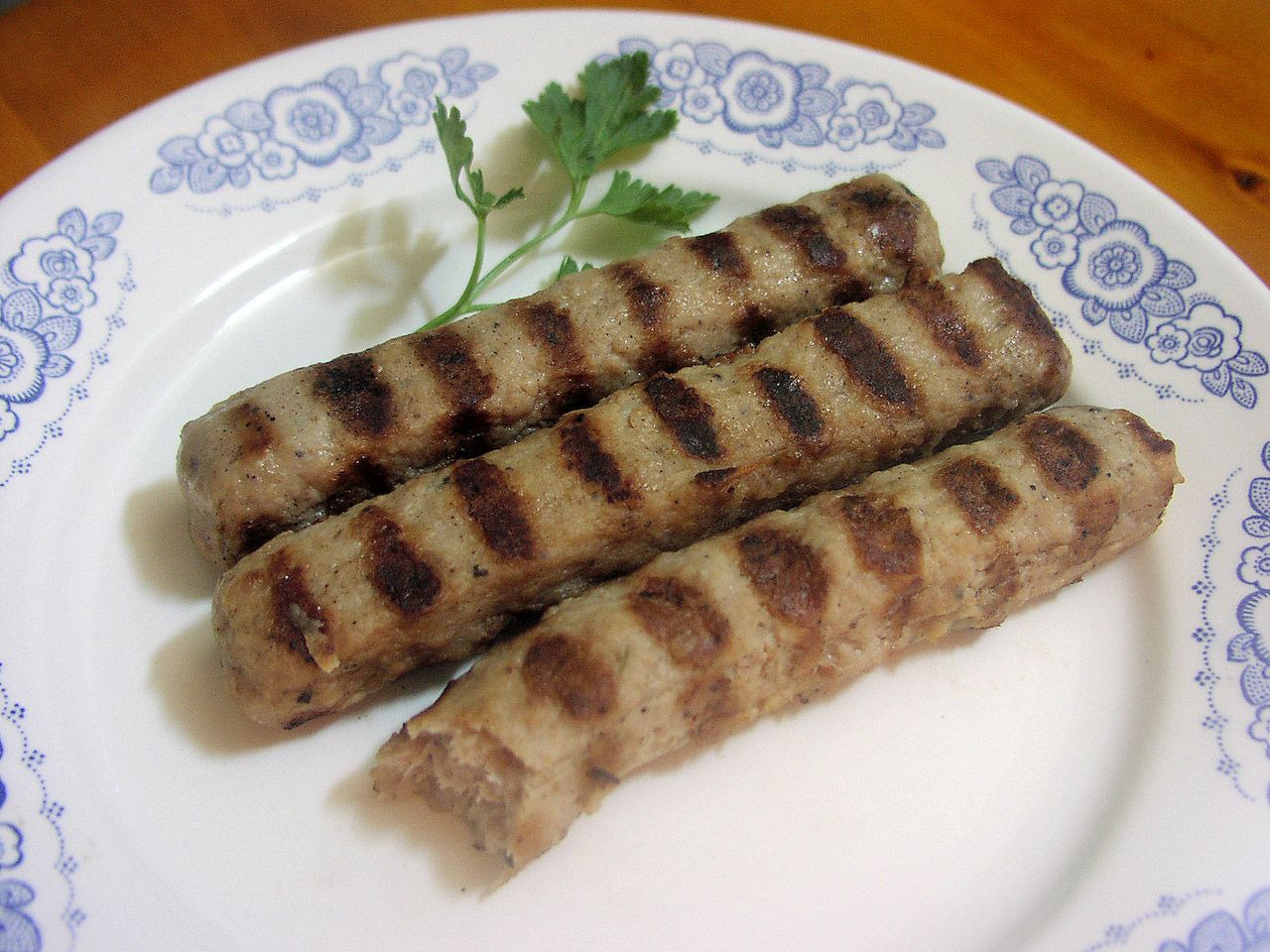
- Kebapche: an elongated patty of minced pork and beef seasoned with cumin and black pepper. The classic order is "two kebapcheta with garnish", meaning fries and lyutenitsa.
- Kyufte: the same meat, but round and with onion. The "kyufte po chirpanski" version comes stewed in tomato sauce in a clay pot.
- Meshana skara: the mixed grill platter for when you want everything at once. Portions tend to be enormous.
- Sach: a scorching clay platter of meat and vegetables that finishes cooking right at your table. One serves two.
A note on prices: mehanas a few streets back from the waterfront charge noticeably less than the resort front line for the same grill, and the quality is usually better, because they cook for locals.
Lyutenitsa and kiselo mlyako: what to take home?
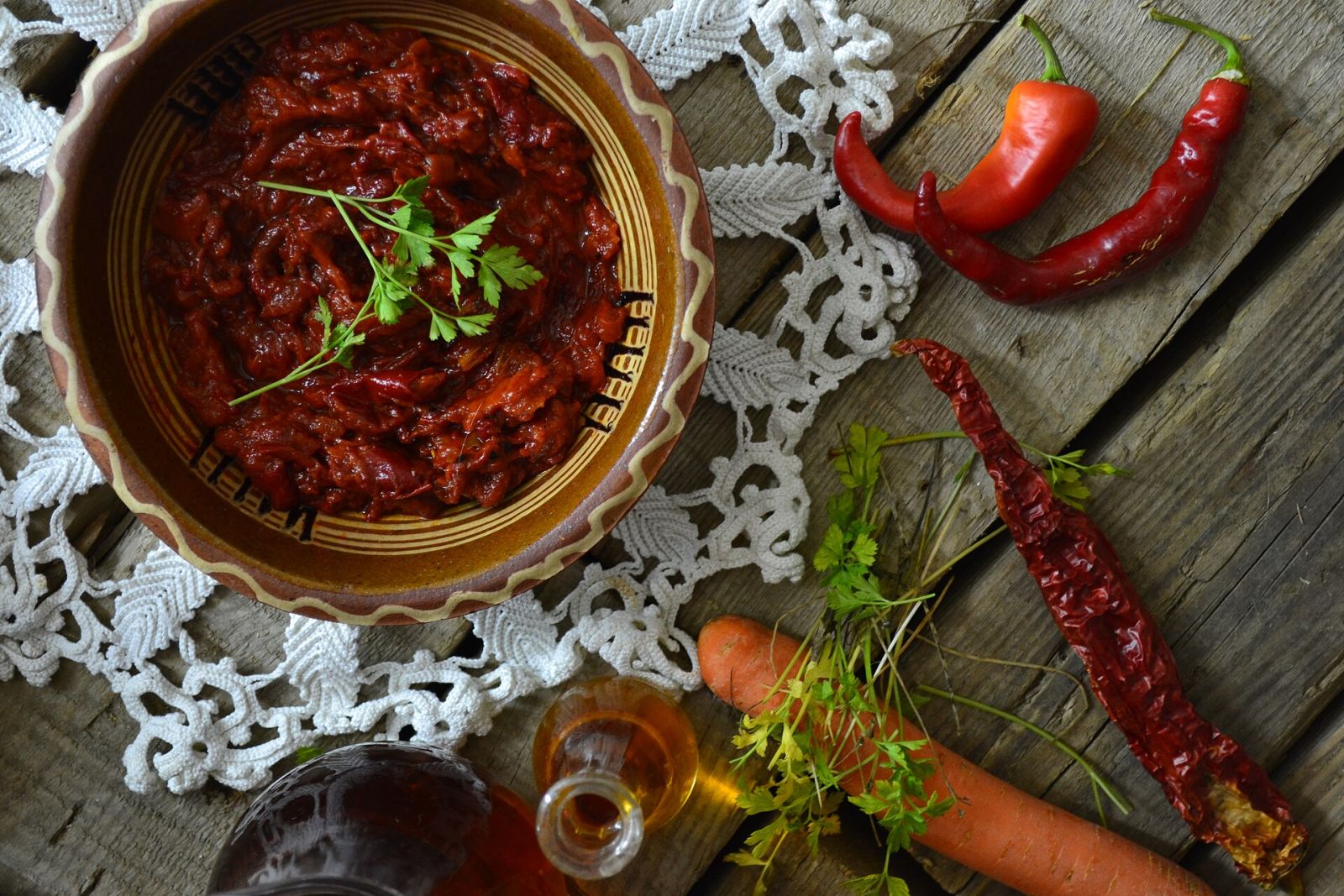
Lyutenitsa is a thick relish of roasted peppers and tomatoes, sometimes with aubergine and carrot. Bulgarians spread it on bread, serve it with kebapcheta, eat it by the spoon straight from the jar. In autumn whole families still roast peppers in their yards and jar lyutenitsa for winter. In a supermarket pick jars labelled "edro smlyana" (coarsely ground) with a short ingredient list and no starch: that comes closest to homemade. A jar of lyutenitsa is the best edible souvenir the country offers.
Kiselo mlyako, Bulgarian soured milk, deserves its own paragraph. It was from a Bulgarian culture that scientists isolated Lactobacillus bulgaricus in the early 1900s, and Bulgarians consider yogurt their invention quite officially. Local kiselo mlyako is thicker and tangier than the supermarket yogurt most visitors know, sold in tubs from 2% to 4.5% fat. It also becomes ayran: diluted with water and salt, perfect alongside banitsa or grilled meat.
Rakia and wine: what to drink, and what does it cost?
Rakia is a fruit brandy of forty-plus percent strength, most often distilled from grapes (grozdova) or plums (slivova). It is sipped slowly over shopska salad, frequently chilled, never downed in one go. Village-made rakia can be stronger than the shop version, so pace yourself: two shots is a sensible ceiling for the uninitiated.
Bulgarian wine is as underrated as the country itself. Seek out the indigenous varieties that grow nowhere else:
| Type | Variety or kind | What to expect |
|---|---|---|
| Red | Mavrud | Dense and tannic, from the Thracian Valley near Plovdiv |
| Red | Shiroka Melnishka Loza | Softer, from the Melnik area in the southwest |
| White | Dimyat, Misket | Light summer wines from the coast and the Rose Valley |
| Spirit | Grape or plum rakia | 40-50 percent, served chilled with salad |
A decent bottle of Mavrud runs roughly 7-12 euros in a shop and about double in a restaurant; prices drift, so check locally. Wine tours around Plovdiv and Melnik are a holiday genre of their own, and a tasting at a small winery usually costs about as much as two glasses in a tourist bar.
And what about dessert?
The sweet side is humbler than in Greece or Turkey, but it has its heroes. Mekitsi are puffy fried dough rounds made with soured milk, dusted with icing sugar or served with white jam and sirene: a Sunday-breakfast classic, found in the same banicharnitsas. The Garash cake, a dense walnut-and-chocolate creation, dates back to the late 19th century and still holds its reputation in Sofia's patisseries. In summer simply order kiselo mlyako with a spoonful of rose jam: the Rose Valley around Kazanlak supplies petals for a good half of the world's rose oil, and a jar of that jam is one more souvenir that survives the trip home.
Where to eat without falling into a tourist trap
Three simple filters. First: a menu only in English with photos is a bad sign, while a Bulgarian menu with a clumsy translation is a good one. Second: check whether Bulgarians are eating inside, because the local crowd does not get it wrong. Third: in resort areas walk two or three streets back from the sea; the difference on the bill is real and the difference in flavour even bigger.
A final word on rhythm. A Bulgarian dinner is not fast food but a two-to-three-hour process: salad and rakia, then the grill, then coffee. The waiter will not bring the bill until asked, and that is not poor service but respect for your table. Settle into that tempo and Bulgarian food opens up far deeper than it looks from a beach lounger.