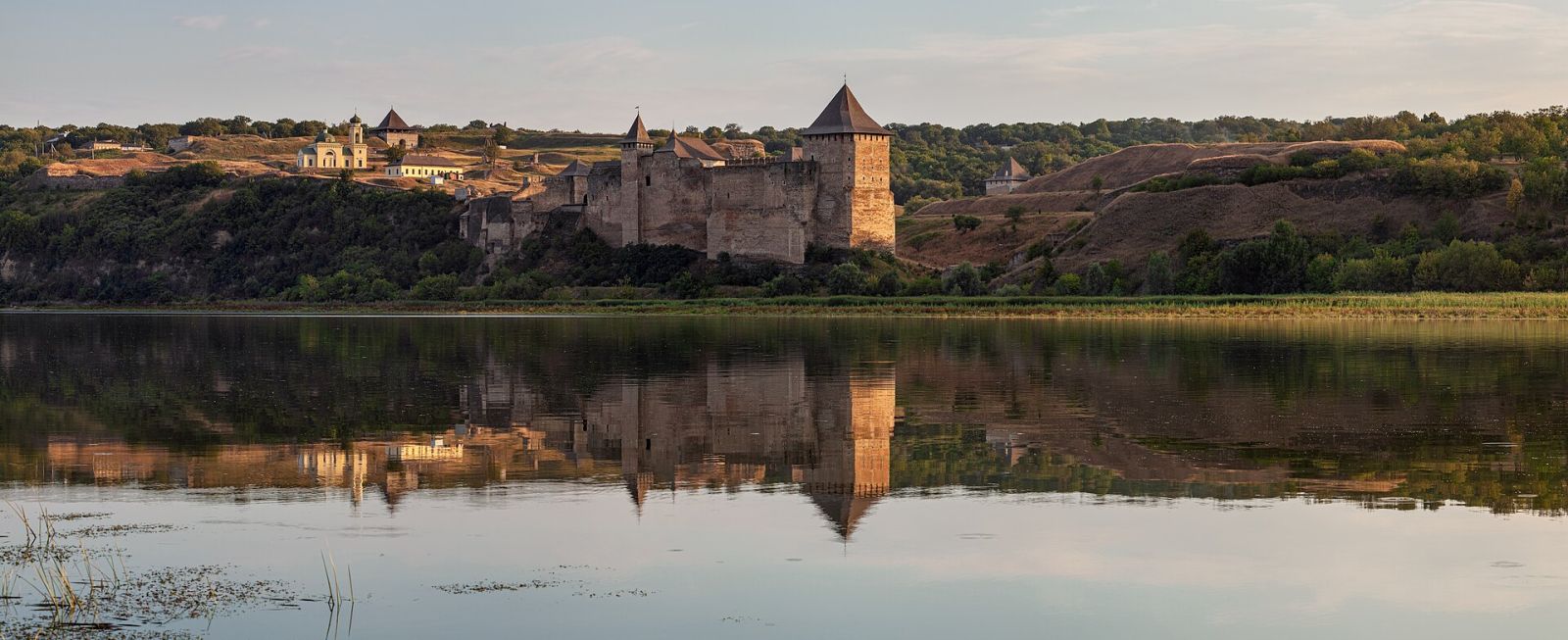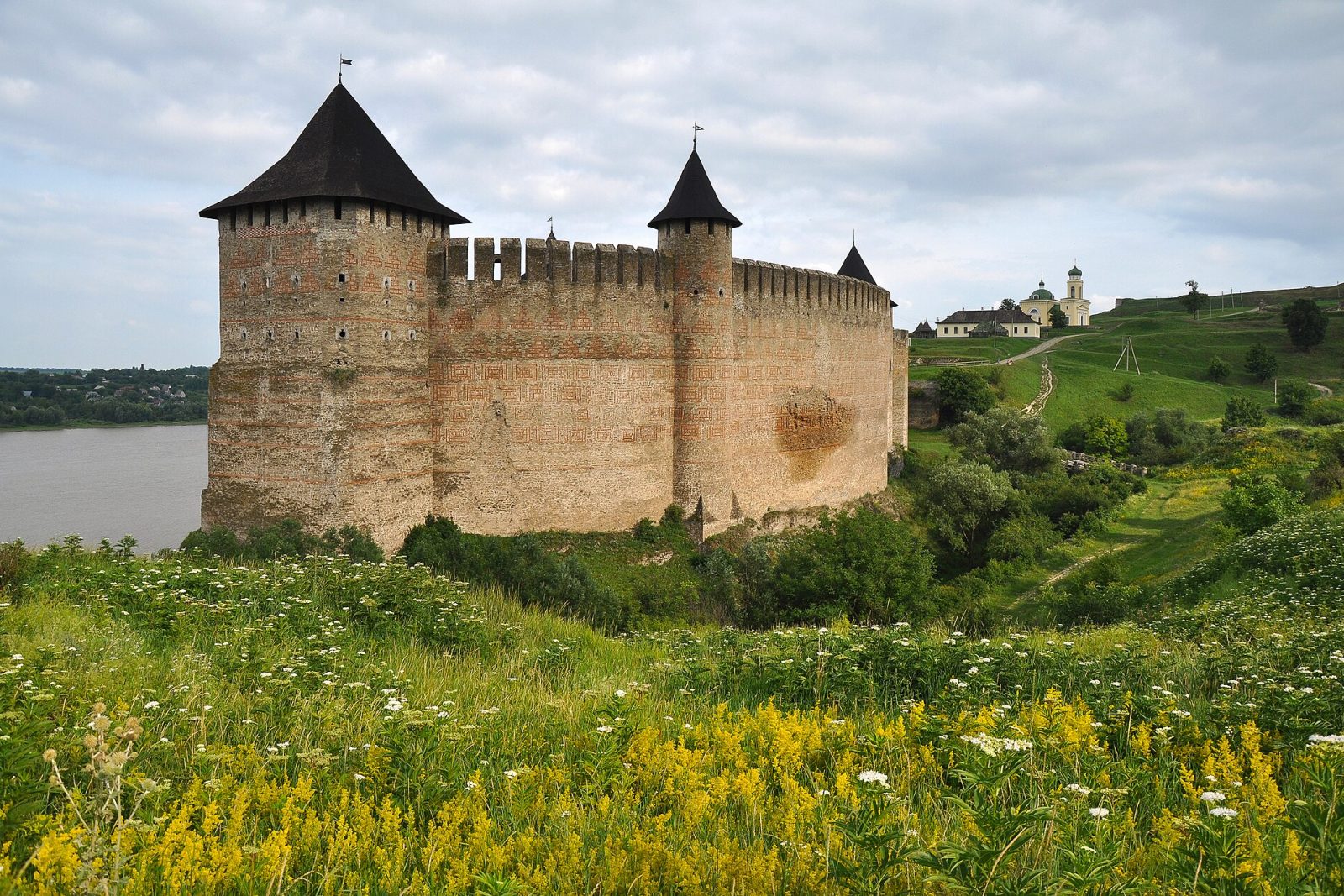


If you can visit just one castle in southwestern Ukraine, Khotyn Fortress deserves the top slot: its stone walls rise nearly forty metres above the Dniester River, and up close that hits harder than any photo prepares you for. Straight talk before you pack: the exhibition inside is thinner than the exterior promises. So come mainly for the walls themselves, the river panorama and the history, not for museum halls.
The fortress sits on the right bank of the Dniester, next to the small town of Khotyn in Chernivtsi Oblast. It is one of those places that looks equally monumental in person and on screen. No surprise that Khotyn Fortress once made it into Ukraine's unofficial Seven Wonders, chosen by public vote: those walls above the water carried the case almost on their own.
Why the place is remembered: the Battle of Khotyn, 1621
The date most tied to Khotyn is 1621. That autumn a huge Ottoman army met the combined forces of the Polish-Lithuanian Commonwealth together with the Zaporozhian Cossacks under these very walls. The Cossack camp was led by Hetman Petro Konashevych-Sahaidachny, and it was the stubbornness of the defence at Khotyn that stalled the Ottoman push deeper into Europe for weeks. The battle ended without a single dramatic storming victory, more by attrition, but it did its job: the plan for a fast Turkish breakthrough collapsed.
Half a century later, in 1673, another Khotyn fight made the name of the Polish commander Jan Sobieski, the future king, who crushed the Ottoman garrison here. One battlefield, two different eras, and in both cases the ground was the key to controlling the Dniester crossing. That crossing, in fact, is the whole reason such a stronghold was raised here in the first place.
How old this fortress really is
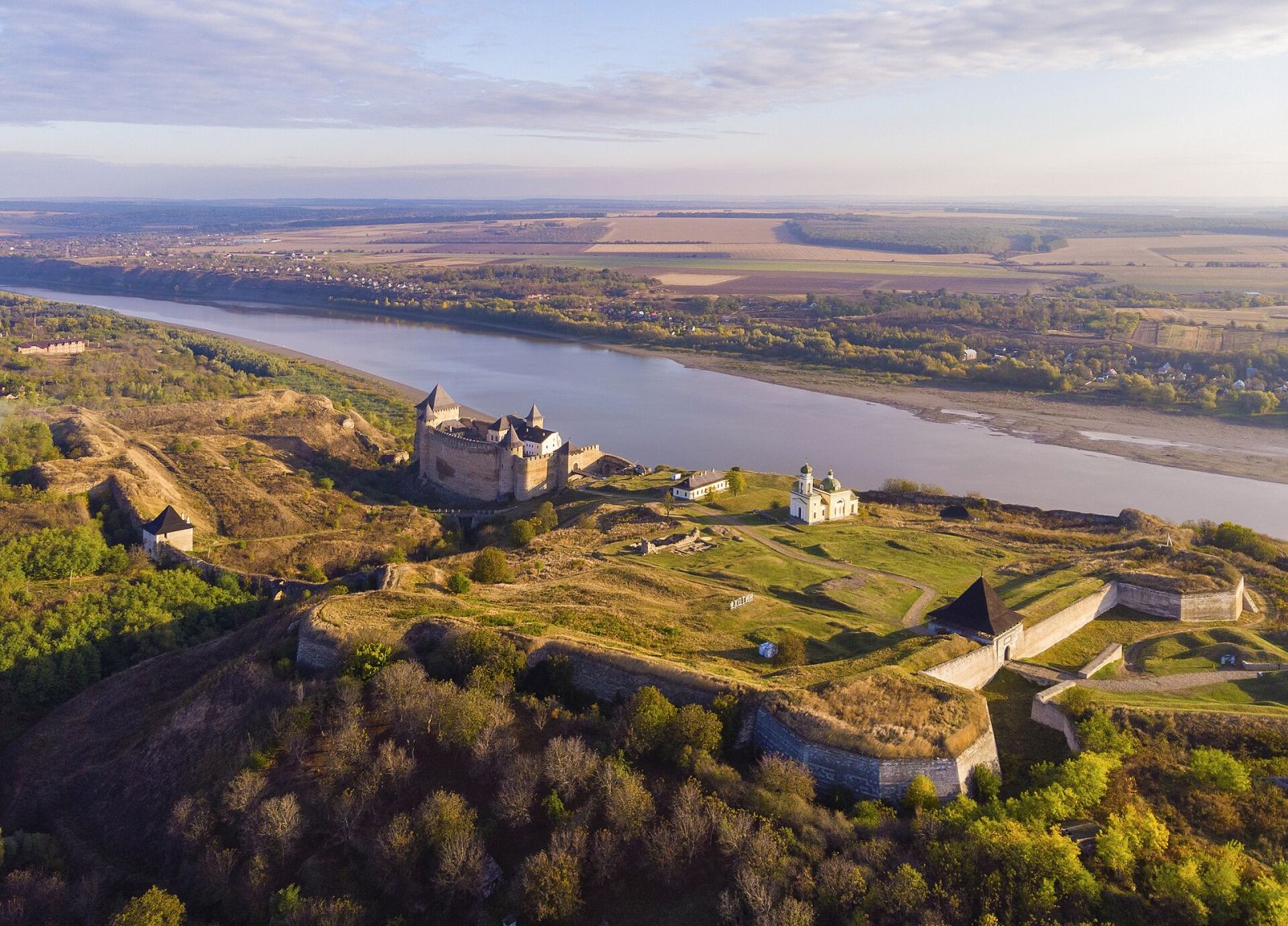
Confusion about dates is normal here, because the fortress was rebuilt across centuries. The first wooden fortification on this spot appeared back in the days of Kyivan Rus, roughly at the turn of the tenth and eleventh centuries. The stone castle we see today took its core shape in the thirteenth, fourteenth and fifteenth centuries, and grew most under the Moldavian rulers, notably Stephen the Great. Later the walls were built up again for the age of cannon defence.
That layering shows in a single silhouette: a medieval core, defensive towers, a princely palace inside the yard and a church. The main citadel is compact, but the true sense of the walls' height and thickness only lands when you stand right below them, down closer to the river.
Walls above the Dniester: what is actually inside
Here is the part the glowing write-ups usually skip. From the outside the citadel looks like a set built for a big historical film. Inside you get a courtyard, a few restored rooms, a small church, an old well and towers you can climb. There is an exhibition, but it is more illustrative than deep: some armour, a couple of halls, information boards. If you arrive expecting a museum on the scale of the great European castles, with dozens of furnished rooms, mild disappointment is likely.
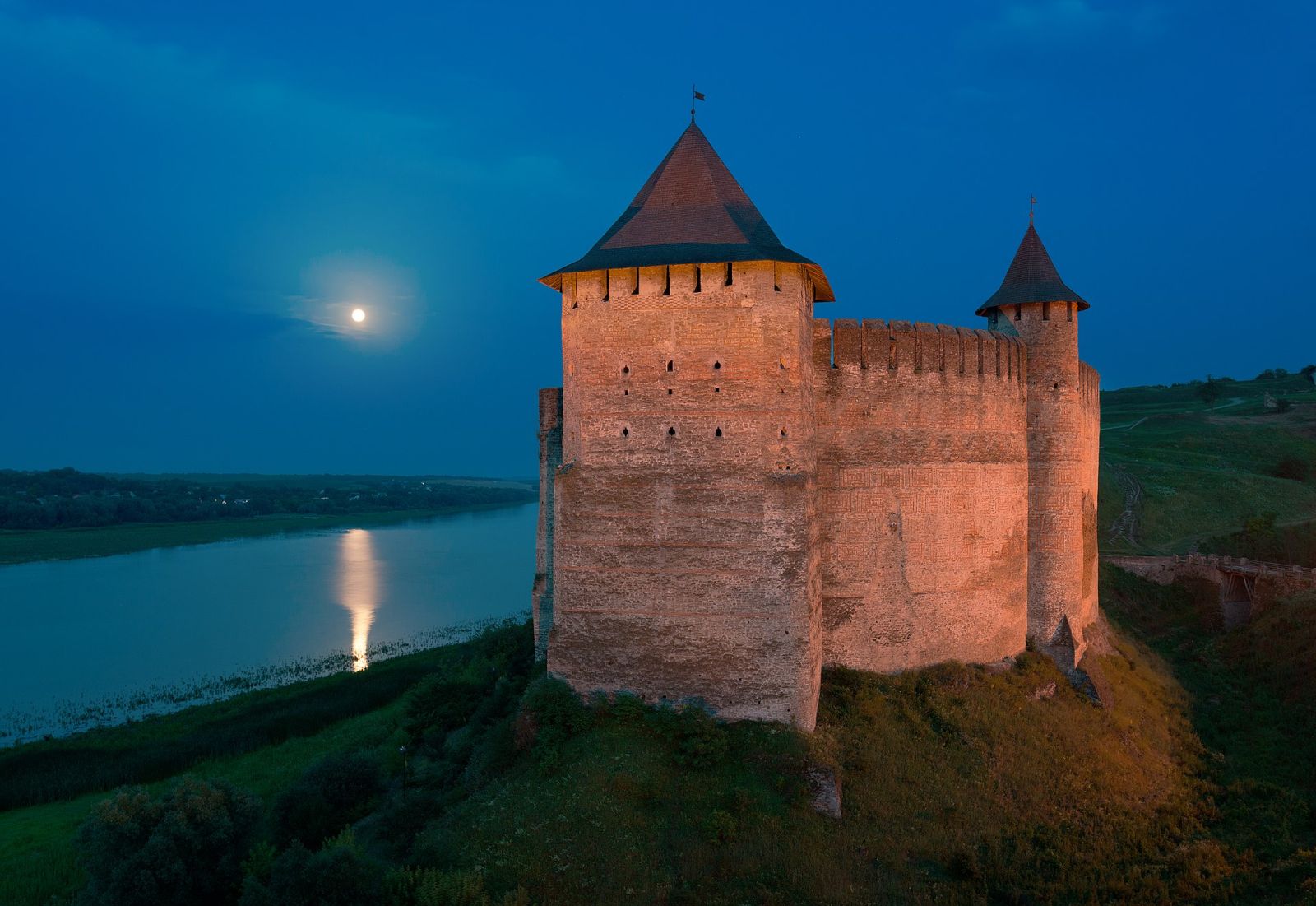
So the smart plan is simple. Spend your main time walking the walls, climbing the towers and going down to the base of the fortress on the river side: that is where the postcard panorama photographers chase actually opens up. Do the courtyard and halls at an easy pace, without hunting down every board. In the warm season the grounds often host historical re-enactments and festivals, and that brings the visit alive far more than any permanent display.
| What to see | Why it matters | Time to allow |
|---|---|---|
| Citadel walls and towers | The main impression: wall height and the Dniester view | 40-60 min |
| Inner courtyard and church | Palace, small church, well, information boards | 20-30 min |
| Descent to the river below the walls | The classic postcard angle, looking up | 15-20 min |
| Festival / re-enactment (seasonal) | Atmosphere comes alive: knights, archery | per programme |
How to get to Khotyn Fortress
Khotyn sits conveniently between two travel bases, and that is its big practical advantage. The nearest large city with transport and hotels is Chernivtsi, about an hour's drive away. Closer still, barely half an hour off, stands Kamianets-Podilskyi with its own equally striking fortress. In practice you can set out from either town.
| From | Distance and drive | How to travel |
|---|---|---|
| Chernivtsi | about 70 km, roughly 1 hour | Car, taxi or regional bus to Khotyn |
| Kamianets-Podilskyi | about 30 km, roughly 30 minutes | Car or bus; a short walk from the station to the fortress |
| Lviv | about 250 km, roughly 4 hours | Better with an overnight en route than as a single day |
A car works best here, since it lets you combine Khotyn with nearby stops in one day. Public transport is doable too: buses run to Khotyn from Chernivtsi and Kamianets, and from the local station it is a short walk to the fortress. Check the bus timetable before you leave, it is seasonal and shifts.
Opening hours and admission
The fortress runs as a museum reserve, so it has a schedule and a ticket. Roughly, it is open daily from morning until around evening, and admission is cheap by the standards of castles this size. I am deliberately not quoting exact figures: hours and prices get revised now and then, tower access or photography may be charged separately, and winter hours are shorter. Verify the current details on the reserve's official channels before you go, so you do not arrive at closed gates on a day off.
A practical tip on timing: the best light for the river-side panorama comes in the afternoon, when the sun catches the walls from the southwest. In summer bring a hat and water, there is almost no shade on the open platforms.
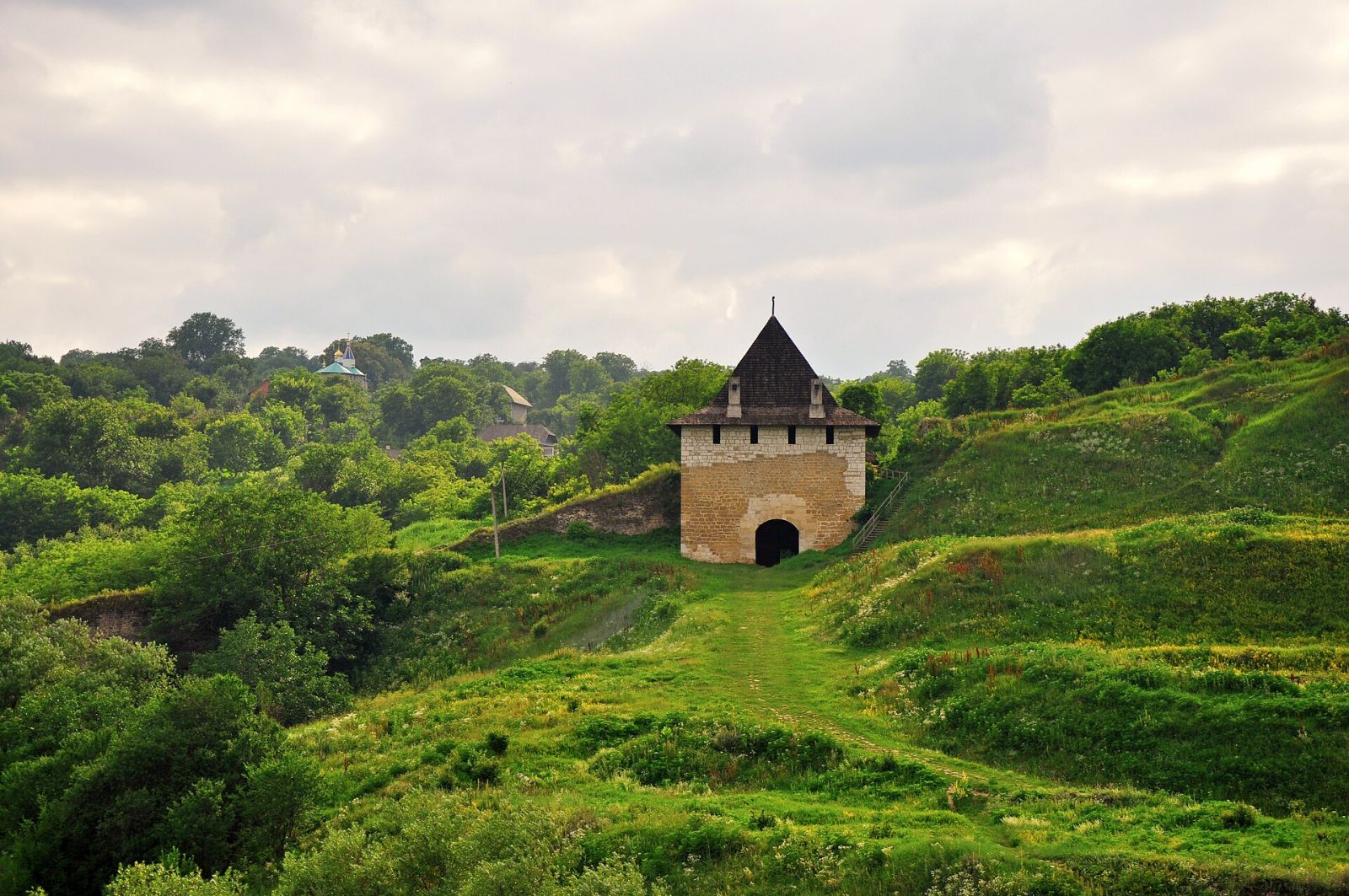
The fortress you have probably already seen on screen
Even if you have never been to Khotyn, there is a fair chance these walls look familiar. The fortress has been used dozens of times as a location for historical films: adventure and costume pictures from both the Soviet and later Ukrainian eras were shot here, from musketeers and Robin Hood to Ukrainian historical dramas. The reason is plain: massive walls with no modern intrusions give a ready-made medieval frame almost without sets. So as you wander the courtyard, it is easy to recognise angles you once saw in a film.
The logical route: Khotyn plus Kamianets-Podilskyi
The smartest way to see Khotyn is not to treat it as a separate long expedition, but to pair it with Kamianets-Podilskyi. The two fortresses stand half an hour apart, both dramatically perched over river canyons, and together they add up to a very strong single day. A working plan: morning in Kamianets with its Old Town and the castle above the Smotrych canyon, an afternoon transfer to Khotyn, then the panorama of the walls over the Dniester in the warm evening light.
With two days to spare, add a night in Kamianets-Podilskyi: it has more hotels and cafes, and the old town after dark is worth a walk of its own. Khotyn stays the main visual highlight of the pair, but now without the feeling that you drove half a day for a half-hour look. In exactly this format the thin indoor exhibition stops being a problem: you came for the scale and the history, and there is more than enough of both.