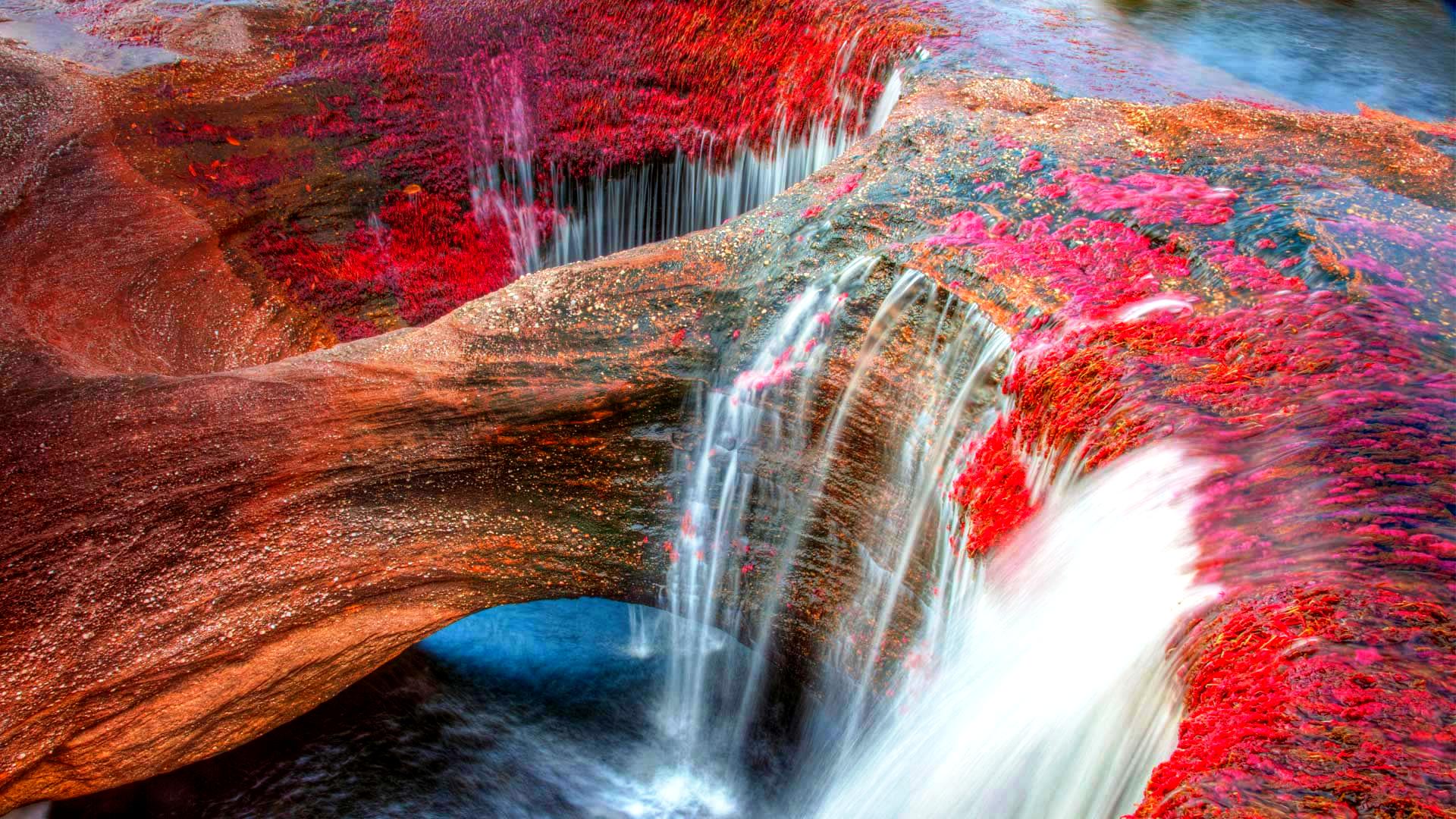


Visit Caño Cristales during Colombia's wet or dry season, and you could be forgiven for wondering what all the fuss is about.
Travel there between July and October, however, in the mild months that fall between the extremes of the wet and dry seasons, and you'll witness one of Mother Nature's crowning glories.
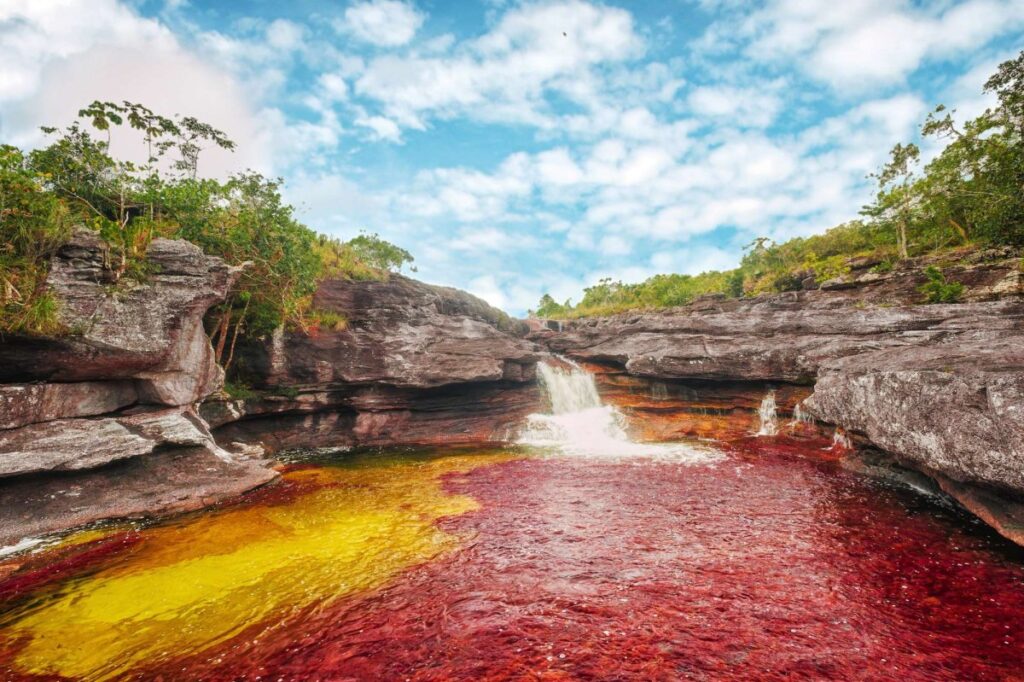
Stretching 62.1 miles through Colombia's Serranía de la Macarena National Park, in the Meta department, this river is known as the "River of Five Colors."
Partner links: booking through them supports the blog at no extra cost to you.
This "liquid rainbow," as it's also called, is one of the South American country's most breathtaking natural wonders, thanks to its vivid palette.
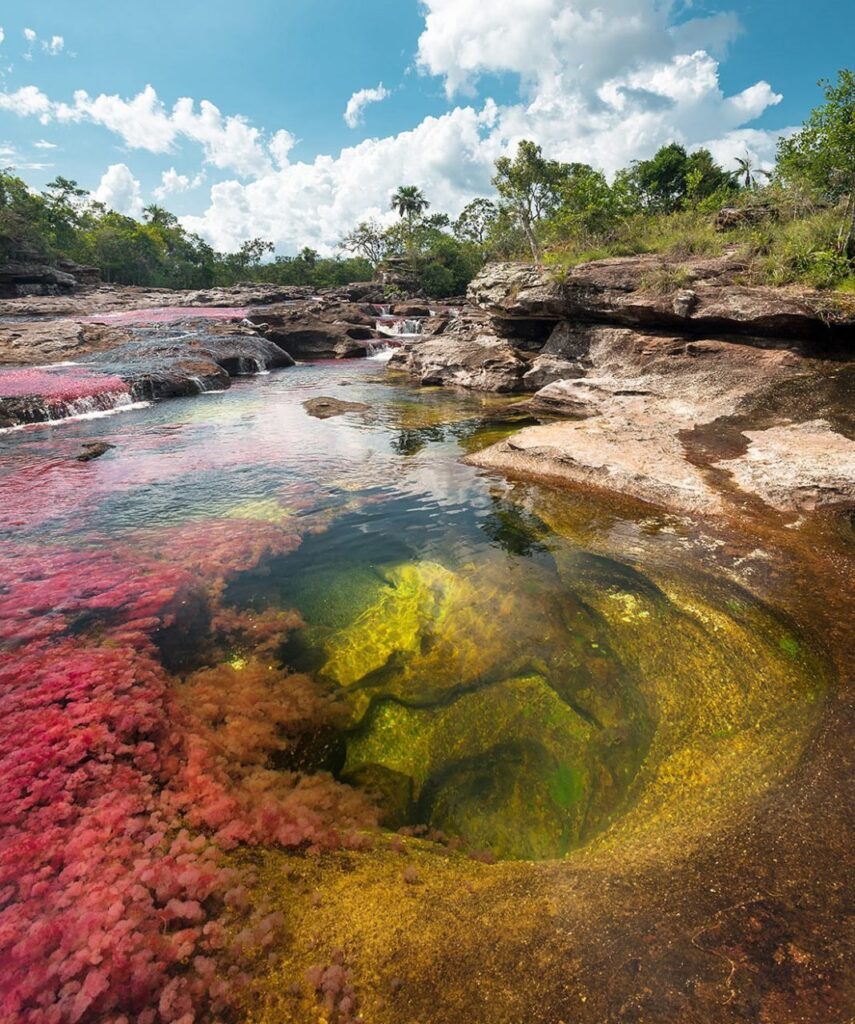
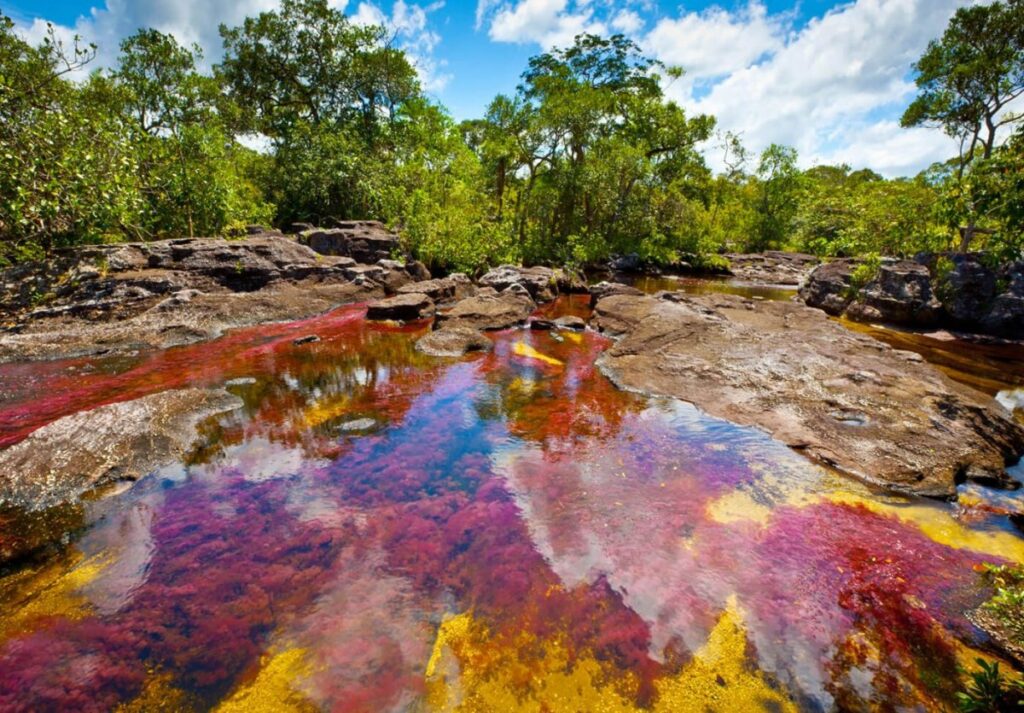
For a few months, when conditions are just right, the riverbed turns brilliant shades of red, yellow, green, blue and black. While these colors can appear as early as mid-May, and sometimes even in December, they're at their most intense in June and November.
Related reading
This "lost city" here is older than Machu Picchu
The colors emerge during the reproductive cycle of the aquatic plants living in the river, known as Macarenia clavigera, a species from the riverweed family Podostemaceae.
During the wet season, the river runs fast and high, so sunlight can't reach the plants on the riverbed. In the dry season, there isn't enough water to sustain them. The seasons rarely shift, so visitors hoping to catch the spectacle need to head to the national park in the months when the bloom is at its most striking.
This phenomenon exists nowhere else on Earth. The area itself is a biodiversity hotspot, where the Andes mountains meet the Amazon and Orinoco river basins, and it's home to countless endemic species.
Protecting the river
Before the pandemic, thousands of tourists flocked to see the spectacle every year, raising fears among scientists that the river could be endangered by over-tourism.
Flavia Santoro, head of ProColombia, the country's tourism board, says measures had to be taken to protect the area, so heavy was the flow of visitors. The agency "drastically limited the development" of tourism infrastructure in La Macarena, the town closest to the national park, and capped the number of tourists allowed into the park at 200 people per day.
There were so many visitors in the region that, despite the limits, environmental authorities closed the destination in December 2019 to protect the river. The closure was later extended because of the pandemic.
For 18 months, right up to its reopening in June of this year, Caño Cristales welcomed not a single visitor.
According to biologists, the effect proved beneficial for the region.
Faber Ramos, a park ranger and ecotourism coordinator for the Orinoco region of Colombia's national parks system, says the pandemic had a "positive impact" on the river's health, and that wildlife has become more abundant in it.
Related content
Piranhas and pink dolphins draw visitors to a remote Lake Tarapoto
At its peak, Caño Cristales drew around 15,000 tourists a year, and the tourism board forecasts that this number will keep climbing.
Colombia has seen a significant surge in visitors each year since the 2016 signing of a peace agreement with the FARC guerrillas, which formally ended a civil war that had lasted more than 50 years.
After the agreement was signed, millions of foreign tourists were eager to explore the country, while Colombians themselves set off for areas that had long been off-limits because of the war, such as Serranía de la Macarena National Park. In the period from 2017 to 2018 alone, the number of visitors to the country rose by 38%.
Balancing visitors and a fragile environment
The extended closure to tourists during the pandemic worked in Caño Cristales' favor.
That growth brought enormous benefits to the tourism industry and to small towns that suddenly found themselves able to meet travelers' demand for local guides, lodging and food, but it proved problematic for an environment that had remained almost untouched for half a century.
For decades, tourists, even Colombian ones, kept their distance from Caño Cristales, because the region was under the control of the FARC guerrillas.
"This area is a biodiversity hotspot," says Carlos Lasso, a senior researcher at the Humboldt Institute, the Colombian body responsible for the country's biodiversity.
Here the biological elements of the Andes, the Amazon and the Orinoco basins converge. There are many endemic and range-restricted species. For years, the Serranía de la Macarena region was a theater of war, and the threat is advancing at an alarming pace.
Deforestation is one of Colombia's most pressing problems, with more than 40 soccer fields' worth of forest cleared every day, and the La Macarena area is no exception.
Deforestation affects rainfall patterns, and rainfall has declined in this area, which means the water in Caño Cristales could turn from clear to a murky brown, ultimately threatening the survival of Macarenia clavigera.
And when the country reopens, Caño Cristales will face the challenge of not exceeding the ecosystem's capacity to receive visitors.
"This is a difficult area to protect," Lasso said, "because it's so far from any city."
"Although the government is doing a good job, there's always room for improvement," he said, adding that more park staff are needed to protect and monitor the region.
New opportunities
The pandemic offered a chance to reduce visitor numbers and make the region's health a priority.
Lasso is pragmatic: the river brings the region much-needed money, and local people have suffered enormous losses in income.
The recent reopening of Caño Cristales also includes 10 new ecotourism trails with strict hours from 7 a.m. to 4 p.m.
The river has designated swimming spots. Visitors, however, are not allowed to swim while wearing sunscreen or insect spray, because the plants are sensitive to the chemicals in these products.
Single-use plastics are also banned, including bags, bottles, straws, containers, plates and cutlery.
Tourism officials promote eco-minded accommodations, such as Wayabero Lodge, which champion the preservation of ecosystems and the development of sustainable programs for local communities.
Tourists come not only to see the river but also to spot an abundance of wildlife. Turtles, iguanas and eagles, Colombia's national bird, are just a few of the local species you can encounter in Serranía de la Macarena National Park, home to more than 400 bird species.
Despite the challenges, Lasso hasn't lost hope. "More and more young Colombians are learning about the environment and how to protect it."
If you go
While it's possible to visit the river without booking through an agency, you can't visit without a government-licensed guide. A permit to enter the park can be obtained in advance from the national parks office. There's a daily cap on visitors, and most permits go to tour agencies.
Although the limit is still far lower than it was before the pandemic, the national park admits a small number of visitors each day, so be sure to book your tours well in advance.
It's much easier to arrange an excursion through an agency. The Colombian Way offers in-country guide services with excellent local knowledge. Tours start at $658 for three days. Another agency, Amazon Adventures, offers a river tour starting at $709 for three days.
Most tours run two to four days and include visits to other parts of the park worth seeing. The closest town to Caño Cristales is La Macarena. You can't camp within the park, so tourists have to "commute" from the town, where basic lodging is available.
Be sure to bring plenty of cash, as ATMs in town are limited and don't always work. You'll need a yellow fever vaccination, because visitors are sometimes asked to show proof at the La Macarena airport, and you'll also need to take anti-malarial pills.
For Americans, there are travel advisories for certain parts of the country because of recent civil unrest, as well as advisories related to the ongoing Covid-19 pandemic.