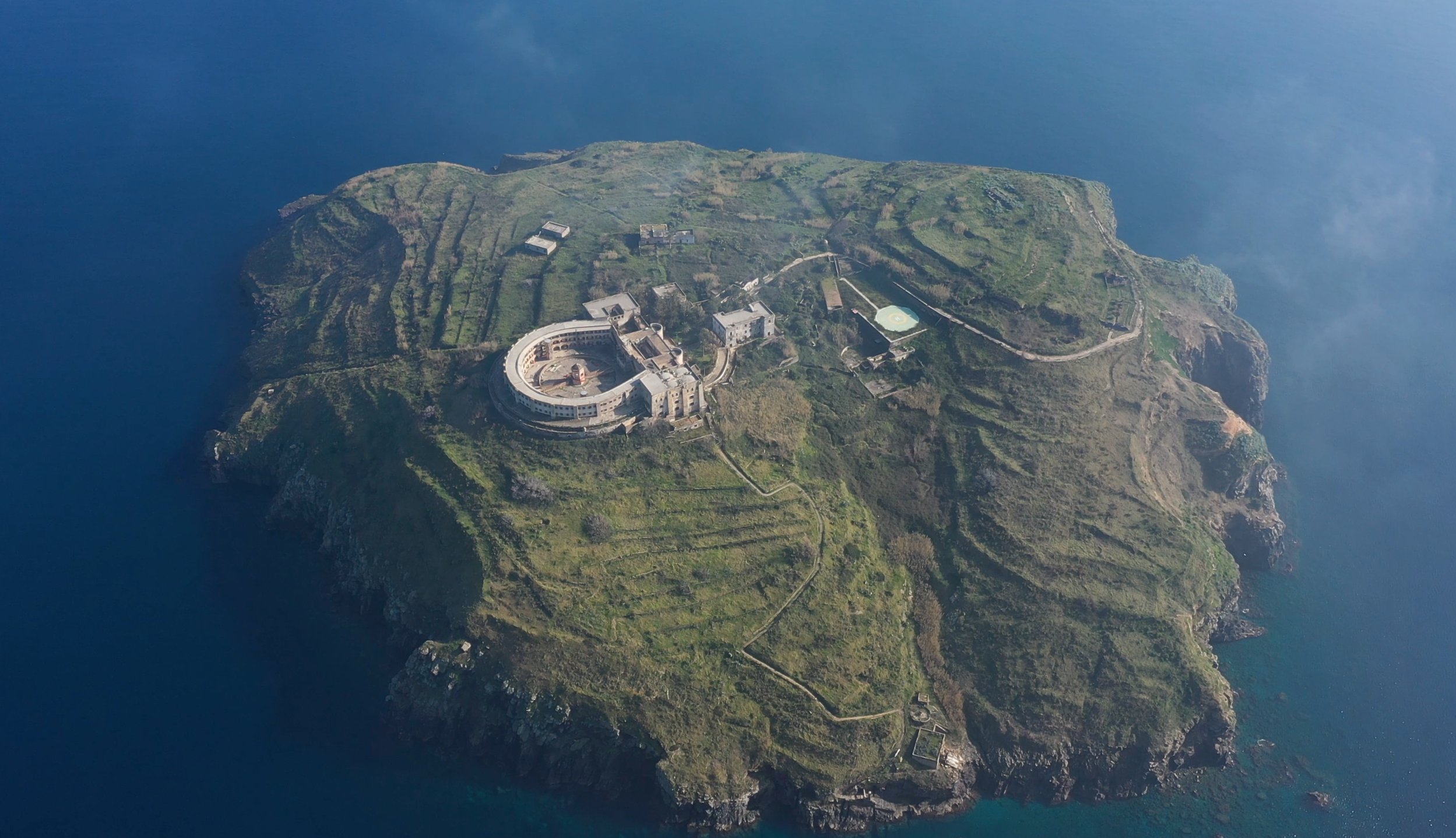


It is eerie, crumbling and abandoned. Santo Stefano is a tiny volcanic island between Rome and Naples where silence reigns, but not for long.
It was once Italy's Alcatraz. For centuries, criminals, bandits, anarchists and political dissidents were sent here to rot. From the Roman emperor Augustus, who banished his daughter to the neighboring island of Ventotene, to the Fascist regime that deported the people it branded enemies of the state, rulers throughout history used Santo Stefano as one of the grimmest places to send those they considered the worst of the worst.
The prison closed in 1965, and the island was left to decay. Until now, when it is being pulled back from the grave through an ambitious restoration project.
Partner links: booking through them supports the blog at no extra cost to you.
The Italian state will spend 70 million euros (86 million dollars) to breathe new life into Santo Stefano, turning it into an open-air museum and a tourist destination along the lines of America's Alcatraz. Repair work is already under way to secure the key areas, and a call for reconstruction proposals for the prison is set to be announced in June.
Silvia Costa, the government commissioner in charge of the restoration, said the goal is to restore every part of the colony, from the barracks to the original cisterns, "with an eco-friendly approach that respects the uniqueness of the island's natural environment".
A beautiful present hiding a dark past
Santo Stefano sits within a protected marine park. These days it draws fishermen, sunbathers, and divers and snorkelers lured by the giant groupers and friendly barracudas gliding through the crystal-clear waters. The seabed is rich in archaeological treasures and a World War II shipwreck.
The island has no dock. The only anchorage for boats setting out from the neighboring island of Ventotene, one nautical mile away, is an ancient Roman harbor with uneven steps carved into the rock. When the sea is rough, not even a canoe can approach it safely.
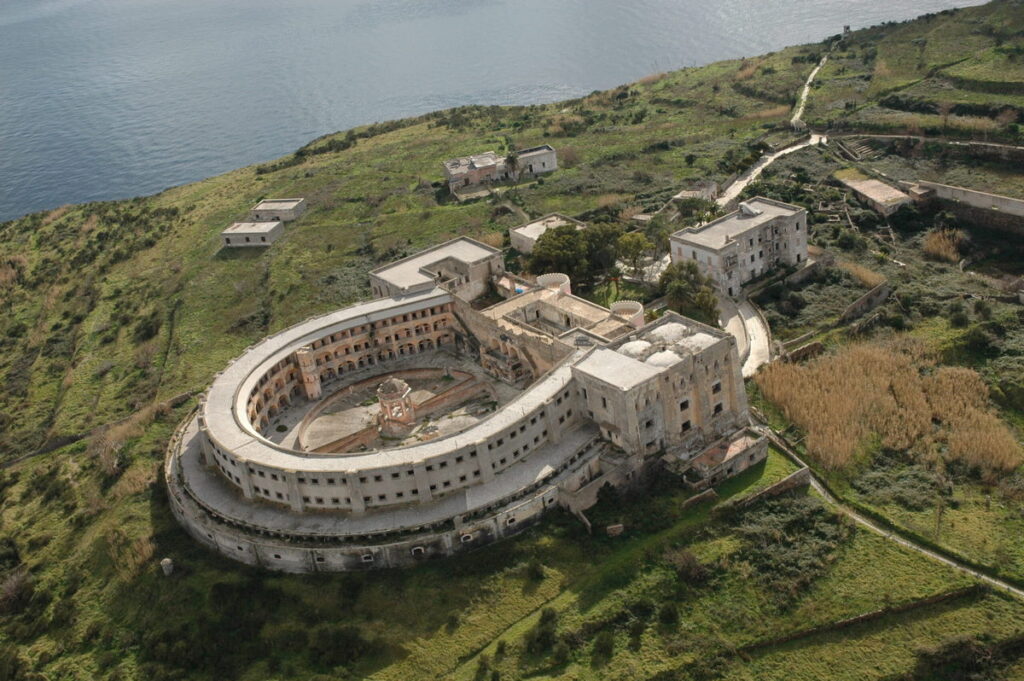
Today, the prison, a horseshoe-shaped pink fortress built by the Bourbon rulers in the 18th century, is reached by guided tours that include a 40-minute climb up a steep path. Three plaques greet visitors as they make their way up: "This is a place of suffering". "This is a place of atonement". "This is a place of redemption".
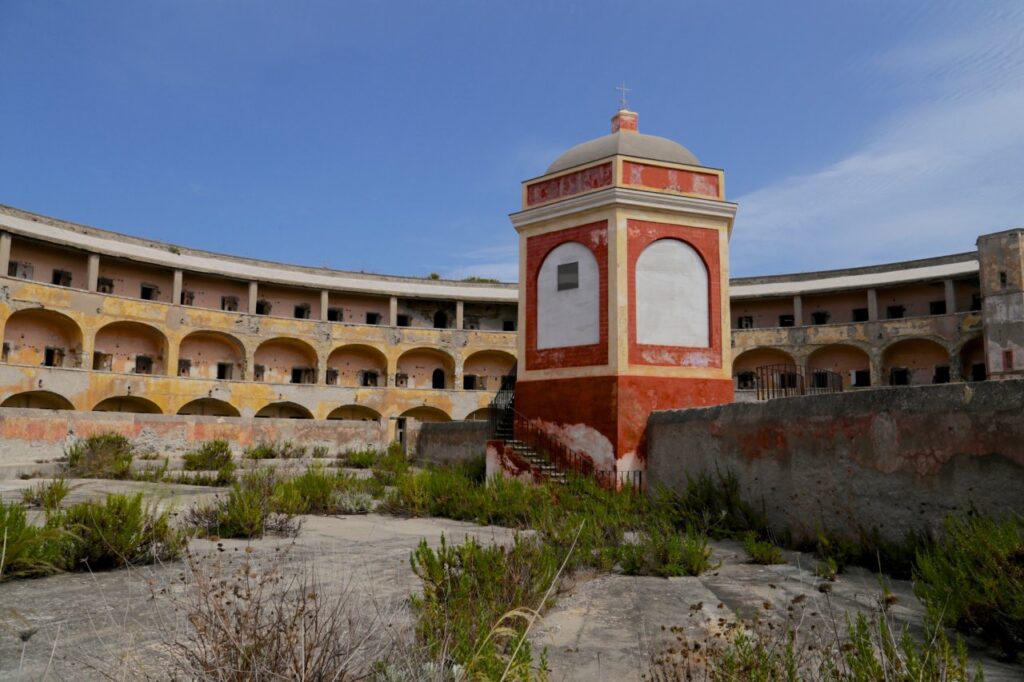
At the top, lush vegetation and palm trees grow over rusting prison cells, their doors hanging off the hinges and paint peeling from the walls. There are stairways and even a football pitch where inmates once played.
Under the restoration master plan, Santo Stefano will host a multimedia open-air museum dedicated to the history of the prison and its inmates, art studios, research centers and European Union workshops.
A permanent "walking" exhibition will begin at the future dock and unfold across the wild landscape, dotted with dry-stone walls first built by the prisoners.
The former warden's house and the football-pitch changing rooms, where inmates washed after matches, will be turned into budget-friendly hostels with around 30 rooms.
The bakery, where prisoners baked bread every day, will become a restaurant-cafe with a panoramic terrace where visitors can sip an evening drink while watching the sunset. On clear days the view stretches to Vesuvius and the island of Ischia, 20 miles away. Though the garden is abandoned now, it will be replanted with the flowers and plants that once grew here. The prisoners' orchards will be revived too.
"We want the island to attract visitors all year round, not just during the crowded summer months", Costa says.
"Tourism has to be sustainable, but Santo Stefano will become something bigger. It will be a hub for scholars from around the world, coming together on key issues such as environmental policy, human rights, freedom of speech, European citizenship and Mediterranean dialogue".
Reimagining the past
The master plan sets out the concept and vision for the restoration, which will take shape through the winning proposals for each individual site. Reconstruction is due to be completed by 2025.
One idea is to introduce "virtual prisoners" whose voices narrate stories from the cells, which themselves could be lit in creative ways. The turrets surrounding the prison, the central chapel and the cemetery will also be restored, and old objects found in the buildings, such as photographs, furniture and beds, will be put on display. There are also plans to open a bookshop and set up apps to guide visitors.
There is also a chance that the prison's semicircular loggia will become a venue for performances and events. Its infamous horseshoe shape, rather like an inverted amphitheater, is called a panopticon: a type of prison designed so that guards at the center could see all the cells around them. At the center stands a church, symbolizing spiritual authority over the inmates' souls and a constant reminder of their crimes (or, in the case of political prisoners, "crimes") and the penance they were meant to serve.
"We started from scratch", Costa says of her ideas.
"It had been closed for decades, in ruins. There is no light, no running water. Access is difficult". The reconstruction aims to tell the story of the torment endured in this prison, to preserve this symbolic place of memory, while still looking to the future".
A sad history
Along with its neighbor Ventotene, Santo Stefano served as a prison from the days of ancient Rome, when it was more a place of confinement than a fortress. On one side of the island there is a so-called "bath", a kind of natural jacuzzi cut from the dark rock with steps, where Roman guards would take their prisoners to cool off.
The high cliffs and wild vegetation made escaping from Santo Stefano impossible. The few who tried drowned.
The 18th-century prison enforced strict, centralized control over every cell. Its layout recalls Dante's Inferno: split across three floors with 33 cells on each.
Typical punishments ranged from flogging to standing for hours under the scorching sun without water, in full view of everyone. Inmates, divided into clans along political and geographical lines, cheered when their enemies screamed in agony.
They could not even find comfort in nature. Every cell was windowless and faced inward, toward the guard patrols.
Food was scarce. Meals consisted mostly of bean soups; meat was served once a month.
A particularly bleak chapter of the islands' history came during Fascist rule. Opponents of the regime, students among them, were sent to Ventotene and Santo Stefano. Those held on Ventotene were allowed to move around the island, while the "more dangerous" prisoners were locked up and often tortured in the cells of Santo Stefano. Many died.
After the war, the island became an ordinary prison once again. Things improved in the 1950s with the arrival of an enlightened director, Eugenio Perucatti. He took a more humane approach, making the prison livable and turning it into a small, self-sufficient economy.
Perucatti built a cinema and a football pitch. He opened craft workshops run by the inmates, created plots for growing fruit and vegetables, and set up a bakery to make fresh bread and pizza. The prisoners helped keep the prison clean and were issued a special currency they could use to buy things from one another. There were cobblers, carpenters, masons and cooks.
Inmates were allowed to decorate their cells in pastel colors to make their stay more comfortable.
"My grandfather believed in the power of redemption through work, and that every prisoner deserves a second chance. He gave them hope and improved their living conditions. Rehabilitation was key", says Simone Perucatti, Eugenio's grandson. His family's story, along with the memories passed down to him, will become part of the museum.
"He moved to the island to live with his whole family. My father grew up in the prison and used to tell me about a criminal named Pasquale who looked after him, spoiled him, took him swimming and on adventures".
Pasquale killed his wife, who was having an affair with Pasquale's father while Pasquale was away fighting in World War II. He threw her down the stairs and dismembered her body, but later turned himself in to the authorities, Perucatti says.
"For my father, still a child at the time, it was hard to believe that he was mingling with such terrible criminals, who showed him kindness and hugged him".
Perucatti's grandfather, the prison director who turned the community of inmates into one big family, even held his daughter's wedding celebration inside the prison.
"He built a sewer system, brought in electricity and water, and opened the cells. The inmates worked to improve the paths and the cottages. They grew grain and tended terraced fields. There was a butcher and an optician, and goats for fresh milk. My father had a pet lamb", Simone Perucatti recalls.
Some locals on nearby Ventotene still hold vivid memories of the prison; they used to sail over to play against the inmates' football team. A few former guards are still alive. Ventotene's restaurateurs recall how prisoners on parole would sometimes drop by for lunch with their officers.
The prison that sparked a political revolution
Restoring Santo Stefano will boost the tourist appeal of Ventotene, the authorities hope. The place is already a tourist hub: sunset boat trips set out from here, with people sipping cocktails out on the water. Today, in this patchwork of brightly painted fishermen's cottages and old grottoes, barely a trace of the past remains.
These days visitors can even spend the night in the former prisoners' quarters, now painted yellow and purple, and eat in their dining halls on the village square beside the Bourbon castle.
Ventotene's history is not entirely dark. The overwhelming majority of political prisoners during the Fascist era turned the island into an impromptu training camp for politics and philosophy. Altiero Spinelli, who went on to become one of the founders of the European Union, was sent here in 1941 as an anti-Fascist prisoner. During his time on the island he became one of the authors of the "Ventotene Manifesto", a call for a united Europe. It was written as a text for the Italian Resistance, but it went on to pave the way for European integration.
Another of the political prisoners was Sandro Pertini, who was held in the Santo Stefano prison from 1935 to 1943. He later became president of Italy in 1978.
For now, tourists sunbathe on the black rocks beneath Ventotene's quirky lighthouse. The view of the Santo Stefano prison from here is believed to have inspired Spinelli's ideals of a free and united Europe.
And once the island is restored, the authorities hope to be able to honor the people who were imprisoned here, and the politics that the internments of the 20th century inspired.