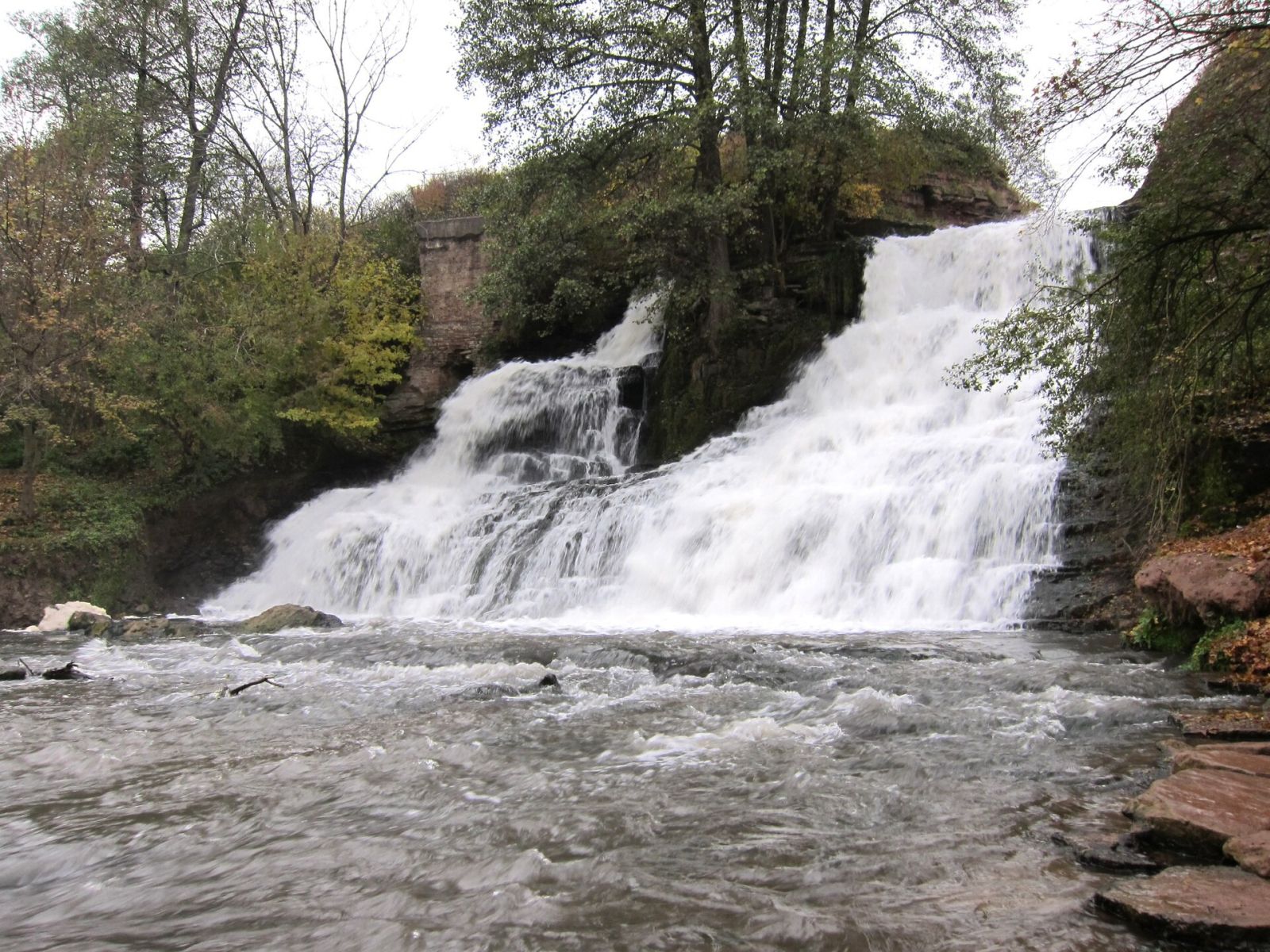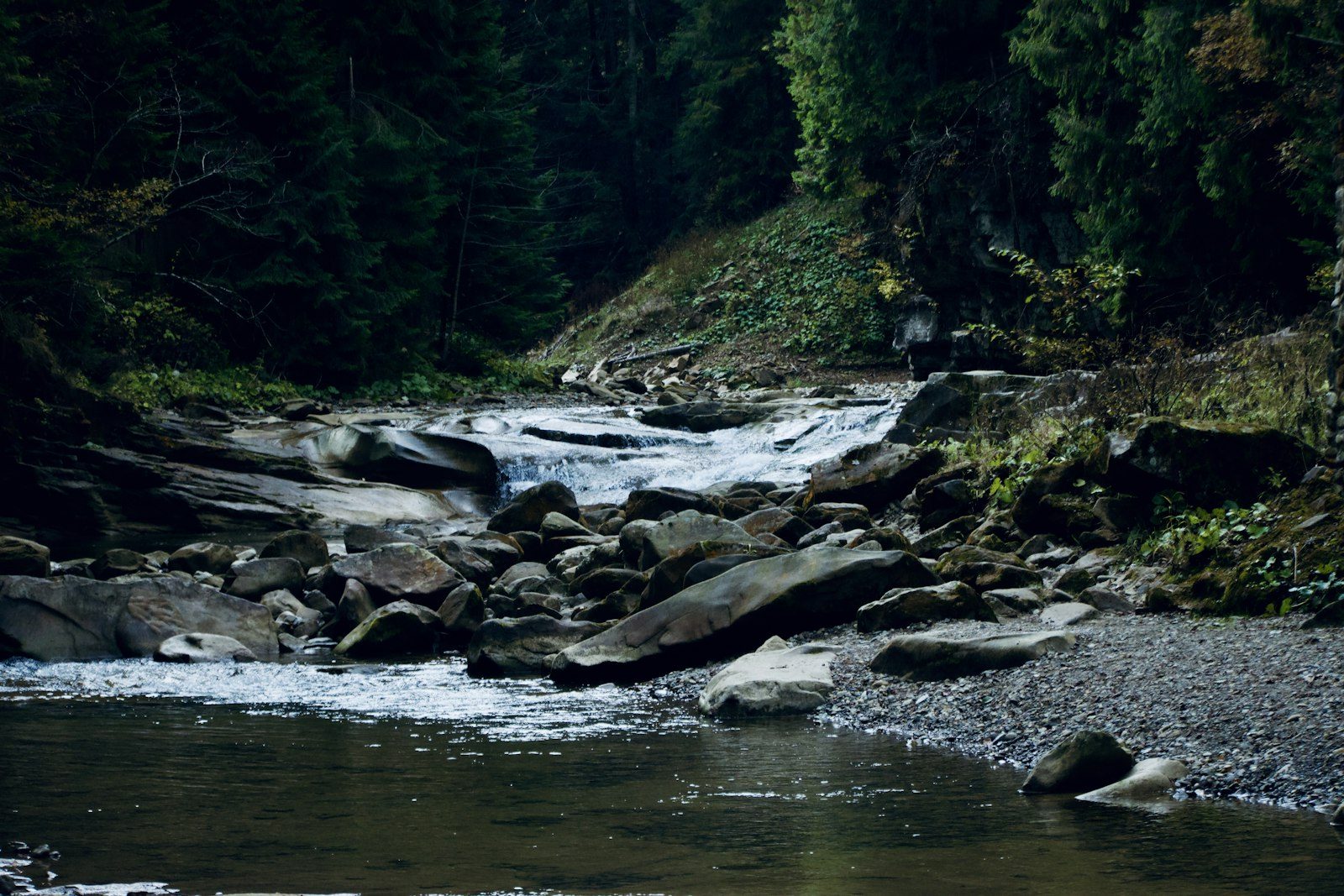


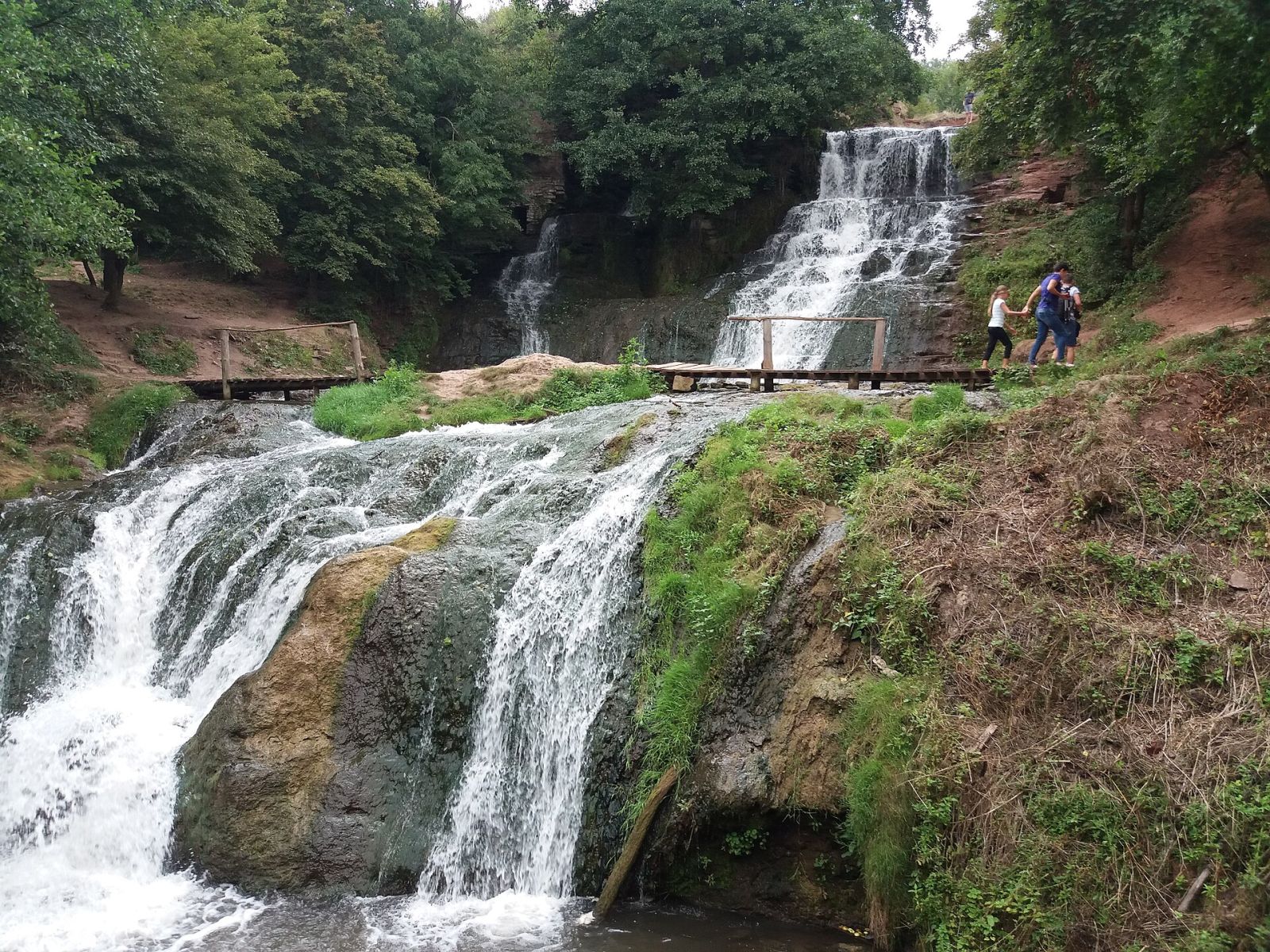
Dzhurynskyi Waterfall in the Ternopil region drops around 16 metres in three cascades, and that is exactly what makes it the largest lowland waterfall in Ukraine. «Lowland» is the key word here: most of the country's famous waterfalls hide away in the Carpathians, while this one stands in the middle of a Podillia field, in the deep hollow of the Dzhuryn River near the village of Nyrkiv. And here is one more detail that upends expectations: it is not entirely natural.
Where exactly to look and why it has two names
The waterfall lies in the Chortkiv district of the Ternopil region, in the Chervone tract, between the villages of Nyrkiv and Ustechko. You will come across two names, and both are correct: Dzhurynskyi (after the Dzhuryn River) and Chervonohorodskyi (after the ancient town of Chervonohrad, whose ruins remain nearby). This whole area is part of the Dnister Canyon National Nature Park, which appears on the lists of the seven natural wonders of Ukraine.
The coordinates for your navigator are simpler than any directions: 48.8051, 25.5877. But GPS will bring you to the edge of the village rather than to the water itself, so for the last stretch rely on the lay of the land.
The tallest lowland waterfall, not «just a pretty one»
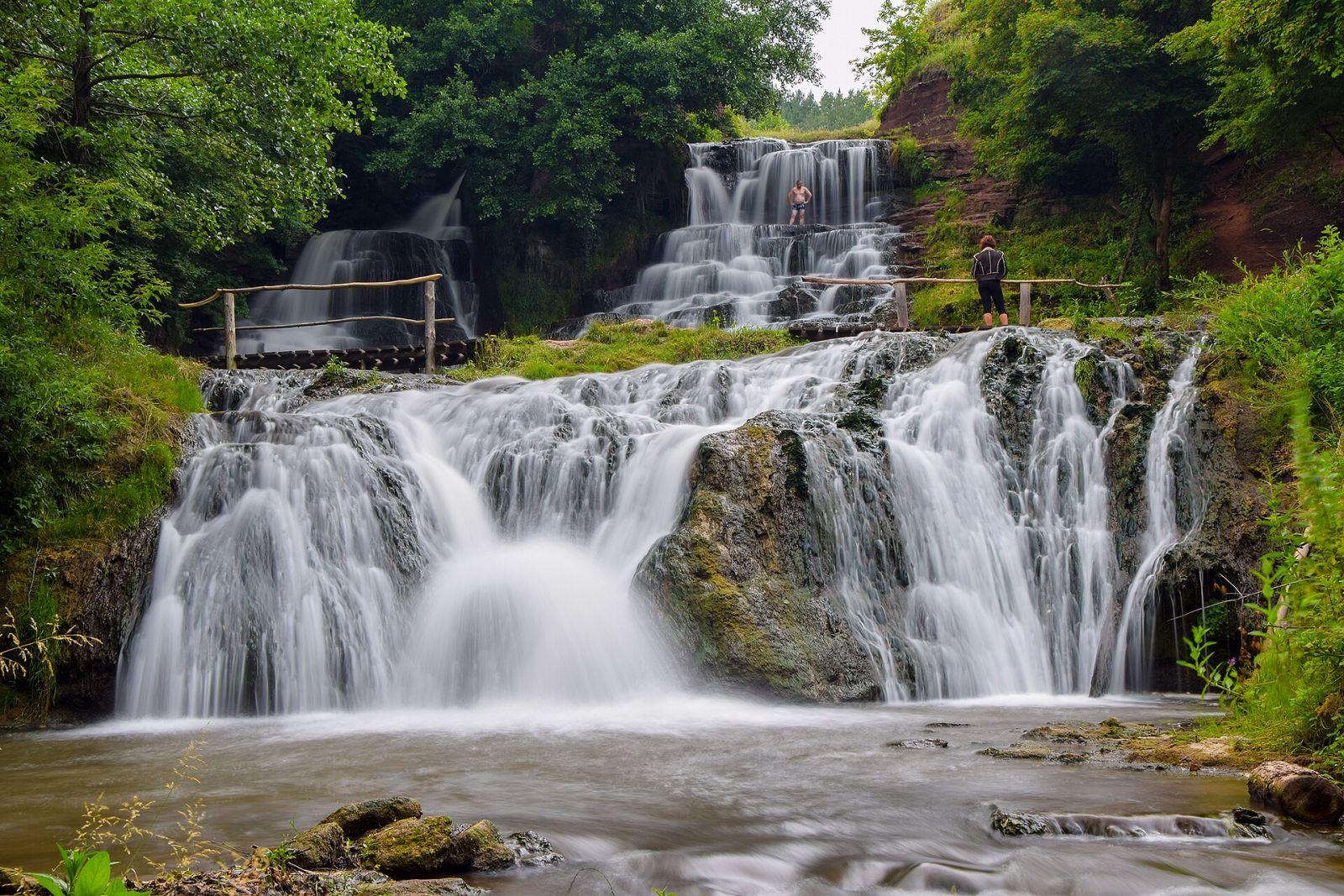
The numbers carry real weight here, because the whole reputation of the place rests on them. The stream is up to 20 metres wide and plunges down in three steps, carving out deep pools below. A small lake gathers at the foot, where people swim in summer. For lowland Ukraine, 16 metres is a lot: Carpathian waterfalls can be taller, but they are in the mountains, whereas here the water falls where by all logic it should be quietly flowing across the plain.
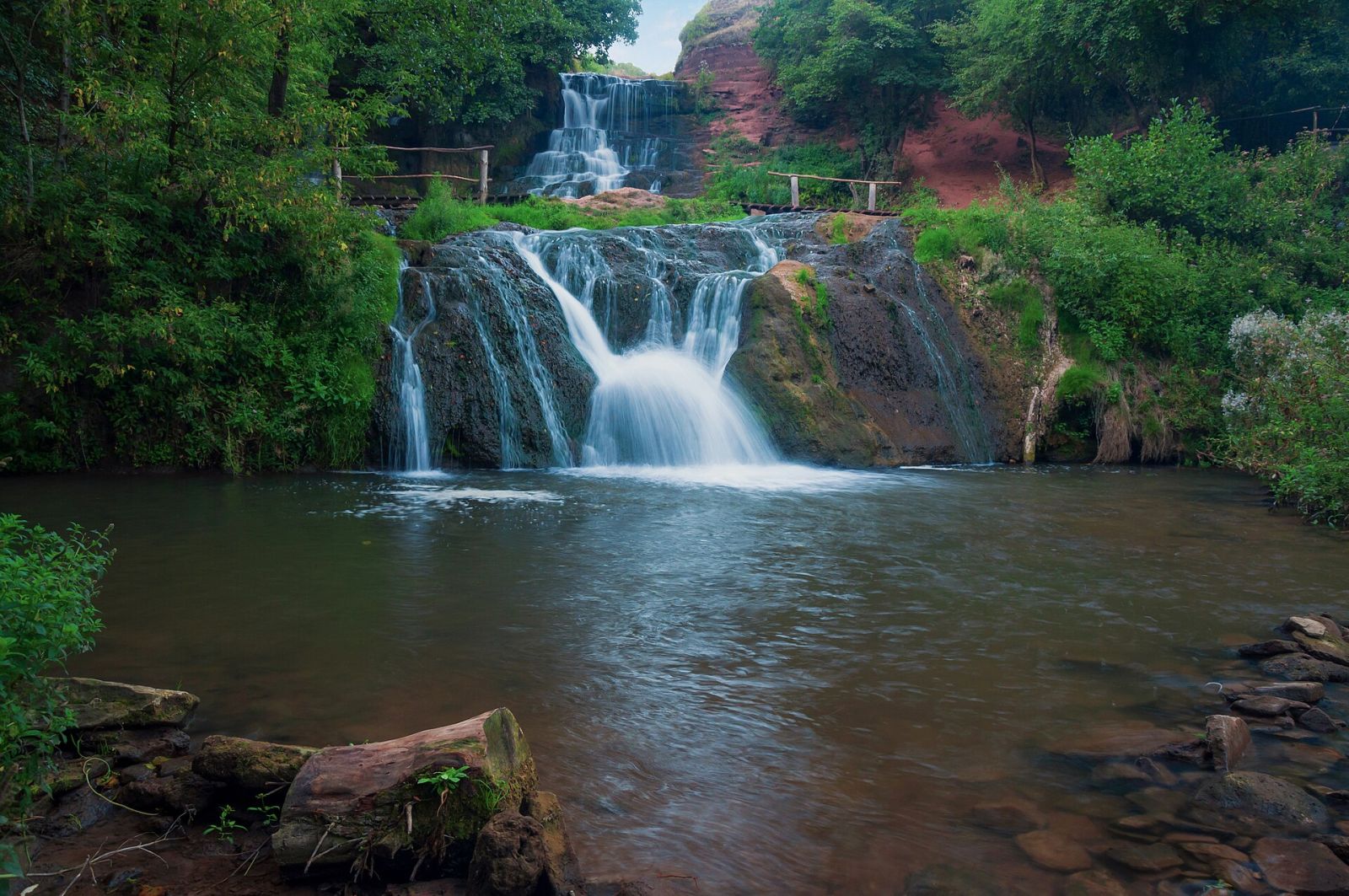
The most surprising thing is that this is a man-made object. The riverbed was diverted and the drop raised to power a water mill: the waterfall has been mentioned in a geographical dictionary since 1880, the mill worked here until the 1950s, and after it a small hydroelectric plant ran until the 1960s. Maps from 1779-1782 already show both the waterfall and the mill on this spot. In other words, the «natural wonder» is actually the result of several centuries of human activity, and that does not make it any less striking.
How to get to the waterfall
The easiest way to reach the Dzhurynskyi Waterfall is by car. From Ternopil it is about 100 kilometres and roughly two hours of driving through Zalishchyky along the T-2002 road. The asphalt does not run all the way to the water: the last two kilometres or so are a dirt road that washes out after rain, so in bad weather an off-road vehicle comes in handy, and a passenger car is better left higher up so you can continue on foot.
| From | Distance | How to travel | Note |
|---|---|---|---|
| Ternopil | about 100 km | By car through Zalishchyky, T-2002 road, about 2 h | Last 2 km are a dirt road |
| Zalishchyky | about 25 km | Suburban bus to Nyrkiv village (morning and midday) | Then on foot past the castle |
| Chortkiv | about 45 km | Car or minibus to Nyrkiv, then on foot | Check the timetable on the spot |
| Nyrkiv village | about 5 km | On foot along a field road past the castle ruins | The most scenic approach |
Getting there without a car is doable too, just allow more time. A suburban bus runs from Zalishchyky to Nyrkiv (usually two trips a day, in the morning and around noon), and from the village you walk to the water. Landmarks to follow are the chapel of the Poniński family and a children's camp; once you pass the castle, a field road takes you down to the waterfall. Village bus schedules change, so check them the day before rather than by this article.
When to go to catch it at full flow
Spring is beyond competition. In April and May, when the snow melts and the rains come, the Dzhurynskyi Waterfall is at its most powerful, and that is exactly when to catch it. In summer the flow weakens, but the little lake below warms up, and locals come here to escape the heat; the water stays cool, though a swim is possible. In winter, in hard frosts, the cascades grip with ice, which is a story of its own for photos, even if the road becomes harder.
The main practical tip is not about the season but the time of day. The place is popular, and on weekends and holidays a lot of people and cars gather by the water. Come in the morning: your shots will come out without other people's backs in them, and you will find parking closer.
| Season | What you will find | Who it suits |
|---|---|---|
| April-May | The fullest flow | For the impression and photos |
| Summer | Weaker flow, warm lake | A swim, a relaxed day with kids |
| Winter | Icy cascades, few people | For quiet and an unusual shot |
What to see nearby on a single trip
Driving a hundred kilometres for the waterfall alone would be a shame, and the good news is that a whole cluster of sights surrounds it. Right above the hollow stand the ruins of Chervonohorod Castle with its towers, whose roots go back to the 14th century, and the remains of the Church of the Ascension. Nearby survives the Poniński family chapel and tomb, which against the backdrop of the field looks almost surreal.
Downstream along the Dzhuryn, about half an hour's walk away, hides the so-called Hermit's Cave, where in the 19th century a monk lived and carved into the stone. And this whole spot is only a fragment of the Dnister Canyon, so it makes sense to combine the waterfall with Zalishchyky and the canyon panoramas in one route over a day or two.
How much it costs and what to bring
The waterfall itself is out in the open, and there is no entrance fee in the classic sense. In practice, during the season a small charge for entry or parking may be collected near the turnoff, and different visitors describe it differently, so set aside a symbolic amount in cash and check on the spot. In the warm months there is a kiosk, but do not count on developed infrastructure.
Bring shoes you would not mind getting muddy: the descent to the water can be slippery, especially after rain. Carry drinking water and a snack with you, and take your rubbish back out, because the park is alive, not a stage set. If you are coming to swim, bear in mind that the bottom near the cascades is stony and uneven.
Where you should start
If this is your first time and you want the full wow effect, plan for late April or May, a weekday morning, and a full day for a route that takes in the castle and the canyon. If instead you are coming with children in summer for a day by the water, shade, the lake and calm matter more to you than the force of the stream, and then any warm morning will do. The main thing is not to try to squeeze the waterfall in between other errands at a gallop: the place rewards those who give themselves the time to walk down to the water itself and linger there a while.