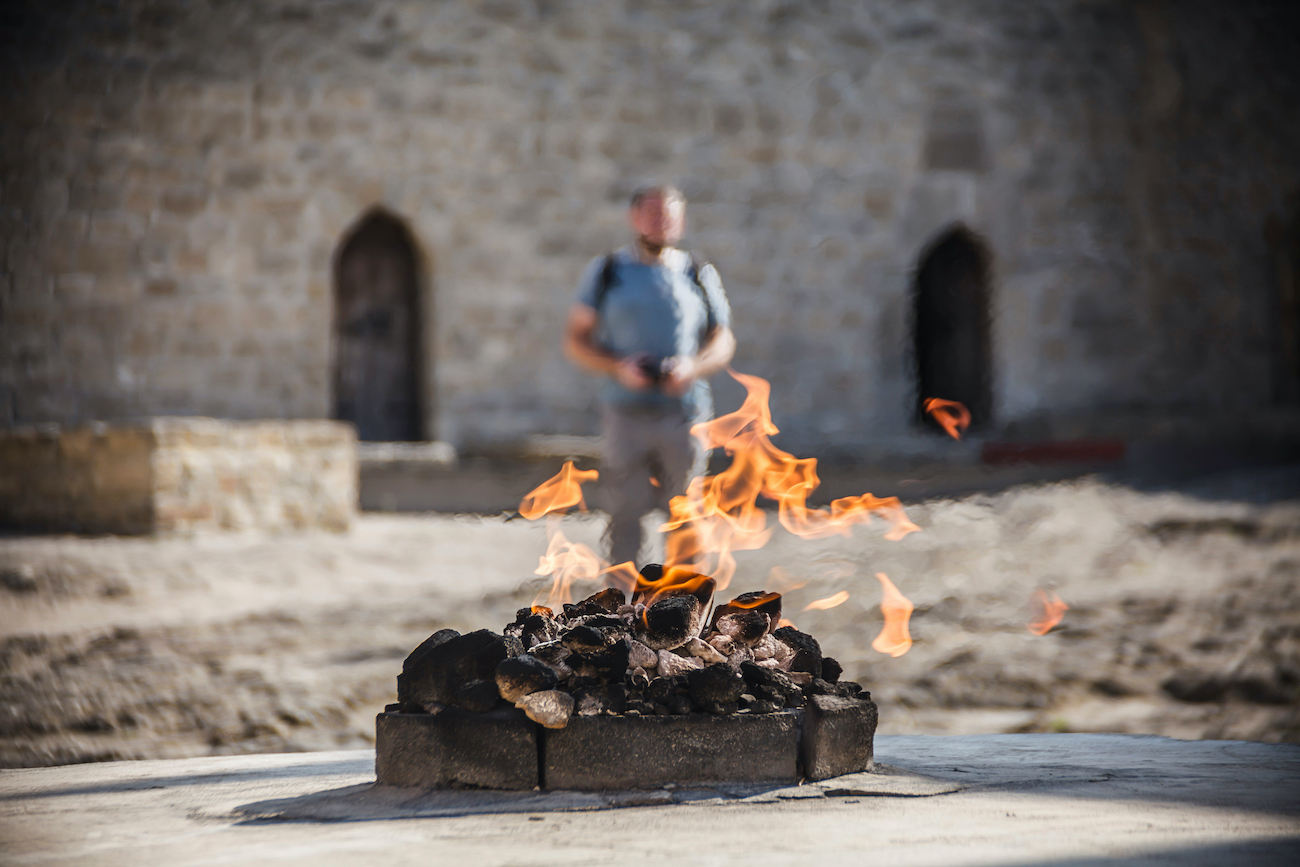


"This fire has burned for 4,000 years and it has never stopped," says Rahila Aliyeva. "Rain, snow, wind: it never stops burning."
Ahead of us, tall tongues of flame dance restlessly across a 10-metre stretch of hillside, making a hot day feel even hotter.
This is Yanar Dag, which means "burning mountainside," on Azerbaijan's Absheron Peninsula, where Rahila works as a guide.
Partner links: booking through them supports the blog at no extra cost to you.
A side effect of the region's rich reserves of natural gas, which occasionally seeps up to the surface, Yanar Dag is one of several spontaneous fires that have fascinated and frightened travellers to Azerbaijan for thousands of years.
The Venetian explorer Marco Polo wrote about these mysterious phenomena when he passed through the country in the 13th century. Other Silk Road merchants carried word of the flames as they set off for other lands.
This is how the country earned its nickname, the "land of fire."
An ancient religion
Azerbaijan once had many such fires, but because they lowered the gas pressure underground and interfered with commercial gas extraction, most of them were extinguished.
Yanar Dag is one of the few remaining examples, and perhaps the most spectacular.
In their day, these fires played a key role in the ancient Zoroastrian religion, which was founded in Iran and flourished in Azerbaijan during the first millennium BC.
For Zoroastrians, fire is the link between people and the supernatural world, as well as a means of gaining spiritual insight and wisdom. It purifies, it sustains life, and it is a vital part of worship.
Today, most of the visitors who come to the Yanar Dag visitor centre come for the spectacle rather than any religious observance.
The sight is most striking at night or in winter. When snow falls, the flakes dissolve in the air without ever reaching the ground, Rahila says.
Despite the claimed antiquity of the Yanar Dag flame, some argue that this particular fire may only have been lit in the 1950s. To see it, you need to drive 30 minutes north of central Baku. The centre has only a small cafe, and there is nothing else of interest in the area.
The Ateshgah Fire Temple
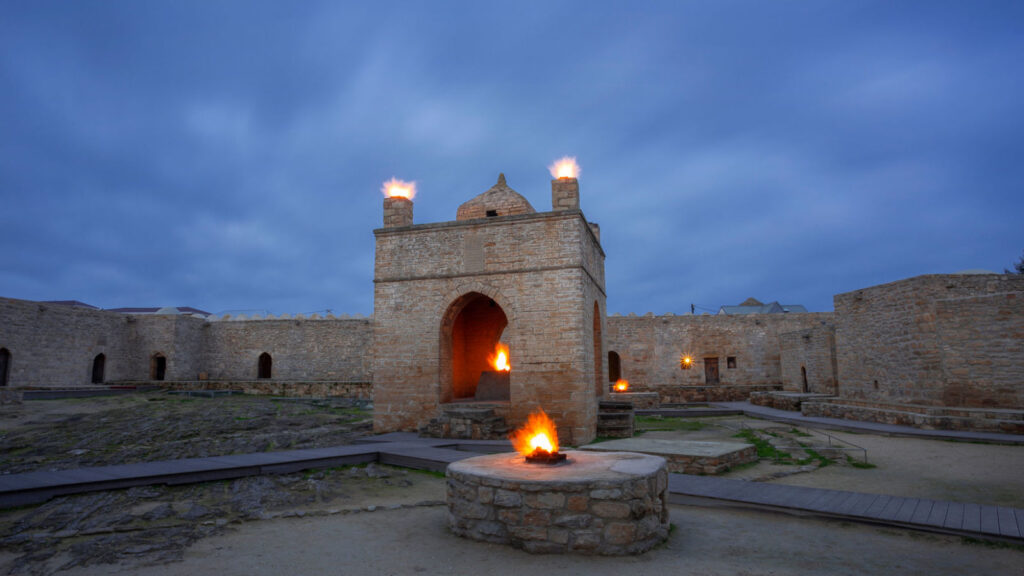
For a deeper look at Azerbaijan's history of fire worship, visitors should head east of Baku to the Ateshgah Fire Temple.
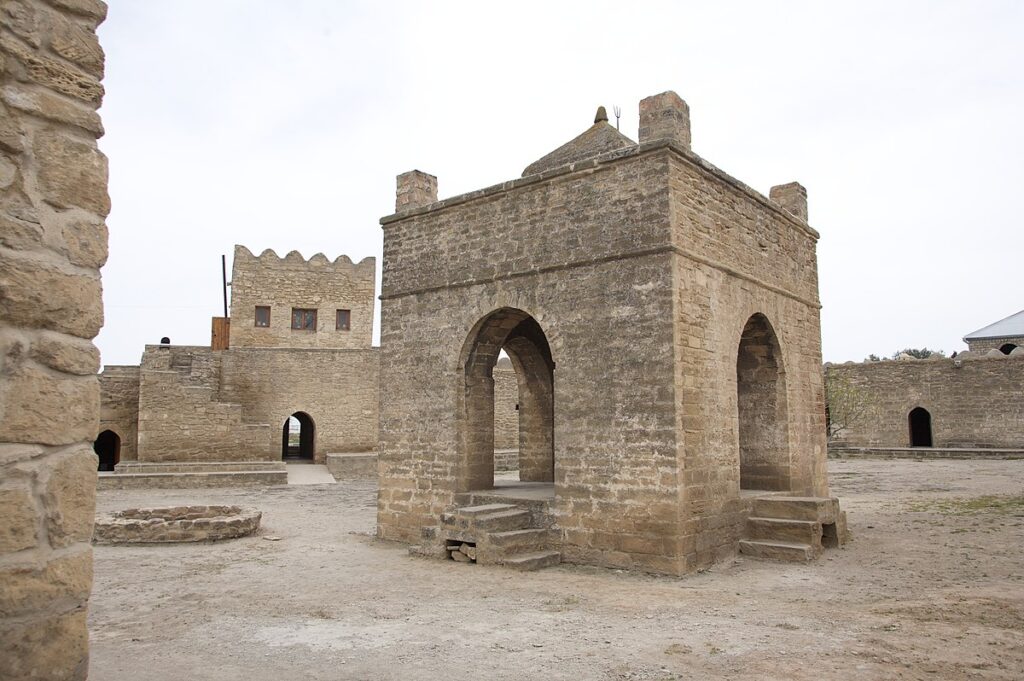
"Since ancient times, they have believed that [their] god is here," our guide tells us as we enter the pentagonal complex, which was built in the 17th and 18th centuries by Indian settlers in Baku.
Fire rituals at this site date back to the 10th century or even earlier. The name Ateshgah comes from the Persian for "house of fire," and the centrepiece of the complex is a domed altar-shrine built over a natural gas vent.
Until 1969, a natural eternal flame burned here on the central altar, but these days the fire is fed from Baku's mains gas supply and is lit only for visitors.
The temple is associated with Zoroastrianism, but its history is better documented as a Hindu place of worship.
Merchants and ascetics
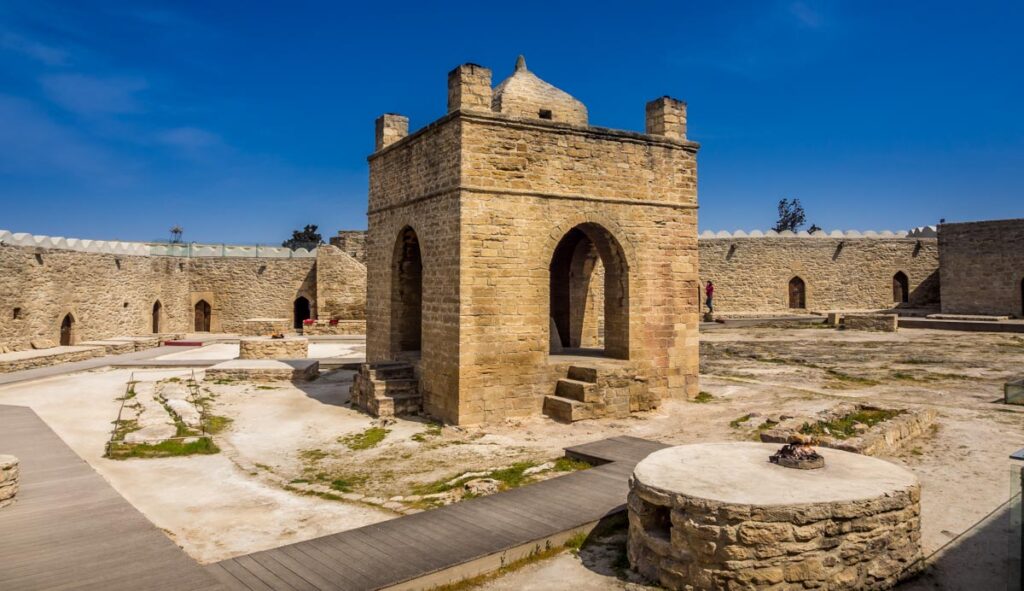
Built in the style of a caravanserai inn, the complex has a walled courtyard surrounded by 24 cells and rooms.
These were used by pilgrims, passing merchants (whose donations were a vital source of income), and ascetics, some of whom put themselves through ordeals such as lying on caustic quicklime, wearing heavy chains, or holding an arm in a single position for years on end.
The temple stopped being used as a place of worship at the end of the 19th century, when the development of nearby oil fields made the worship of Mammon ever more widespread.
In 1975, the complex became a museum, in 1998 it was added to the UNESCO World Heritage list, and today it welcomes around 15,000 visitors a year.