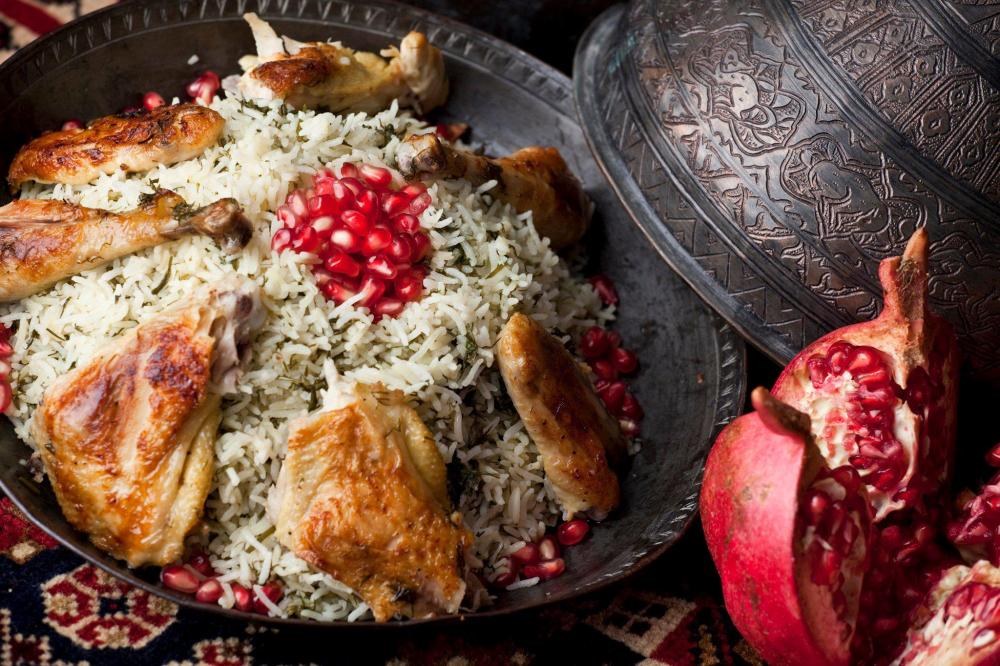


Azerbaijan's history, and its flavor, goes back more than 2,000 years.
Sitting between East and West, in a prime spot along the Silk Road routes, traders passed through here for centuries, bringing spices, ingredients, and culinary influences.
Today, Azerbaijani cuisine has Eastern roots and shares plenty with the dishes of neighboring Iran and Turkey. Local staples like kebab and pilaf are hearty and filling, yet the country also overflows with fresh, wholesome fruits and vegetables.
Partner links: booking through them supports the blog at no extra cost to you.
Here's our guide to food and drink in Azerbaijan.
Tea
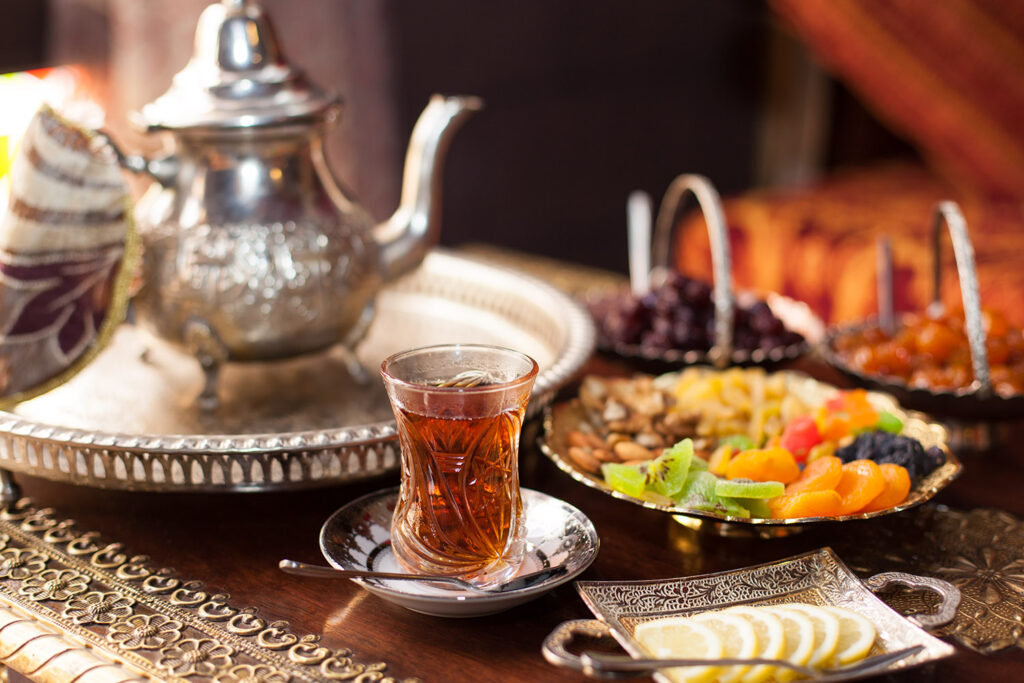
It might sound counterintuitive, but in the summer heat Azerbaijanis love to drink hot tea, which is believed to help the body cool down naturally.
Even as coffee culture flourishes across the country, most Azerbaijanis still begin their day with a cup of tea.
In the regions, tea is almost always brewed with thyme or cinnamon, and while the water boils in a samovar heated by burning tree branches, it takes on a distinctive forest aroma.
An Azerbaijani Breakfast
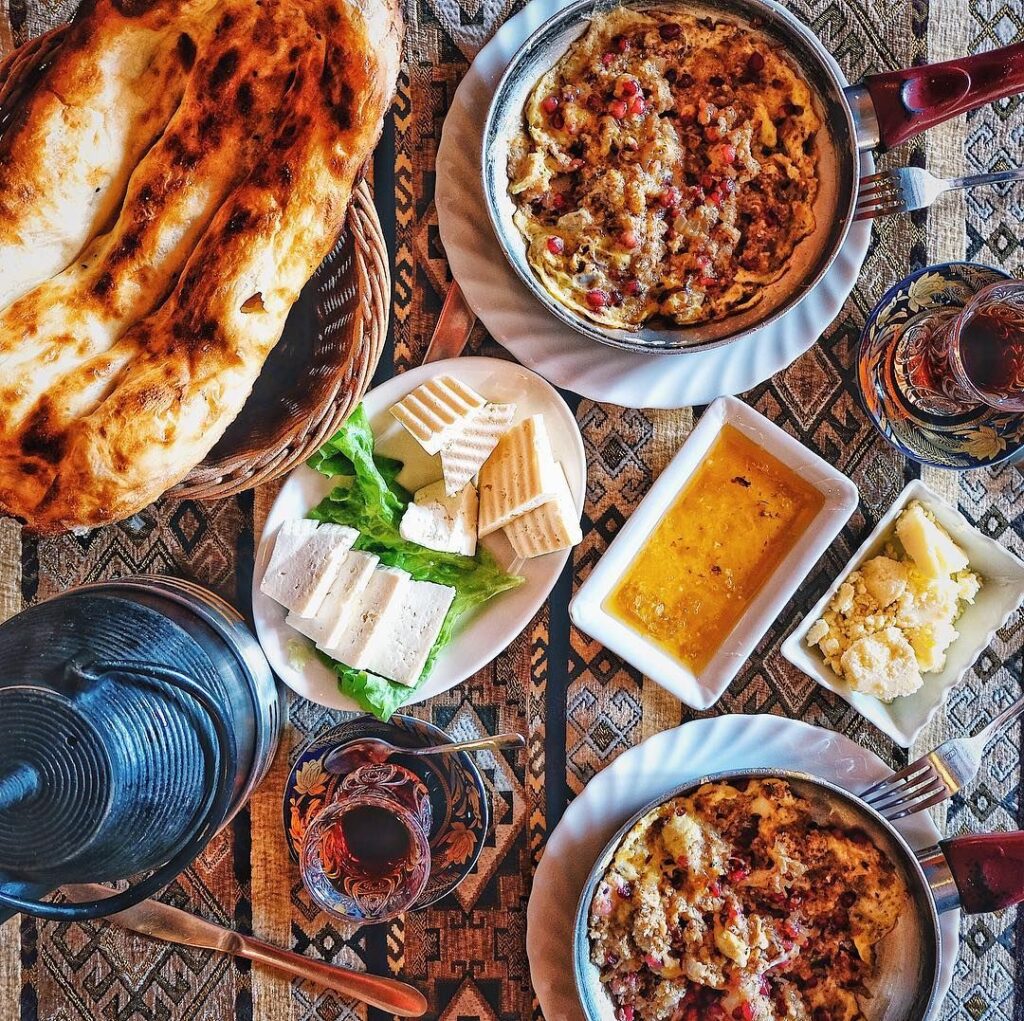
While the preparations may vary across the country, and locals often add their own twist to the familiar version, breakfast is fairly consistent everywhere.
A wide variety of colorful components revolves around the star of the show: freshly baked tandir bread.
Whether it's honey and kaymak (thick clotted cream), goat cheese, butter, or eggs with tomatoes, the crispy bread is the welcome companion to all of these pairings.
To make eggs with tomatoes, the finely chopped tomatoes are fried first, until they release their juices. Only then are the eggs added, and the dish is taken off the heat with a runnier consistency than ordinary scrambled eggs.
It's served in a small pan and eaten by dipping tandir bread into the savory blend of eggs and tomatoes. Unsalted goat cheese on the side is used to cut the saltiness and balance the palate.
An alternative is kuku, an omelet shaped like a pie, a great option for anyone who loves greens. Fresh cilantro, dill, and green onion are finely chopped, mixed with five or six eggs, and then fried in a pan until crisp on the outside.
Qutab
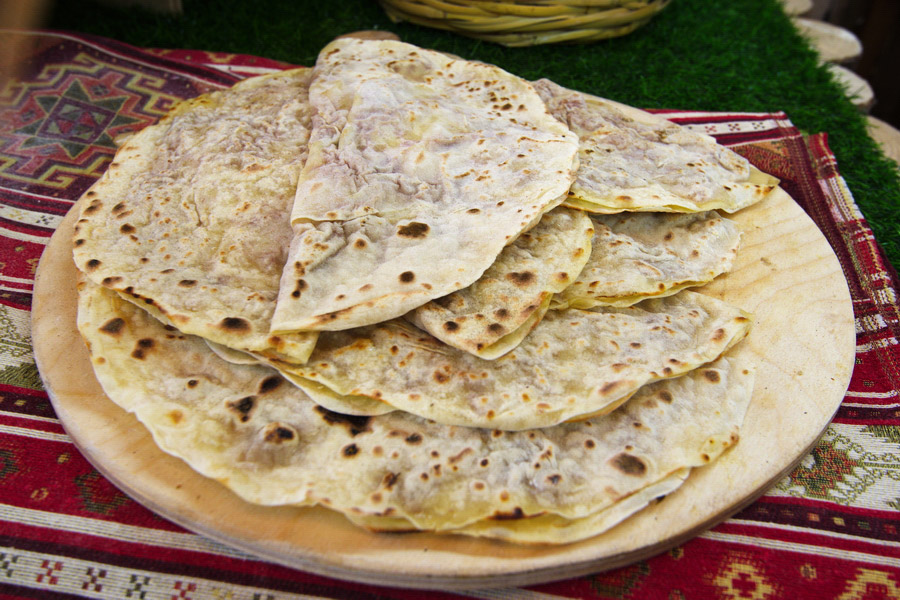
When it comes to street food, Azerbaijan is known for its doner, Turkish-style meat sandwiches, but qutab is the lighter option.
Classic qutab, made from lavash (a thin flatbread), is filled with minced meat; the vegetarian version might include pumpkin or fresh greens such as spinach, cilantro, onion, and dill, folded into a crescent shape and fried on a flat pan without oil.
Qutab, with its soft center and crispy edges, is sprinkled with sumac, a bright, tangy, berry-colored spice, and fresh pomegranate seeds (when in season). Both the meat and the herb qutab are served with ayran, a frothy sour milk mixed with water and salt. For true food lovers, there's also a smaller variation stuffed with minced camel meat, called jorat qutab.
Mangal Salad
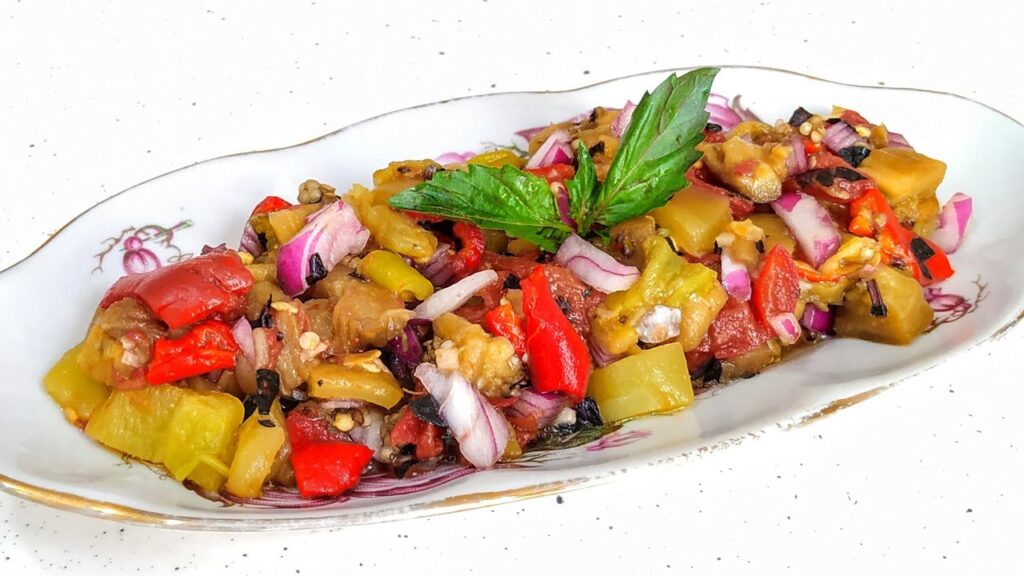
Among the salads, the Mangal salad deserves special attention. Its name comes from the way the main ingredients, eggplants, bell peppers, and tomatoes, are roasted on a mangal, the Caucasian grill.
Once the grilled vegetables are chopped, they're combined with onion, cilantro, dill, olive oil, and purple basil, an Azerbaijani signature, and tossed together. The salad is usually served cold as a side to meat kebabs and is thought to aid the digestion of heavy meat.
Azerbaijanis love to cook on the grill. Here's how they do barbecue, from preparing the shashlik to the mangal salad.
Dovga
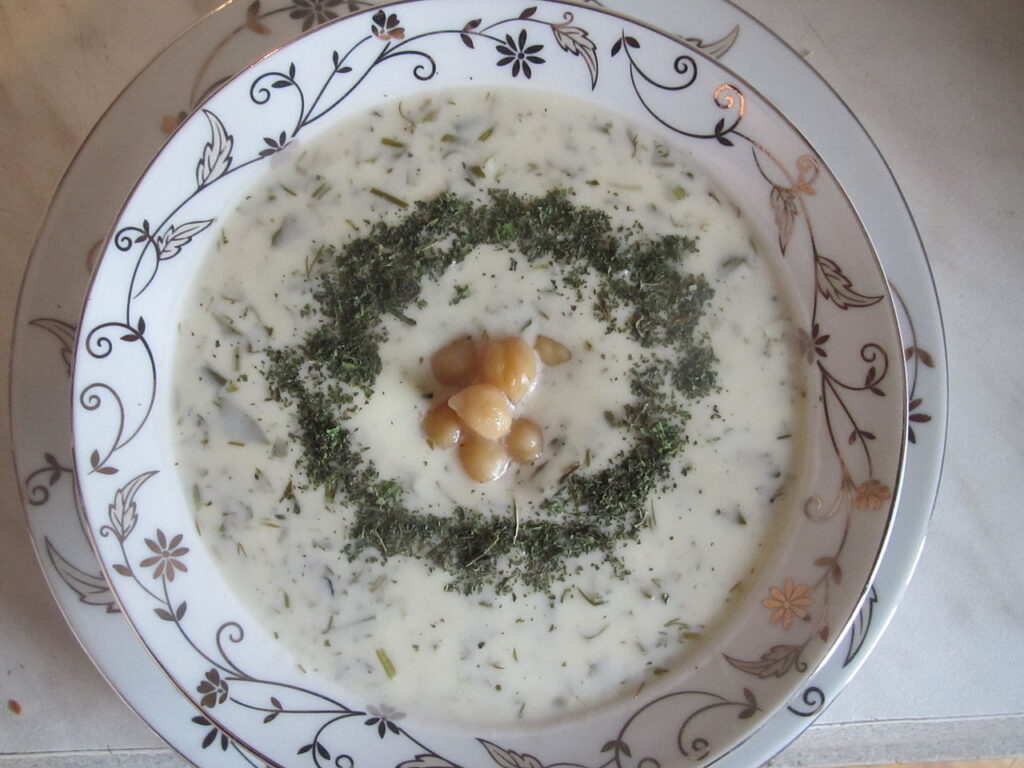
This yogurt-based soup, which can be served either hot or cold depending on the season, also includes rice, a handful of peas, and an assortment of finely chopped greens.
Despite the simplicity of the ingredients, the cooking requires the cook to stir constantly so that the rice doesn't burn.
Levengi Chicken
On the outside, Levengi chicken may look like a standard grilled chicken, but a delicious secret hides within.
Inside, the filling is made of sauteed onion, roasted walnuts, raisins, prunes, and pitted cornelian cherries, all ground and blended into a paste. The richness of the walnuts and the tartness of the plums make this combination a must-try.
The Levengi filling can also be used for fish.
Dolma
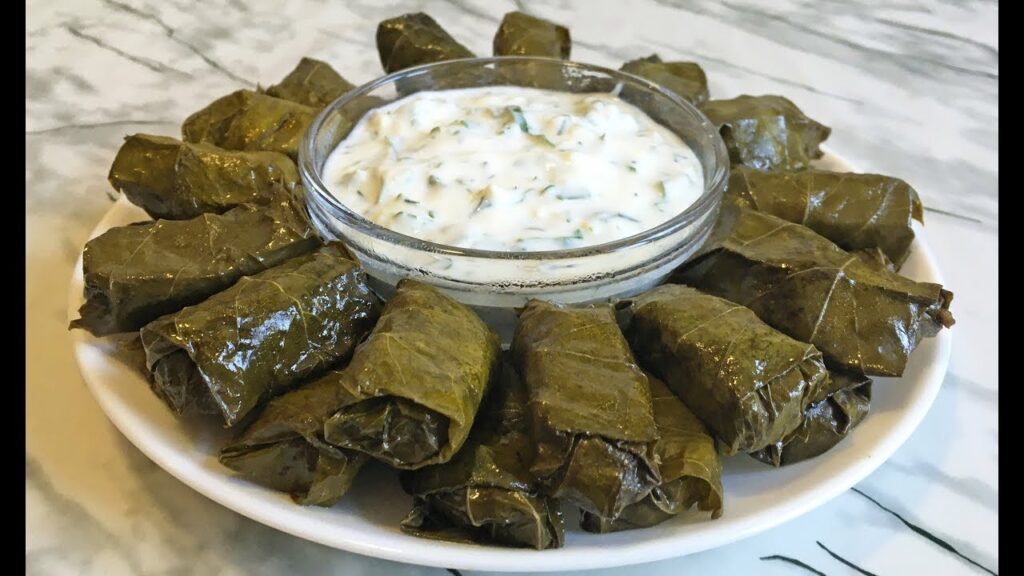
Azerbaijani cookbooks are packed with different kinds of dolma, but two are the most notable: yarpaq (made with grape leaves) and uch baji (three sisters).
The first, minced meat wrapped in grape leaves and slow-cooked, is served with katyk (plain natural yogurt) and garlic.
The uch baji version is a trio of eggplant, tomato, and bell pepper, stuffed with minced meat and cooked in their own juices. Katyk is very often added to heavier dishes, since its probiotic properties support digestion.
Dessert
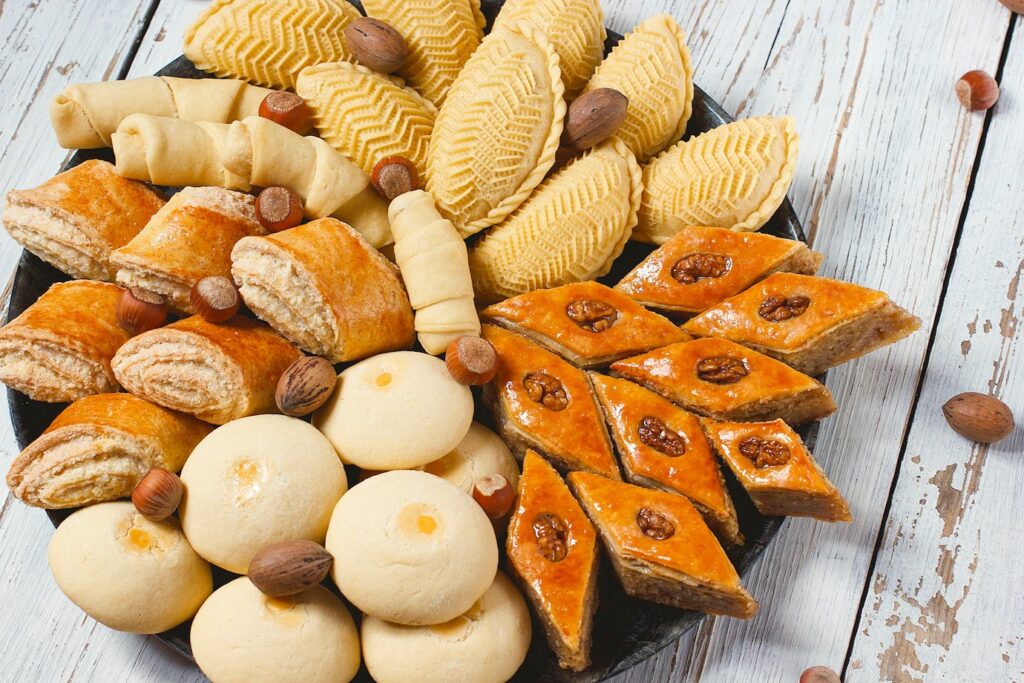
The most beloved pastry in Azerbaijan is traditionally baked in March, the month of the spring festival Novruz.
Baklava, the diamond-shaped pastry common across the Middle East, is one of the favorites.
The Azerbaijani version, especially the one from Sheki, tends to be softer and more buttery than others.
Shorgoghal, a crispy spiced bread, can be sweet (with white sesame seeds on top) or savory (with black sesame seeds on top).
Shirin chorak, a sweet bread with nuts and dried grapes, is another top choice.
Preserved walnut is perhaps one of the most surprising Azerbaijani desserts served with tea.
Picked from the trees while still green and soft, the walnuts slowly darken as they cook and end up a very deep brown. The texture of the nut and the sweetness of the syrup make it a real treat.
Finally, the most unusual food pairing, one the whole country looks forward to all year, is watermelon, goat cheese (the saltier the better), and tandir bread.
They might look and sound like an outrageous combination, but once you try them together, there's no going back.