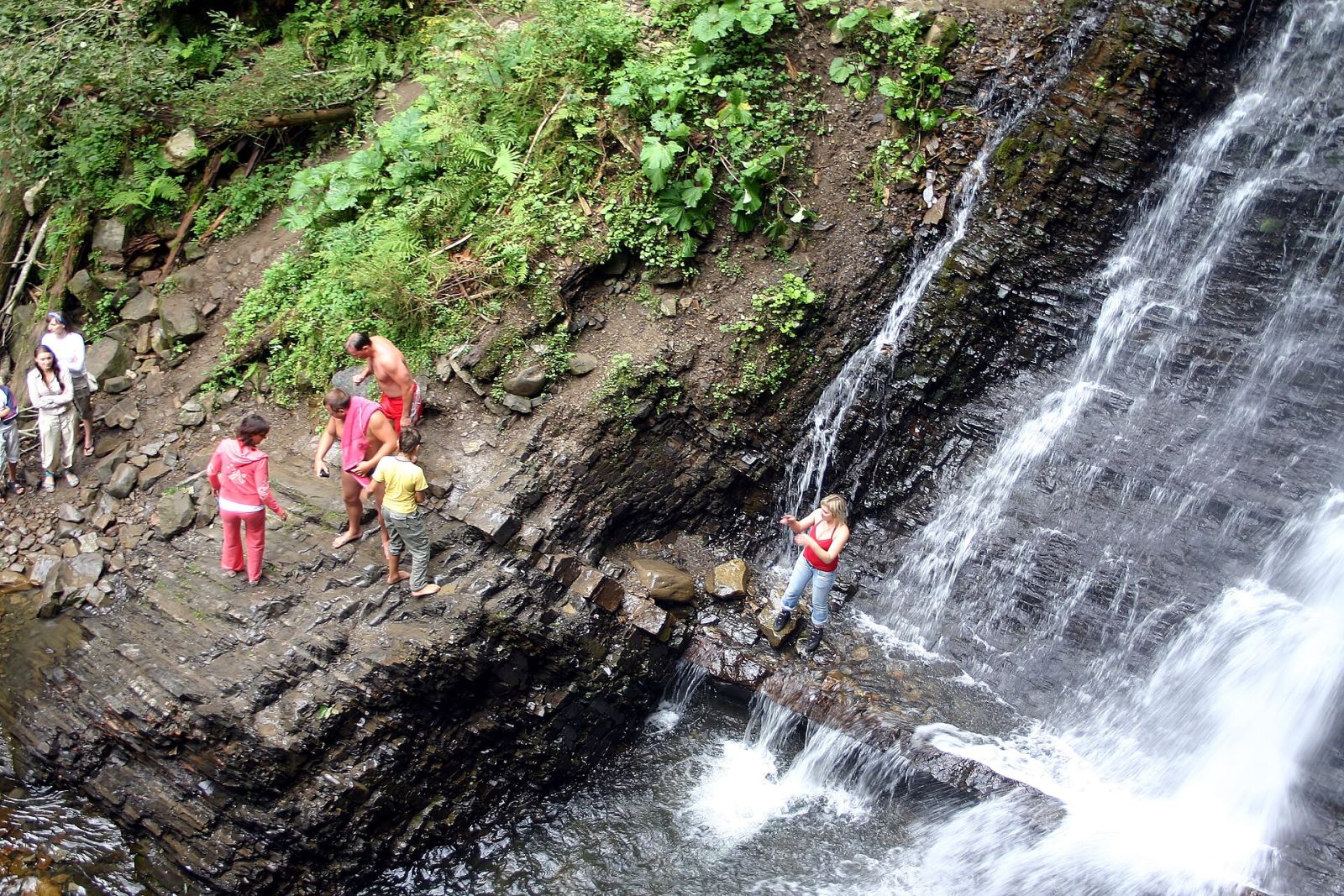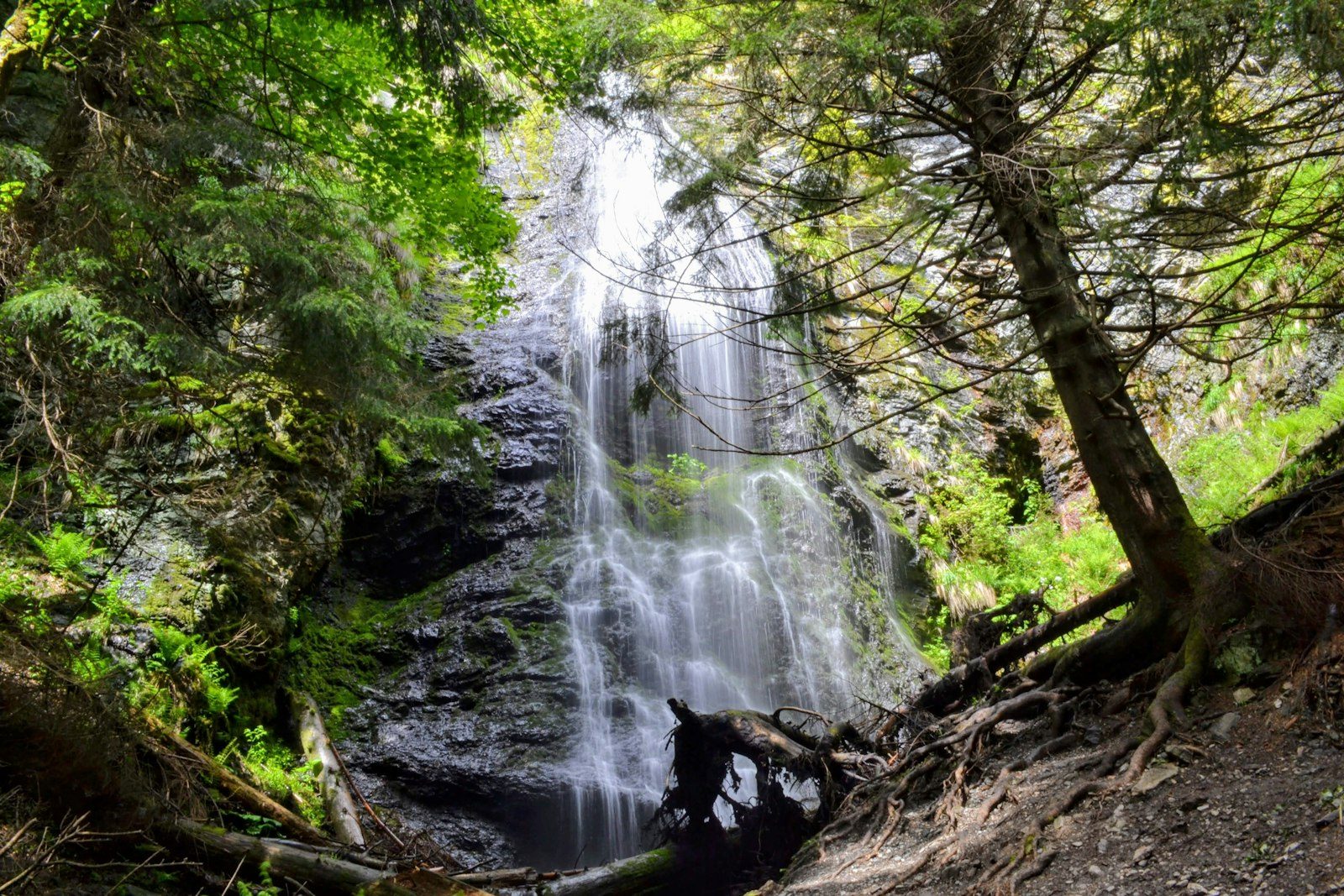


The most striking waterfalls of the Carpathians are spread across three regions and demand very different amounts of effort: some you can reach almost right up to by car, while others take an hour on a forest trail. If you are short on time, go for Probiy in Yaremche and Trufanets near Yasinia: both sit right by the road. If you want a walk with a reward at the end, that means Shypit, Manyavsky and Zhenetsky Huk.
Below are six specific spots with their height, address, the route from the highway and an honest take on the difficulty. One warning right away that will save you a trip: Carpathian waterfalls are at their fullest in spring, in April and May, when the snow melts. In the July heat that same Huk or Manyavsky can shrink to a thin trickle, and the photo will look nothing like the ones online.
Which waterfalls of the Carpathians to see: a quick table
| Waterfall | Where | Height | Route from the highway | Best time to go |
|---|---|---|---|---|
| Probiy | Yaremche, Ivano-Frankivsk region | about 8 m | in the town center, a couple of minutes on foot | spring, after rain |
| Trufanets | near Yasinia, Zakarpattia | about 36 m | right beside the H09 highway | spring, snowmelt |
| Shypit | Pylypets, Zakarpattia | about 14 m, 5 cascades | a trail of about 1.5 km | spring and even winter |
| Manyavsky | Manyava, Ivano-Frankivsk region | about 16-20 m | a trail of about 2.5 km | spring, early summer |
| Zhenetsky Huk | near Mykulychyn, Ivano-Frankivsk region | about 15 m | about half an hour on foot | spring, high water |
| Hurkalo | Skole Beskids, Lviv region | about 5 m, wide | on foot only, no car access | spring, after rain |
Probiy in Yaremche: the fullest and the easiest
Probiy stands right in the center of Yaremche, on the Prut River, and it is that rare case where you do not have to walk to the waterfall at all. The water drops from a height of about 8 meters at an angle of almost 45 degrees, and it is precisely the power of the flow that earns it a name as one of the fullest waterfalls of the Carpathians. It used to be taller, but the rock was blown up to float timber logs down the Prut, and the waterfall became lower and wider.
A practical plus: you can view it from every side, including from a pedestrian bridge right above the water. The downside is obvious too. This is the most touristy place on the whole list, with a large souvenir market and cafes nearby, so there will be no quiet or solitude here. It is worth coming here together with the other sights of Yaremche, not on its own.
Trufanets: 36 meters you do not have to walk to
Trufanets is two kilometers before Yasinia, on the southern slope of Svydovets, in the Rakhiv district of Zakarpattia. Its height is about 36 meters, and it is the tallest natural waterfall in Zakarpattia. The most amazing part is that such a height comes to you almost for free in terms of effort: the water falls in many cascades right along the H09 Mukachevo-Rakhiv highway, and the stop is made right beside it.
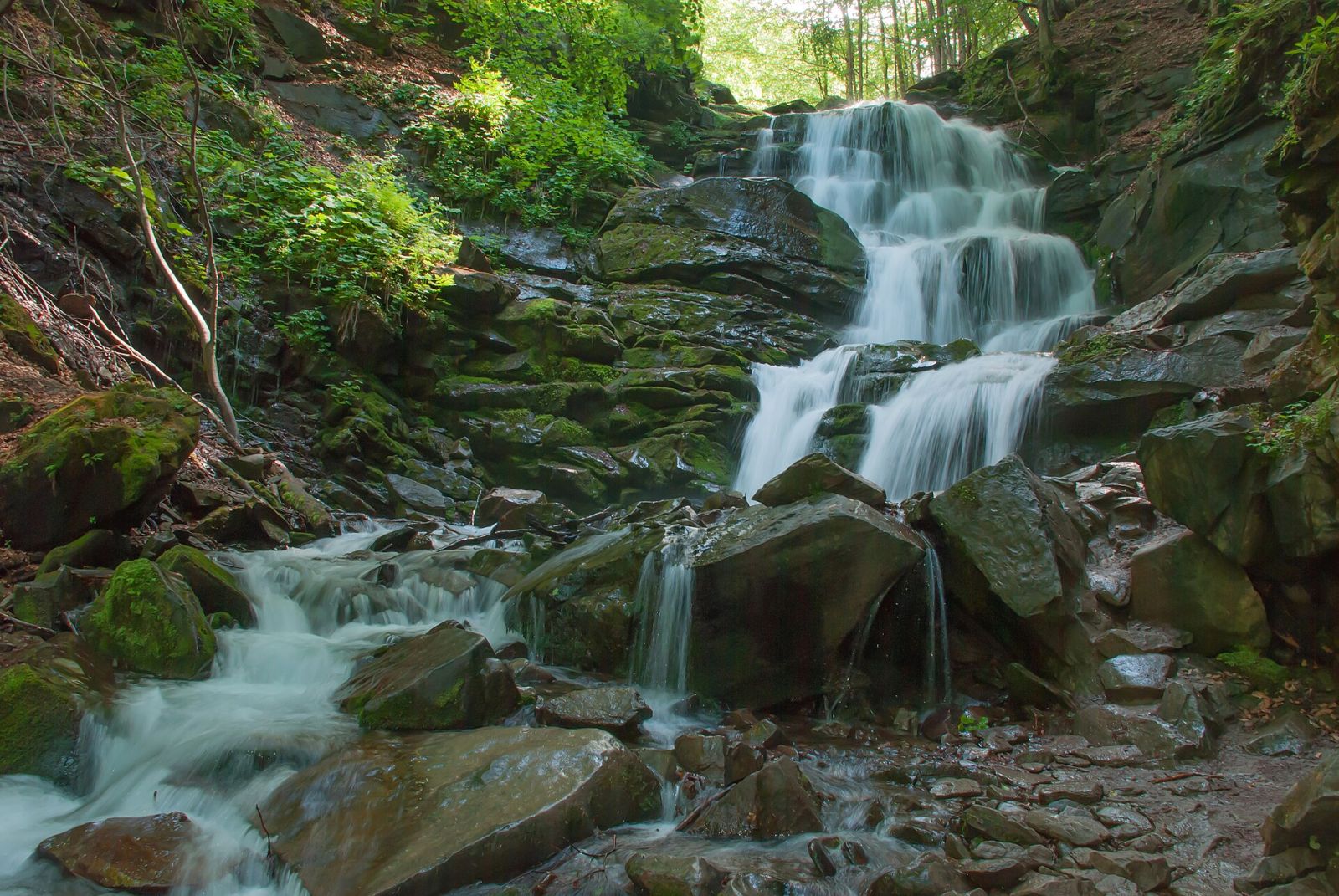
Because of this, Trufanets is ideal for those passing through toward the Rakhiv area or Yasinia and not up for a full trek. The flip side of the ease: at the height of summer the flow thins out noticeably, and it is at its most picturesque in April and early May, when meltwater comes down from the mountains.
Shypit: the waterfall that does not freeze in winter
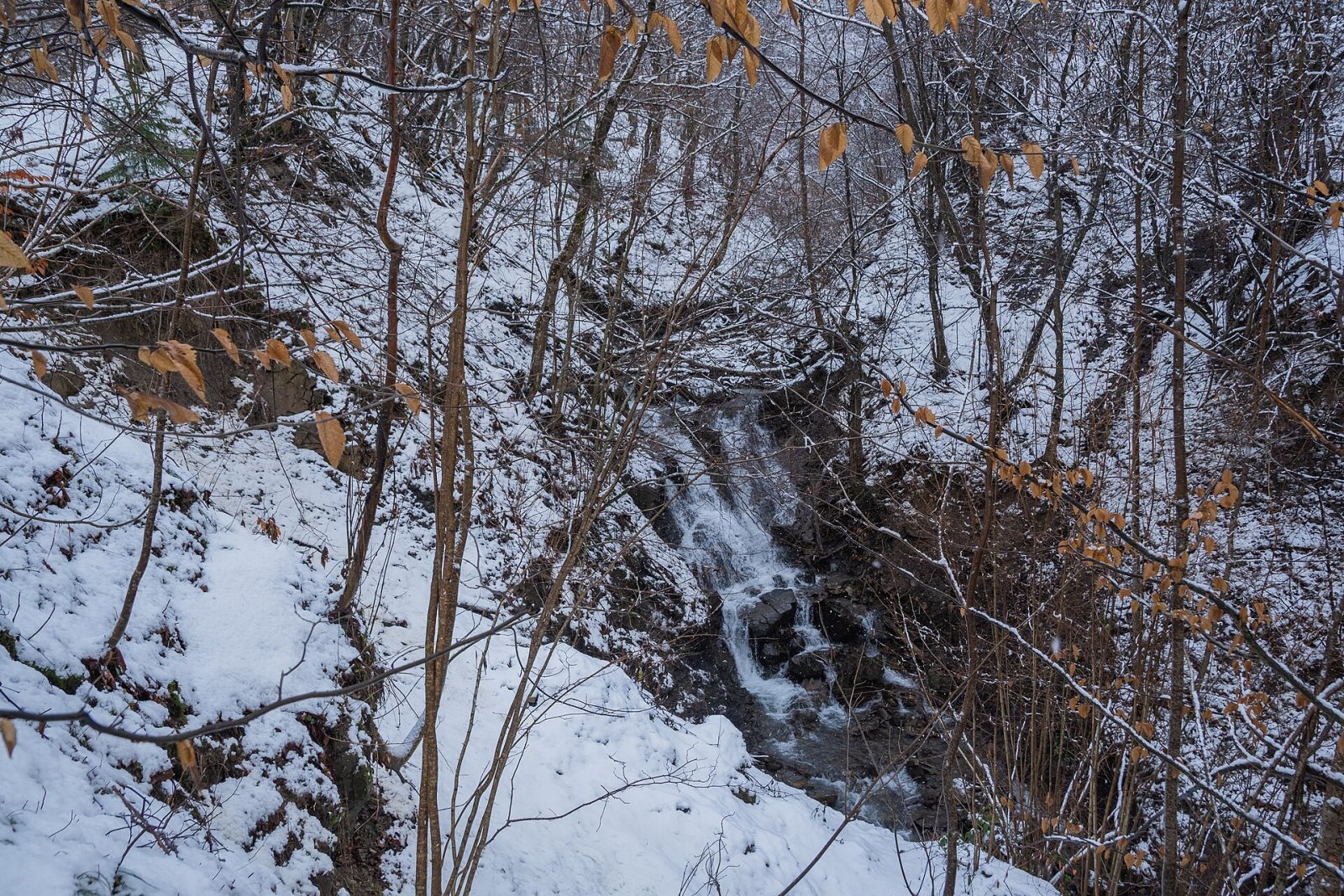
Shypit is above the village of Pylypets in Zakarpattia, near the well-known Borzhava ski lifts. The water drops from a height of about 14 meters in five cascades, and a forest trail roughly 1.5 kilometers long leads to the waterfall from the village. The path is easy and suits even non-athletic travelers, though after rain the stones become slippery.
The main draw of Shypit is that it does not freeze completely even in frost, so in winter you get distinctive icy scenery here. Historically, bohemians and bards used to gather here for Ivan Kupala, and the waterfall still carries a reputation as a place for big summer gatherings. If you are after quiet, come on a day other than a peak-season weekend.
Manyavsky waterfall: a two-hour walk
The Manyavsky waterfall hides in the Gorgany massif, on the Manyavka River near the village of Manyava in the Ivano-Frankivsk region. Its height ranges from 16 to 20 meters depending on the section; it is a cascade of three parts, of which the lowest and largest is the best known. You reach it by a walking trail of about 2.5 kilometers one way from the village.
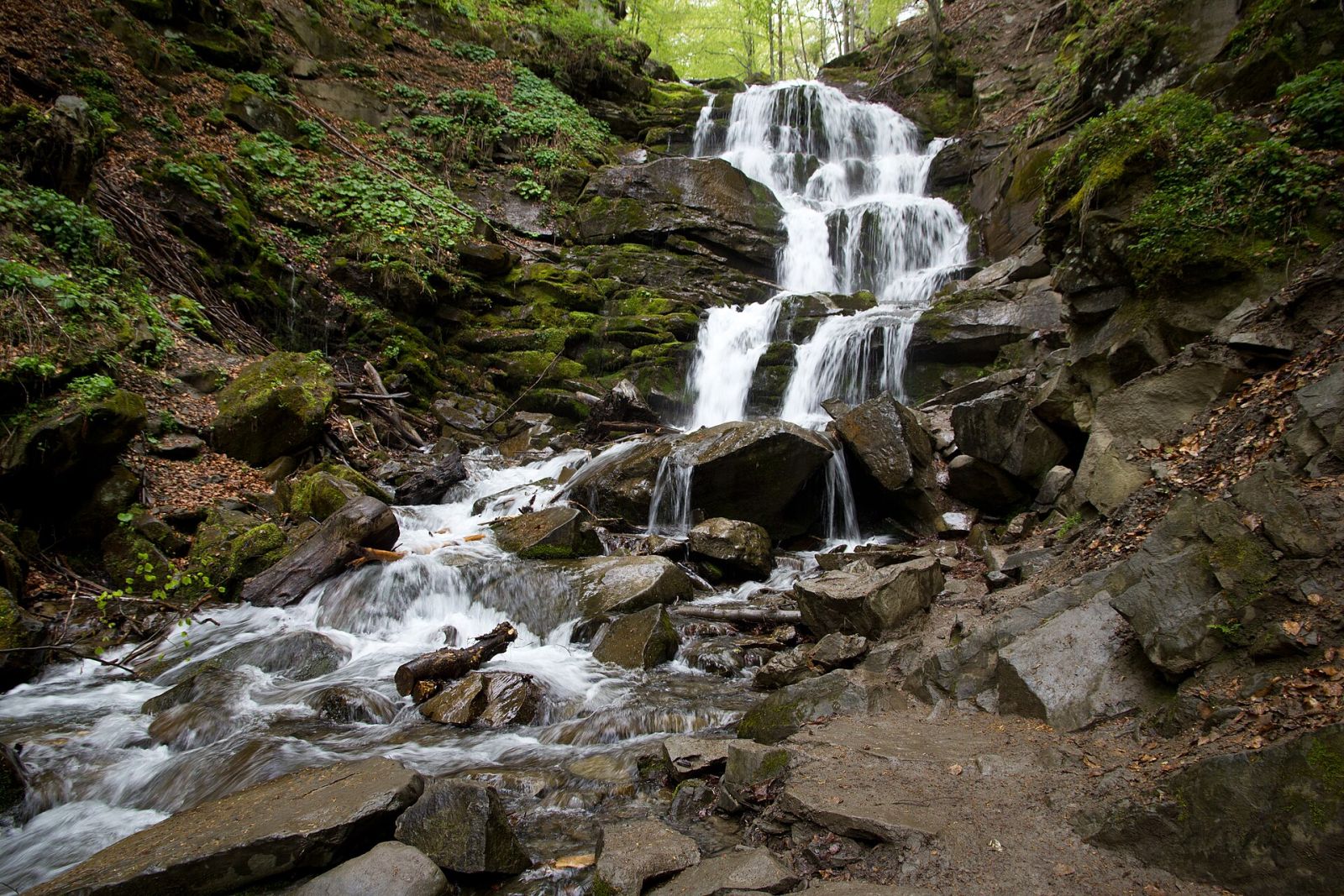
The route is considered easy and genuinely suits children, but bring hiking shoes: after rain the trail is slippery. In terms of the scale of the drop, Manyavsky is one of the tallest in the Prykarpattia area, and it is exactly the combination of an accessible walk with a great height that makes it a good half-day option. Nearby, it is worth setting aside time for the Manyava Skete, a logical pairing with the waterfall.
Zhenetsky Huk: how far do you really have to walk?
Zhenetsky Huk lies in the valley of the Zhenets stream at an altitude of about 900 meters, near the village of Mykulychyn, between Yaremche and Vorokhta. The drop is about 15 meters. The car approach starts from a turn between Mykulychyn and Tatariv, then an ecological and educational trail runs along the stream, and it is about half an hour of walking at an easy pace to the waterfall itself.
One detail people often stay quiet about: the waterfall is in a nature-protected zone, so there is a small charge for entry, and you should check the amount before your trip on site. Who it will not suit: those who want to see the water straight from the car. Here you will have to walk, even if not for long.
Hurkalo: the most beautiful, and the hardest to reach
Hurkalo is in the Skole Beskids in the Lviv region, on the Velyka Richka River, a tributary of the Stryi, in the Stryi district. It is low, about 5 meters, but wide: a rocky ledge splits the flow into two parts, and below it a basin up to 10 meters across has formed, which locals call the bowl of youth.
This is the hardest spot on the list in terms of logistics. Reaching it by car is practically impossible even in dry weather, so people walk to the waterfall along a marked trail from Korchyn or Krushelnytsia. It is worth planning a separate hike here, often paired with the Grödel Palace in Skole, rather than as a quick roadside stop.
And what about the Burbun waterfall?
People often google it alongside the Carpathian ones, and here it is only fair to warn you: the five-meter Burbun with its turquoise water in the canyon of the Bobravka River near the village of Lysets is in the Khmelnytskyi region, in the Kamianets-Podilskyi district, not in the Carpathians. The place is lovely and worth a separate trip around Podillia, but there is no point tying it to a Carpathian route; these are different destinations hundreds of kilometers apart.
When to go and which waterfall suits whom
There is one general rule: go for the water in spring. The peak of high water falls in April and May, when the snow melts, and also in the few days after heavy rain in summer and autumn. In dry heat the smaller waterfalls shrink a great deal, and the difference from the spring photos can be striking.
If you are going for the first time and with children, start with Probiy and Trufanets: zero trekking, maximum impression for the effort spent. If you want a walk with a waterfall at the finish, go for Shypit or Manyavsky, both easy and accessible. And if you have already seen the popular spots and want some quiet, walk to Hurkalo or make your way to Zhenetsky Huk: there are noticeably fewer people, and a stronger sense of the real mountains.