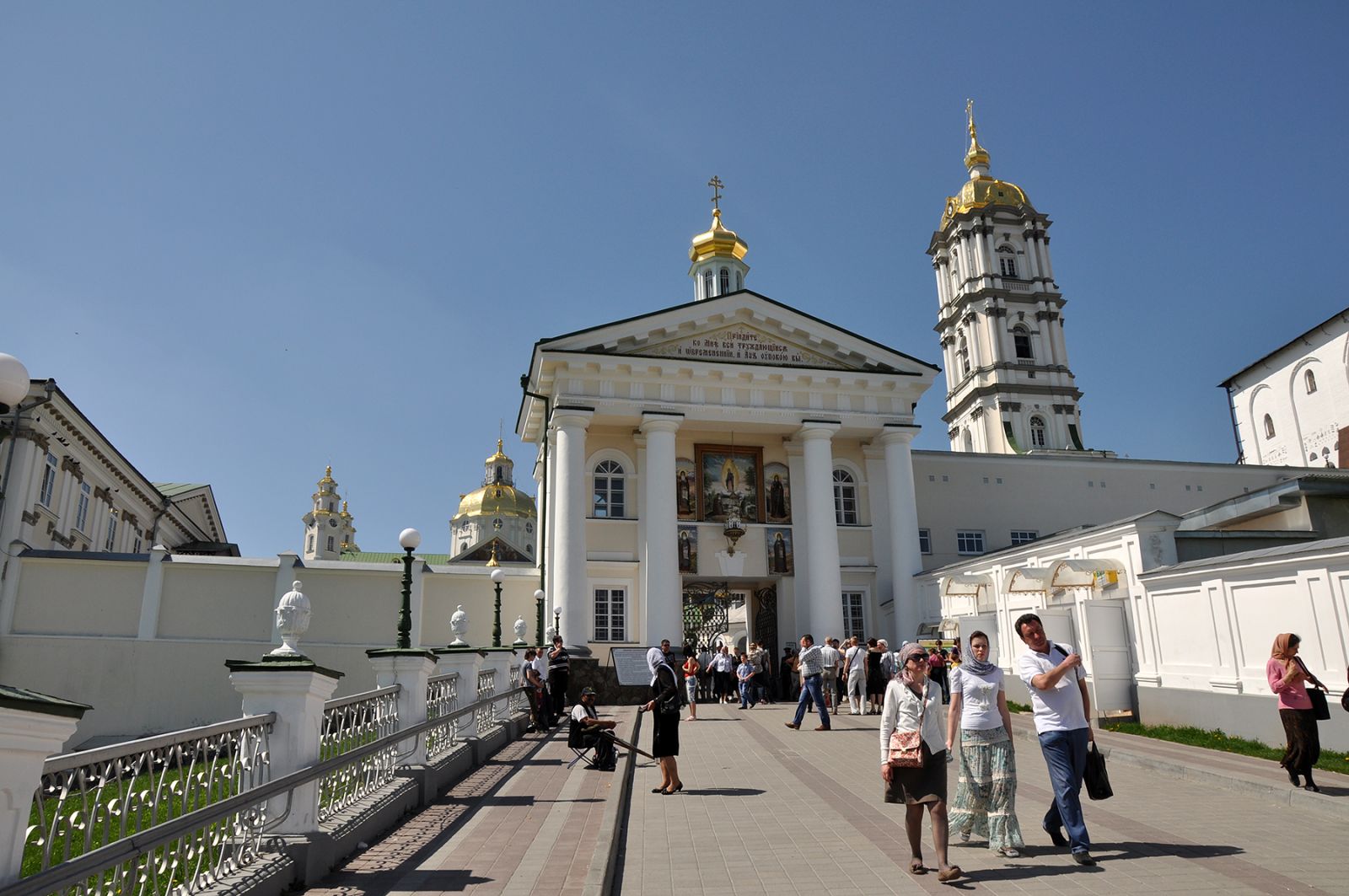
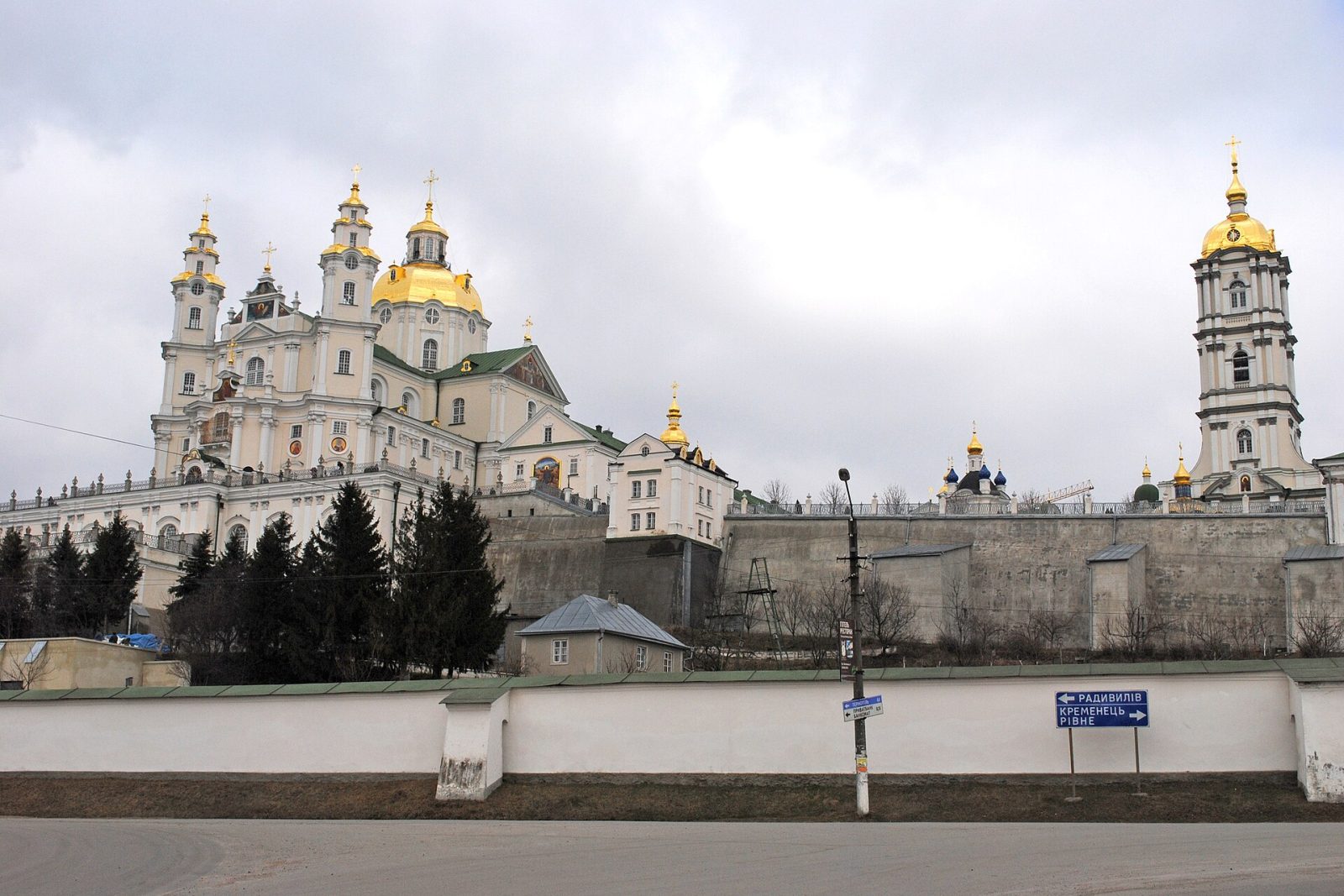
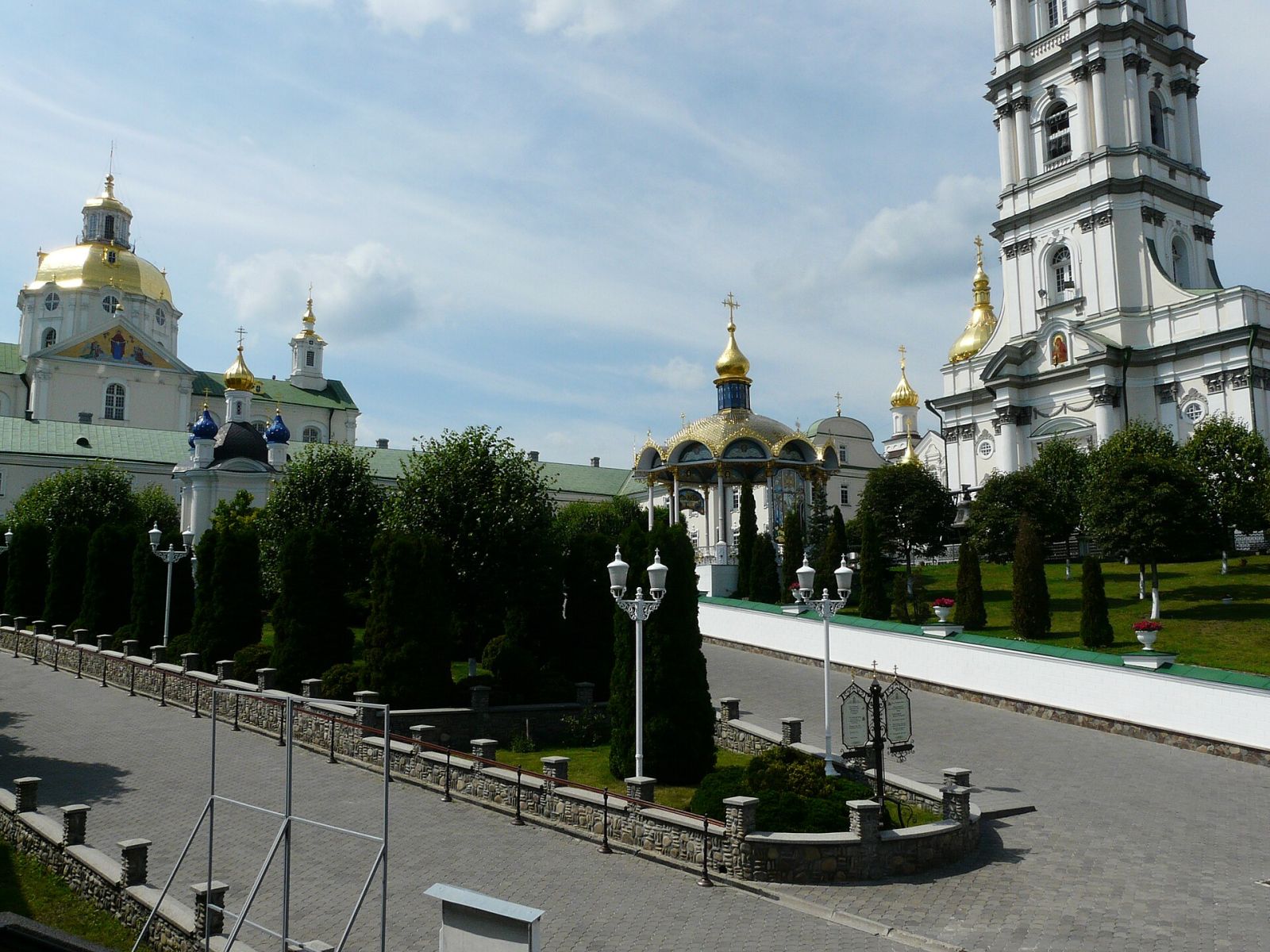
The Pochaiv Lavra is Ukraine's second most important Orthodox shrine after the Kyiv-Pechersk Lavra and the main spiritual site of historic Volyn: a large monastery complex on a high hill in the town of Pochaiv, in the Ternopil region of western Ukraine. A quick heads-up for anyone planning the trip: this is a working monastery, not a museum, so people come here first of all for pilgrimage and prayer, and only then for the architecture and the views. Three things make the Pochaiv Lavra famous across the whole Orthodox world: the miraculous icon of the Mother of God of Pochaiv, the imprint of the Mother of God's footprint in the rock with its healing spring, and the vast Dormition Cathedral, visible from many kilometres away.
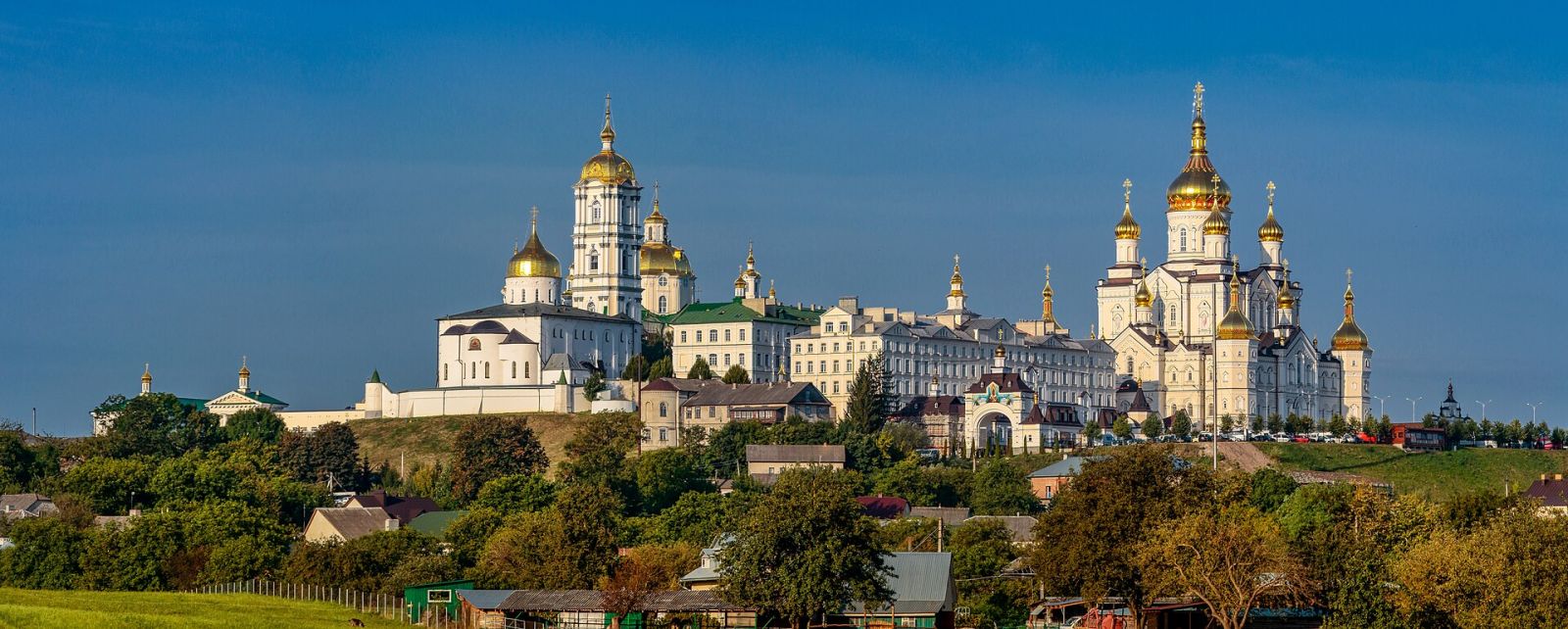
The monastery sits in the Ternopil region, right next to the old town of Kremenets. Formally this is no longer today's Volyn Oblast but historic Volhynia, a land with very deep church roots. The complex rises above the surrounding plain so plainly that the golden domes of the Dormition Cathedral and the tall bell tower are the first thing you see on the approach. It is one of those ensembles that impress you before you even step through the gate.
Where the lavra came from: a short history
According to tradition, monastic life on Pochaiv Hill began as far back as the 13th century, when monks arrived here, by one account from a Kyiv ravaged by the Mongols. Around the same time, the legend says, the Mother of God appeared on the rock in a pillar of fire and left the imprint of her foot on the stone, from which a spring began to flow. This event is considered the beginning of the shrine, and it is to the footprint that pilgrims head first of all.
The rise of the monastery is tied to two names. The first is the noblewoman Anna Hoiska, who at the end of the 16th century donated to the community the miraculous icon of the Mother of God, brought, by tradition, from the East. The second is St. Job of Pochaiv, an abbot, ascetic and defender of Orthodoxy who led the monastery for almost half a century at the turn of the 16th and 17th centuries. His incorrupt relics rest in the cave church and remain one of the main objects of veneration to this day.
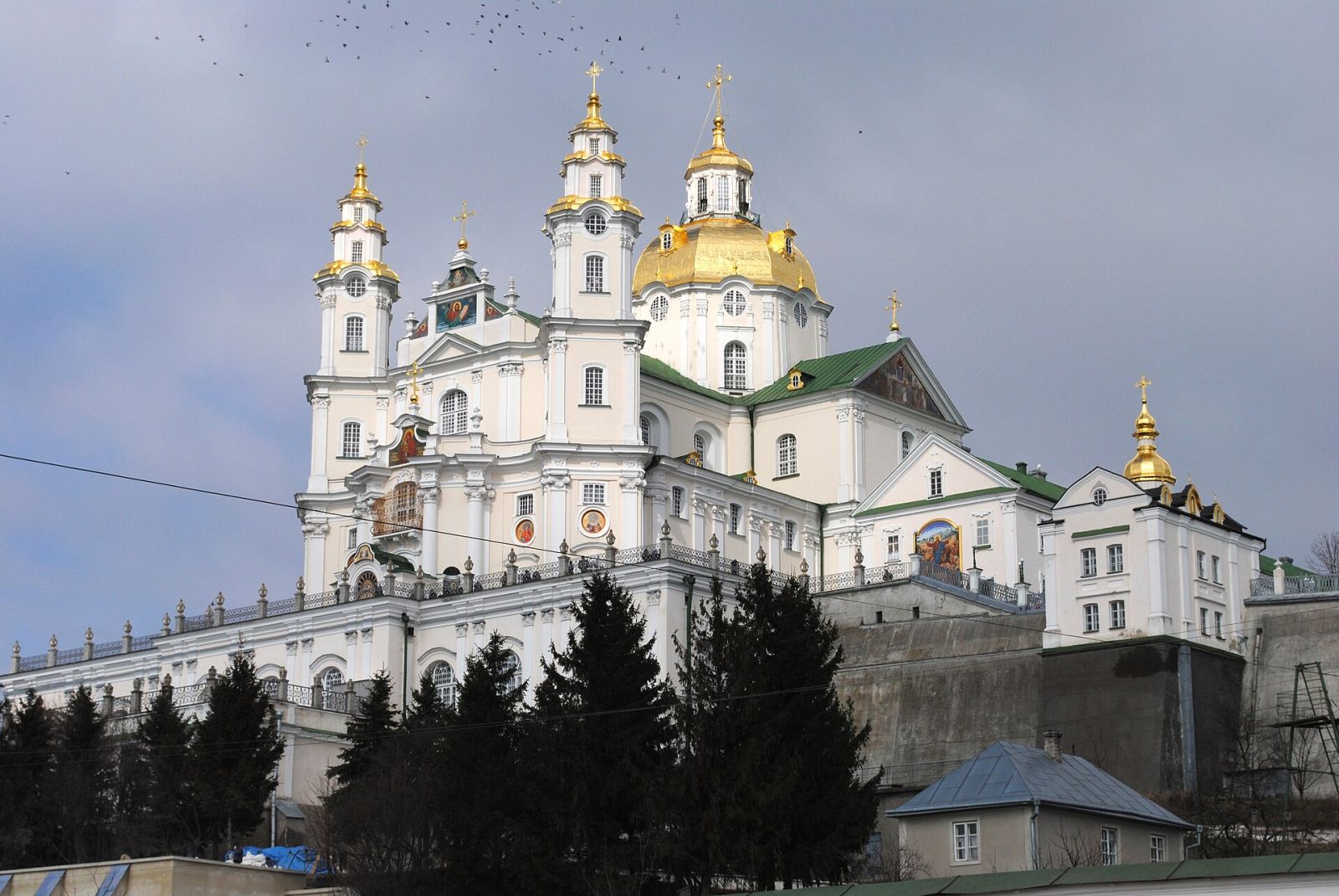
The lavra's history was not a smooth one. In the 18th century the monastery passed for several decades to the Greek Catholic Basilian monks, and it was then, funded by Count Mykolai Potocki, that the main Dormition Cathedral was built. Later the community returned to Orthodoxy and in the 19th century received the honorary status of a lavra. Because of that, different eras and traditions are woven into its architecture and history, which is only natural for these lands.
What to see at the lavra
The complex is large, and a single visit should take in several key places. Here is a short guide to why each one matters.
| What to see | Why it matters | How long |
|---|---|---|
| Dormition Cathedral | The main church, home of the miraculous icon of Pochaiv | 30-60 min |
| Footprint of the Mother of God | The imprint in the rock with its spring, the shrine's holiest spot | within the cathedral |
| Cave church with the relics of St. Job | Underground church, incorrupt relics and the ascetic's tiny cave | 20-40 min |
| Trinity Cathedral | An early 20th-century church in neo-Russian style with mosaics | 15-30 min |
| Great bell tower | One of the tallest in Ukraine, with a panorama of the area | 15-20 min |
The Dormition Cathedral and the miraculous icon
The Dormition Cathedral is the heart of the lavra and its largest building. Inside it keeps the main shrine, the miraculous icon of the Mother of God of Pochaiv, which at set hours is solemnly lowered towards the faithful on special ribbons. Right here, beneath the cathedral itself, are the stone with the footprint of the Mother of God and the spring whose water pilgrims take away with them. The atmosphere inside matches the place: crowds of people, singing, candles and a quiet queue to the holy things.
The cave church of St. Job
The cave church leaves a strong impression of its own. A narrow passage takes you down to an underground church where the relics of St. Job of Pochaiv rest in a shrine. Beside it the actual cave survives, a very cramped stone niche where the ascetic, by tradition, prayed in seclusion. The place is quiet and cool, and it is customary to behave with particular restraint here.
The bell tower and the panorama
The great lavra bell tower is one of the tallest in the country, and it is worth climbing for the view. From the top you can clearly see how the monastery commands the surrounding plain of the Ternopil region, and on a clear day the eye reaches far beyond the horizon. This is the point from which you grasp the scale of the place and why the lavra was built exactly here, on a high hill.
Dress code: how to dress for a visit
This is an important practical point worth thinking through in advance, so it does not spoil your visit. The Pochaiv Lavra is a working men's monastery with strict rules on clothing, and they are enforced at the entrance to the churches.
- Women need a skirt below the knee and a covered head, meaning a headscarf. Trousers, shorts and bare shoulders will not do.
- Men may not enter in shorts or vests; long trousers and covered shoulders are required.
- At the entrance simple wrap skirts and headscarves are usually handed out to those who arrive without them, but do not rely on that alone.
- Photo and video inside the churches are often restricted, especially during services. Watch for the signs and do not photograph people at prayer.
The rule is simple: the more modest and covered your clothing, the fewer questions at the entrance. Even if you come purely as a tourist for the architecture, treat this with respect; above all it is a shrine for thousands of people.
How to get to Pochaiv?
The handiest reference points are Kremenets, an old town a couple of dozen kilometres from the lavra, and Ternopil as the region's main transport hub. There is direct transport to Pochaiv, but it is easier to plan the trip through these two towns.
| From | Distance | How to go |
|---|---|---|
| Kremenets | about 20 km | Nearest town; car, taxi or a local marshrutka |
| Ternopil | about 70 km | Buses and marshrutkas to Pochaiv, car roughly 1-1.5 hrs |
| Lviv | about 150 km | Car or pilgrim buses, roughly 2.5-3 hrs |
| Rivne | about 100 km | Car via Dubno, roughly 1.5-2 hrs |
Your own car gives you the most freedom, especially if you want to combine the lavra with Kremenets and its castle hill in one route. Without a car the realistic plan is a scheduled bus or marshrutka from Ternopil, and on major feast days separate pilgrim buses run to Pochaiv from many cities. Public transport timetables here like to change, so check current departures before you travel.
When to go?
The lavra is open all year, and each season has its own character. The warm months from May to September are the most convenient for the journey and for walking the grounds, while golden autumn gives an especially fine light for the panorama from the bell tower. In winter the monastery looks stern and solemn, but the short day and the weather call for warm clothes.
A story of its own is the major religious feasts, above all the days of the Pochaiv icon and the memory of St. Job, when thousands of pilgrims flow into the lavra. On these days the atmosphere is at its strongest and the services at their most solemn, but there are so many people that a calm walk round the churches is hard, and lodging in the area is booked up well ahead. If your goal is quiet and an unhurried visit, choose an ordinary weekday outside the feasts. The exact dates of the patronal feasts and the times of services are best checked on the monastery's official channels before the trip.
A few practical tips to finish
When you plan your visit, set aside at least half a day for the lavra itself, and a full day together with the drive and Kremenets. Bring an empty bottle if you want to fill it from the spring, and a little cash for candles and the church shop. Getting around the grounds means walking, and uphill at that, so comfortable shoes suit the place better than smart ones.
And the main thing for the mood. The Pochaiv Lavra is first of all a living, prayed-in place where people have come for centuries with their hopes and their pain. Whether you arrive as a believing pilgrim or simply as a traveller who wants to understand this land, treat it with the respect that the main shrine of Volyn deserves. Then the trip will leave you not just a few photos of the panorama, but that particular stillness that is the real reason to make the journey here.