

When it comes to holiday traditions, the Macy's Thanksgiving Day Parade is just as essential to a cozy November celebration as turkey and stuffing.
Despite a few interruptions and setbacks over the years, the show has still managed to go on nearly every year for almost a century.
Let's look back at five historical facts about the Macy's Thanksgiving Day Parade:
Partner links: booking through them supports the blog at no extra cost to you.
It started out as a Christmas parade
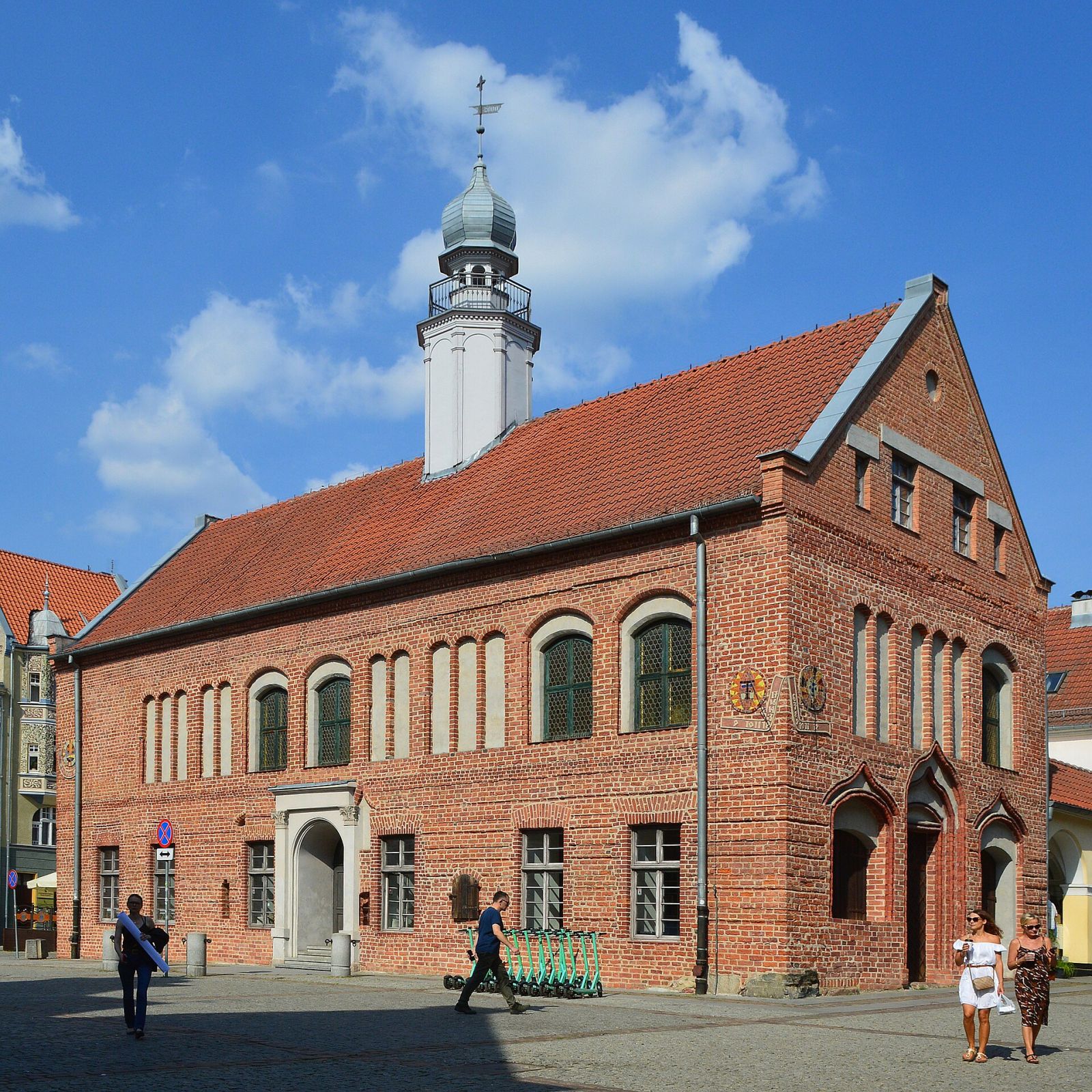
The original store was located about 20 blocks farther south on Sixth Avenue, near 14th Street. Macy's has occupied its current flagship spot, at Broadway and 34th Street, since 1902. Constant expansion turned the location into what Macy's has called the "largest store in the world," an entire city block with more than 1 million square feet of retail space.
To mark the occasion, employees organized a Christmas parade in 1924 that featured "floats, marching bands, animals from the zoo and 10,000 spectators," according to Macy's history page. It also kicked off way up at 145th Street. The parade wrapped up with the arrival of Santa Claus and the unveiling of the store's Christmas windows. Three years later, the Christmas Parade was renamed the Thanksgiving Day Parade.
Macy's didn't invent the practice. Philadelphia hosts the oldest Thanksgiving parade: the Gimbels Thanksgiving Day Parade, now known as the 6ABC - Dunkin' Thanksgiving Day Parade, made its debut in 1920.
The parade was first broadcast on the radio
You had to use your visual imagination when the first parade broadcasts took place in 1932, because they were on the radio.
The parade was first televised in 1946 in New York, and then nationally on NBC the following year.
Balloons have been around almost from the beginning
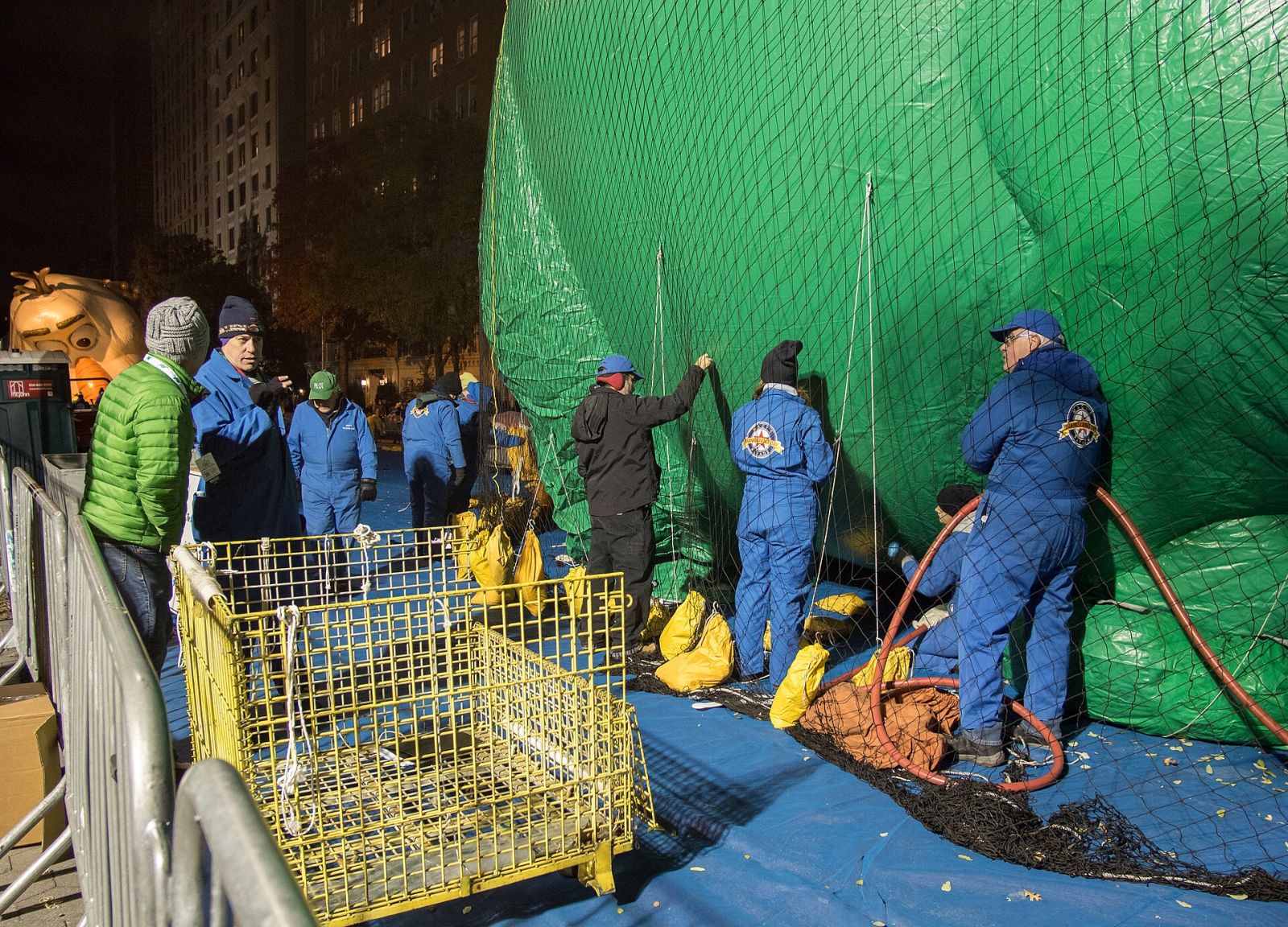
According to Mental Floss, balloons made their debut in 1927, inspired by an aerial float. Even then they were huge, one was a 60-foot dinosaur, and back in those days they had to contend with more than just strong winds and wild weather: until 1938, an elevated train ran along Sixth Avenue.
Well-known characters have been part of the parade since that very same year, 1927. Felix the Cat was there from the start, and Mickey Mouse joined in 1934, the same year a balloon based on the popular entertainer Eddie Cantor was introduced. The "Peanuts" characters, especially Snoopy, who first appeared in 1968, are regular guests.
One tradition didn't last long. At first, the balloons were allowed to fly away, and whoever found them received a gift certificate from Macy's.
The route has changed over time
For many years, the downtown parade route ran straight down Broadway, Manhattan's main artery. But in 2009, the route was moved to Seventh Avenue because of new pedestrian plazas along Broadway. In 2011, it was shifted to Sixth Avenue. Given the parade's appeal to tourists, not everyone was happy about it.
In 2019, the route began at 77th Street and Central Park West, where it turned left onto 59th Street. It continued past Central Park until it reached Sixth Avenue. From there it headed down to 34th Street, where it turned right and ended near the flagship store.
And because of the pandemic in 2020, there was a very short, television-only route right next to the flagship store.
You can check out the 2.5-mile route for 2023 on the Macy's website.
The parade has faced other obstacles too
In 1957, a wet day got even wetter for the people near the Popeye balloon: the character's hat filled with water and drenched parade spectators. The same thing happened in 1962 with Donald Duck's hat.
Superman once lost an arm to tree branches.
But the worst was probably 1997, a windy day in the Big Apple. During that parade, wind speeds reached more than 40 miles per hour, and the balloons were hard to control. One balloon hit a lamppost and injured four people; one woman was in a coma for a month. The Pink Panther threatened a woman holding its ropes.
"The balloon came down on me and my daughter," she told The New York Times. "We thought it was going to smother us."