


So, you're gearing up for a trip to Europe in this most uncertain of summers. You've booked your flight, sorted out all the paperwork for your destination (and for the journey home), and braced yourself for the odd bump along the way. Oh, and you're fully vaccinated.
Now there are just a couple of things left to do: book a hotel and rent a car. The first shouldn't be a problem, though rooms are filling up fast. And the second is never a problem; you can always leave it until the very last minute, right?
You're in for a shock. Because this summer, the continent is caught up in what people are calling a "carmageddon."
Partner links: booking through them supports the blog at no extra cost to you.
An unprecedented shortage of vehicles means prices are through the roof, and that's if you can find a car at all. According to one industry insider, it's "a disaster for renters."
Prices Gone Wild
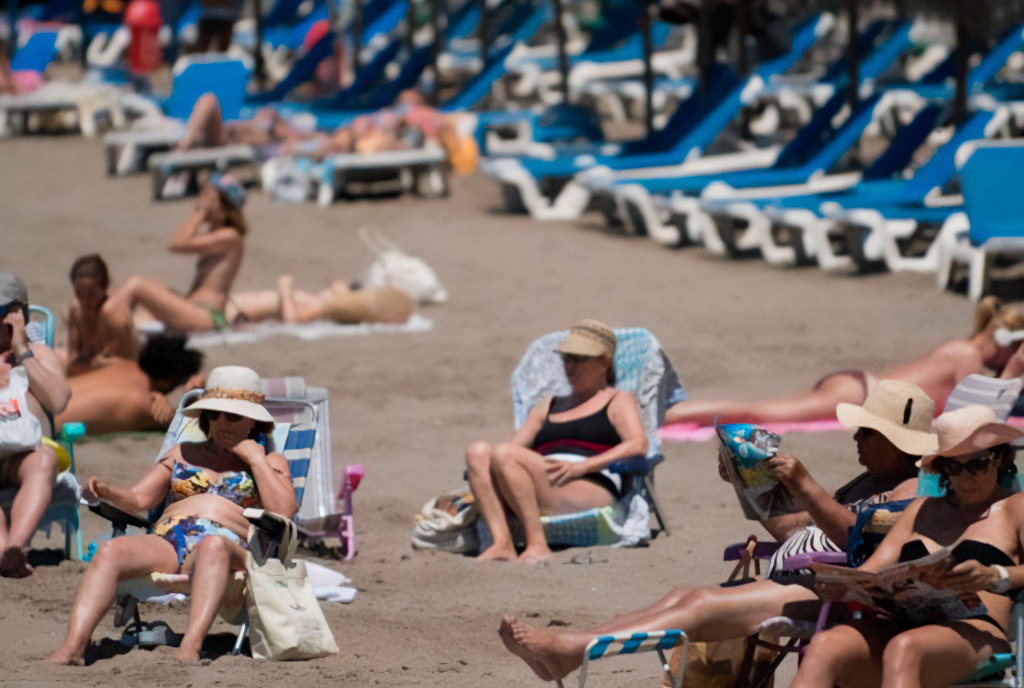
Take Malaga, for example. The city is the gateway to Spain's popular Costa del Sol coast for hundreds of thousands of tourists every year. Those travelers are used to paying a couple of hundred dollars a week at most.
But to book a car for this coming weekend for a week, the cheapest we could find was a compact from Avis at $548.
In Germany, things are slightly better. You can rent a Fiat 500 at Munich airport this weekend for $484 a week.
In Italy, it's even worse.
A week-long car rental at Bologna airport, usually one of the entry points for exploring the neighboring region of Tuscany, costs a whopping $1,800 with the Italian chain Locauto. You might assume this had to be a Maserati; after all, we're in the region that produces luxury cars, including Ferrari and Maserati.
But no, it's just a humble Volkswagen Golf.
And if you want to escape the heat of Florence and explore Tuscany beyond its cultural capital for a weekend, it'll set you back $886 for three days when booking the day before your trip. Once again, that's the cheapest car, a Fiat 500 Cabrio from Sicily by Car. If you're a family and need a minivan, that'll run you $1,536.
Sure, last-minute bookings are always pricier, but never this much. And in any case, prices are still high across the board: a week from July 31 out of Bologna starts at $452 for the smallest car.
In Greece, it's the same story.
"We've definitely seen some car rental prices climb this year; we've come across a few cases where prices have doubled," says Michael Vinales, managing director of tour operator Olympic Holidays.
"A lot of it comes down to shrinking fleet sizes because of [an underestimate of] the number of travelers, and that shortage of supply has now driven prices up."
"A Disaster for Renters"
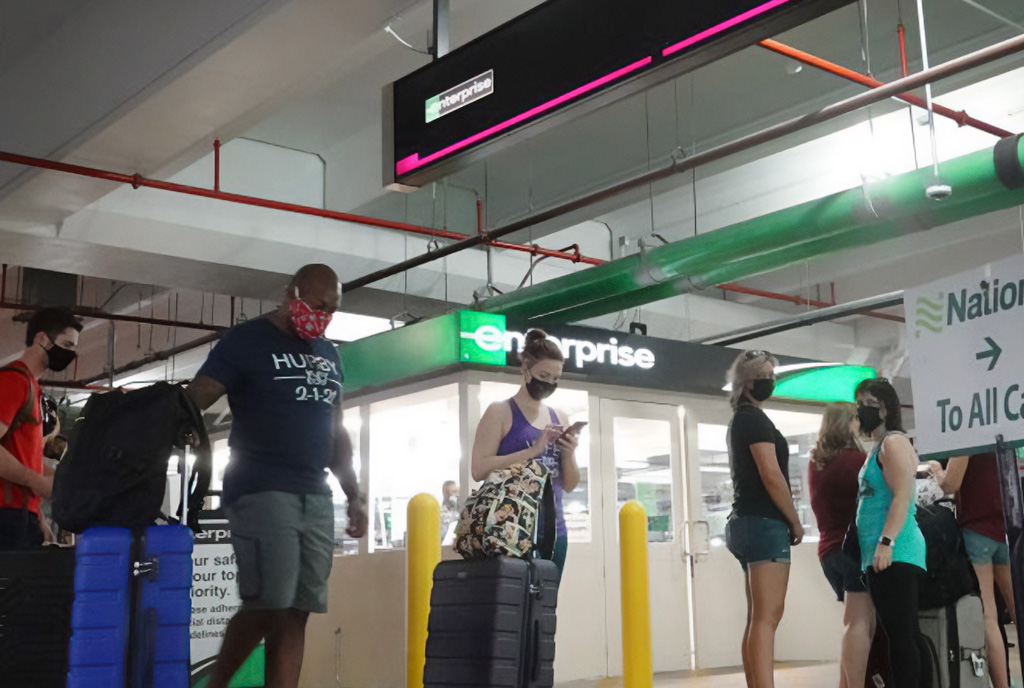
The problem is tied to the pandemic, of course, but it's also a product of the long-term way car rental companies operate. Unlike other sectors that were able to pivot quickly, rental firms plan months ahead, so they can't turn things around overnight.
It's what Phil Partridge of the brokerage Rhino Car Hire calls a "perfect storm." (He also calls it a "carmageddon" and a "disaster for renters.")
In essence, rental companies typically order their fleets roughly two to three months ahead, at the start of the year, and having taken a hit from low demand last year, this year they decided to play it safe.
In fact, Sixt confirmed that, according to its latest figures, it had 93,200 vehicles across its global network in the first quarter of 2021. That compares with 130,900 in the first quarter of 2020 and 129,200 over the same period in 2019. That's a 29 percent drop in the number of cars compared with last year.
Making matters worse is the fact that there's currently a delay in new car deliveries from manufacturers because of the global "chip crisis," a shortage of the "chips" needed to run advanced features in cars. Partridge says it took six months to get his own new car.
"There was uncertainty about what demand would be like this summer, there were huge fleet cuts last year, and I think they've had trouble rebuilding them," says Partridge, whose firm aggregates and books cars from 200 suppliers worldwide.
"My guess is that there's so much uncertainty [with travel restrictions] that companies don't want to invest heavily in rebuilding fleets only for governments to turn off the tap on travel."
He points to Portugal, which was the first major destination to make the UK government's travel "green list" in May, only to be taken off it just a couple of weeks later.
"If you invest in, say, Faro, Hertz probably has 500 cars there; that's a huge capital outlay if there's no traffic.
"But even if they ordered 1,000 new cars for Portugal, that's not something you can do in a month."
Neither the Hertz group nor Avis responded to a request for comment.
Sixt, however, acknowledged the current supply problems, with a company representative saying:
"As mobility and travel restrictions ease and vaccination rates rise, people are eager to be mobile and travel again.
"Right now we're seeing strong demand, especially in tourist areas, where demand has almost reached 2019 levels. This is being met by a shortage of available rental cars.
"The reasons for the shortage lie, on one hand, in the low supply of cars due to the chip crisis and the reduced production capacity of some automakers; and on the other hand, in the shrunken fleets of rental companies against the backdrop of the coronavirus crisis and a sharp drop in demand."
Partridge says he's only seen anything like this once before, after the 2008 recession.
"In Spain there was a huge shortage; companies got rid of a lot of their fleet because they expected demand to be nonexistent, but demand went through the roof, and a shortage set in," he says.
"The situation now isn't much different. Prices are responding to the lack of availability."
A Fight for Survival
There's no doubt the car rental industry is in a tough spot.
Hertz, whose parent company also owns Thrifty and Dollar, filed for Chapter 11 bankruptcy protection in the US last year, though it emerged from the process in July 2021.
"Last year the industry took enormous losses; the cars were barely used at all," says Paolo Zampi, co-owner of Knowleggi, a small car rental company in Florence, Italy.
In 2020, he says, Knowleggi's turnover was just 30 percent of its 2019 figures.
"If foreigners don't come, all that's left is the business market, and that doesn't move every car in Italy; only tourism does that," he says.
Zampi says he usually orders his cars six months in advance, not buying them but leasing them.
"It takes months; we close our deals every November so the fleet is ready for the start of the season at Easter," he says.
But with Italy in a stop-start lockdown mode all winter, no one wanted to take the risk of placing big orders.
"Now tourism has exploded," he says, pointing to the loosening of borders that now gives Americans, Canadians, and Japanese residents freedom of movement, along with Europeans.
"Up until June we were renting out 20 percent of our cars, but now we're at 100 percent.
"But if I order more cars now, they'll arrive in two months, at the end of the season."
Raising Prices for Desperate Customers

It's precisely this enormous gap between supply and demand that's driving the runaway price increases seen across Europe this summer, he says.
Most big companies raise prices when demand outstrips supply, just like airlines do.
In fact, if the price is that high, says Simone Bonini of Tuscany by Car, a small rental company based in Florence, it can mean the company doesn't actually have a car, but is willing to go out and find one if the price is right.
"If you're looking at $250 a day, they're setting crazy prices, because either it means they have just one car left and it's a higher class, or they're out looking for one," he says, explaining that the big brands often send staff to small rental firms asking to "borrow" a car.
"But the people doing the searching want to get paid too, so the price ends up exceptionally high," he says.
If you're willing to make the calls yourself, and track down small companies in town, you can save up to 50 percent.
In Florence last weekend, the cheapest car rental you could find online cost $422 at Hertz for two days when we checked.
But by calling around the small companies, we found a car at Knowleggi for just $88 a day.
That's because, Zampi says, they've stuck to their rates from the summer of 2019, "because we respect our customers."
"People are used to renting for $50 a day. If you now ask them for $150, is that good publicity? It shows up in the reviews," he says.
This Year, Small Is Beautiful

In short, this might be the summer to try a small company you've never heard of.
"Small local agents are always cheaper," says Partridge.
"They have lower overheads, lower marketing costs, and they tend to be located off-airport [having an airport presence carries huge overheads, he says]."
"And while rates are always higher, I think the gap has widened significantly this year."
This may sound alarming if you usually prefer dealing with a big firm, on the assumption that there'll be more protection or the chance to appeal to a head office if something goes wrong.
Partridge says there's nothing to worry about, not in the age of online reviews.
"There are local agents who show up on platforms like ours, and some who don't appear on comparison platforms; you can often find a guy on the street with a coffee, happy to let you drive off for $50 a day," he says.
"There's usually a basic feeling that people prefer a big agent; it's a familiar service, they think it'll be more reliable, and if they book a Ford Focus they're more likely to actually get one, and the car will be new or nearly new.
"In Cyprus I once booked a Ford Focus and was given a seven-year-old Honda Jazz with 80,000 miles on it. I don't think you'd get that with a big agent, but I complained, and they swapped it out."
He recommends looking at customer ratings on platforms (like his own, naturally), or on ones such as Trustpilot and Feefo, though he warns that ratings sites are "not without their problems." He also suggests asking for local recommendations from your hotel or villa owner.
But Zampi says there's no need to panic; in fact, he argues that small companies are more likely to take care of you.
"People are always afraid of small rental companies, but we always try to keep our customers; for me it matters that the customer comes back, whereas for Avis it makes no difference. If you leave Avis for Hertz, they don't care, because there'll always be someone leaving Hertz for Avis," he says.
"If you bring the car back to me with a scratch, I won't make you pay, unless you've dented it. But if you go to a big company, they'll make you pay not just for the scratch, but for four days of the car sitting idle.
"You return the car without gas, I'll charge you for the gas plus $17 for the refill. But the big firms will charge you for a full tank.
"It's all in the reviews. Big firms don't care about reviews. But for me a bad review is bad publicity, so I always try to find a compromise with the customer.
"Wherever you rent, a small company's interest is always in making a good impression on the customer. We have so many customers who come to us on a recommendation. It's about finding a compromise with the customer and not taking advantage of them. That never happens with a small company."
Working out the cost of a private or coach transfer instead of a car is also an option, says Vinales of Olympic Holidays; they try to help guests with that where they can.
But most importantly, says Partridge, don't leave your car rental until the last minute this year. Check prices before booking your flights; it might help you decide where to go.
"If you've found a flight that suits you, try to find a car, because discovering it costs $1,000 when you expected to pay $250 can make a holiday unviable," he says.
"This year, the rental car could be the deciding factor in where you end up."