


You will find it almost everywhere you look, on T-shirts, bumper stickers, magnets and every kind of tourist souvenir: three little words, "Ithaca is gorges".
After all, who does not love a good pun? Ithaca, New York, is stunning, studded with steep gorges (get it?), tumbling waterfalls and blanketed in forested hills that blaze with bright shades of yellow, orange and red once the leaves turn in autumn. If you can time your visit for the peak of "leaf-peeping" season, it is a sight worth seeing.
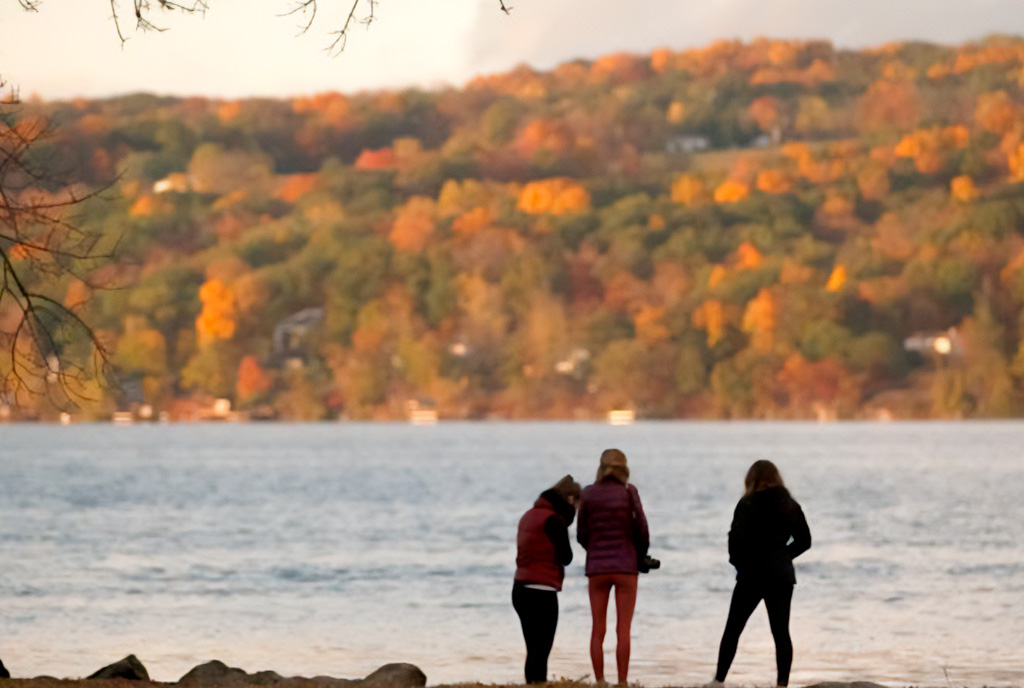
Four hours from New York City, Ithaca sits in the Finger Lakes region of upstate New York, named for the 11 finger-shaped lakes spread across roughly 9,000 square miles. Over the years the region has earned a progressive and often quirky reputation; Ithaca even had its own currency, one of the longest-running community currencies in the United States.
Partner links: booking through them supports the blog at no extra cost to you.
But there is far more to this part of the country than you might expect when you travel here. Beyond the natural beauty and the peaceful, unpretentious little towns lies a rich history that was, and in many ways still is, ahead of its time.
The Legacy of the Haudenosaunee
To understand this area, you have to recognize who was here first, and that is the Haudenosaunee. Also known as the Six Nations, the Haudenosaunee are made up of six Native American nations: the Mohawk, Oneida, Onondaga, Cayuga, Seneca and Tuscarora.
Now living on land designated as "territories" by the United States, such as the Onondaga Nation territory, a 7,300-acre area south of the city of Syracuse in central New York, the Haudenosaunee (meaning "people of the longhouse") have shaped not only the region but the entire country in fundamental ways, from democracy to women's rights.
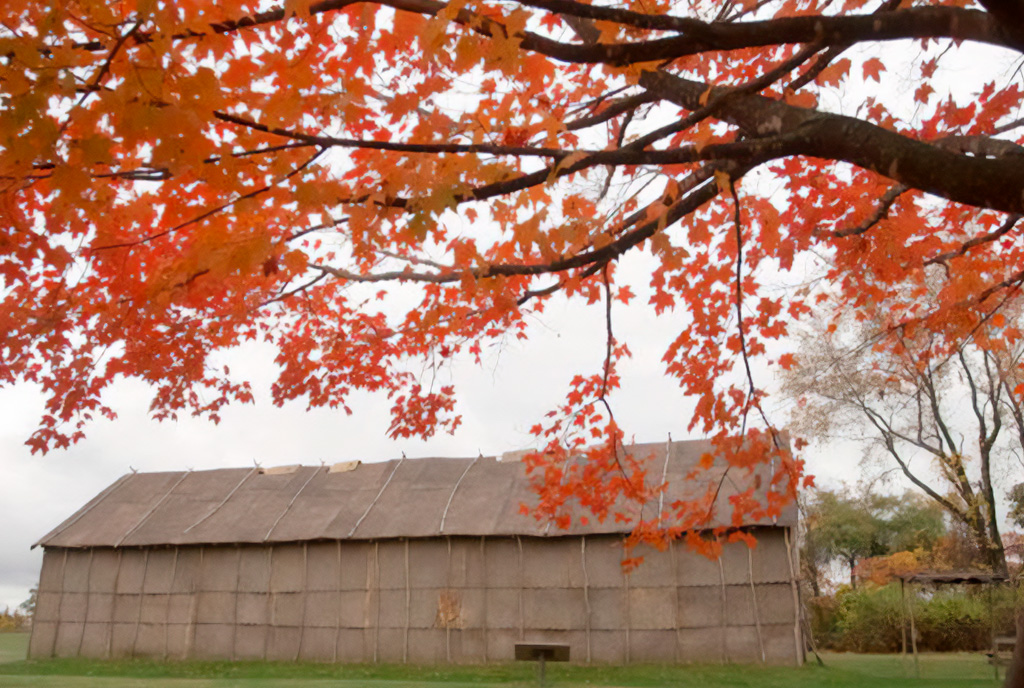
"By the time Europeans made contact with the Haudenosaunee, there was a long-established, complex political and social system that united the territories of the six nations," says Louise Herne (Wakerakats:te), a recognized Bear Clan Mother of the Kanien'keha:ka (Mohawk).
"This structure has endured through time because we follow natural law, and the universal wisdom in our processes is that we do not push the mother to the side," she says. In Haudenosaunee culture, women make the decisions. "Women are the foundation, and men are the walls and the roof. Neither can exist without the other. It is about balance."
Known as the Great Law of Peace, the warring members of the nations were brought together to form the Haudenosaunee Confederacy sometime between 1570 and 1600. It is considered one of, if not the oldest, examples of a formal democracy. It is this very foundation that is believed to have inspired the Founding Fathers and democracy in the US, including the Constitution itself, with one fundamental difference.
"When our Peacemaker came and established the Great Law of Peace, he did not cast the women aside. He did not cast the mothers aside," Herne says. "In fact, he built the structure of democracy on the foundation of women. And that was his genius."
A Champion of Women's Rights
With a foundation like that, it is not hard to see why the Finger Lakes region became the birthplace of the fight for women's suffrage in the United States, which began in Seneca Falls, New York, in July 1848.
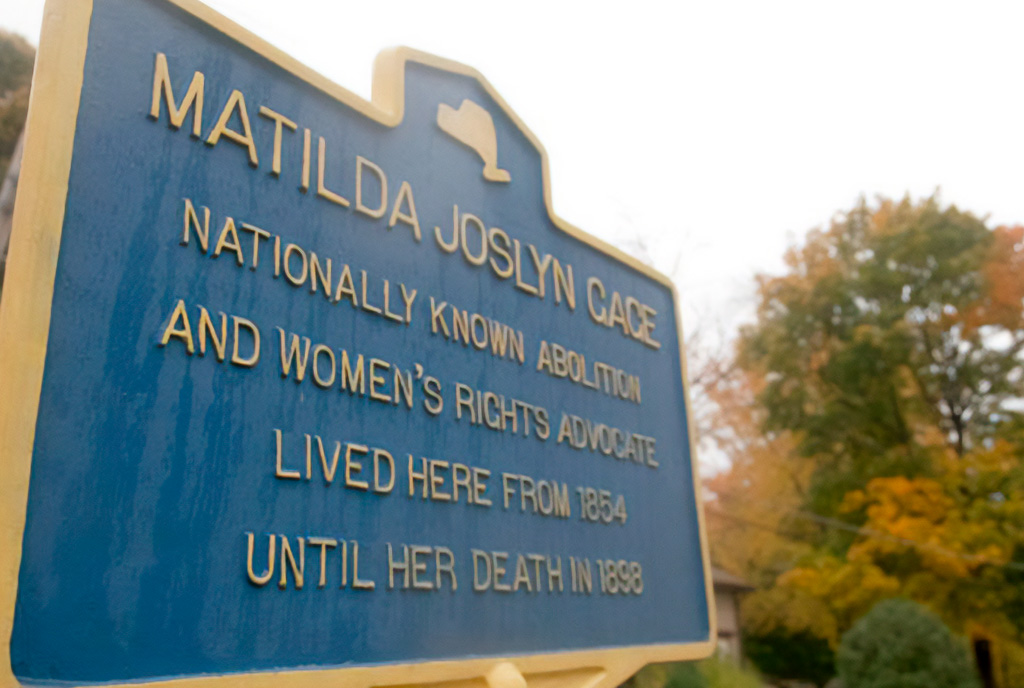
Women would not win the right to vote until 1920. Today, a century later, this area remains not only a beacon for those seeking freedom of thought and expression, but a place that nurtures it in those born here, like Matilda Joslyn Gage.
Gage, a driving force in the early fight for women's rights, was born in 1826 in Cicero, about 60 miles north of Ithaca. She spent much of her life in a white, two-story house in nearby Fayetteville.
"This house is not 'here is where she slept. Here is where she ate.' This is a house of ideas," says Sally Roesch Wagner, executive director and founder of the Matilda Joslyn Gage Center. Wagner, a pioneer in women's studies in her own right, has turned the Gage house into an interactive museum.
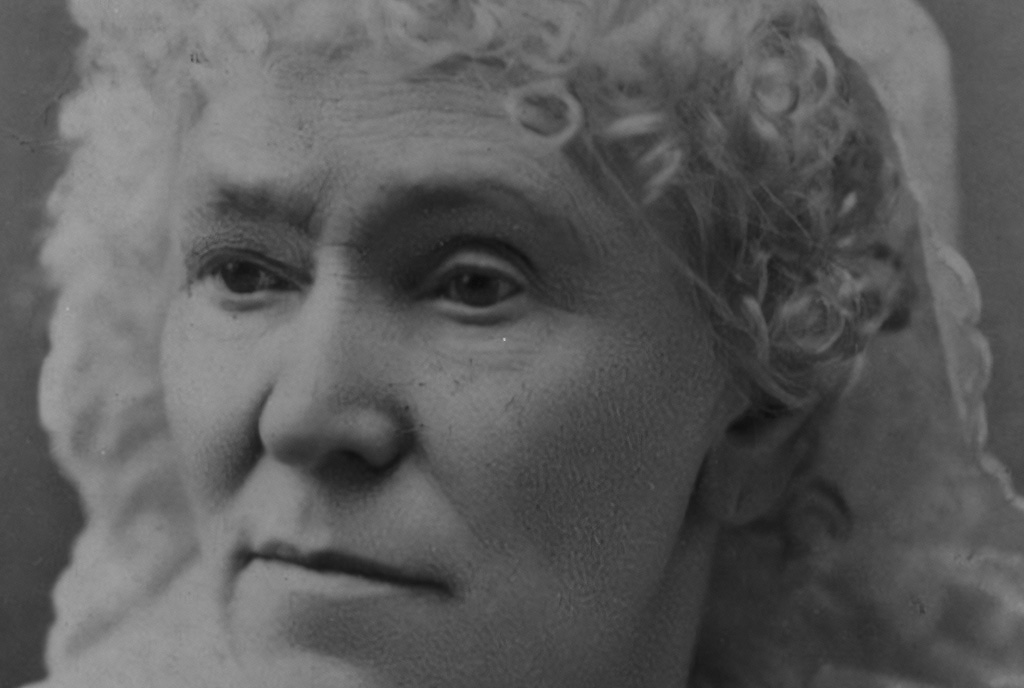
But while names like Susan B. Anthony are still remembered for their contribution to the long struggle for women's rights in the United States, Gage's name has largely been forgotten, even though they worked side by side. Uncompromising and devoted to full freedom for women that went beyond the vote, she was ultimately written out of the history books.
"She says, 'There will be no lasting peace until there is absolute equality for every group, men and women, Black and white, Indigenous and American, rich and poor.' That is it," Wagner says.
Wagner credits Gage's revolutionary vision to the Haudenosaunee and a culture that not only included women but elevated them.
"[Gage] saw it in action! That is the wonder of it," Wagner says. "She lived on Haudenosaunee territory and saw a world that was the mirror opposite of her own. Culturally, governmentally, spiritually, one in which there is absolute balance and harmony."
"The goal is to preserve that," Wagner adds. "And that is her vision."
Welcome to the 'EcoVillage'
A few miles from downtown Ithaca, a residential community nestled among the trees has also taken the Haudenosaunee ethos to heart.
"There is a very rich history of community and social conscience here. And part of that comes from Indigenous peoples," says Liz Walker, co-founder of EcoVillage Ithaca. "The Haudenosaunee had a very strong history of making decisions together."
Alongside a strong sense of community there is also a commitment to sustainable living. Made up of three neighborhoods and about 100 homes, the village relies on features like solar power and foot-thick insulated walls, helping to cut heating costs during Ithaca's harsh winters. One study found that the ecological footprint of EcoVillage residents is 70% smaller than that of typical Americans.
"I would say we are really striving for an alternative that makes sense," Walker says. "We believe in shared governance, and that means everyone has a stake in decision-making, and we expect our neighbors to take part in making decisions and doing the work of the community."
The term "cohousing" originated in Denmark, with a cluster of private homes around shared land and open space. Founded in 1991, EcoVillage Ithaca is one of the first such communities in the United States.
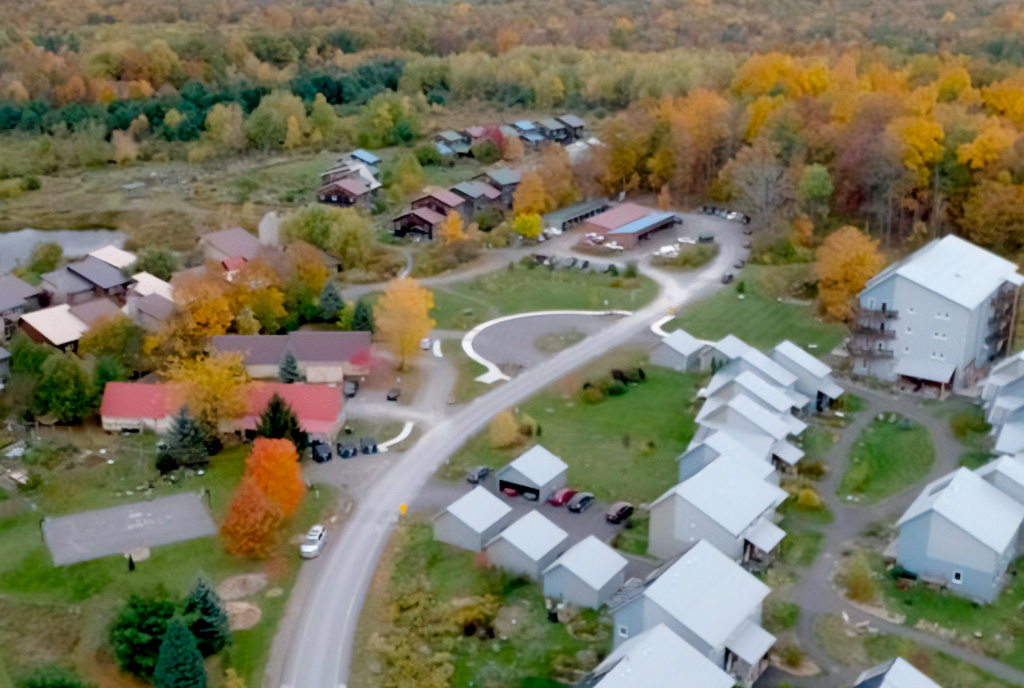
"It is like living in an extended family, where you know everyone, and you might have an uncle you are not too fond of, but you still celebrate his birthday," Walker says. Disagreements, she adds, come up from time to time and are worked out as a community.
Beyond the homes, there are also a few local businesses here. Graham Ottoson lives and works in the EcoVillage, running Gourdlandia, a shop and garden that specializes in, you guessed it, gourds. Turning the uniquely shaped fruit into everything from lamps to necklaces, Ottoson has found a welcoming home for her artistic passion.
"I came here because it is a progressive area," she says, adding that "people crave community."
"I love the phrase 'intentional community,' people move here with the intention of being part of a community," Ottoson says. "It is a self-selected group of people who want to be especially good neighbors."
While society has certainly changed in the three decades since the community was founded, Walker says the core values have held: "There is a continuation of the spirit of activism, of caring for the planet and caring for one another."
Dining at Moosewood
A connection to nature has always been a pillar here for the Haudenosaunee, who consider themselves "keepers of Mother Earth," Herne says. So perhaps it is no surprise that one of the earliest examples of the "farm-to-table" movement found a natural home in the Finger Lakes.
And today, while the area may be better known for its thriving wine region, it was Moosewood, a vegan and vegetarian restaurant, that first helped put the area on the map in the 1970s, when hippies arrived in search of their own sense of community.
"I think the Ithaca area has always attracted people who were interested in some kind of alternative way of living," says David Hirsch, a co-owner of the Moosewood restaurant since 1976. "So many of us came here from big cities; we did not want that urban, busy, frantic life. And there was a 'back to the land' movement."
The restaurant is actually a "collective," made up of 19 members, 14 women and five men, including Hirsch, who together own and run the restaurant and write cookbooks.
Devoted to vegetarian food, Moosewood has operated this way since it opened in 1973, a radical idea for its time.
"It was strange. It was unusual," says Wynnie Stein, another co-owner of Moosewood. "There were not many restaurants that focused on vegetarian cooking or bought produce directly from farmers."
"I think we can now see the impact of what our work has done," she adds. "We are considered some of the pioneers of the farm-to-table movement. And we are still excited. We are still young at heart."