

The question of what to see in Crete beyond the beaches has a concrete answer: Knossos, palace of a civilisation a thousand years older than classical Greece, the Venetian harbour of Chania, the 16-kilometre Samaria Gorge, the lagoons of Balos and Elafonissi, which are far more than beaches in their own right, and the old town of Rethymno. Crete is Greece's largest island, 260 kilometres west to east, and the single biggest planning mistake is settling into a hotel near Heraklion and deciding you have seen the island. You have not seen a quarter of it.
Knossos: what is left of the Minotaur?
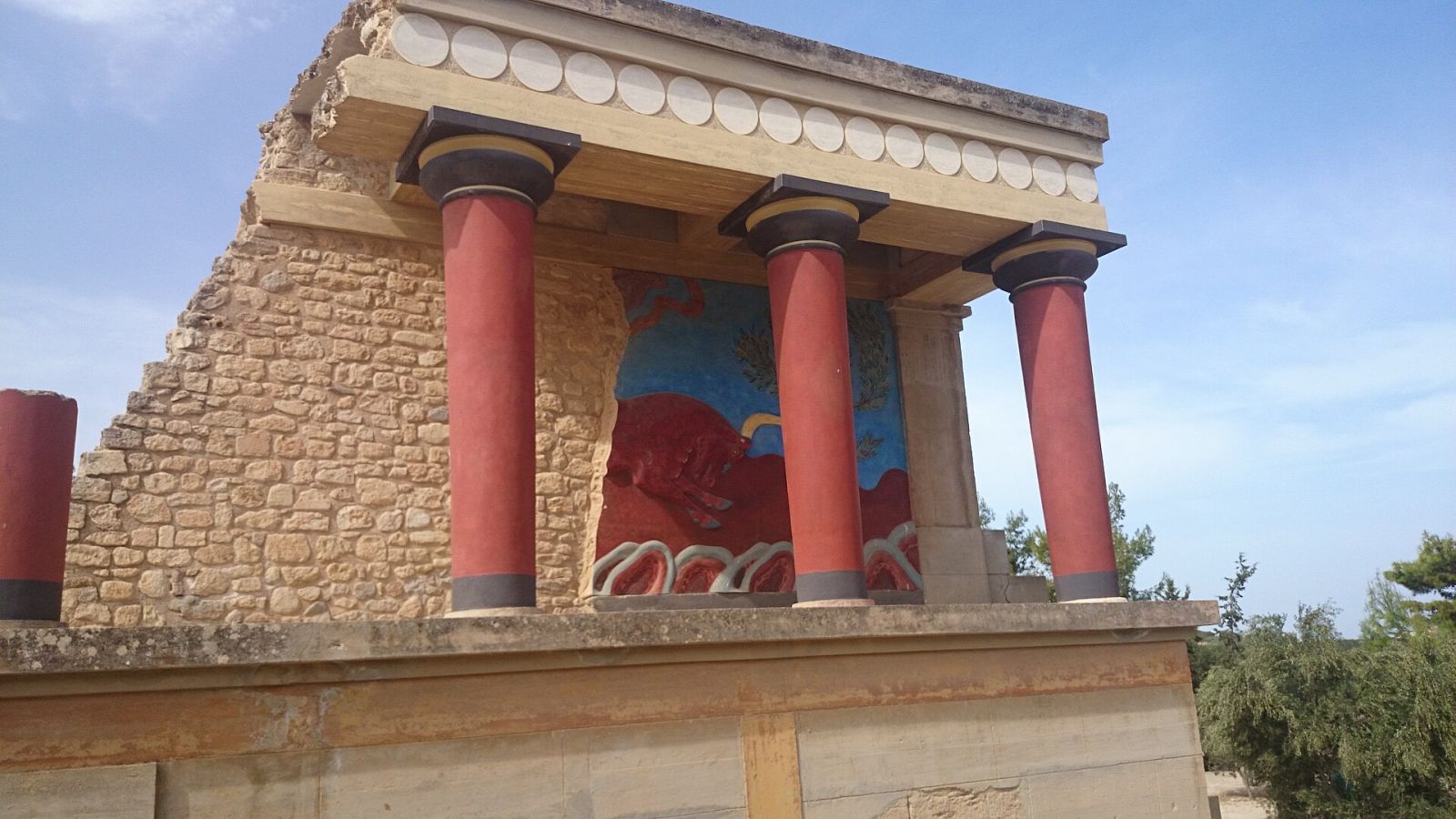
Knossos, five kilometres from Heraklion, is the remains of a Minoan palace built roughly four thousand years ago: over a thousand rooms, running water, drainage and dolphin frescoes at a time when the Parthenon was still fifteen centuries away. The maze-like floor plan is what spawned the Minotaur's labyrinth myth. One expectation to calibrate: a large share of the ruins was rebuilt in concrete in the early 20th century by archaeologist Arthur Evans, and scholars still criticise his red columns as artistic licence. It adds spectacle and subtracts authenticity, and it is worth knowing before you go.
Arrive by nine or after four: there is almost no shade on site, and midday coach groups queue at every fresco. Buy tickets online at the Greek culture ministry's official platform hhticket.gr; the combined ticket with the Heraklion Archaeological Museum is better value. The museum is non-negotiable: the original frescoes and the Phaistos Disc live there, while Knossos displays copies. Half a day to a full day covers both.
Chania: the Venetian harbour and the best western base
Chania is the island's most beautiful town, and arguing otherwise is hard. The Venetians held Crete for four hundred years and left behind a harbour with a 16th-century lighthouse, arsenal shipyards and a weave of old-town lanes where Venetian palazzi run into Ottoman fountains and a synagogue. The evening loop around the harbour to the lighthouse and back through the Topanas quarter is the mandatory programme; the morning version, before the cafes open, is even better: the town is empty and entirely yours.
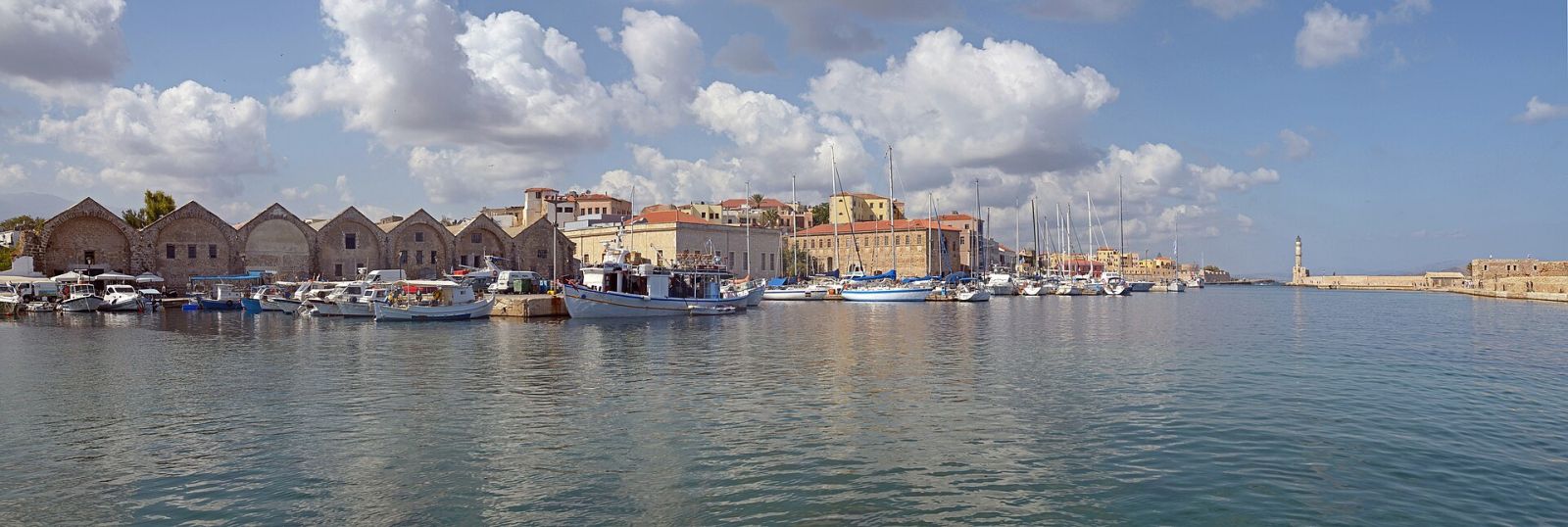
Chania makes a convenient base for the whole west: buses to Samaria, boats to Balos and the road to Elafonissi all start here. Give the town a full day plus the evenings between excursions. Specifics worth your time: the covered Agora market, the maritime museum in the Firkas fortress, and the second-row tavernas where menus are shorter and the food more honest than on the waterfront.
Samaria: 16 kilometres down to the Libyan Sea
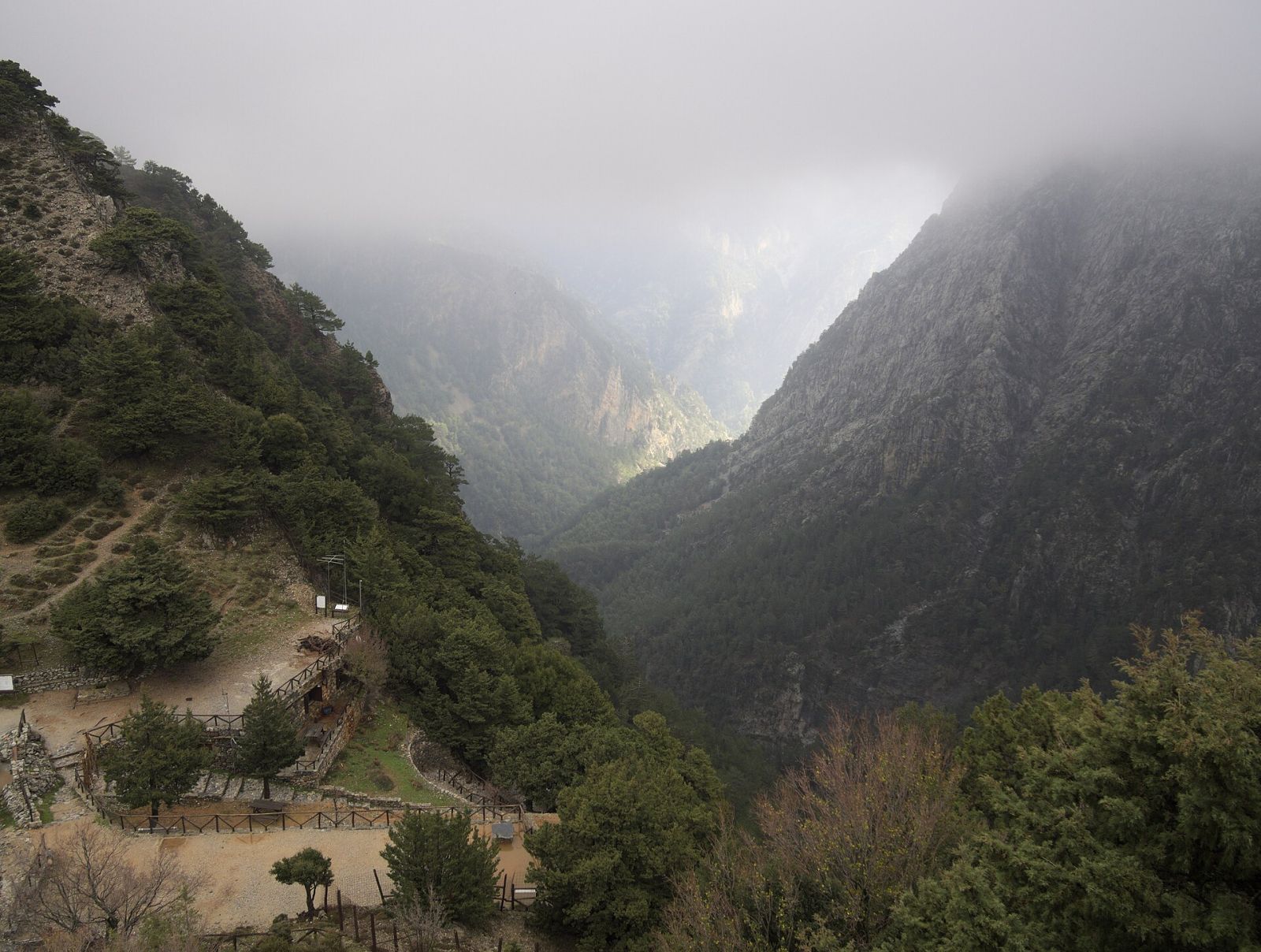
The Samaria Gorge is Greece's longest popular hiking route: 16 kilometres from the Omalos plateau at 1,250 metres down to the village of Agia Roumeli on the Libyan Sea. The gorge walls close to three and a half metres at the Iron Gates, and kri-kri, wild Cretan goats found nowhere else, wander the slopes. The route is one-way with no mid-point exit: once you start, you finish. Expect 5-7 hours of walking with a pack of water, in proper hiking shoes, and know that the descent punishes knees harder than lungs.
Logistics decide everything. No roads reach Agia Roumeli, only a ferry to Chora Sfakion or Sougia, from where a bus returns you to Chania. Samaria is therefore done as an organised day: early bus to Omalos, the hike, the ferry, the bus, home around nine in the evening. The park opens roughly May to October; entry closes in heat above 35°C and in rain, so check the status before setting out. If 16 kilometres is too much, there is an honest alternative: the Imbros Gorge nearby, 8 kilometres and half the crowd.
Balos and Elafonissi: the lagoons people fly for
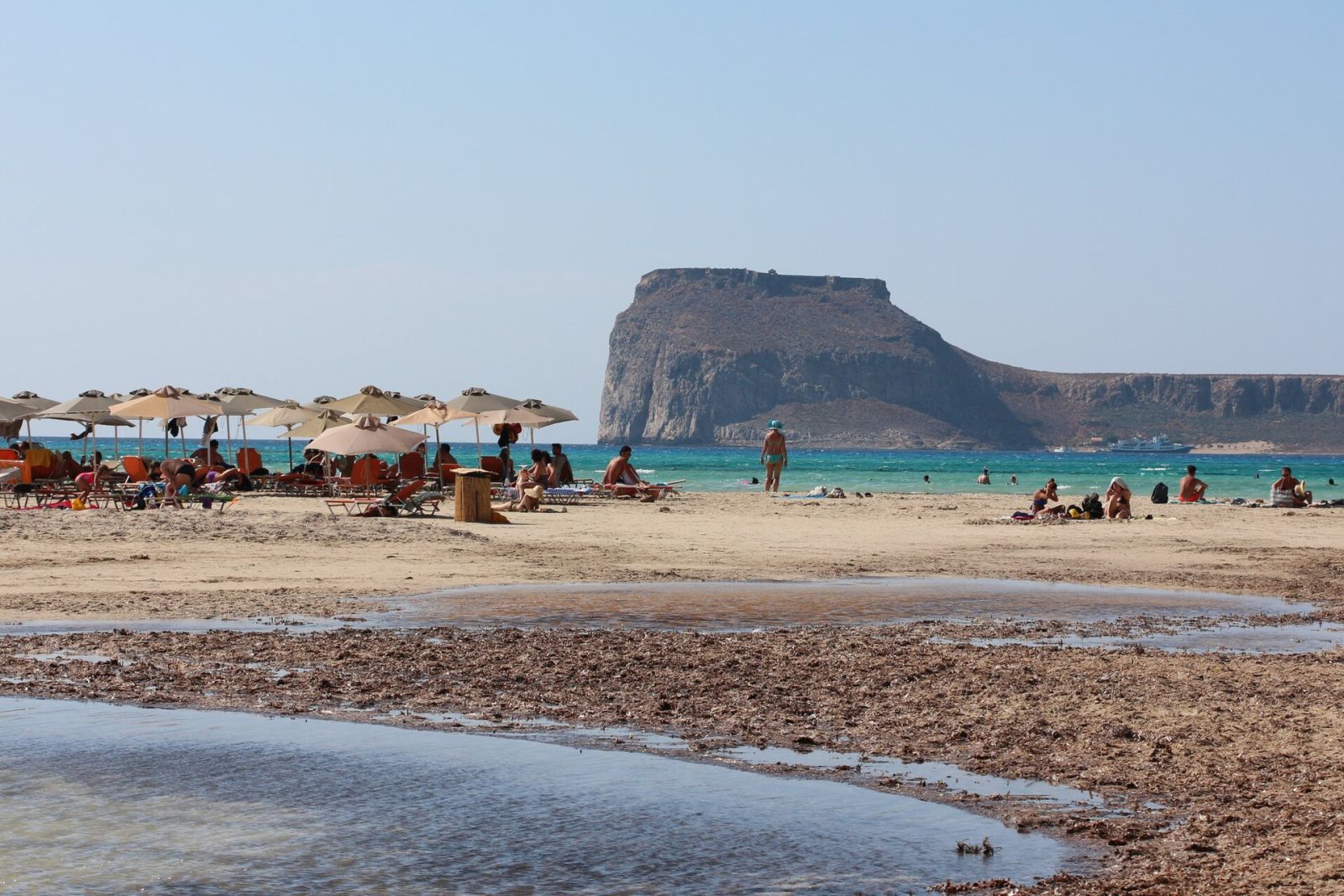
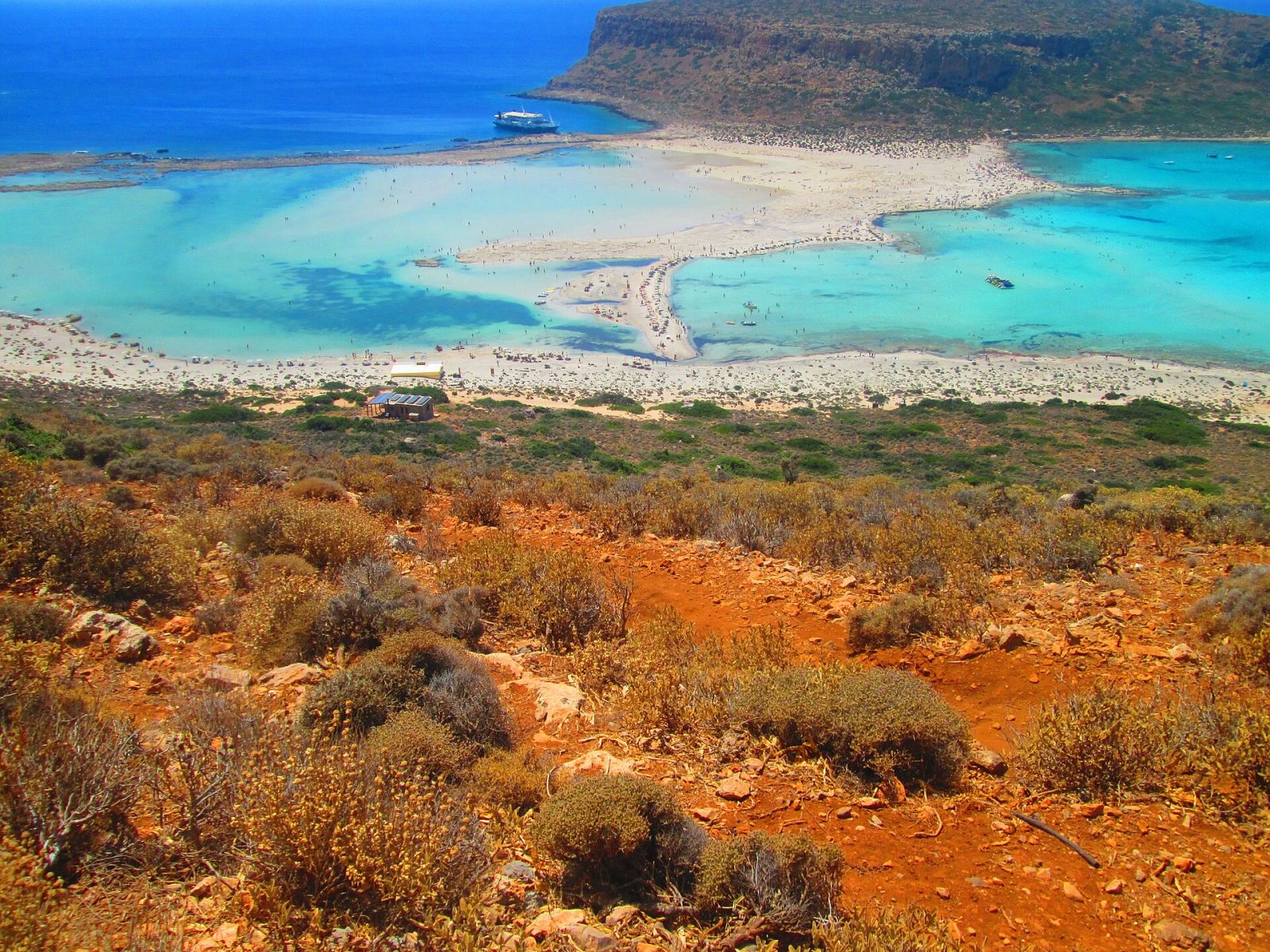
Formally these are beaches; in essence they are natural phenomena. Balos is a lagoon between a cape and the island of Gramvousa: white-pink sand, water in every shade from turquoise to deep blue, and a view from above that has done half of Crete's advertising. You can arrive by boat from Kissamos with a stop at the pirate fortress of Gramvousa, or under your own steam: 8 kilometres of dirt track that rental companies dislike intensely, then half an hour's walk down. Self-driving gets you there by nine, before the boats, and the lagoon is yours.
Elafonissi at the island's southwestern tip is famous for pink sand: the colour comes from ground foraminifera shells, and it is pinkest at the waterline. The lagoon is shallow, knee-deep for hundreds of metres, which makes it the island's best spot for children. Taking sand away is forbidden; the area is a Natura 2000 protected zone. Both places demand an early start: after eleven the car parks and beaches stay packed all season.
Rethymno and the road inland: mountains, villages, monasteries
Rethymno, the island's third town, lives undeservedly in Chania's shadow: the same Venetian old town, minarets, the largest Venetian fortress, the Fortezza, above the sea, plus a long town beach that Chania cannot offer. Half a day to a day, and a handy halfway base between the west and Heraklion.
Now for the most underrated part. Real Crete lives not on the coast but in the mountains, and a day or two inland transforms your impression of the island:
- The Lasithi plateau: a mountain bowl ringed by villages, with the Dikteon Cave where, per the myth, Zeus was born.
- Arkadi Monastery: shrine of Cretan resistance, site of the 1866 tragedy, a Baroque church amid vineyards.
- Mountain villages: Anogia with its lyra and weaving traditions, Argiroupoli with springs and waterfalls running right between the tavernas.
- Inland tavernas: antikristo lamb roasted by open fire, dakos, and raki after the meal on the house. That is not service, that is Cretan filotimia.
How many days, and how to lay out the route?
| Days | Base | Programme |
|---|---|---|
| 1-2 | Heraklion | Knossos in the morning, Archaeological Museum, old harbour |
| 3 | Rethymno | Transfer, the Fortezza, old town, Arkadi Monastery en route |
| 4-6 | Chania | Harbour and old town, a day for Balos, a day for Elafonissi |
| 7 | Chania | Samaria as a full day (or Imbros as the lighter version) |
| 8-9 | Mountains | Anogia or Lasithi, villages, tavernas, a slow day |
| 10 | Heraklion | Coastal drive back, departure |
A week is the honest minimum, ten days the comfortable norm. A car is the key condition: KTEL intercity buses run decently between the big towns, but Balos, Lasithi, Arkadi and half the list above turn into expensive scheduled excursions without one. Rentals start around 35-45 euros a day in season, half that off season; check current rates. Roads are fine but winding, and the local habit of drifting onto the shoulder to let others overtake surprises at first.
When to go?
Crete has the longest swimming season in Greece, May to late October, with the sea still at 23°C in October. Peak July-August means 35°C, crowds and price maximums, and the south coast runs hotter than the north. The smartest windows: late May through June, when the mountains are still green and everything is open, and September into early October with warm sea and emptying beaches. Critical for Samaria: the park operates roughly from May and is closed by November. Winter Crete works for towns and mountains, 15°C by day, greenery and zero tourists, but most resort infrastructure sleeps and the White Mountains stay under snow until April. Direct charters to Heraklion and Chania appear in season; check current flight options before you plan.