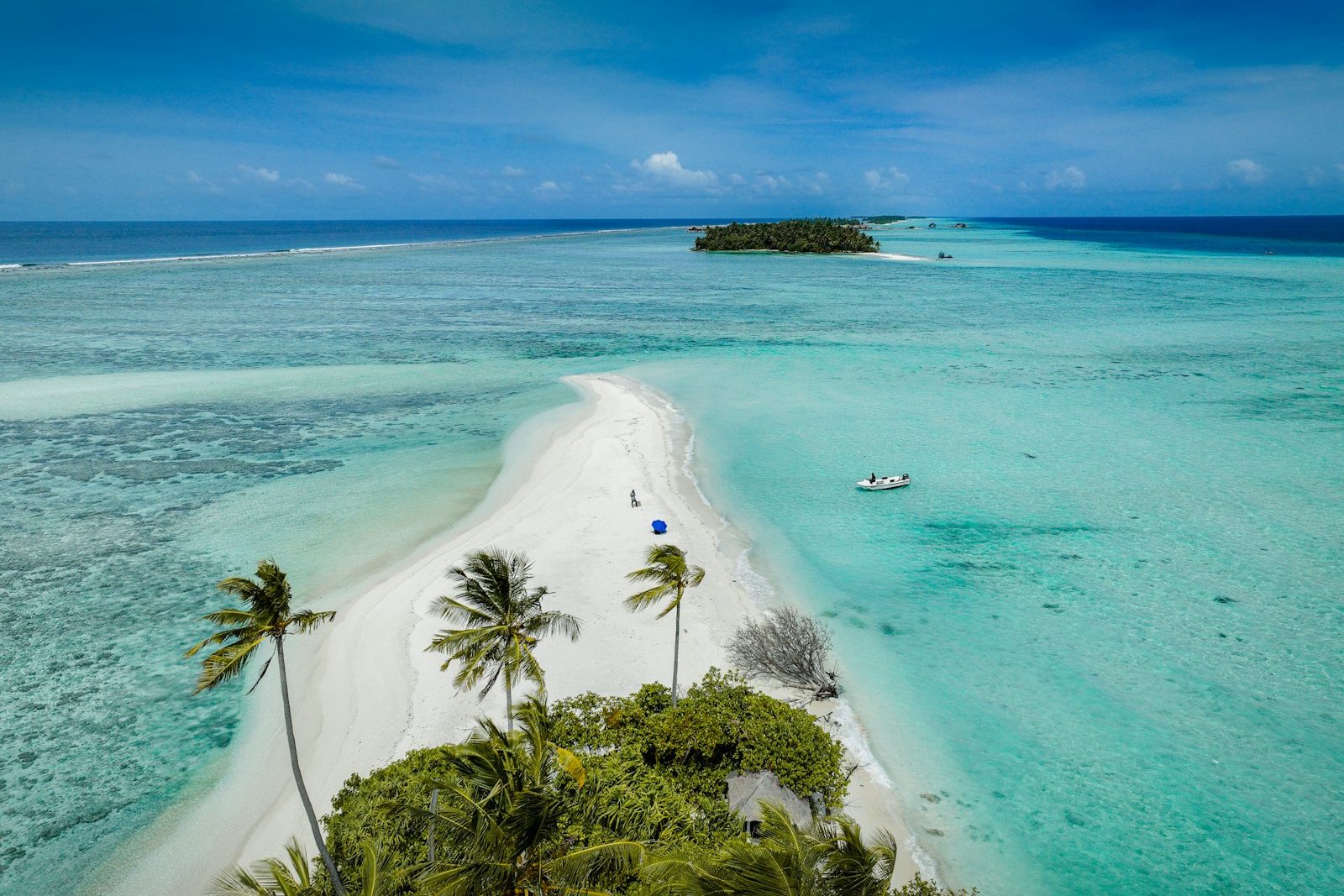


The short version: for perfect weather, people fly to the Maldives from November through April (the dry season), while for lower prices and the richest underwater life they come from May through October (the wet season). So the question of when to visit the Maldives is not really about the calendar, but about what you are flying there for: dry sun over the lagoon, mantas and whale sharks, or a noticeably smaller resort bill.
The air temperature here barely moves all year and stays within 28-30 °C, and the water is always warm too. So the “seasons” in the Maldives are not about cold and heat, but about two monsoons, rain, wind and water clarity.
Which season in the Maldives counts as the best overall?
By weather, the winner is obvious: the dry season from November through April. Clear skies, calm lagoons, lower humidity, excellent underwater visibility. But “best for weather” and “smartest to go” are two different things. At the peak of the dry season, meaning December, January and February, prices soar to their yearly high, and popular resorts get booked out months in advance.
Partner links: booking through them supports the blog at no extra cost to you.
The wet season from May through October pays you back in other ways: shorter downpours and gusty wind, but also discounts of up to a third off peak rates, and this is exactly when huge gatherings of ocean giants collect around the atolls.
How does the dry season differ from the wet one?
The weather in the Maldives is driven by two monsoons. The northeast one (locally called iruvai) brings the dry season roughly from December through April: sun, a light breeze, smooth water. The southwest one (hulhangu) is responsible for the wet season from May through October: more clouds, wind, higher humidity, shorter tropical showers and occasionally rougher seas.
One honest detail matters. November and April are transitional months on the boundary between monsoons, so rain is possible even in “dry” November, and full sun happens in “wet” May. The Maldives are scattered across hundreds of kilometers, and while it pours on one atoll, the sun shines on the next, so a forecast here is always about probability, not a guarantee.
The Maldives month by month: weather, prices and crowds
This table shows which month to pick for which goal. Prices are given relatively, because the exact rate depends on the resort and the booking date, so double-check the final figures before your trip.
| Month | Weather | Prices | Who it suits |
|---|---|---|---|
| November | Transition into the dry season, rain still possible | Moderate, rising toward the end of the month | Anyone who wants sun without peak prices |
| December to February | Driest and clearest | Yearly high, holiday season | Anyone ready to pay for perfect weather |
| March to April | Still dry, warmer water | Drop 15-25 % off the peak | Divers and anyone chasing the balance |
| May to July | Start of the wet season, short showers, wind | Noticeably lower, minus 20-35 % | Budget trip, surfing |
| August to October | Wet but warm, short rains | Low, apart from an August spike | Hunting for mantas and whale sharks |
A special note on August: it is the middle of the wet season, but because of European school holidays, prices for this month often jump despite the weather.
When to go for diving, surfing, mantas and whale sharks?
This is where the wet season takes its revenge. The plankton brought in by the southwest monsoon draws the ocean’s biggest inhabitants to the atolls.
- Mantas. The best time is May to October. In Hanifaru Bay on Baa Atoll (a protected area and UNESCO biosphere reserve), the feeding gatherings run roughly from June through October, and at the peak from July through September you can genuinely see a hundred or more mantas in a single dive.
- Whale sharks. They are spotted year-round near South Ari, but the highest odds fall in the second half of the wet season, roughly from July through October.
- Diving for visibility. Here it is the other way around, the dry season wins: calm water gives the best clarity and the easiest conditions for beginners.
- Surfing. The wave season stretches from March through October, and the most powerful swells arrive from May through September, that is, at the height of the wet season.
The result is a paradox worth accepting in advance: the perfect picture above the water and the most exciting life beneath it fall on different halves of the year.
And when is it better not to go to the Maldives?
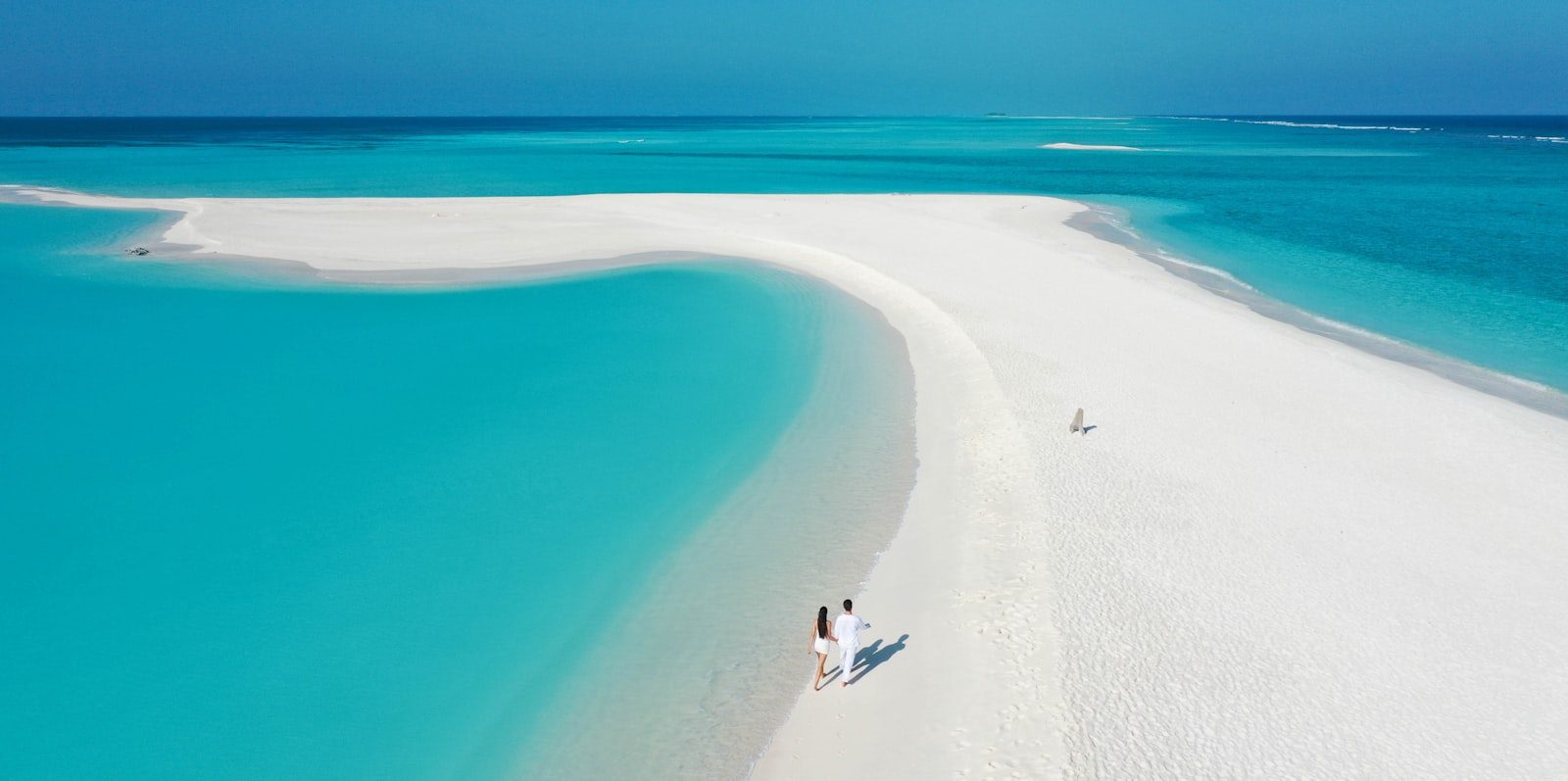
The honest answer depends on your type of holiday, not on some abstract “bad month”.
If you are going purely to lie in the sun and are not willing to accept a single shower, avoid June, statistically the rainiest month of the wet monsoon. If budget is critical for you, stay away from the Christmas and New Year window of late December and early January, when prices are at their peak and the best water villas are all snapped up. And if you dislike crowds and high rates at the same time, August with its holiday spike is a poor idea.
There is no month in the Maldives that universally “suits no one”, and that is arguably the destination’s main advantage over seasonal resorts.
What a night really costs: the taxes people forget
The villa price in a search engine is not the final bill yet. On top of the rate, the Maldives add several mandatory fees, and over a week-long trip they add up.
| Fee | How much | How it is calculated |
|---|---|---|
| Green Tax, resorts | 12 USD per person per night | All resorts, hotels and vessels regardless of size, plus hotels and guesthouses on inhabited islands with more than 50 rooms; children under 2 are exempt |
| Green Tax, guesthouses | 6 USD per person per night | Small hotels and guesthouses with up to 50 rooms on inhabited islands |
| Tourism GST | 17 % | On the cost of accommodation and services |
| Service charge | 10 % | Regulated by the state, goes to the staff |
The Green Tax for resorts doubled from 6 to 12 dollars in January 2025, and the tourism GST was raised to 17 % from July 2025. In practice, a villa at a notional thousand dollars works out, after taxes and fees, to about 1,270 dollars a night plus the Green Tax for each guest. Over a week that builds into a solid surcharge, so factor it into your plan from the start. Tax rates can change, so double-check the current figures before your trip.
As a rough guide on price ranges: budget water villas on local islands run from about 250 to 400 dollars a night, the mid-range from 450 to 800, and luxury overwater villas from 900 dollars and well above. In the wet season these figures fall by 20-35 % against the dry-season peak.
Do Ukrainian citizens need a visa for the Maldives?
No, you do not need a visa in advance. Ukrainian citizens receive a free visa on arrival valid for 30 days, as confirmed by the official portal of the Maldives immigration service. If you need to stay longer, it can be extended in the capital, Malé, for up to 90 days in total.
What you need to have on entry: a valid international passport, a return or onward ticket, proof of accommodation (a booking or voucher) and enough funds for the duration of the trip. A separate mandatory step is the electronic Traveller Declaration (through the IMUGA system), which you complete in the window of up to 96 hours before arrival, after which a QR code is generated for check-in and passing through the border.
Visa conditions change, so check the current requirements before your trip on the official Maldives immigration portal and on the website of Ukraine’s Ministry of Foreign Affairs.
So when should you go?
If you are flying for the first time and want a guaranteed postcard with clear skies and a mirror-still lagoon, pick March or April: it is still dry, the water is warmer, and prices are already below the December peak. If your goal is diving with mantas and whale sharks or surfing, do not fear the wet season and aim for the stretch from July through September, making your peace with short rains. And if the deciding factor is budget, the calmest compromise between weather and price comes in May and early June, while the monsoon is only just gathering strength.