

“Every patch of grass is covered in tents on the weekends,” says 26-year-old glamping enthusiast Yoga Song.
Glamping, a mash-up of “glamour” and “camping,” is the latest travel craze among young Chinese.
Over the past year, Song says she has taken more than 10 glamping trips around China, heading to rural regions and city outskirts alike.
Partner links: booking through them supports the blog at no extra cost to you.
She set off on her first glamping getaway in April 2021, making her way to Zhongwei, a city nicknamed “the Morocco of the East.”
Set in the mostly desert Ningxia Hui Autonomous Region of northern China, Zhongwei is home to the Yellow River, stretches of the Great Wall, deserts, wetlands and ancient villages.
By the time she arrived, the city was already dotted with boutique hotels and guesthouses. But Song decided to try something different: a tent.
When Song got there, she says there were five tents pitched just 10 meters from the roaring Yellow River, with views of the Gobi Desert, the sixth largest in the world, on the other side.
Things didn't go smoothly, though. The weather in Zhongwei was fiercely windy, kicking up flying sand and gravel. As a result, all the tourist sites were shut down.
“That night, the people running the glamping site called us out to look at the stars,” she recalls. “When I stepped out of my tent, all the clouds covering the sky had finally cleared. The sky was vast, scattered with starlight, every star I could possibly imagine, and the silence was perfect.”
Leaving behind the hustle and noise of city life, travelers immerse themselves in an authentic, modern-day northwestern China. Song says glamping here, surrounded by farms and pastures, gives travelers the chance to sow, harvest and taste local dates and wine grapes. Goats, yaks and sheep wander past the tents from time to time.

Comfort over nature
In the world's most populous country, time spent outdoors can mean intense mountain treks and desert expeditions, or easygoing picnics on a grassy park lawn and relaxing trips out of town.
Yet while young city dwellers crave fresh air and nature, many aren't willing to give up creature comforts like a soft mattress.
Xiaohongshu, the country's leading lifestyle platform, is a major hidden hand driving this fashionable escape, as chic, camping-inspired posts flood mobile feeds.
For many young Chinese, glamping is the perfect activity for their daka lists, a buzzword describing internet users who “check in” at Instagram-worthy spots.
Thousands of detailed glamping packing lists, easy-to-make recipes and recommendations for glamping sites across the country dominate the Chinese internet.
Song recalls seeing a Marshall speaker and huge handmade rugs inside her tent in Zhongwei.
Natural Camp, the site's operator, proudly announces on its official Xiaohongshu page (a Chinese social media platform): “We maintain a careful selection of outdoor brands, both domestic and international.”
Among them are King Koil mattresses, quite possibly the same ones you'd find in five-star hotel rooms, and outdoor furniture from the high-end Scandinavian brand Tentipi.
A one-day stay costs around 1,000 yuan ($148) per person, Song says.
The trend isn't limited to mainland China, either.
Wade Cheung, marketing manager at Saiyuen, a glamping and adventure park on an island in Hong Kong, has also noted a “significant increase” in bookings over the past two years, with more than 10% of visitors returning after a first stay.
“The ongoing pandemic has inspired Hong Kong residents to explore fantastic local experiences within the city,” says Cheung.
The site, located on Cheung Chau island, offers a range of accommodation options, from tepees to Mongolian yurts, but the most exclusive is Sunset Vista, a 300-square-foot dome tent set on its own 2,000-square-foot grounds with a private lawn.
The dome can host a total of four people and includes a private shower and toilet, a barbecue, a hammock and much more.
With a bay window looking out over the ocean and a spot perfectly suited for stargazing, Sunset Vista has become a hit with Hong Kong bloggers and influencers.
A single night in the tent costs around HK$3,500 ($446) to HK$4,800 ($611), comparable to a night at a luxury hotel on Hong Kong Island.
These days, glamping sites are dominated by guests who put comfort ahead of nature.
Cheung says the type of visitor they welcome has shifted since the pandemic began. Earlier visitors loved camping, hiking and nature, and were delighted by air conditioning in the tents. Now guests consider air conditioning a must.
“For instance, if there's a frog sitting in front of the tent, earlier visitors would probably crouch down and take a photo with it, but for today's visitors it might be something they need to adjust to,” he adds.

A trend fueled by COVID
Glamping has been gaining momentum ever since Covid-19 appeared. A report published by Chinese travel operator CTrip shows that searches for camping activities jumped eightfold in 2021.
During the May holidays in 2022, data from another platform, Qunar, shows that ticket sales for parks that allow camping in China rose by more than 50% compared with the same period a year earlier.
Bookings for guesthouses that offer camping-related services, such as RVs and tents, also quadrupled across the country during the holidays compared with the same period the previous year, according to home rental site Tujia.

Covid-19 has undoubtedly played a part in this recent enthusiasm for upscale outdoor experiences.
The initial outbreak in 2020 sealed China's borders, keeping Chinese tourists at home. Recent Covid-19 outbreaks are estimated to have cut domestic travel by more than half, and people are spending their holidays even closer to home, as the potential fallout from a trip has evolved from getting stranded outside China to getting stranded outside your own city.
Doubling down on its controversial “zero-Covid” policy, China is imposing strict measures, including lockdowns and repeated mass testing, to stamp out the latest clusters.
The megacity of Shanghai has just emerged from a nine-week citywide hard lockdown that barred all residents from leaving their apartments. In the capital, Beijing, a “soft lockdown” lasting more than three weeks has left millions of residents forced to work from home.
And in Hong Kong, there are echoes of earlier epidemics.
Nearly two decades ago, when the city was hit by a SARS outbreak, Cheung set off on his first local hikes and camping trips. That's when he discovered that “Hong Kong is such a fascinating place to explore.”
The call of the wild
While Song agrees that the rise of glamping can be traced to Covid-19 restrictions, which led people to value chances to connect with nature, she believes there's something more to it. Namely, the concept of “living wild.”
“A lot of the lifestyles we see on social media are too glamorous. Coffee culture in Shanghai, for example, is a little glamorized. They set a precedent for how we're supposed to look, speak and live in an ideal world.”
But people are realizing that these lifestyles are missing something, Song points out. Picnics, which were popular before glamping became the new obsession, can no longer satisfy the desire to connect with nature.
Even so, she carefully draws a line between “living wild” and “living in the wild.”
“Some of my friends can just go hiking up any mountain with nothing but a backpack. That's too extreme for me. At the very least, basic sanitary standards and living conditions shouldn't be sacrificed,” she says.
The enduring appeal of time spent in the wild means the glamping trend is probably here to stay, but it's expected to settle “to a steady level” once travel restrictions ease, Cheung notes.
Among those who visit Saiyuen, roughly 60% are families who “will still love taking their kids to a little adventure island locally” on weekends, he adds.
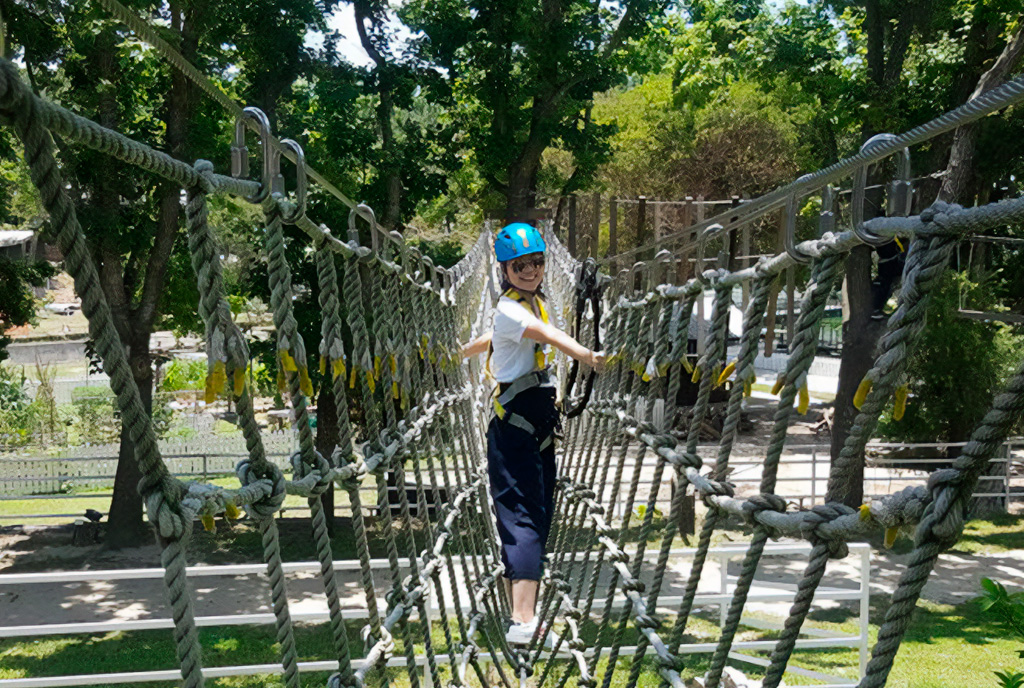
Top image: The Saiyuen glamping resort in Hong Kong sits on Cheung Chau island.