

The French Alps hold a world record: the Trois Vallées links 600 kilometres of connected pistes, more than anywhere else on the planet. The best ski resorts in France are above all these giant linked ski areas, where a week is physically not enough to repeat a single run, backed by altitudes that guarantee snow from December through April. Here is a breakdown of the four key regions: who each one suits, what a lift pass costs and how to get there without a car.
Les Trois Vallées: Courchevel, Méribel, Val Thorens
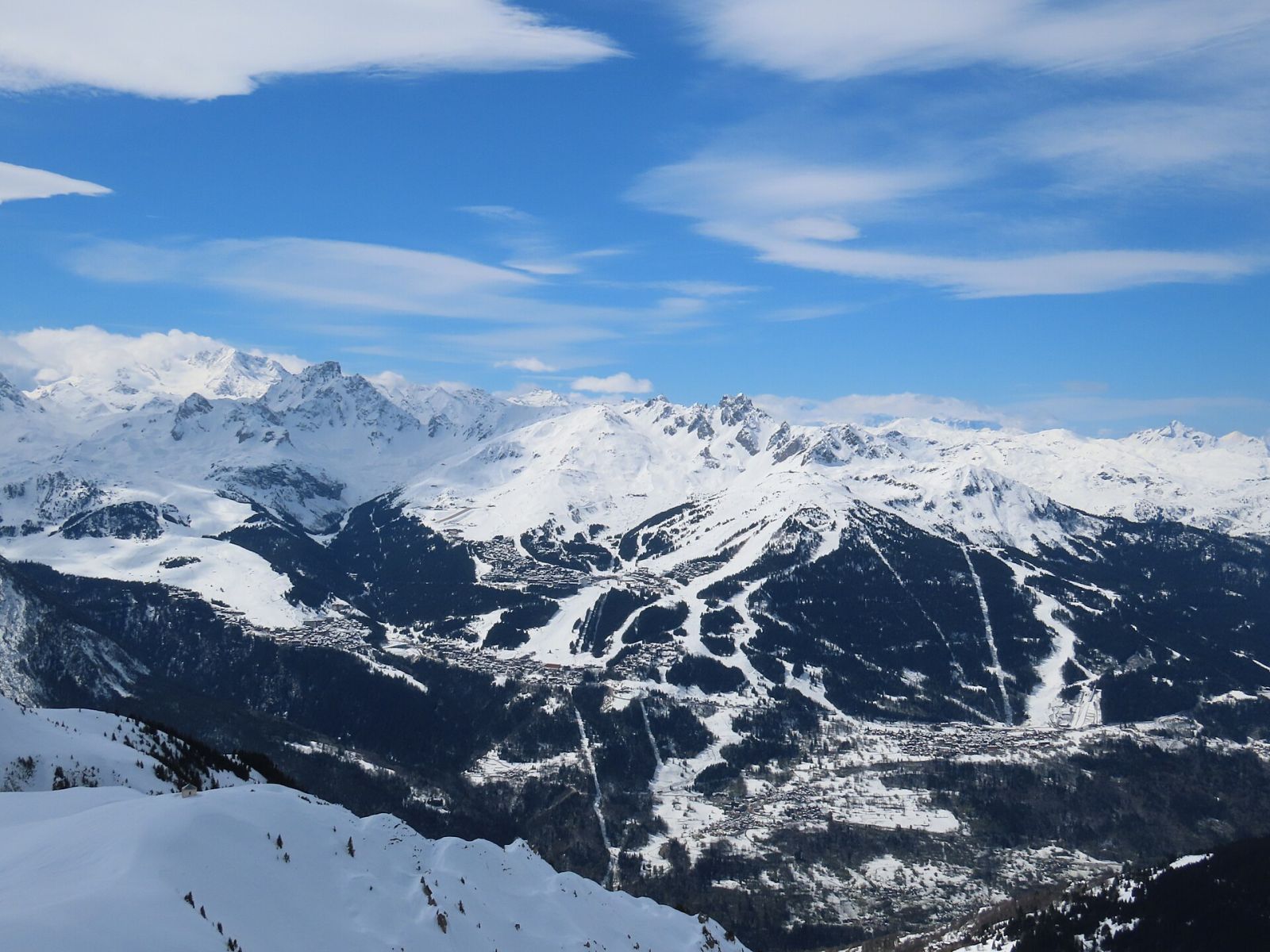
Three valleys stitched into one system by lifts: a single pass, 600 km of pistes, over 160 lifts. Courchevel is famous for immaculately groomed wide runs and prices that make you blink: this is the resort of private jets and Michelin-starred restaurants on the slopes. The skiing itself is friendly even to beginners, with plenty of green and blue terrain. Méribel sits at the centre of the system, which makes it the most convenient base for reaching both neighbours, and the village is built entirely in chalet style with no tower blocks.
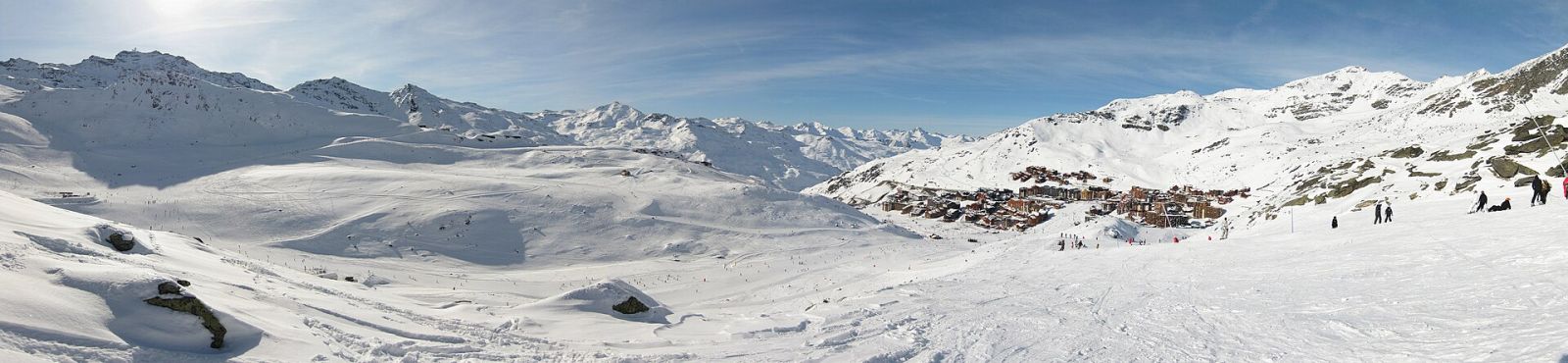
Val Thorens, the third valley, is the highest resort in Europe: the village stands at 2,300 metres with skiing up to 3,230. Snow lasts from November until early May, when the valleys below have switched to cycling. The crowd is younger and more casual, with apartments outnumbering hotels, so trip costs can genuinely be squeezed. Check current pass prices and piste conditions on the official area site les3vallees.com: a day pass for all three valleys runs about 80 euros, a week about 400, creeping up a little each year.
Paradiski: La Plagne and Les Arcs
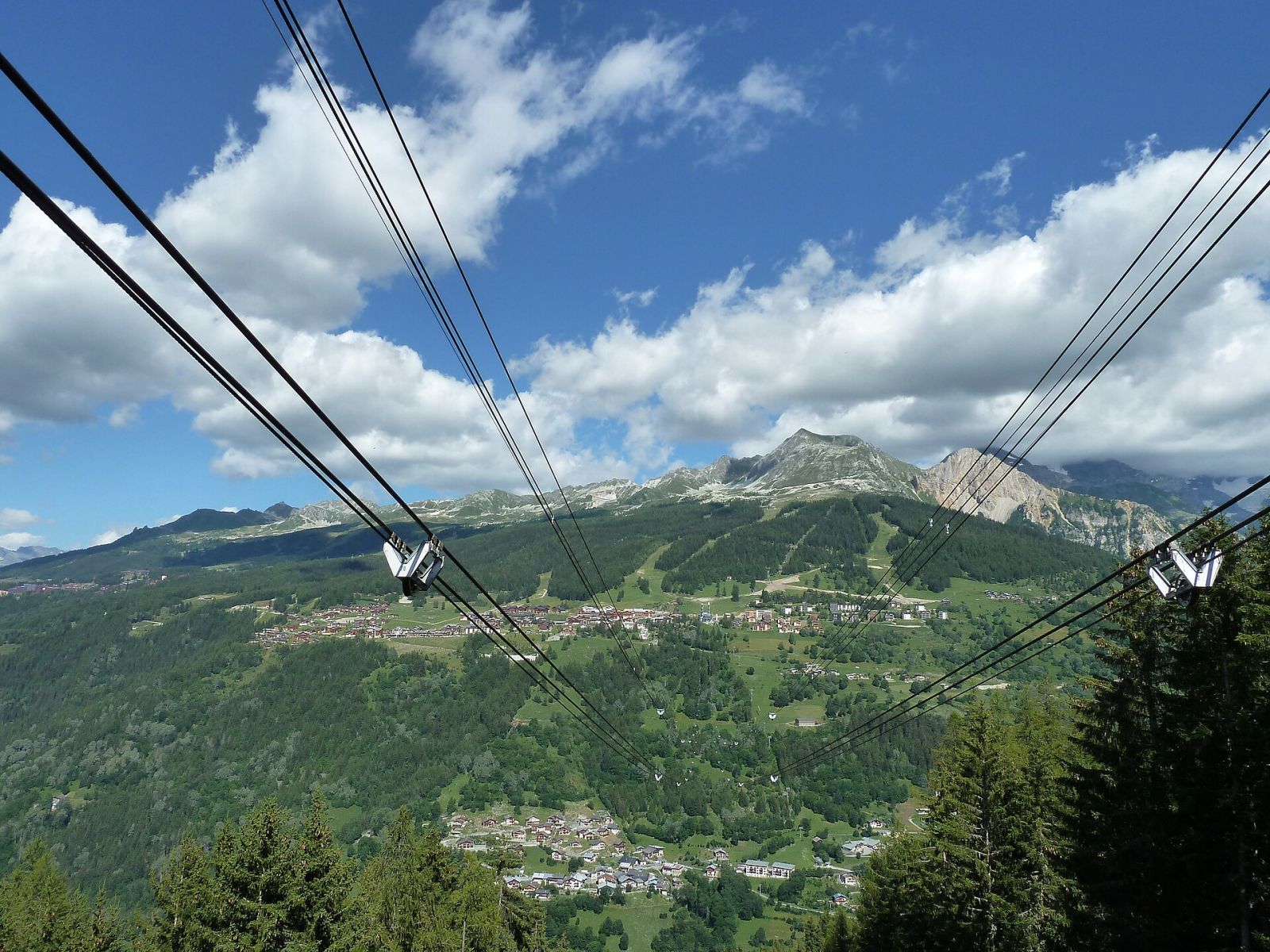
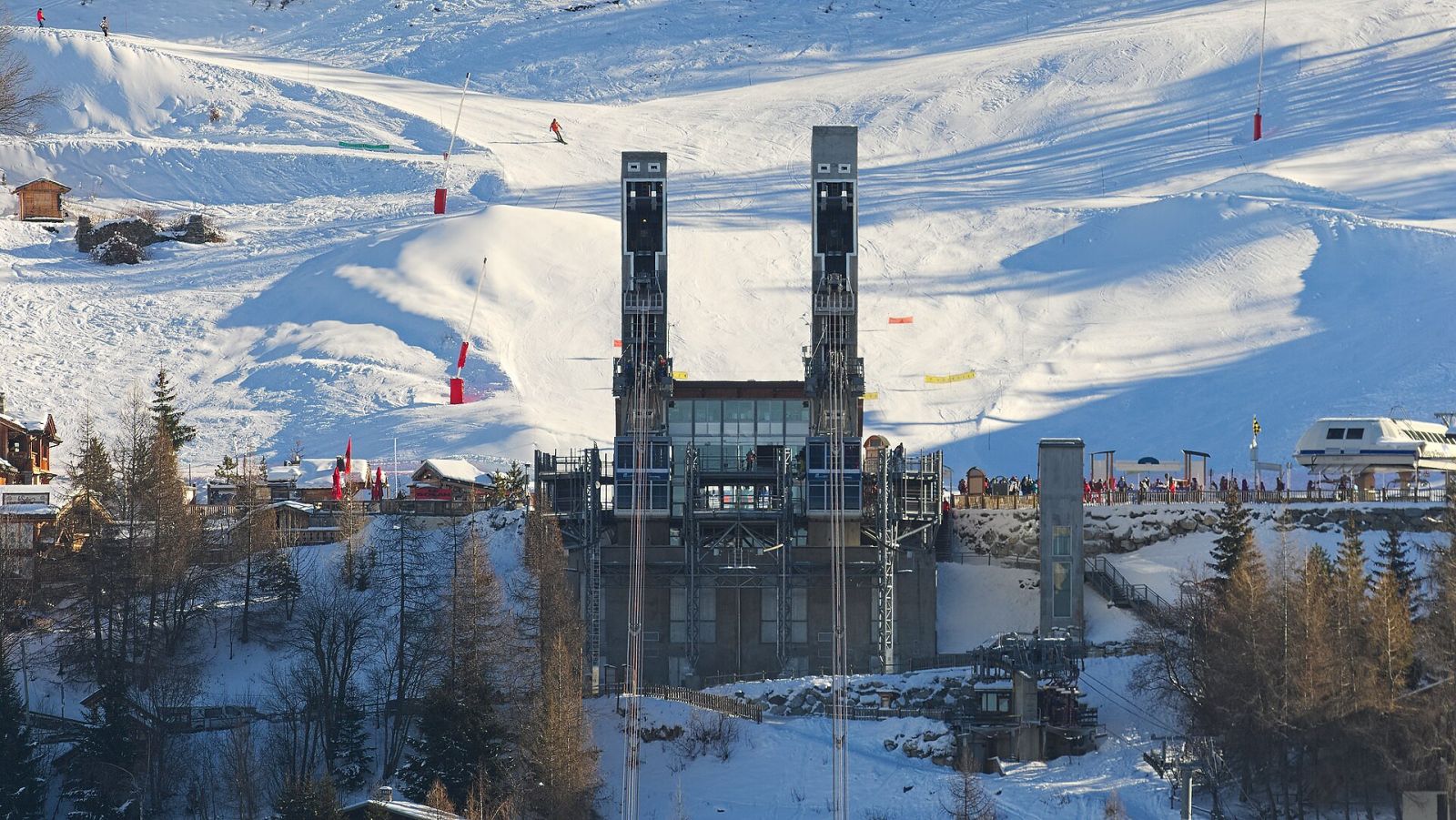
France's second-largest linked area: 425 km of pistes and two big stations joined by the double-decker Vanoise Express cable car, which crosses the valley 380 metres above the ground. La Plagne consists of a dozen villages at different altitudes and ranks among the best family areas anywhere: gentle wide runs, ski kindergartens, and skiing from 1,250 up to 3,250 metres on the Bellecôte glacier. Les Arcs has a sharper character, with long steep descents and the iconic run from the Aiguille Rouge summit dropping more than two vertical kilometres. The architecture is divisive, functional 1970s blocks, but ski-in/ski-out works almost everywhere: step out of the door and go.
Chamonix: for experts and for the legend
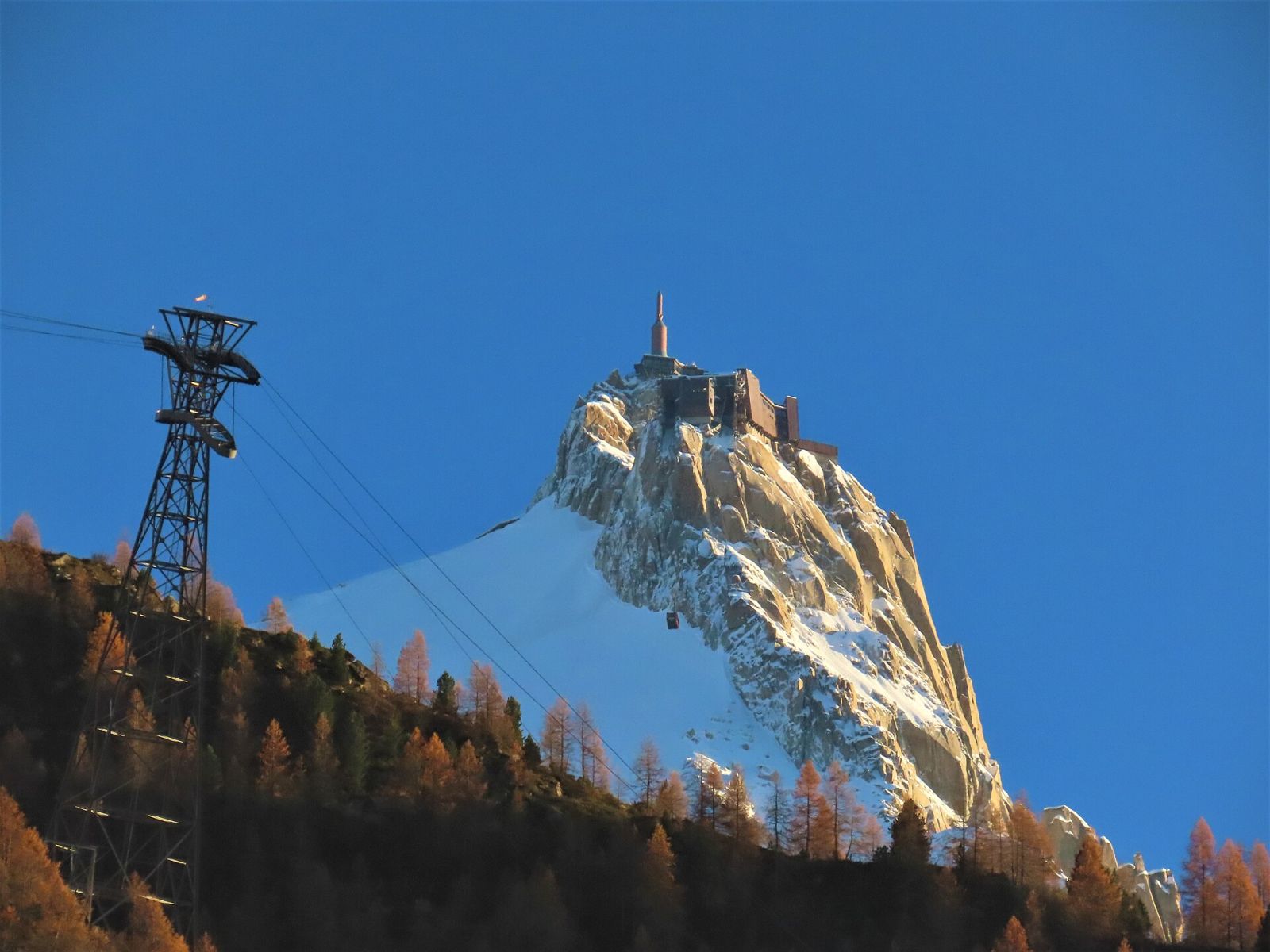
Chamonix under Mont Blanc is not a single ski area but a valley with several separate sectors, and coming here for relaxed family cruising is a mistake. People come for something else: off-piste terrain, the steep blacks of Grands Montets and the Vallée Blanche, the famous 20-kilometre glacier route with a 2,700-metre descent, skied with a guide after riding up the Aiguille du Midi. That cable car is an attraction in itself: a station at 3,842 metres with Mont Blanc at arm's length. Beginners and intermediates can ski here too, but the sectors are scattered, linked by bus, and there is no continuous sea of pistes. Chamonix is for people who rank mountains above mileage.
Val d'Isère and Tignes
A shared area between 1,550 and 3,450 metres with around 300 km of pistes, and snow that holds reliably from late November to early May thanks to the Grande Motte glacier. Val d'Isère is a genuine old Savoyard village with a 17th-century church that grew into a world-class resort: it has hosted Olympic races and regularly stages World Cup events. The terrain is varied, but the overall standard runs high: some local blues would pass for reds elsewhere. Tignes is more modern and plainer architecturally, but cheaper and closer to the glacier. Together they suit confident skiers who want a big mountain without Courchevel pricing.
Area comparison: kilometres, passes, altitudes
| Area | Km of pistes | Day pass, approx. | Skiing altitude | Best for |
|---|---|---|---|---|
| Les Trois Vallées | 600 | around 80 € | 1,300-3,230 m | every level, maximum variety |
| Paradiski | 425 | around 75 € | 1,250-3,250 m | families and fans of long descents |
| Val d'Isère + Tignes | 300 | around 75 € | 1,550-3,450 m | confident skiers, long season |
| Chamonix | separate sectors | around 70 € | 1,035-3,842 m | experts, freeride and glaciers |
Prices are indicative for an adult day pass; tariffs change every season, so verify on the official area sites before booking. Week passes work out noticeably cheaper per day, and buying online in advance usually shaves off a few more percent.
When is the season and when is it cheapest?
The general season runs from early December to mid-April, while high-altitude Val Thorens and Tignes open in November and stretch into May. The priciest weeks are New Year and the French school holidays in February, when accommodation doubles and lift queues appear. The smart windows are January after the holidays and late March. January brings the best snow and empty pistes; March offers long days, warmth and spring skiing, with cover still solid at the high resorts.
Getting there without a car
The standard route: fly to Geneva or Lyon, then transfer. Chamonix is an hour by bus from Geneva, the simplest logistics of all. The Tarentaise resorts (Trois Vallées, Paradiski, Val d'Isère) are served by Flixbus and local shuttles from both airports, a three-to-four-hour ride. By rail, take a TGV to Moûtiers or Bourg-Saint-Maurice; in season direct trains run from Paris, followed by a 30-60 minute local bus to the resort. On Saturdays, changeover day, valley roads jam solid, so arriving midweek saves both time and nerves.
What does a week cost?
- Budget scenario: a four-person apartment in Val Thorens or Tignes, self-catering, weekly pass. Roughly 900-1,200 euros per person before flights.
- Mid-range: a three-star half-board hotel in Méribel or Les Arcs, 1,500-2,000 euros.
- Courchevel has no ceiling: from 3,000 upwards, with no upper limit in sight.
- Full equipment rental: 150-250 euros per week, and online booking beats the counter price.
- Insurance with winter sports cover is essential: a helicopter evacuation off the piste costs thousands of euros.
France wins not on the charm of tiny villages but on sheer scale: no other Alpine country offers this many linked kilometres at these altitudes. If the goal is to ski yourself happy in a single week, the Trois Vallées or Paradiski settle the question outright.