

Strasbourg brands itself Capitale de Noël, the Capital of Christmas, and has the paperwork to prove it: the Christkindelsmärik has traded here since 1570, longer than any market in France. The Strasbourg Christmas market is not one square but an entire old town on the Grande Île island, where more than 300 stalls spread across a dozen locations each season. It all runs from late November until 24 December, and combined with the Alsatian villages nearby it forms the densest Christmas region in Europe.
Christkindelsmärik: four and a half centuries of trading
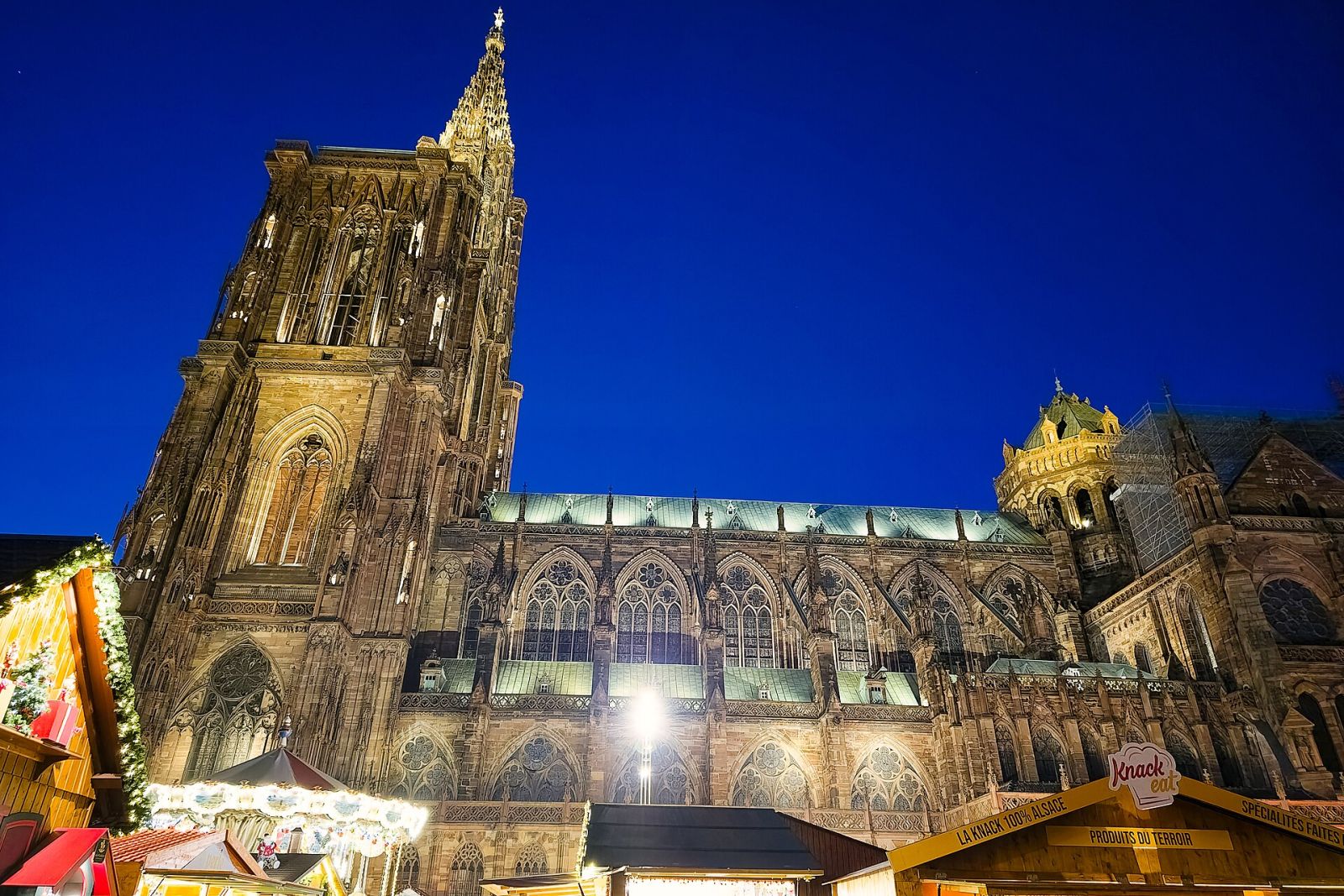
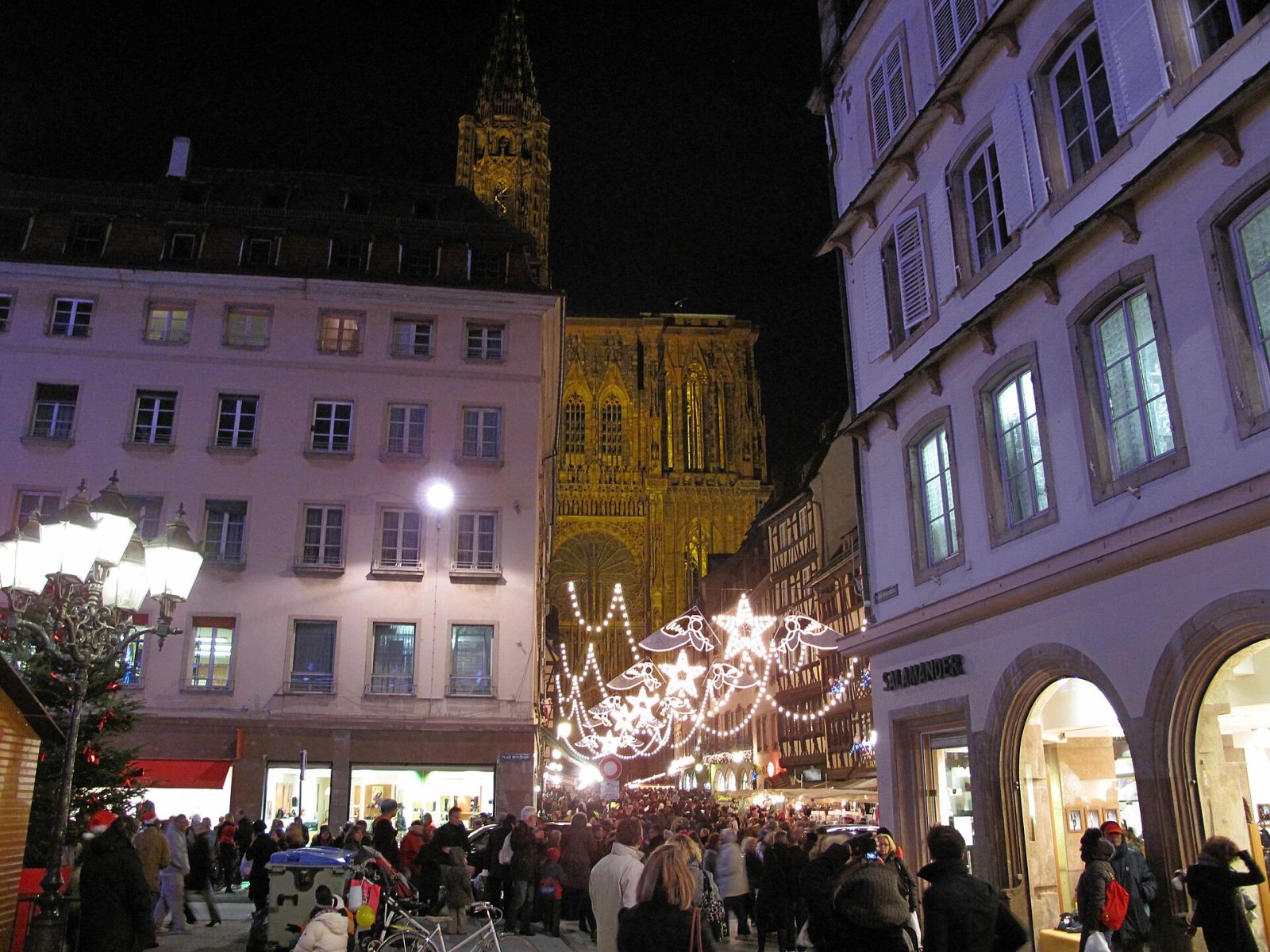
The market was born when Strasbourg was still a free city of the Holy Roman Empire, hence the German-sounding name: in Alsatian dialect it means "market of the Christ Child". The historic trading heart, Place Broglie, keeps the classic range: tree ornaments, nativity scenes, candles, wooden toys. Around the cathedral, a 142-metre Gothic colossus of pink sandstone, the food stalls cluster, and this is where the crowd is thickest. Climb the cathedral platform: the queue shortens towards evening, and the view over a sea of lights repays every step.
The city posts the full list of locations, dates and events each year on the official site noel.strasbourg.eu. It genuinely pays to check it before the trip: some squares change their theme from year to year, and with it the reason to go there.
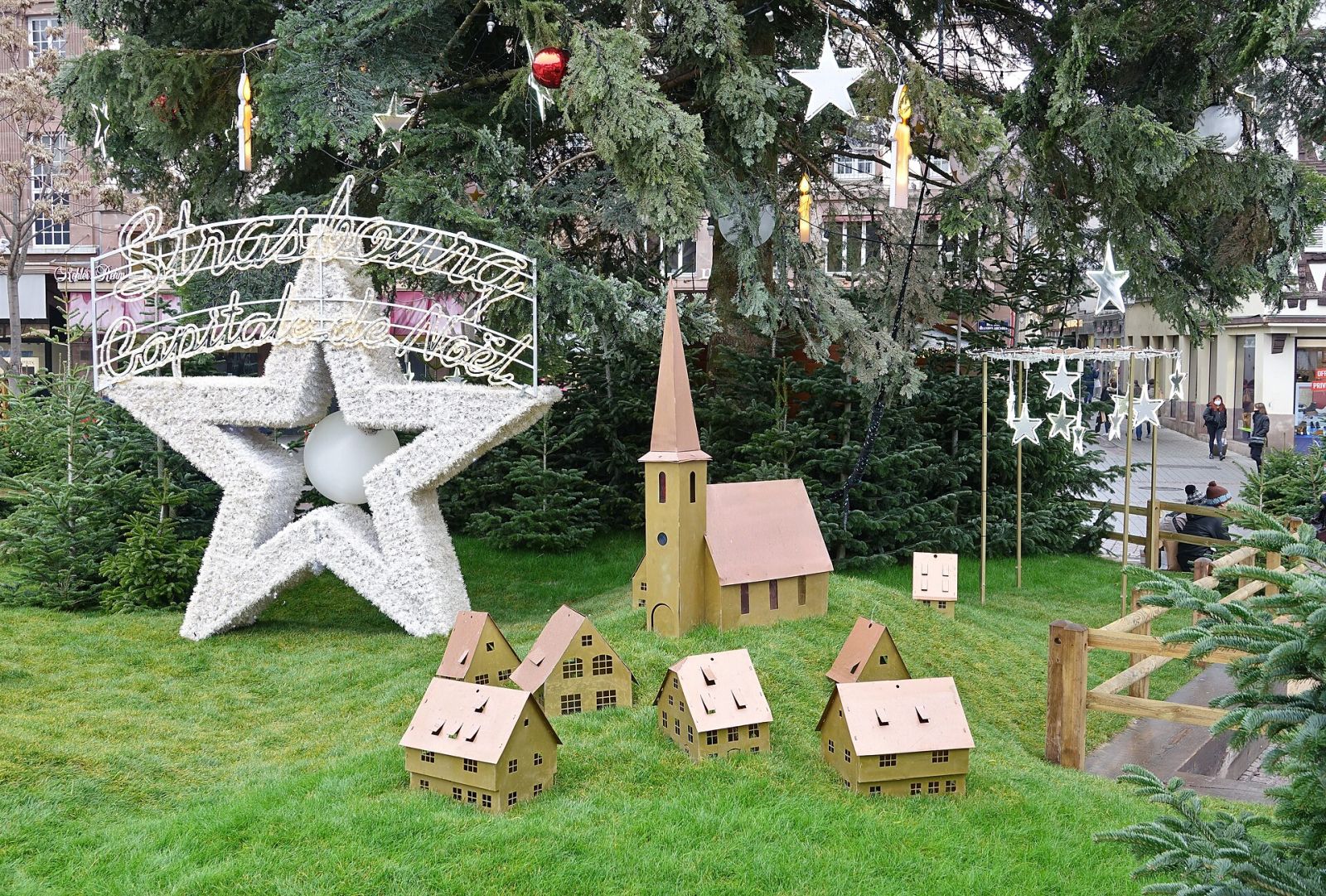
The tree on Place Kléber
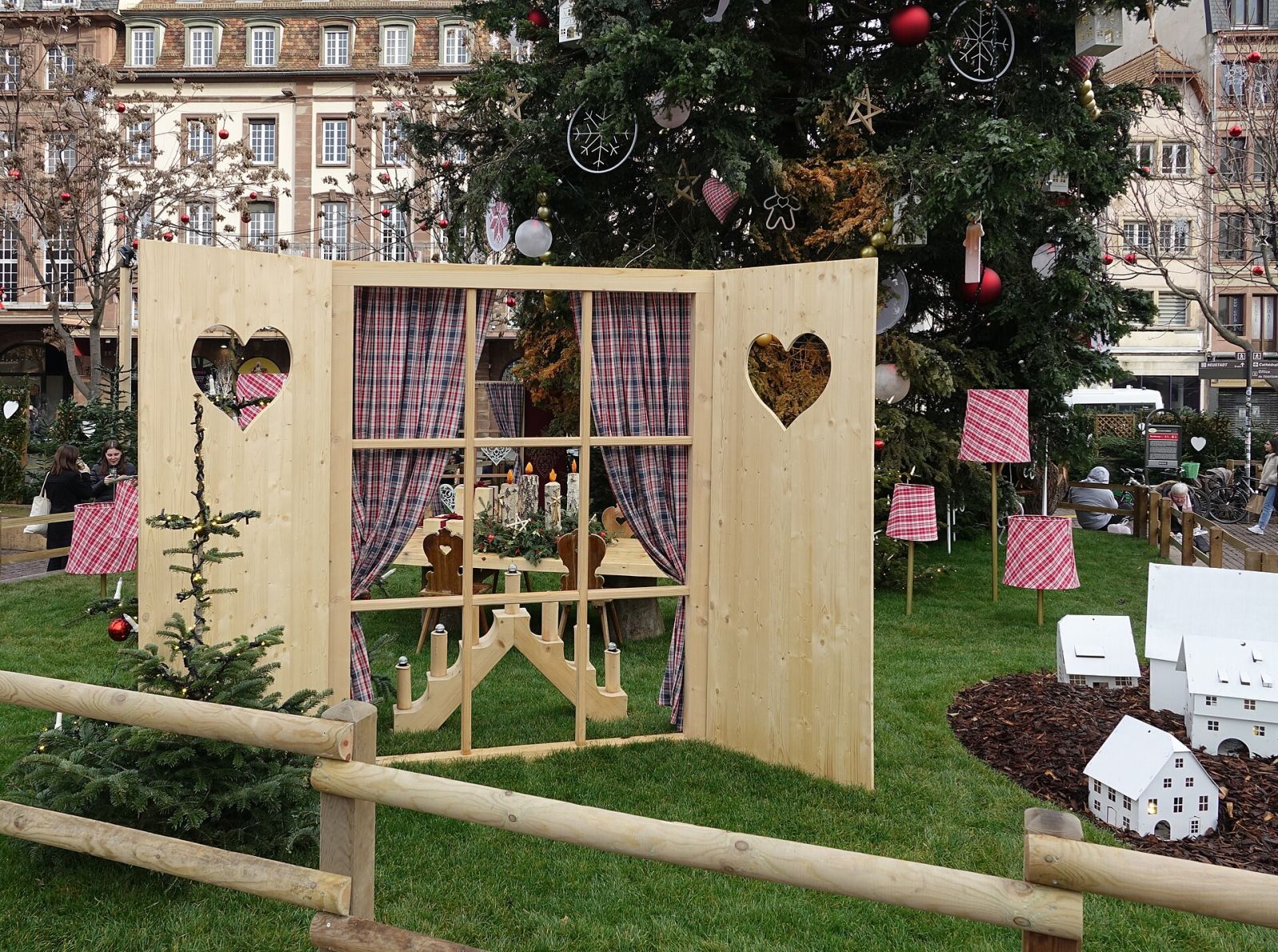
The season's centrepiece stands on the central Place Kléber: a live spruce roughly 30 metres tall, one of the tallest natural Christmas trees in Europe. It arrives from the Vosges forests in late October and takes almost a month to decorate. Beneath it operates the "sharing village", a space for charities, and the nightly lighting at five o'clock draws a solid crowd. The best photo angle is from the far corner of the square, by the arcades: you fit both the tree and the illuminated facades.
What to try: vin chaud and bredele
Alsace does not drink glühwein in the German sense but vin chaud: hot spiced Riesling or Pinot Noir, and often white, which surprises visitors. The white version is lighter and more aromatic; try both and compare. The proper accompaniment is bredele, tiny Christmas biscuits in dozens of varieties: aniseed, cinnamon, almond, wine-flavoured. Alsatian families bake them at home from November onwards, while the markets sell them by weight, with a 250-gram box costing roughly 8-12 euros.
- Buy bredele as a mixed box: that is how you find your favourite, because the varieties differ a lot.
- Munster, the pungent local cheese, is served at the market melted on bread with caraway.
- Tarte flambée, a thin base with cream, onion and bacon: the Alsatian answer to pizza, best eaten scalding hot.
- Pain d'épices, honeyed spice bread. The village of Gertwiller near Strasbourg even runs a museum devoted to it.
- Crème brûlée and hot apple juice for the alcohol-free crowd: the juice comes from local orchards and is genuinely good.
The Alsatian villages nearby: a fairy tale without filters
Half the point of a December trip to Alsace lies outside Strasbourg. The half-timbered villages along the Wine Route dress up in lights just as lavishly as the capital, and the crowds are thinner, at least on weekdays.
| Town | From Strasbourg | Why go |
|---|---|---|
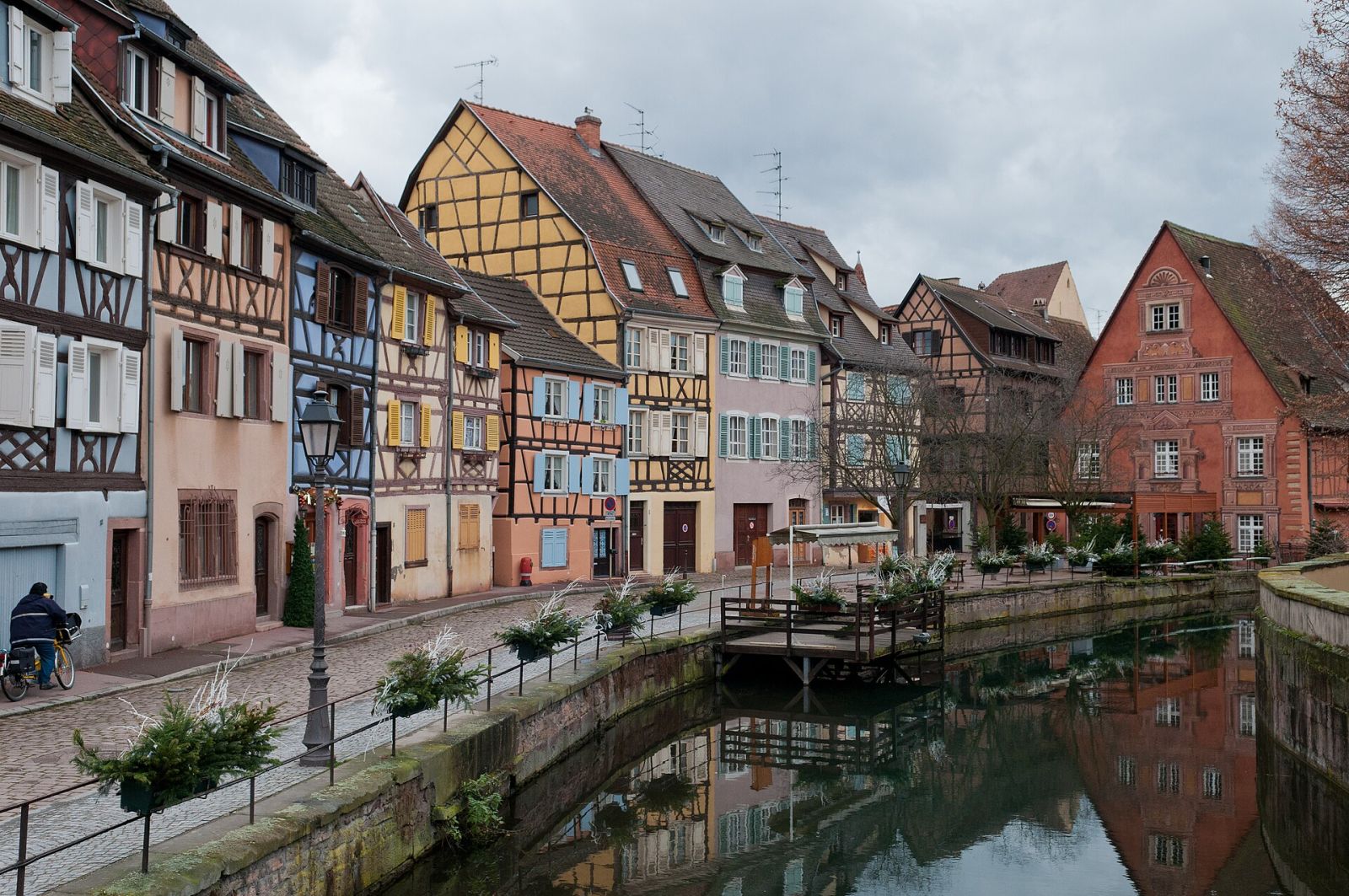
| Colmar | 30-40 min by train | The Little Venice canal quarter, six themed markets, facades lit individually every evening |
| Riquewihr | 1-1.5 h (train + bus) | A postcard village amid vineyards, 16th-century walls, a tiny and very atmospheric market |
| Eguisheim | next to Colmar | Circular lanes around the castle, ranked among the most beautiful villages in France |
| Obernai | 30 min by train | A compact market without tourist pressure, perfect for half a day |
Colmar is non-negotiable: in December the town lights every half-timbered facade separately, and the effect beats any stage set. For Riquewihr, aim for a weekday morning; a village of a few lanes physically cannot absorb the Saturday flow. Seasonal shuttles link the villages, with timetables on the Alsace tourist office website.
When to go and how many days to plan?
The season opens in the last days of November and closes on the evening of 24 December. Peak crowds hit every Saturday and the week before Christmas. The sweet spot is a weekday in the first half of December, when everything is running but the vin chaud queue is not yet ten minutes long. Strasbourg needs a full day, ideally with an overnight stay for the evening illuminations. Add one or two days for Colmar and the villages. December accommodation sells out from September, weekend prices double, so booking three or four months ahead is standard practice here, not paranoia.
Getting there and practical details
The simplest route runs through Paris: a TGV from Gare de l'Est reaches Strasbourg in under two hours. Frankfurt and Basel airports also work, both about an hour to ninety minutes away by ground transport. Within the city you need nothing: the whole Grande Île is walkable, and in season the centre is partly closed to cars.
- Bag checks operate at the island entrances during the season, and large suitcases are not allowed into the market zone. Check into your hotel before strolling.
- The vin chaud mug deposit is one or two euros; designs change yearly and collectors hunt them deliberately.
- Weather: two to five degrees and damp, with snow in Strasbourg itself a rarity. Warm shoes matter most.
- Stalls generally close by 8 pm, food a bit later. Verify the exact season dates before booking.
December Strasbourg works on two fronts at once: the scale of a major city with its cathedral and a 30-metre tree, plus the intimacy of villages half an hour away. No other place in France packs this much Christmas per square kilometre, and even across Europe the competition is thin.