


Forget Hawaii, California and Bali. India could be the next big thing in the world of surfing.
After all, with 7,000 kilometres of coastline, the seventh largest country in the world is hardly short of small beaches and big waves.
Although the surfing infrastructure is still in its infancy, dozens of professional and amateur surfers are finding their way to the Mantra Surf Club, widely regarded as India's first surf club.
Partner links: booking through them supports the blog at no extra cost to you.
From their remote base in the southwestern state of Karnataka, the club's founders have watched the sport grow in popularity over the past 10 years.
"India is a very special place," says Rammohan Paranjape, a surf instructor from Karnataka.
"You have empty beaches and waves all to yourself. And on top of that, you get to experience an amazing culture. That makes it one of the best trips out there for surfing."
Surfing's final frontier
Paranjape is an ambassador for the pioneering Mantra Surf Club, which opened more than a decade ago.
In this remote region, where you are more likely to share the beach with a crab than with another person, Jack Hebner and Rick Perry, two passionate American surfers, decided to set up shop on a small beach in a tiny fishing village near Mangalore.
"Back in 2007 (when the club was officially founded), surfing was still unheard of," says Paranjape.
"In general, there is a culture in India of avoiding the ocean rather than embracing it, so that really put us at a disadvantage."
Despite the late start, Mantra quickly became a popular surf club.
"Since we opened, we've taught thousands of people to surf, from cricketing celebrities to Bollywood stars."
Teaching the next generation
Paranjape says he belongs to a small group of "first generation" surfers in India, having taken up the sport around 12 years ago.
Now the club is training the second generation.
Bhriti Hegde is one of them. At the age of 10, Hegde is already competing in surf contests.
"I didn't know anything about surfing before," Hegde says. "My dad took me to the beach with all his friends, and I watched them surf, and to me it was really exciting."
It didn't take Hegde long to learn. Now it's something she looks forward to.
"When you glide along a wave, you see the little fish jumping, and you feel like it's just so amazing."
A way of life
Paranjape says surfing helps him stay fit and healthy.
But he says the sport is about so much more than just physical exercise.
"It makes you appreciate nature and beauty," says Paranjape. "Most surfers care deeply about the environment, their surroundings and the beaches."
When you're in the water, alone with the waves and your thoughts, he says it can sometimes feel like meditation.
"Surfing can have a really profound impact on your life, whether physically or psychologically," says Paranjape.
"It makes you very humble and makes you feel very small in the ocean. You can't control the elements, whether it's the waves... you have to adapt and go with the flow, and ride the waves."
Surf tours
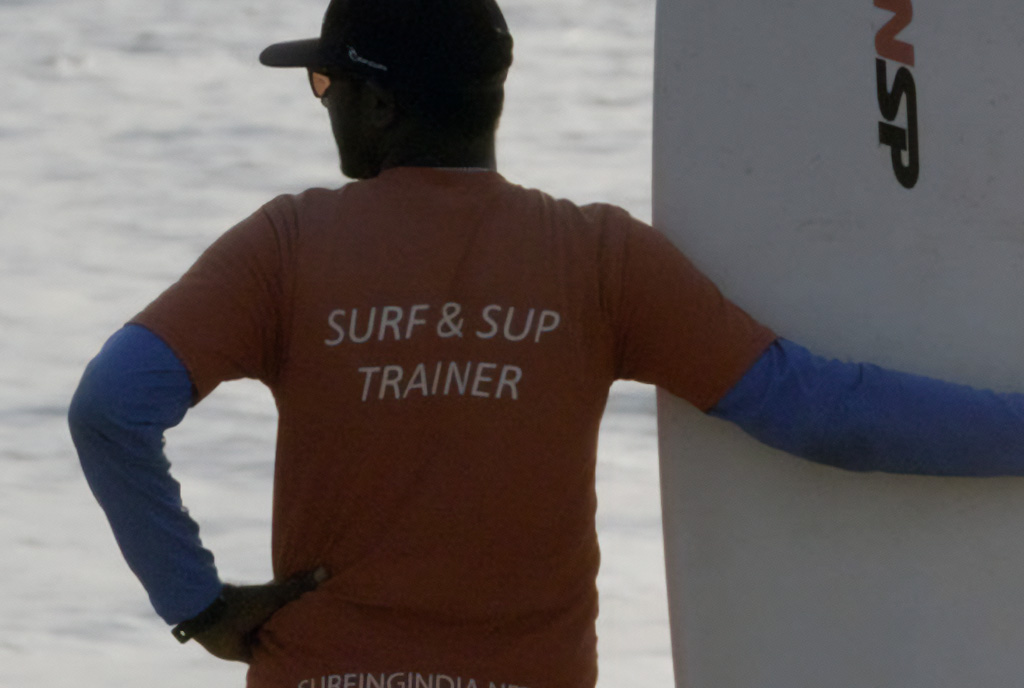
Whether you're a beginner or an experienced surfer, the Mantra Surf Club reserves its lessons for club members and guests staying at the neighbouring Ashram Surf Retreat.
On top of that, the company runs unusual surf camps that travel to remote and untouched areas, such as the Andaman and Nicobar Islands or the Lakshadweep Islands.
Photography and videography are included in the trip, to make sure all your best rides are captured on camera.
Beyond surfing, the retreats also offer morning yoga, meditation sessions and plenty of water sports, such as stand-up paddleboarding and wakeboarding.
While learning to ride a wave may be much the same everywhere, Paranjape says the surfing experience in India is one of a kind.
"It's not just about surfing, it's about getting to know the culture of a place, its food and its people, the different regions and all of that," says Paranjape.
"At some point India will develop its own established surf culture. Just like places such as California and Bali, surfing will become part of the way of life, especially along the coast."