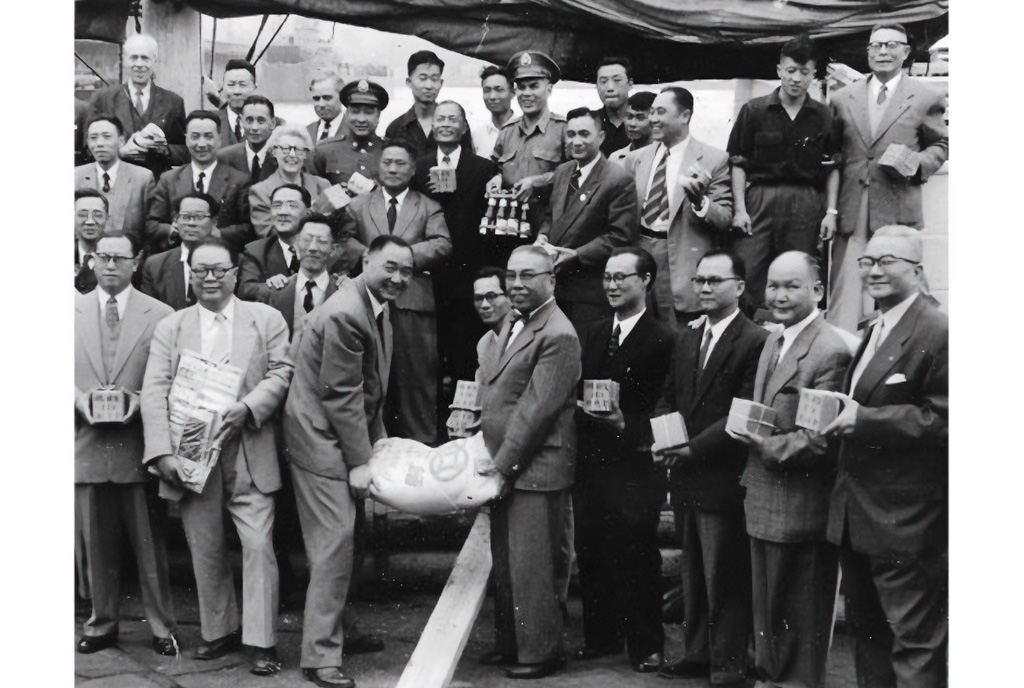


On April 4, 1955, a huge crowd gathered at the harbor of Keelung in Taiwan.
Fireworks lit up the sky. Champagne corks popped. Speeches were made.
A festive mood was a rare sight in Taiwan at the time. The island was in the thick of the First Taiwan Strait Crisis against the communists on mainland China, while the aftermath of World War II and the Korean War was still being felt.
Partner links: booking through them supports the blog at no extra cost to you.
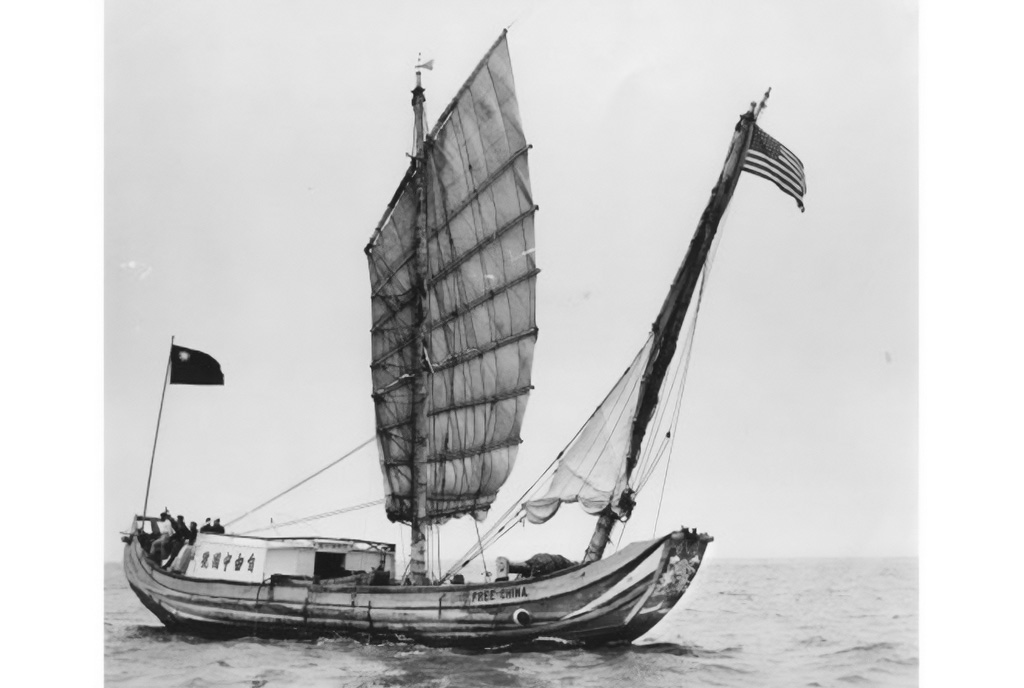
Politicians, the press and the residents of Keelung had come to say goodbye to the "Free China," a half-century-old junk, and its six crew members.
The boat had been named by the governor of Taiwan, a nod to the ongoing struggle with the mainland, who sponsored part of the adventure after reading about the crew's ambitious plans in the newspaper. A special commemorative postmark was even created for the occasion.
Carrying the hopes and dreams of the six crew members and their supporters, this little junk with the politically loaded name was getting ready to set off across the Pacific Ocean to take part in an international sailing race.
The event was to begin on the other side of the world, starting in Newport, Rhode Island, in the United States, and finishing across the Atlantic in Gothenburg, Sweden.
There was just one problem. What the celebrating crowd in Keelung harbor did not realize was that neither the five Chinese crew members nor the American vice-consul who joined at the last minute knew how to sail a junk.
Meet Paul Chow, the Organizer
Paul Chow, now 94, was the mastermind behind the voyage.
A retiree and former physics professor at California State University, Northridge, Chow grew up in a relatively well-off family in China. His parents were among the few who had been able to study in the United States.
His father was a government railway manager, which meant Chow spent his childhood moving from town to town.
In 1941, as the Japanese army advanced through the region, Chow's mother took her four children and moved from Hong Kong to mainland China.
"Then the attack on Pearl Harbor happened. At the time, my father was in Haiphong, Vietnam. Our relatives and friends were all in Hong Kong. We were completely cut off," Chow recalls in a recent interview.
Chow and his brother dropped out of high school to enlist in the army. They arrived in Myitkyina in Myanmar in 1944, where the Allied forces won a crucial victory in the Siege of Myitkyina. They were then sent back to China, fighting battles along the way to Japanese-controlled Guangzhou. Just as they were preparing to launch an attack on Guangzhou, the Japanese army surrendered.
"So we didn't attack Guangzhou. We entered Guangzhou as victors," Chow says.
After the war, he returned to Shanghai to reunite with his mother.
"I came into the harbor. The first thing I noticed was the smell, ooh, the smell of food," Chow says.
The aromas were coming from the fleet of the United Nations Relief and Rehabilitation Administration, diesel boats brought over from the United States to rebuild China's war-ravaged fishing fleet, moored in the Huangpu River.
"I had been starving since the war, since 1937, when the Japanese came. Food was all we dreamed about. They invited me to come aboard first to eat. It was the first American food I had ever tasted. You could eat as much meat, cake and pie as you wanted.
"So I told my mother, 'This is it. I'm not going to college. I'm going to be a fisherman,'" Chow says.
That is how he met Reno Chen and Benny Hsu. The young, fun-loving fishermen quickly bonded, joining various crews in search of new thrills. Then they met fellow fishermen Marco Chung and Hu "Hulu" Lu-chi.
In 1949, the five fishermen found themselves stranded in Taiwan when the communists declared victory and took control of the mainland, leaving them cut off from their families.
They stayed in Taiwan for the next few years, sharing an apartment in Keelung, until one day in 1954 Chow saw a newspaper article about an international sailing race. He asked his shipmates, "Do you think they would accept a Chinese junk to compete?"
Having worked on a diesel boat for nine years, Chow had fished alongside traditional Chinese junks. But he had never been on one.
"One time, during a heavy storm, we hauled in our last net and rushed for shelter," he says. "We ran our 300-horsepower diesel boat at full power. The junk right next to us raised all its sails. By the time we reached shelter, they had already dropped anchor and were washing the deck. They had beaten us.
"I was very impressed. I thought to myself, 'If they can outrun a diesel boat, they can outrun a yacht.'"
Chow decided to write a letter to the newspaper that had run the article.
To his surprise, he received a reply from the North American Yacht Racing Union, a telegram saying that Chow's "junk" had been accepted to compete in the sailing race. It was even given a racing number: 320.
There was just one catch: Chow did not have a junk.
Find the Boat, Then the Crew
With only a few months to spare, Chow traveled across the islands of Taiwan searching for a junk. He says that at one point he nearly got caught in a fierce battle between the communist and nationalist (Kuomintang) armies on Yijiangshan Island, before returning to Keelung.
Then he spotted her.
"It was the last commercial junk carrying a cargo of salted fish from mainland China," Chow says. "After that, the trade stopped, and all the other junks were converted into war junks (because of the conflicts between the two sides).
"The owner realized it was the end of his career. Meanwhile, for me, there was no other way to get a junk. So we were like the only guy and the only girl on Earth: the marriage was arranged on the spot."
Chow sold all his valuables, gathered all his savings and borrowed more money from Hu. He bought the boat for a total of 46,000 Taiwanese dollars (1,670 U.S. dollars).
"Sink or swim, I decided I would no longer need these earthly possessions," Chow says.
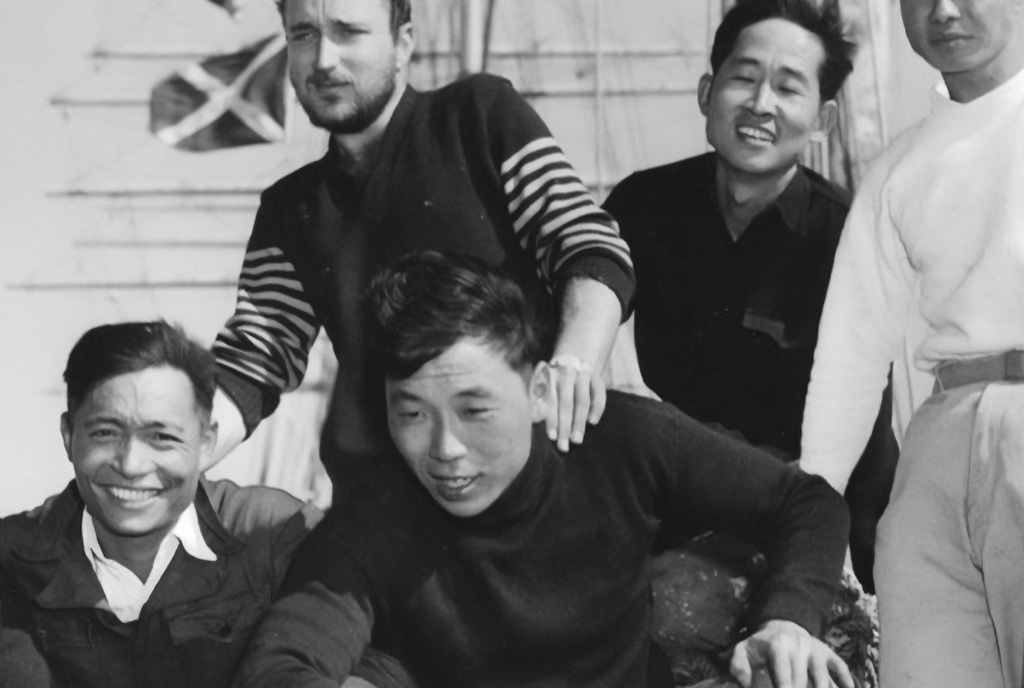
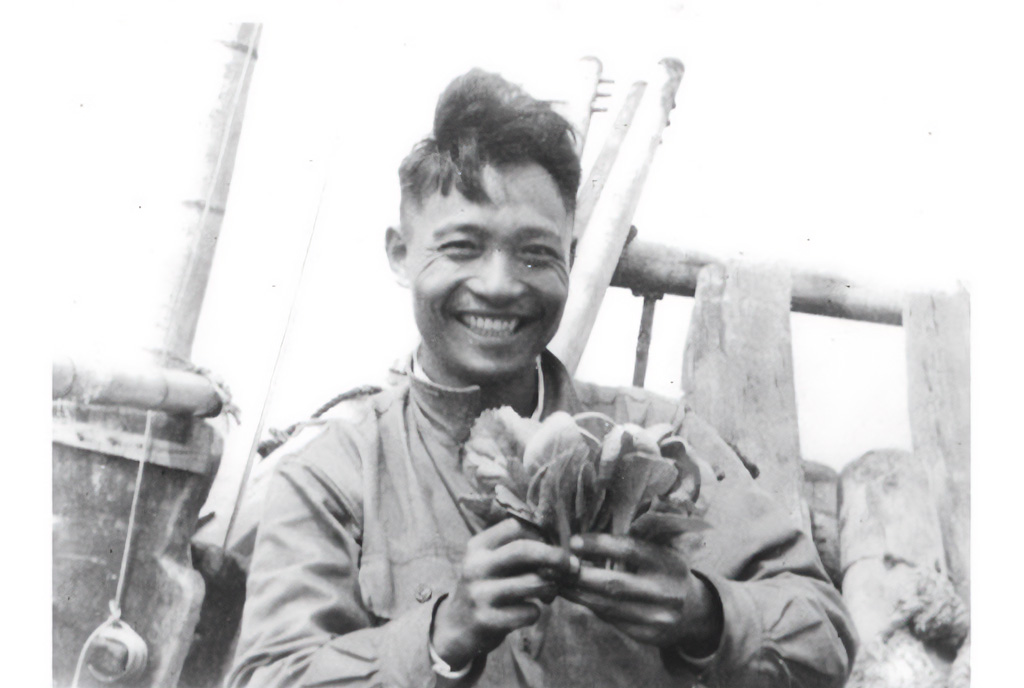
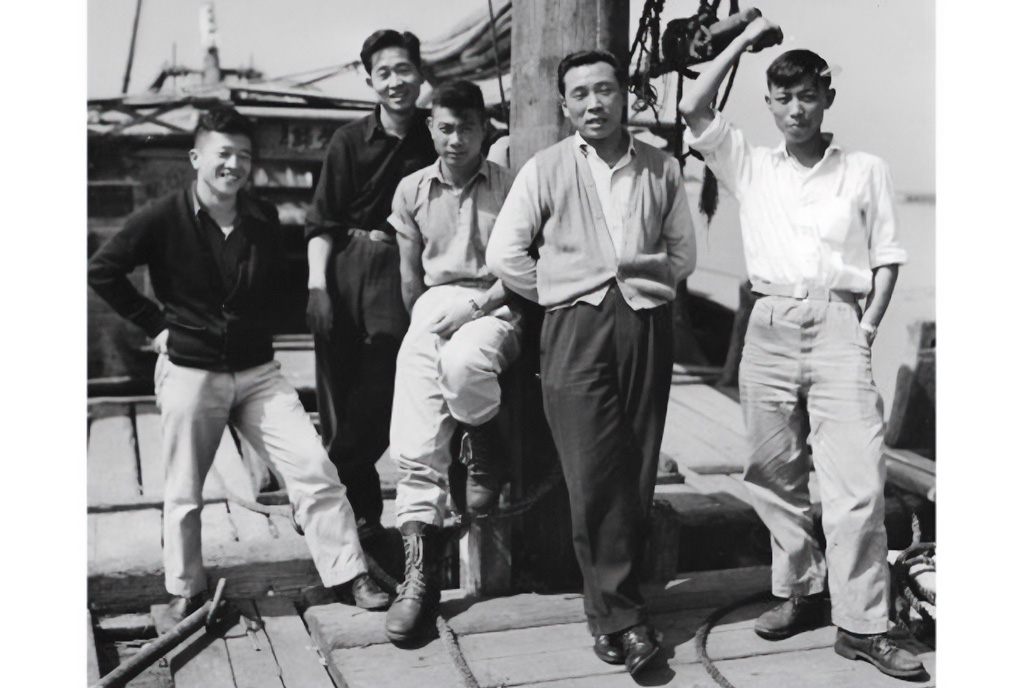
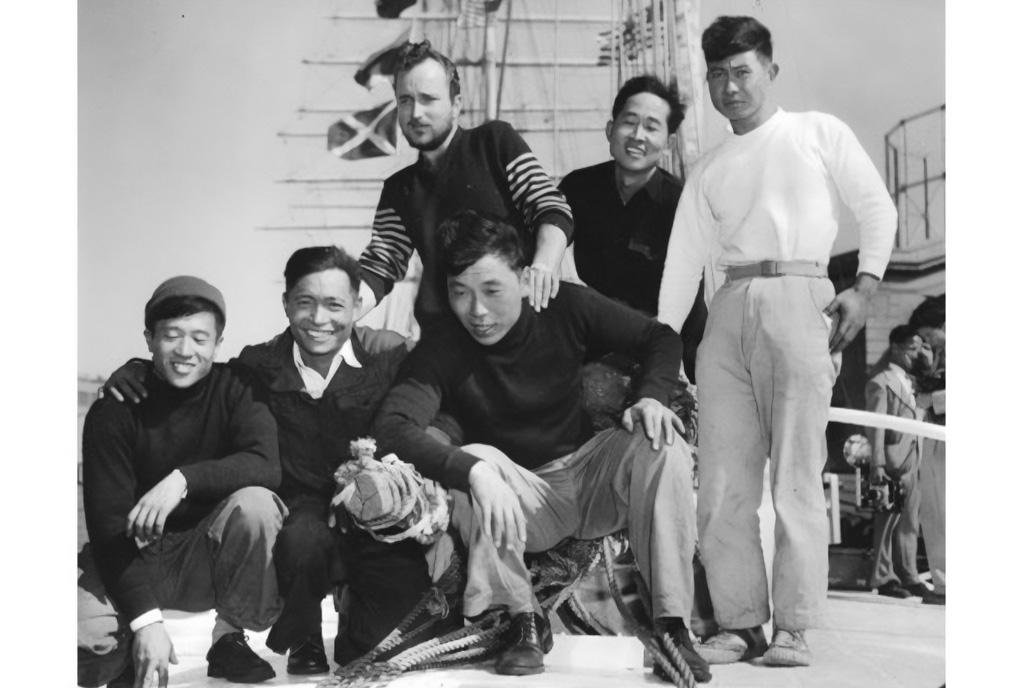
Chow recruited five shipmates. Chow was to be the navigator and radio operator. Marco Chung, being the "nicest guy," was chosen as captain. The multitalented Hu Lu-chi was to be the sailmaster and de facto barber. Reno Chen was named treasurer, and Benny Hsu was to be the boatswain, in charge of maintenance.
Lin, who was supposed to be the sixth member of the crew, backed out at the last minute.
Their story soon made the news, and support began to pour in. Their grand plan started to take shape.
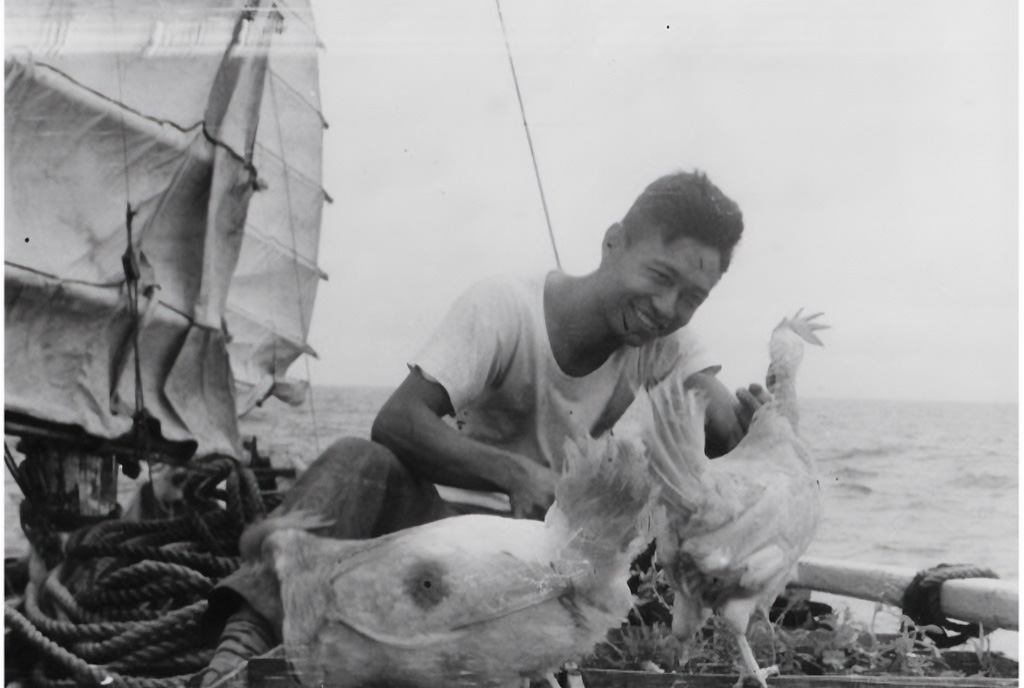
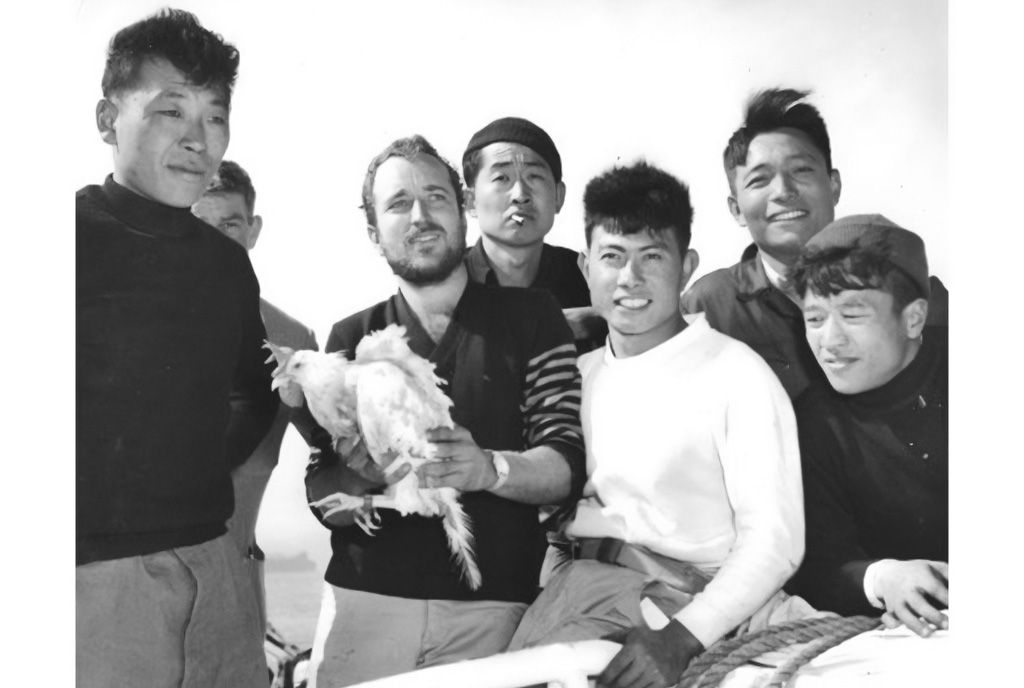
A six-month supply of provisions was donated by the Rotary Clubs of Keelung and Taipei, adding to the three tanks of fresh water and two chickens they already had.
But another problem loomed ahead: obtaining American visas for the five crew members.
When they came to the consulate, Chow says a friendly-looking fellow came out and started asking questions. He gave the crew "10,000 reasons why we couldn't go."
That fellow was Calvin Mehlert, the vice-consul.
A few days later, the American unexpectedly showed up on the dock and asked to see the sleeping quarters on the boat.
"Well, you have six bunks but only five people. How about letting me join the crew?" Mehlert asked the team, promising that they would get their visas.
And so Mehlert became the final crew member, and the voyage's videographer.
"We sort of dragged him into it for the visa, or he dragged us into it for the passage," Chow says.
Two Months Before the Race
Sixty-eight days before the race, they set sail from Keelung harbor.
Although there were five experienced fishermen aboard, none of them had ever sailed a boat like this before.
"Luckily, there was no wind that day, so 'naturally,' we needed to be towed out of the harbor. Out of sight, out of mind," Chow says.
It took the crew five hours to figure out how to work the junk. They sailed all night. The next morning, Chow, the navigator, got up to check their latest coordinates.
"We were still in the same spot," he recalls.
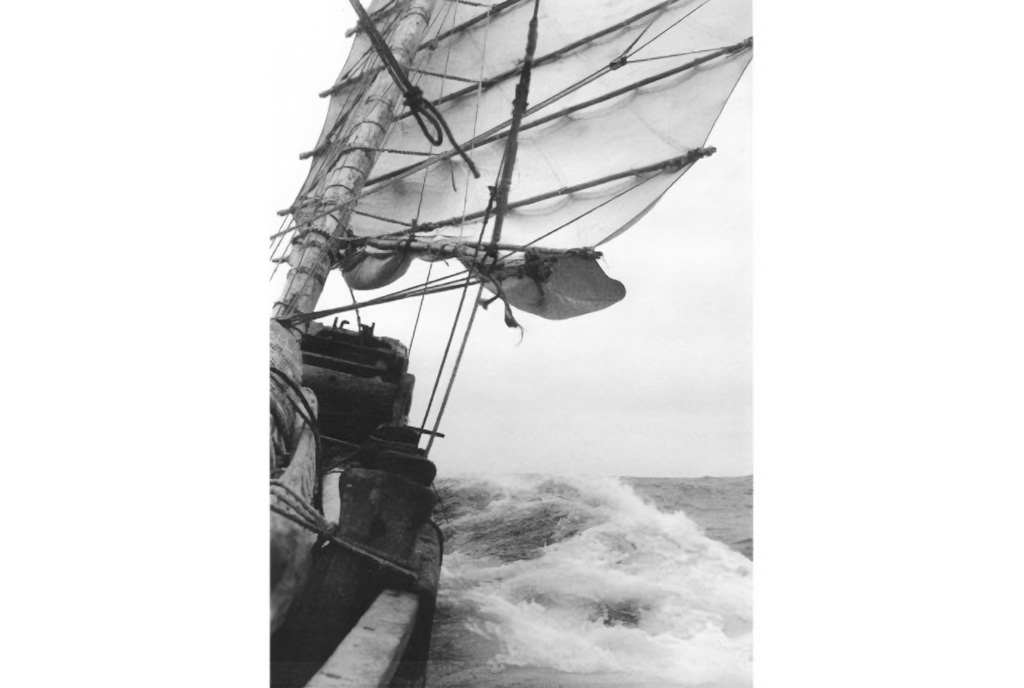
Soon after they adjusted their course again, they ran into their first problem. The boat's ropes and sails jammed. They were not far from where they had started, and thousands of miles lay ahead.
Defeated, the crew called for a tow back to Keelung.
The city's mayor, who had begun to doubt his support for the crew, allowed them to launch a second time after some persuasion.
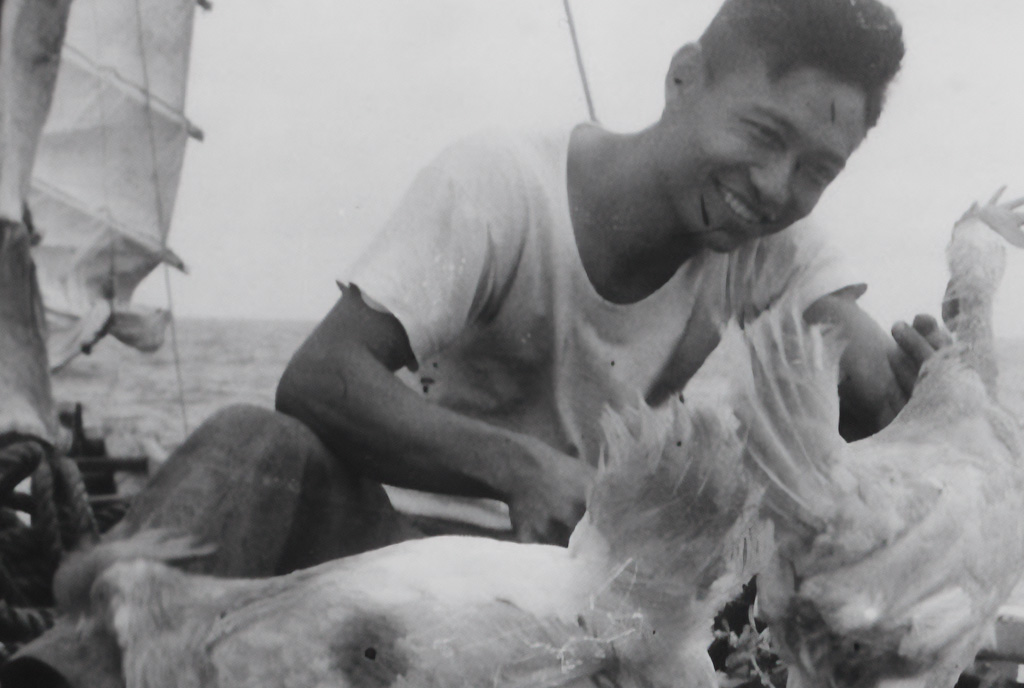
This time, the crew vowed they would rather sink with the boat than fail and return to Taiwan.
Luck was not on their side.
A typhoon struck. Everything broke down again.
The crew sent out a distress signal asking for help from the nearest ships.
"It was around 4 in the afternoon. A big cargo ship appeared. It was like looking up at a skyscraper in New York," Chow says.
They started flashing lights in Morse code, asking the crew to prepare to abandon ship.
The crew replied, "No. We just want a tow."
The cargo ship's operator said, "Well, good luck then," and left.
Thinking about that incident now, Chow says he understands how futile his request was.
"How could a 10,000-ton cargo ship tow a 20-ton junk? It's like towing a ping-pong ball down a highway: the ping-pong ball would be crushed."
Ready to meet the typhoon head-on, the crew tied everything down and waited.
At 1 in the morning, Chow saw a light coming closer and closer.
"We were about to collide, so I started sending 'Disabled ship!' in Morse code," Chow says.
Just before the ships met, it stopped.
A searchlight lit up the "Free China," and a voice, this time using a big loudspeaker, shouted, "Are you ready to abandon ship?"
"We just burst out laughing. It was the same cargo ship that had left earlier," Chow says, still amused by the situation.
"We just said, 'Go away.'"
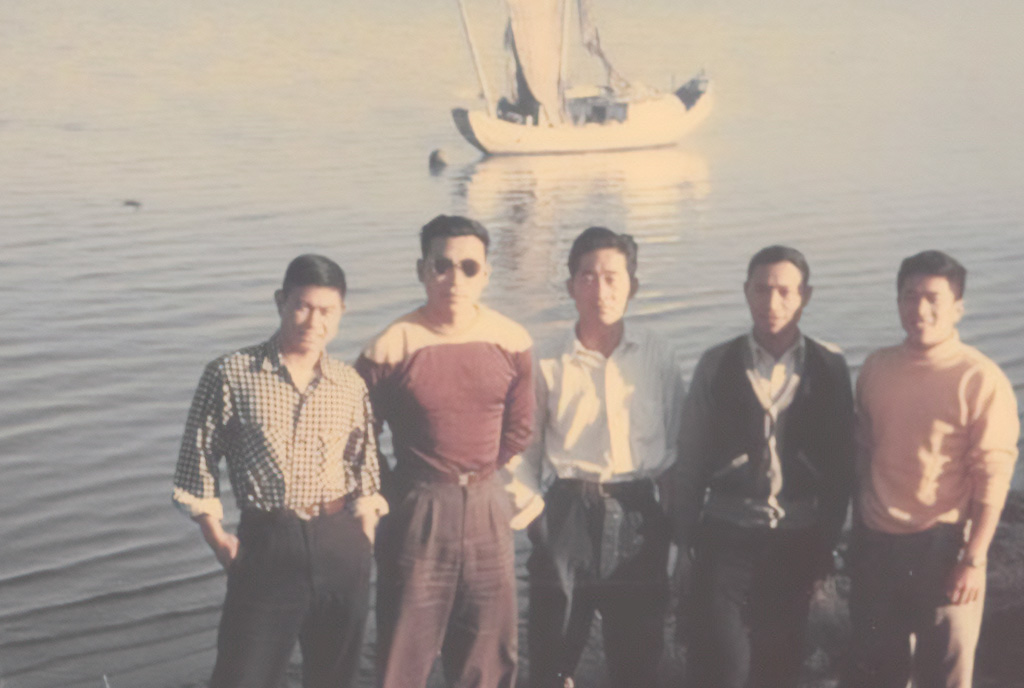
The big vessel circled the little junk for about an hour before switching the searchlight and loudspeaker back on.
The announcer said, "Prepare to receive a tow."
The "Free China" was towed to Okinawa, Japan. When the bad news reached Taiwan, the island's fishing authority reportedly sent a telegram to the Okinawa port administration asking them not to let the crew put back out to sea.
"One reason, I think, is the name 'Free China.' It was meant to represent Taiwan. What if 'Free China' sank? That would be a bad omen. Besides, they were probably a little worried about our safety and their international image," Chow says.
"But you see, we had a diplomat on board," he adds with a smile.
Chow says Mehlert talked his way out of the situation and told the port administration, "You have no right to hold us, because we haven't done anything wrong and we are not smugglers. As soon as we tell you we're ready to go, you had better let us go."
It worked.
By the time they left Yokohama, after numerous repairs, it was June 17. They had already missed the start of the race, which had begun on June 14.
To keep themselves going, the crew decided that they were now in a race of their own, only the distance was much longer.
"From Yokohama, it took us another 52 days to cross the ocean," Chow says.
"We Fought Like Cats and Dogs"
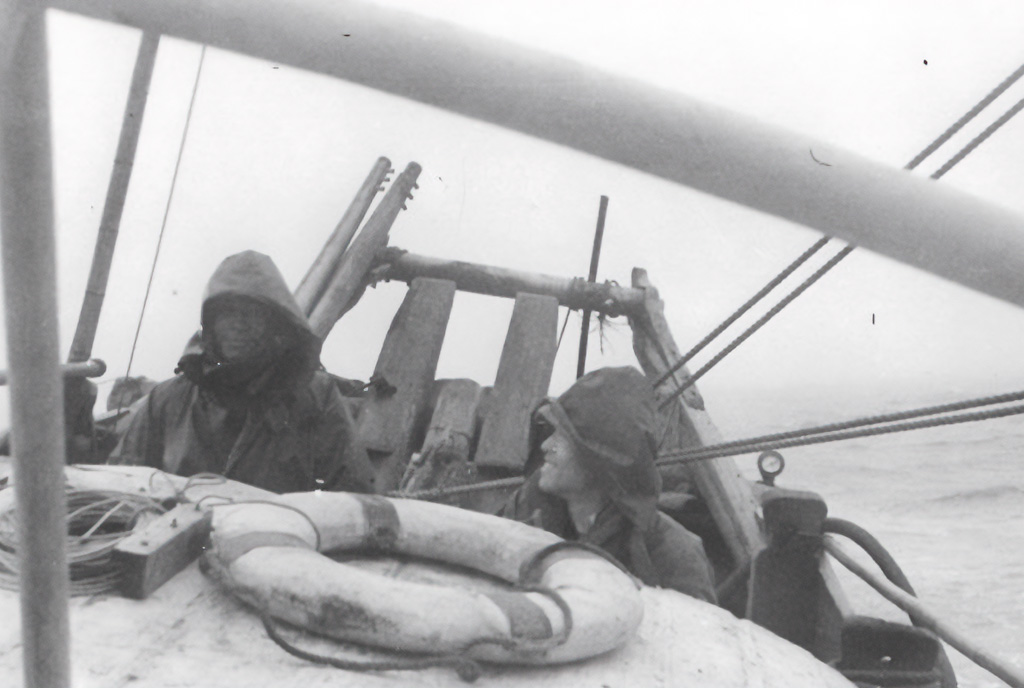
Life on the boat was monotonous and uneventful, broken up by arguments, moments of joy and small storms.
Chow compares it to life in quarantine during the Covid-19 pandemic.
"My grandchildren came to visit last year and got stuck here for six months. Every day they said, 'Boring.' That was our life on the boat," Chow says.
"On the junk, we fought like cats and dogs."
He recalls one "near mutiny" toward the end of the voyage, when Hu, the "tai chi master," vowed to throw Chung, the captain and the "nicest guy," overboard.
During the last few days of the journey, they sailed through thick fog. Chow's sextant, the navigational instrument that measures celestial objects and the horizon, the only navigational device at the time, was useless.
"We were sailing blind," Chow says. "When the fog finally lifted, we were within inches of hitting a rock. We had arrived," Chow says.
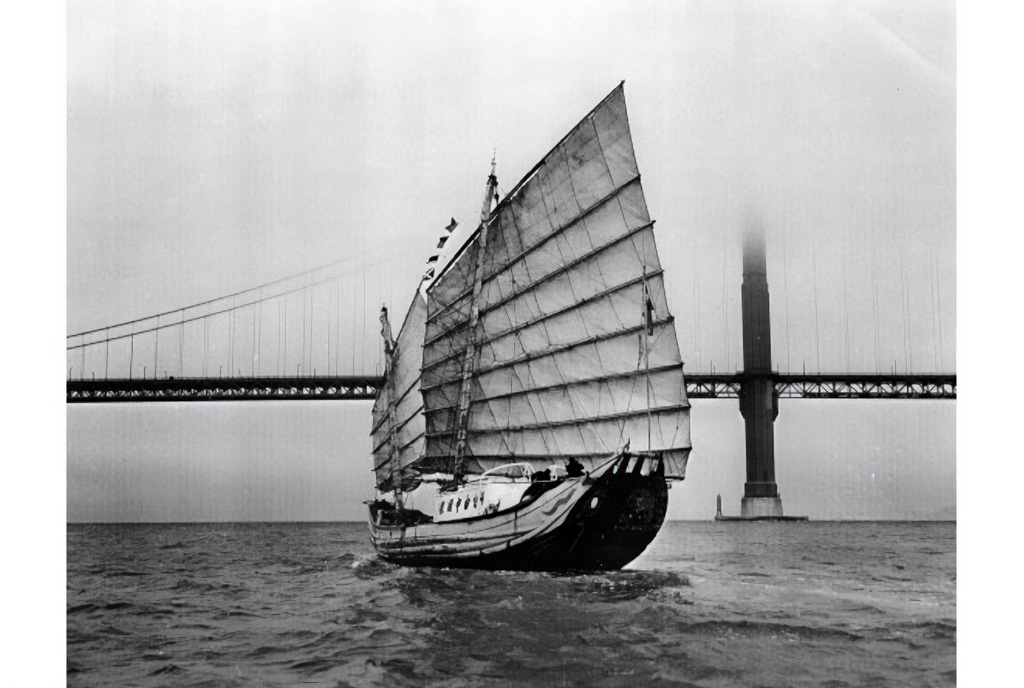
By the time they reached San Francisco, on August 8, 126 days had passed since they first set sail from Keelung.
"At first, we had all these plans to continue our journey to Sweden and then to the rest of Europe. But once we landed, nobody wanted to set foot on the boat again," Chow says.
Life After the "Free China"
Despite their differences, the voyage bonded the six crew members for life.
Although they eventually scattered to different parts of the world, they stayed in touch, following each other's lives and helping out whenever they could.
When they arrived in San Francisco, Chow says the elders in Chinatown learned that the crew had given up everything for the voyage. They gave each member 1,400 dollars to start a new life.
Today, Chow is the only surviving crew member. As for his friends' lives after the voyage, he says Chung "was writing to a girl he had been introduced to while fishing in Thailand" during the crossing, and shortly after the journey ended he returned to Taiwan. He got married and built a successful business before emigrating to the United States.
Hsu, who "couldn't even speak Cantonese well and barely spoke English," joined the crew of a shrimping vessel in Alabama before going on to further his studies. He eventually earned a master's degree in biology from the University of Washington and worked at the United Nations.
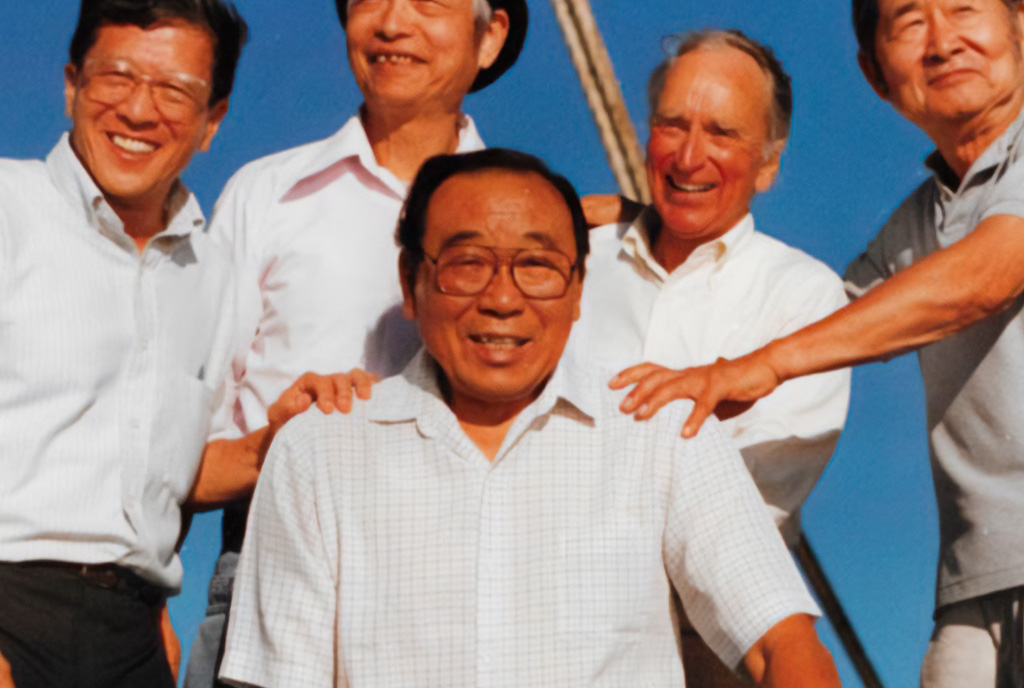
Hu returned to Taiwan before later emigrating to New Zealand to become the captain of a fishing vessel. In 2002, he received the Queen's Service Medal for his dedication to teaching tai chi. (But Chow believes one of Hu's most important yet forgotten achievements was rescuing the famous Norwegian explorer Thor Heyerdahl at sea.)
Mehlert, after learning "real, conversational Chinese instead of intellectual Chinese" from his shipmates, managed to avoid being fired for taking two extra months of leave. He later became one of the three interpreters who accompanied President Nixon on his historic visit to China in 1972.
Chen and Chow decided to start a new life in California together.
"Reno and I spent 500 dollars and bought a used 1951 Buick, which was to become our next home and the tool for launching a new venture," Chow says.
"Imagine what a fun-loving New Yorker in the '50s was like: that was Reno. He loved to dance, drink and smoke. He had dropped out of college, which was far better than the rest of us, who were only high school graduates," Chow says of his close friend.
To pay the expensive fees for foreign students, Chen dropped out of school so that they could work and pay for Chow's education. Then he slowly climbed the career ladder at an American electronics company as an engineer.
"I was present at everyone's funeral: Benny in Seattle, Reno in Palo Alto, Marco in Los Angeles, Hulu in New Zealand and Calvin in San Jose. To this day, I try to keep in touch with their wives and children," Chow says.
And what about the junk?
After a "melancholy" farewell, it changed hands several times.
A palm-sized photograph of the crew is still printed on the Navigators' Monument at Fisherman's Wharf in San Francisco, a modest reminder of their remarkable achievement. But many have forgotten about the voyage.
"You need to talk to Dione, Reno's daughter," Chow says, directing us to the daughter of his late crewmate to learn more about the junk's final voyage.
The Return of the "Free China" to Taiwan
Dione Chen and her brothers grew up with their father's shipmates, or "crew uncles," as she calls them, in their lives. She still visits Chow and his wife from time to time, as well as Mehlert's wife.
After her father's death in 2007, Chen says she regrets not listening to his stories with more respect when she was young. Wanting to learn more, she turned to Chow, who told her, "First, go look at the boat."
Abandoned in a shipyard on Bethel Island, it was waiting to be demolished. The masts had already been cut down, the paint had faded, and the sails were missing.
Even so, Chen fell in love with her at once and vowed to save her.
Without much in the way of resources, Chen says it was a grueling four-year plan. Following every possible lead and talking to every media outlet willing to hear her out, she eventually enlisted the help of the Taiwanese government and academics.
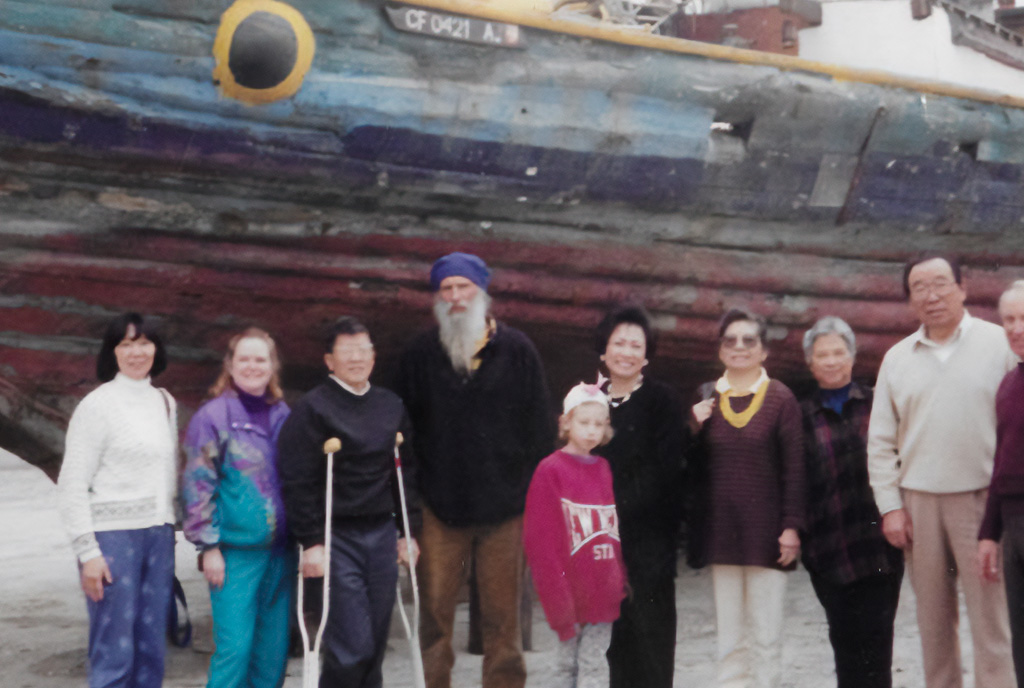
Half a century after the first crossing, in 2012 the "Free China" crossed the Pacific once again. But this time it got there with the help of tugboats and cargo ships.
It is now undergoing preservation at the National Taiwan Ocean University in Keelung and is the oldest known surviving Chinese junk in the world.
Two documentaries, directed by filmmaker Robin Greenberg, explore the boat's voyages to the United States and back: "The Junk 'Free China'" (2010) and "The Return of the Junk 'Free China'" (2015).
Chen often compares her own journey with the "Free China" to the wild adventures of the original crew.
"It felt like both trips were a combination of luck. But it was about creating your own luck, step by step," she says.
Chen hopes her story will inspire others to explore their heritage before it's too late.
"I mean, I think my father would have been happy if I had saved the boat before..."
Chen doesn't finish her sentence.
But the significance of the "Free China" story goes beyond her family's legacy. It serves as one of the few precious documentary records of a Chinese junk and remains part of the history of immigration to America.
"Speaking as an American, I think it's very important to preserve immigrant history. The bottom line is that Asian American history is American history, not something separate. This is especially relevant right now because of anti-Asian hate," Chen says.
"Growing up in America, I didn't think being Chinese was cool. Now I feel more pride. I'm proud of my parents and of what my father did to achieve the American dream."