


If you've heard of a single Cambodian temple, chances are it's Angkor Wat, the awe-inspiring but very well-trodden UNESCO World Heritage Site in Siem Reap.
What many travelers don't realize, though, is that the Seventh Wonder of the World is just one of thousands of ancient Khmer temples scattered across the Cambodian countryside.
Tucked beneath the tree canopy in the jungles of northwestern Cambodia lies a little-known gem: Banteay Chhmar, a name that roughly translates to "Citadel of the Cats."
Partner links: booking through them supports the blog at no extra cost to you.
Built in the 12th century by Jayavarman VII, one of the greatest rulers of the Khmer Empire, this rarely studied temple sat uninhabited for nearly 800 years.
Time, heavy looting and the relentless grip of nature left the complex in a state of ruin. In 1992, it was added to UNESCO's tentative list.
Beginning in 2008, the Global Heritage Fund and the Cambodian government launched preservation and community development efforts, and soon after the complex opened to visitors.
On a journey to remote Banteay Chhmar, we stepped into a mysterious world far removed from the crowds and clamor of Siem Reap.
A transcendent experience
Considered one of the most important Khmer temple complexes in its heyday, Banteay Chhmar was built to honor Srindrakumara, the son of King Jayavarman VII, along with four army commanders.
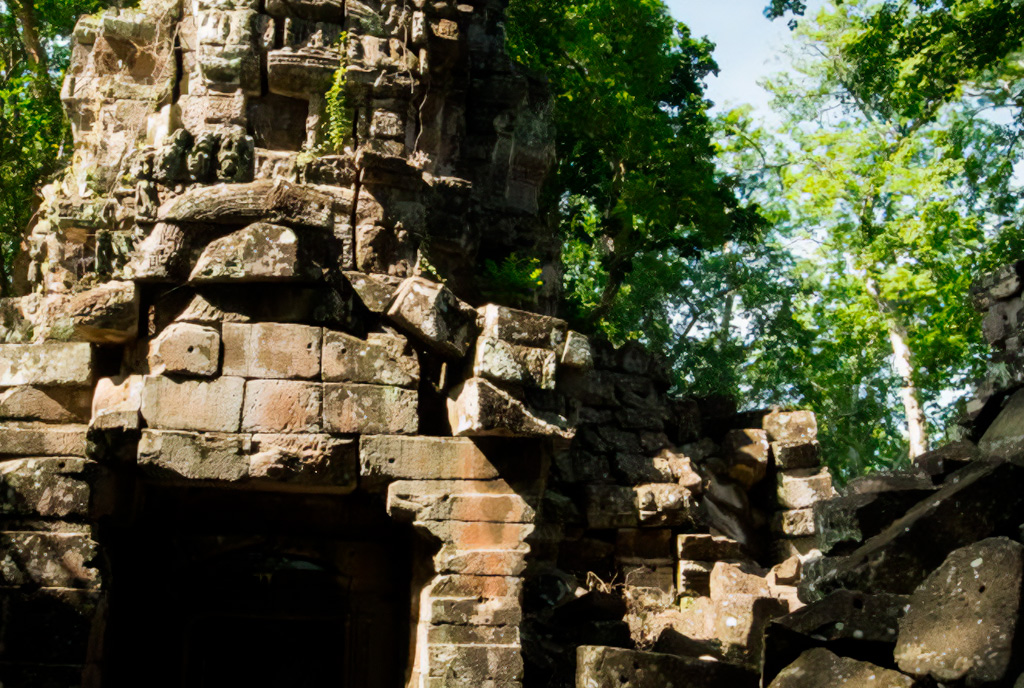
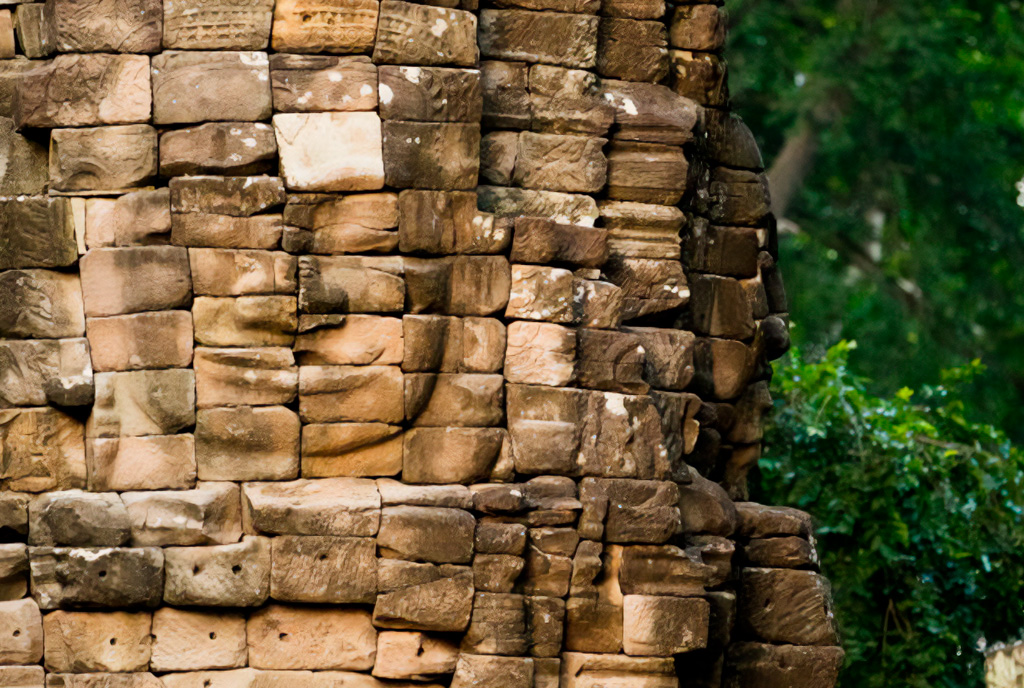
Amid the jungle and scattered stone, the complex's eight temples are adorned with stone towers bearing enigmatic smiles (thought to depict Jayavarman or Buddhist deities) and intricate bas-reliefs that recount tales of religion and war.
Simon Warrack, a stone conservation specialist who has studied Cambodian temples for more than 20 years, estimates that hundreds of meters of inscribed walls have collapsed over time, leaving behind a mysterious puzzle for historians and archaeologists.
In terms of atmosphere, Warrack compares Banteay Chhmar to the famed temples of Angkor Wat back in the 1990s, when tourism was still in its infancy.
With millions of visitors descending on Siem Reap every year, he says, "the old sense of mystery and adventure" once tied to the temples has all but vanished.
But Banteay Chhmar, a few hours' drive from Angkor Wat and drawing just 1,500 visitors a year, still holds on to that transcendent experience.
As Warrack puts it, exploring the temple means being "transported to another era and experiencing a unique interaction, perhaps a battle, between culture and nature."
Look around, and it seems nature is winning that battle.
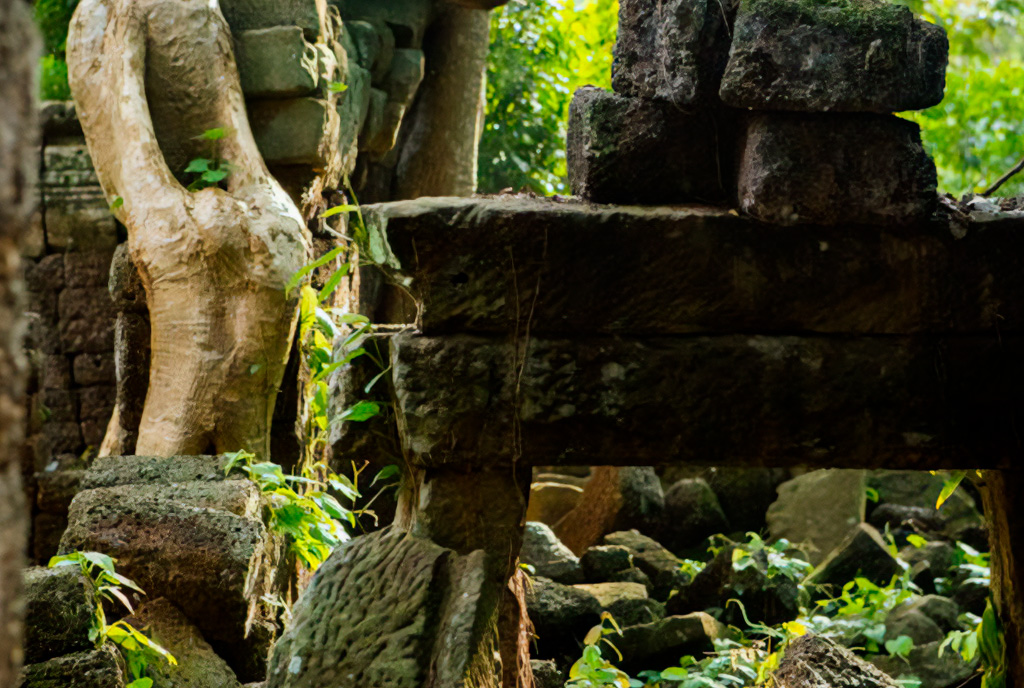
The roots of massive trees wrap around the walls that still stand, as if merging into a single structure.
Vines creep into gaps and cracks, swallowing fallen stones carved with ancient images.
But the most striking thing about Banteay Chhmar is the near-perfect silence, broken only by the distant rumble of motorbikes, the hum of insects and the song of birds.
A community project
For those who live in the region, the temple is more than an archaeological or cultural marvel, it's also an economic boon.
Right now, 23% of residents in Banteay Meanchey province, where the temple is located, still live in poverty.
But the situation is slowly improving as tourists arrive.
Between 2008 and 2016, the number of visitors to Banteay Chhmar rose by 112%, from 744 to 1,575, according to the Global Heritage Fund.
"If we hadn't opened up this temple, there would be no tourists here," says Mao Si, president of the Banteay Chhmar community-based tourism group. "Now all the villagers can earn an income by opening guesthouses, cooking meals and selling handicrafts."
Nil Leun, a 67-year-old local, has benefited from the rise in tourism, recently opening a guesthouse next to the temple.
"When tourists come and stay in my house, my family's life gets better," she says.
In 1978, during the civil war, Leun was forcibly relocated to Banteay Chhmar by the regime of Khmer Rouge leader Pol Pot, and she has lived beside the temple ever since.
Splendid isolation
With help from the Global Heritage Fund, Banteay Chhmar is trying to strike a balance between the needs of preservation, access and sustainable economic development, and the interests of the local community.
It's a strategy that suits people like Mao Si and Simon Warrack, who say they'd love to see Banteay Chhmar enjoy sustainable tourism growth.
But Warrack isn't worried that mass tourism will affect Banteay Chhmar the way it has Angkor Wat.
"The people who go to Banteay Chhmar are visitors coming for the second or third time [to Cambodia's temples], the ones who get hooked and want to explore."
Those who choose to venture out to this particular temple, Warrack says, are rewarded with "splendid isolation."