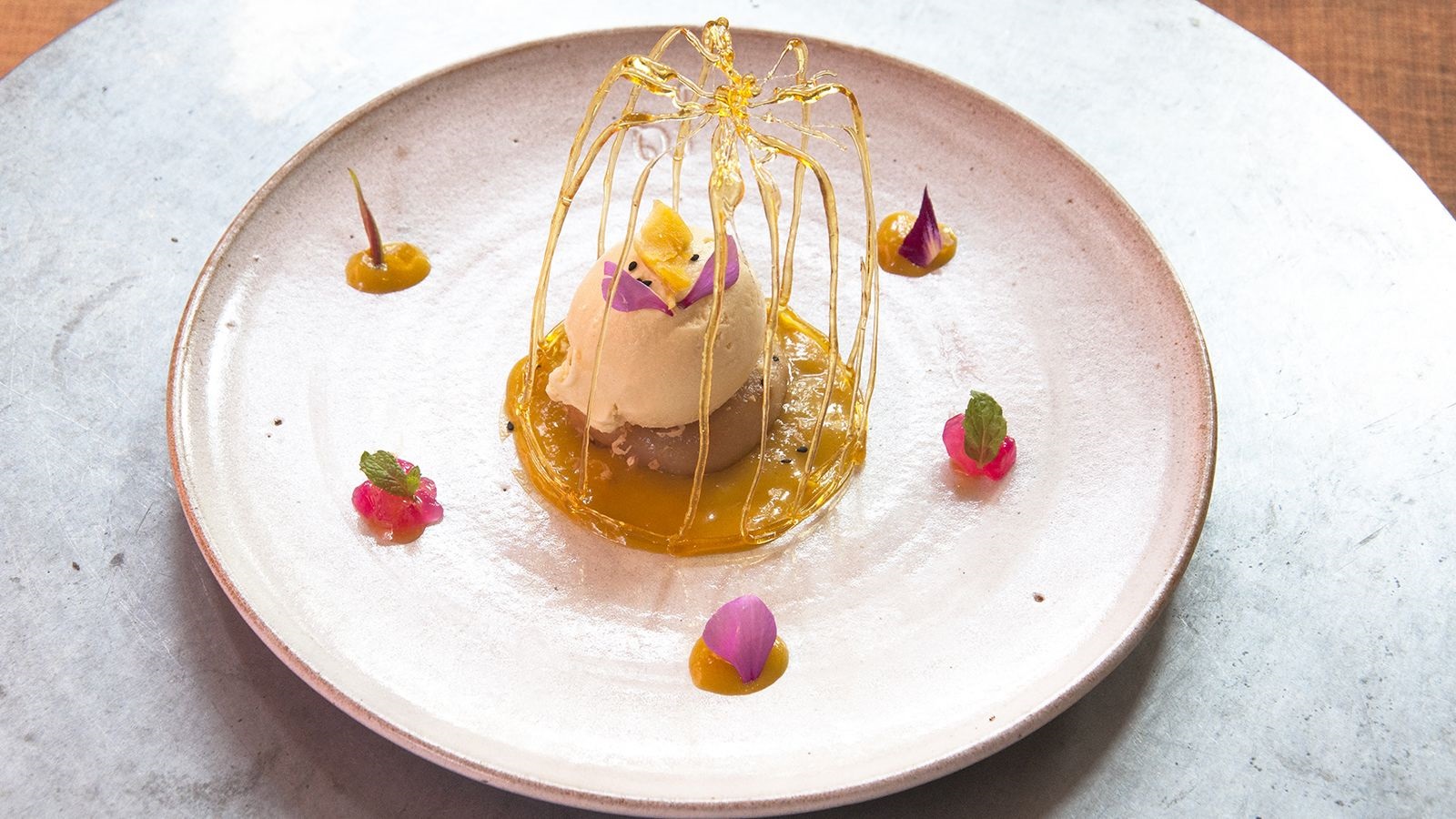


If Las Vegas can become a global culinary capital, why not Siem Reap?
This town in western Cambodia, whose bright lights and big hotels are fueled by the steady flow of visitors to the ancient city of Angkor, now serves up an international medley of imported flavors and aromas in a rather freewheeling style.
But where should you go if you really want to get to know classic Cambodian cuisine, rather than simply wander the countless markets and gawk at local curiosities like moringa leaves and the snakehead fish of the Tonle Sap?
Partner links: booking through them supports the blog at no extra cost to you.
Just a few decades ago, in the wake of the starvation and dictatorship of the Khmer Rouge, middle-class comforts such as restaurants or cookbooks would have been unthinkable.
And even recent visitors, hoping for the tasty local dishes they might have found in neighboring Thailand, instead ran into mostly pungent fermented prahok fish and versions of amok, or hor mok, a fish mousse of wildly varying consistency.
But as tourism and prosperity have grown in Siem Reap and the capital, Phnom Penh, the care of the national cuisine has passed from well-meaning researchers and NGOs to a new generation of chefs, both local and foreign, all equally devoted to their craft.
Embassy
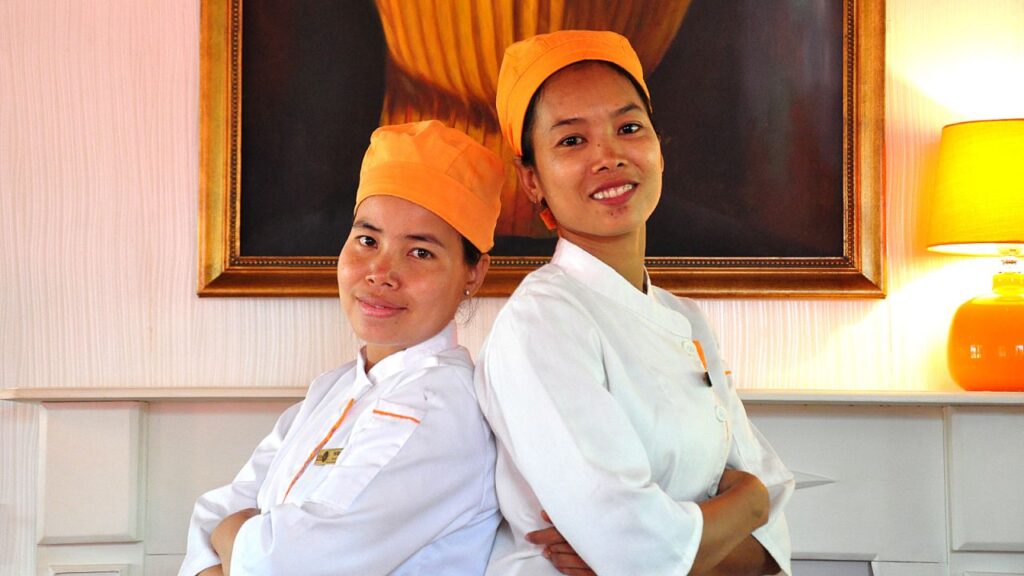
A vivid den of light, flowers and European design on the top floor of a dull shopping mall in Siem Reap, this is arguably one of the most unusual culinary ventures in the country and, one hopes, a sign of things to come.
Embassy's all-female team is led by two chefs, nicknamed the Kimsan twins for their shared surname, who are graduates of an NGO-run training restaurant for students from disadvantaged backgrounds.
The pair bring a refreshing, refined approach along with a commitment to local produce, reflected in an experimental menu that changes every month.
Local herbs such as rongeang leaf, and sauces like kapi yok pao, are paired with more familiar lemongrass pastes, lufu and lake fish to create a six-course menu, rounded out with wines and sorbets, yet thoroughly Cambodian in feel.
Cuisine Wat Damnak
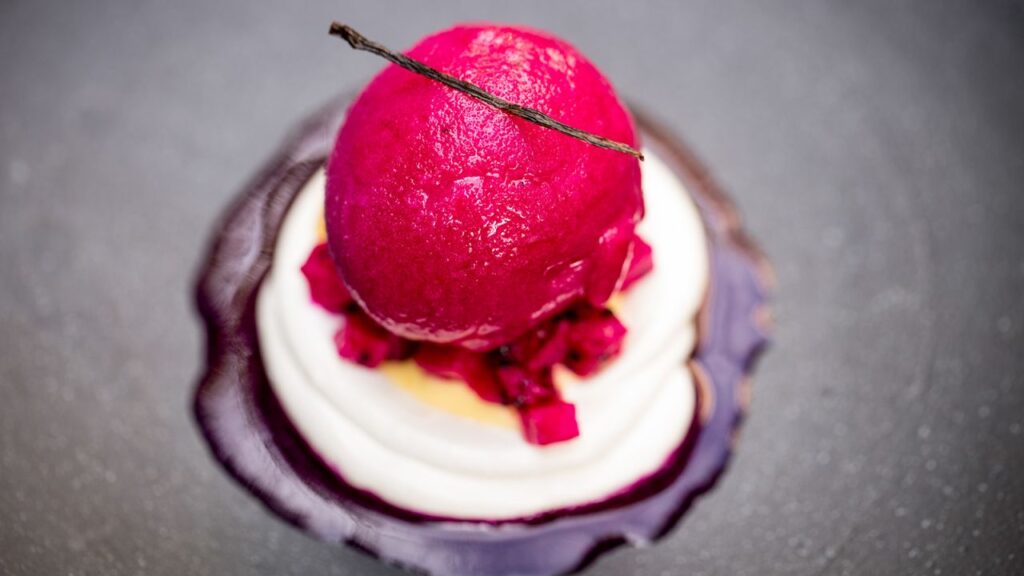
Cuisine Wat Damnak is the only restaurant in Cambodia to make the prestigious list of Asia's 50 Best Restaurants.
The open-air seats in this charming house on the edge of Siem Reap are sometimes booked months in advance.
This restaurant is considered the leading showcase of what Cambodian cuisine once was and what it could become again, given the right attention to flavor and detail.
The credit goes to the lifelong dedication of French chef Joannes Riviere, a gracious and modest master of the culinary arts who came to teach Western technique at a training restaurant and ended up inspired by his adopted Eastern home.
A swift procession of miniature melanges, some served in bowls, emerges from the glassed-in kitchen, where white-coated Cambodian assistants work with methodical calm.
Among the dishes on offer are a Tonle Sap featherback fish curry and slow-cooked pork shank with okra, yellow noodles, crispy pork belly and a fermented chili sauce.
The French touch lingers in the wonderful desserts featuring tropical fruit. Riviere also has a magical way with chocolate.
Chi Restaurant and Bar
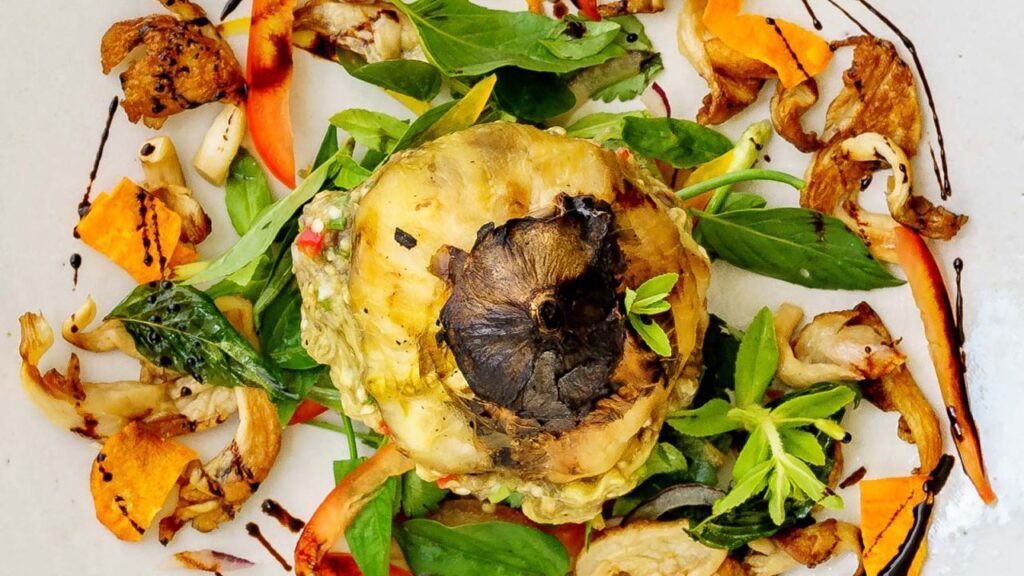
Usually, when hotel chains pour large sums into a renovation, decking out their in-house restaurant in heavy timber and dramatically high ceilings, they rarely pay attention to lesser-known local dishes.
But the luxurious Anantara Angkor Resort in Siem Reap has given a free hand to young German chef Kien Wagner, who offers up "progressive Cambodian cuisine."
Wagner, who has already spent time in the province of Kampot, source of Cambodia's prized pepper, does not pine for schnitzel and potatoes. He is an unabashed devotee of the local cuisine, drawing inspiration from a sous-chef who grew up in a Cambodian orphanage and, more importantly, from his Cambodian wife.
At Chi, which in Khmer means "herb" rather than the Chinese "energy," the choice is wide. It all comes with the expected five-star polish and finesse, and none of it is too coarse or harsh.
Wagner scrupulously uses chemical-free local produce wherever he can find it, even if his lok lak stir-fry main is made with American beef.
But his pumpkin and Tonle Sap fish soups are entirely authentic, including the medicinal moringa tree and "rice field" herb.
The main courses are large and hearty, and the Hamburg native takes particular pride in the way he pairs pork knuckle with Asian-style pickled vegetables and an anise caramel glaze.
Mie Cafe
Mie Cafe, its tables set mostly outdoors in the courtyard of a modern two-story house, with a name that nods to its original incarnation as a noodle shop, would seem to be an everyday sort of eatery.
But there is nothing casual about the way the dishes are prepared.
In fact, everything is so serious that the a la carte menu rivals even Cuisine Wat Damnak in its complexity and innovation.
The results can be a little more unexpected, but they are never dull and always worth a try. Owner Pola Siv spent nearly a decade working in kitchens abroad and clearly relishes the freedom to do whatever he pleases now that he is back home.
How about a ratatouille with pineapple and local sausage, served with locally made burrata? Mekong langoustines on pumpkin puree?
Find out here what "kroeung" curry really is (hint: yellowish in color and a perfect match for fish or chicken).
Oxtail is braised in espresso coffee and served with smoked radish and greens for dipping.
And you will find a very Cambodian protein, red ant powder, put to unusual uses. There is even a vegan menu.
Malis
In Phnom Penh, Malis is the city's only choice for discovering high-end Cambodian cuisine, served in a lavish yet accessible setting.
The Khmer Rouge wiped out the city's dining scene. Chef Luu Meng, born a year before Phnom Penh was emptied of restaurants and people, says he turned to old family recipes for inspiration.
But he has also clearly taken note of Western surf-and-turf restaurants.
There are plenty of tourist-friendly dishes here, such as crab and lobster or pork ribs, seasoned with hints of local aromatics.
It is also the perfect place to try the de rigueur fish malis, or fish-head amok.
But the soups, so often overlooked by foreigners, are true treasures and feature ingredients like smoked fish, moringa and young chili leaves. Dive right in.
And Meng deserves praise for putting raw vegetables on the menu for dipping into prahok, akin to Thailand's spicy shrimp paste.
Not the most adventurous restaurant, but a place where it is almost impossible to go wrong.
Marum
Everything about this training restaurant for young people from troubled families is sweet and colorful.
It is a little disconcerting, given that many of the students in T-shirts were rescued from a bleak life on the streets, but Tree Alliance, run by a French NGO with seven restaurants across Asia, knows how to market its products and its fairly priced food.
In the turquoise dining room adorned with bright children's drawings, or in the lovely open-air garden, it is a wonderful spot to combine a good cause with food creatively built in a style you might call upscale "hippie-Asian."
The menu, however, features not only symbols marking spiciness but also silhouettes of Angkor Wat to show that a dish is "truly Khmer."
Among them are a tamarind fish soup and a succulent smoked eggplant, though it is served with flatbread.
All the salads are generous and well mashed, and it hardly matters that the rice balls here are stuffed with brie.
Oddly enough, given the new-age atmosphere, they also serve frog legs and crocodile burgers.
The staff, of course, is 100% Khmer, but it is a shame that Marum does not go further and apply its cheerful flair to what is truly local.