

Every menu in Tbilisi has adjaruli khachapuri, and almost everywhere in the capital they make it worse than they do nearly four hundred kilometers away in Batumi, where it comes from. That's the main thing worth knowing about Georgian cuisine before you go: it isn't nationwide, it's regional. The name of a dish on the menu tells you less than the region where you order it, and a tourist who spends eight days eating the same three items simply never made it to the places where those dishes were born.
The menu lies with the name, not the ingredients
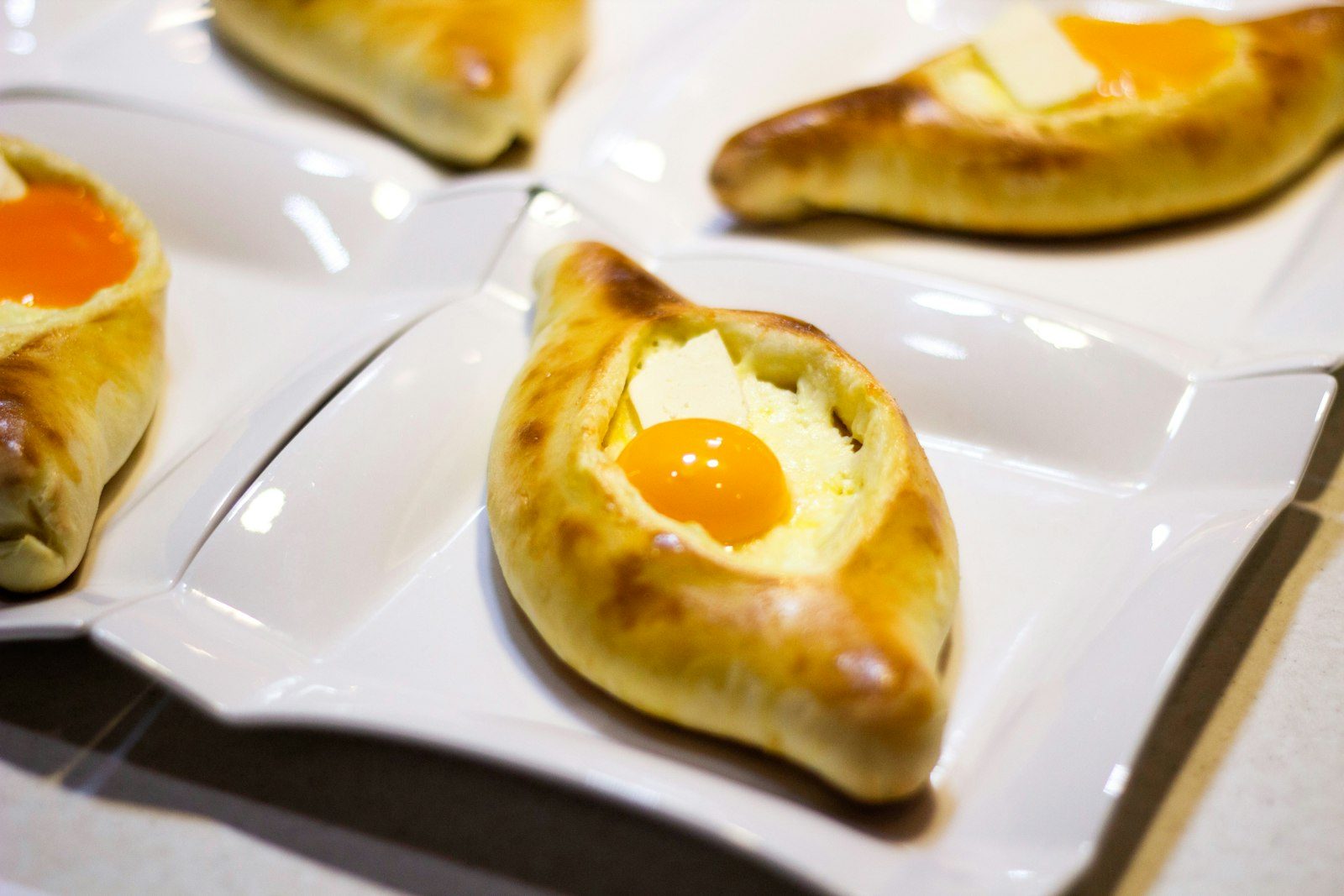
The word "khachapuri" on a menu promises almost nothing, because it covers a dozen different dishes. Adjaruli is a bread boat filled with melted cheese, a knob of butter and a raw egg yolk that you stir straight into the hot cheese. It looks spectacular, which is exactly why it's the one that travels around social media, but it's the richest of them all, and ordering it every day gets old fast. The boat makes sense on the coast, in Adjara, not in every Tbilisi spot that puts it on the menu for the tourist.
Imeruli, round and closed with cheese inside, is the hardest to get wrong, so in an unfamiliar place it's the safest choice. Megruli is the same thing but with an extra layer of cheese baked on top. Then come the Gurian one with egg, the Rachan one with beans, and a few more regional versions you'll rarely meet outside their home region. There's one practical takeaway: if you see an unfamiliar name on the menu, ask which region it's from, and whether that's the region you're actually in.
Partner links: booking through them supports the blog at no extra cost to you.
Khinkali get ruined by the fork, not the recipe
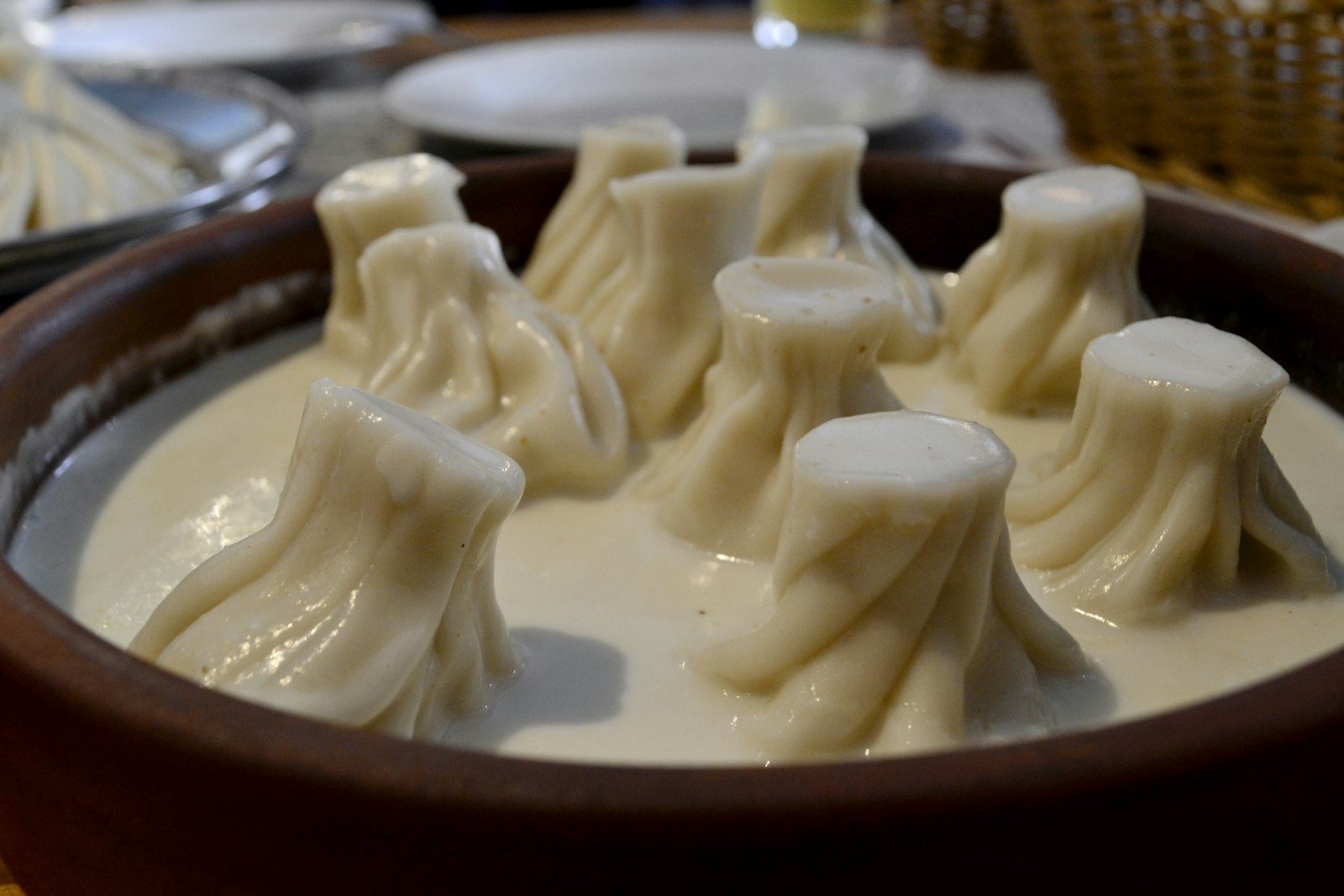
Khinkali are big dumplings filled with minced meat and broth, and the main mistake with them is technical. Pierce one with a fork and the broth, the whole point of the dish, leaks out onto the plate, leaving you with a dry shell of filling. The right way is to grab the twisted top with your hand, bite into the side, drink the broth first, and then eat the rest. You leave the top on the edge of your plate and count them up to track how many you've had, and a dozen is a normal grown-up portion, not a starter.
Meat is the classic, but mushroom, potato and cheese versions are almost everywhere, so no one goes hungry here without meat. The loudest reputation belongs to the khinkali from Pasanauri, on the road to Kazbegi. Whether they're objectively the best is impossible to prove, but as a lunch stop on the way into the mountains, it's a route with no alternatives.
The best mtsvadi isn't in a restaurant
Mtsvadi, Georgian barbecue, is grilled over dry grapevine, and it's the vine, not the marinade, that gives it the smoky flavor it's known for. The trouble is that a tourist restaurant skimps on the vine, so you'll eat the truest mtsvadi not in a place with a three-language menu, but somewhere they cook it to order in the yard, most often in the villages of Kakheti.
Beyond the barbecue, two hot dishes are worth your attention: chakhokhbili, chicken in tomatoes with plenty of onion, and ojakhuri, pork with fried potatoes. The portions of both are built for a table, not one person: Georgian cuisine barely knows how to feed a lone guest, it's all about company.
The Lenten menu here beats the meat one
Georgia is one of the few countries where a vegetarian doesn't have to live on side dishes. The reason isn't a trend but the Orthodox fasts: half of the traditional dishes have gone without meat and dairy for centuries, and this isn't a hastily thrown-together "vegetable menu" but part of the table that everyone orders.
- Pkhali, cold balls of ground vegetables, spinach or beetroot, with a walnut-and-garlic paste and pomegranate on top.
- Lobio, beans with spices in a clay pot, served with mchadi cornbread.
- Badrijani, eggplant rolls with that same walnut filling.
- Ajapsandali, a vegetable stew of eggplant and peppers, a distant relative of ratatouille.
Walnut paste is as much a foundation here as cheese is in the baking. Half the Lenten table rests on it, and these dishes are worth ordering even if you do eat meat.
The flavor rests on three sauces, not on the ingredients
You recognize Georgian food from the first spoonful not by its ingredients but by its spices and sauces. Khmeli suneli, a blend of dried herbs, is the base of almost every hot dish. Adjika is fiery, made of pepper and garlic. Tkemali is sour, made from plum, and it lifts any meat or potato. In a class of its own is Svan salt from Svaneti: they grind it with garlic and herbs, and a single jar at home turns even plain fried potatoes into a different dish. It's also, by the way, the best souvenir from Georgia, one you'll actually use rather than leave to gather dust.
Wine here is a reason to sit down, not a drink
Winemaking in Georgia is so old that the technique of aging wine in clay qvevri buried in the ground was added to the UNESCO heritage list back in 2013. The main wine region is Kakheti, and a tasting at a family winery gives you more than any city wine museum.
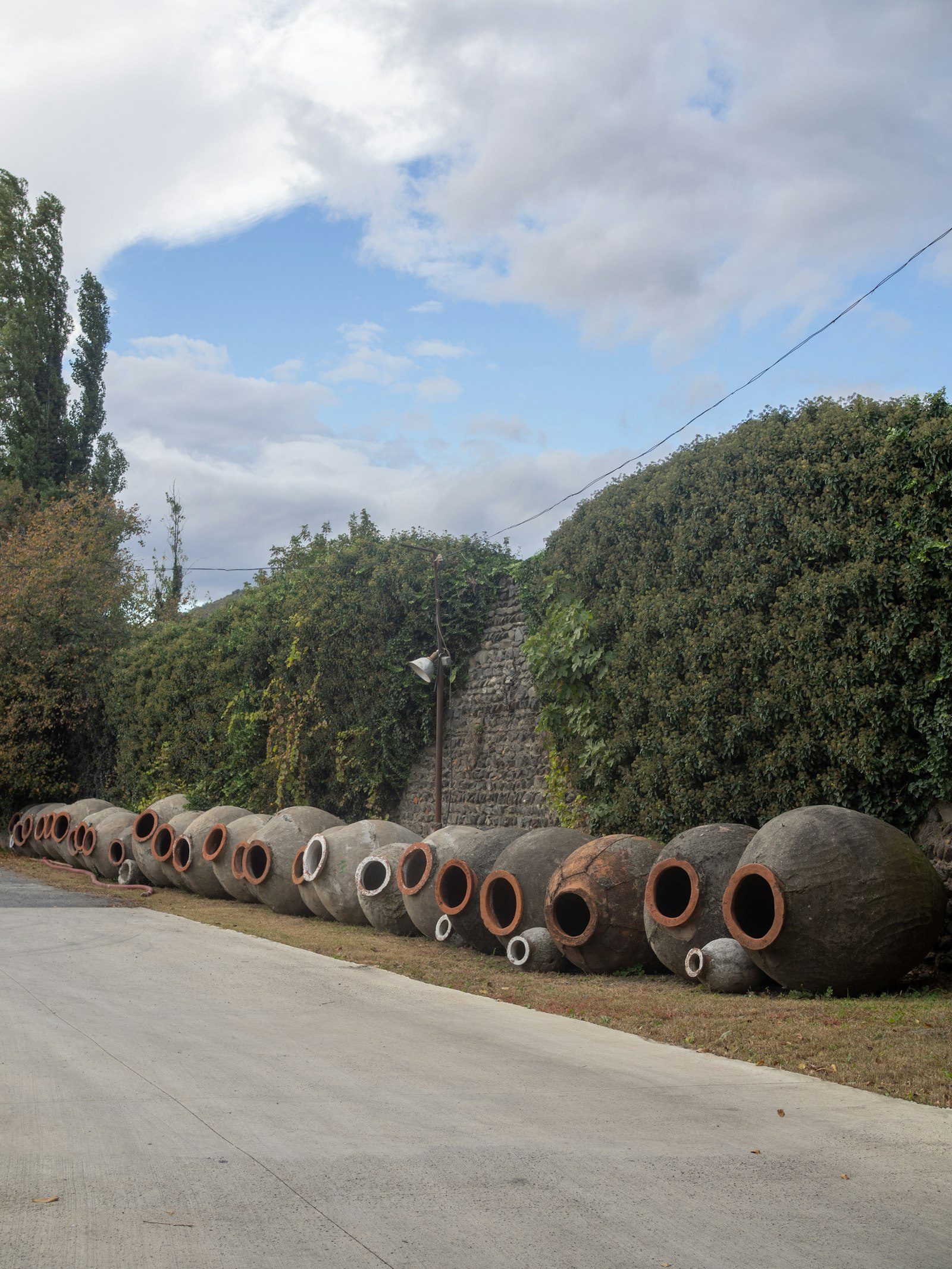
But the bottle here is secondary. Wine exists for the sake of the supra, the feast led by a tamada, and the toasts at one are a genre of their own with their own rules, sometimes running longer than the meal itself. If you're invited to a home supra, say yes without hesitation: that feeling is exactly why people come back to Georgia a second time, not for one more khachapuri.
What to bring home besides photos
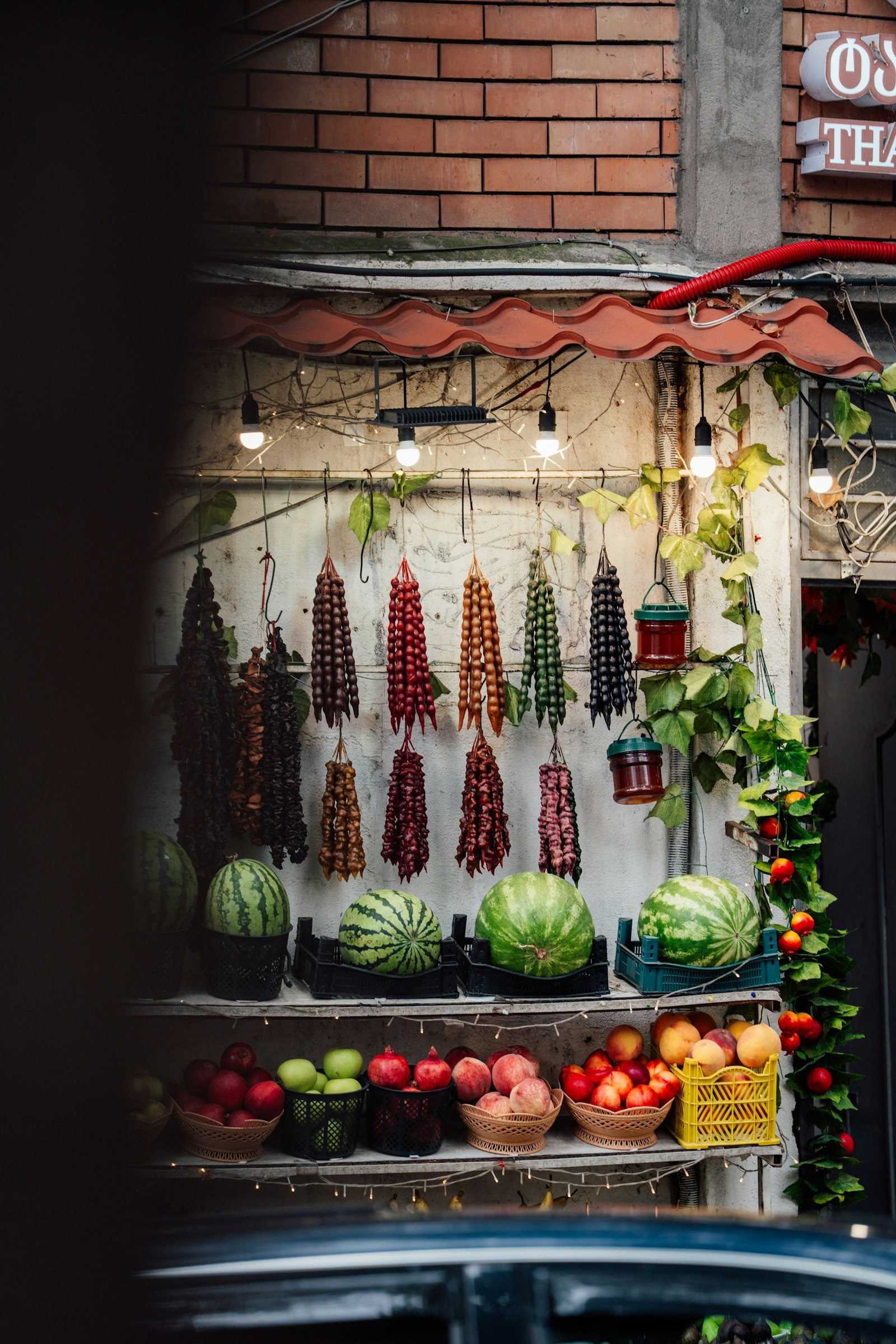
Churchkhela, the main local treat, is nuts threaded on a string and dipped many times into thickened grape juice. It looks like a candle, keeps for months, and so as a gift it survives any suitcase. Right next to it at the market you'll find tklapi, thin sweet-and-sour sheets of dried fruit puree. Together with Svan salt, that's a set worth giving instead of a fridge magnet: people actually eat all of it.
Where to go for which dish
| Region | What to go for | Why there |
|---|---|---|
| Adjara (Batumi) | Adjaruli khachapuri | Home of the egg-yolk boat; by the sea they make it best |
| Kakheti | Mtsvadi and wine | Wine country, barbecue over vine and qvevri right in the yards |
| Samegrelo | Megruli, spicy sauces | The spiciest cuisine in Georgia, lots of walnut pastes |
| Svaneti | Kubdari, Svan salt | Mountain cuisine, the kubdari meat pie and that very salt |
| Road to Kazbegi | Khinkali (Pasanauri) | The country's most famous khinkali, a handy stop on the way |
What to do with all this in practice
A route covering only Tbilisi and Batumi ticks the bare minimum: the boat by the sea, khinkali with broth, mtsvadi and something walnut-based from the Lenten side. But if you head into the regions, the opposite of habit applies: don't order the same thing everywhere, order the local dish for the place you're in. The whole difference between someone who tried Georgian food and someone who understood it lies right here, not in the number of khachapuri eaten.