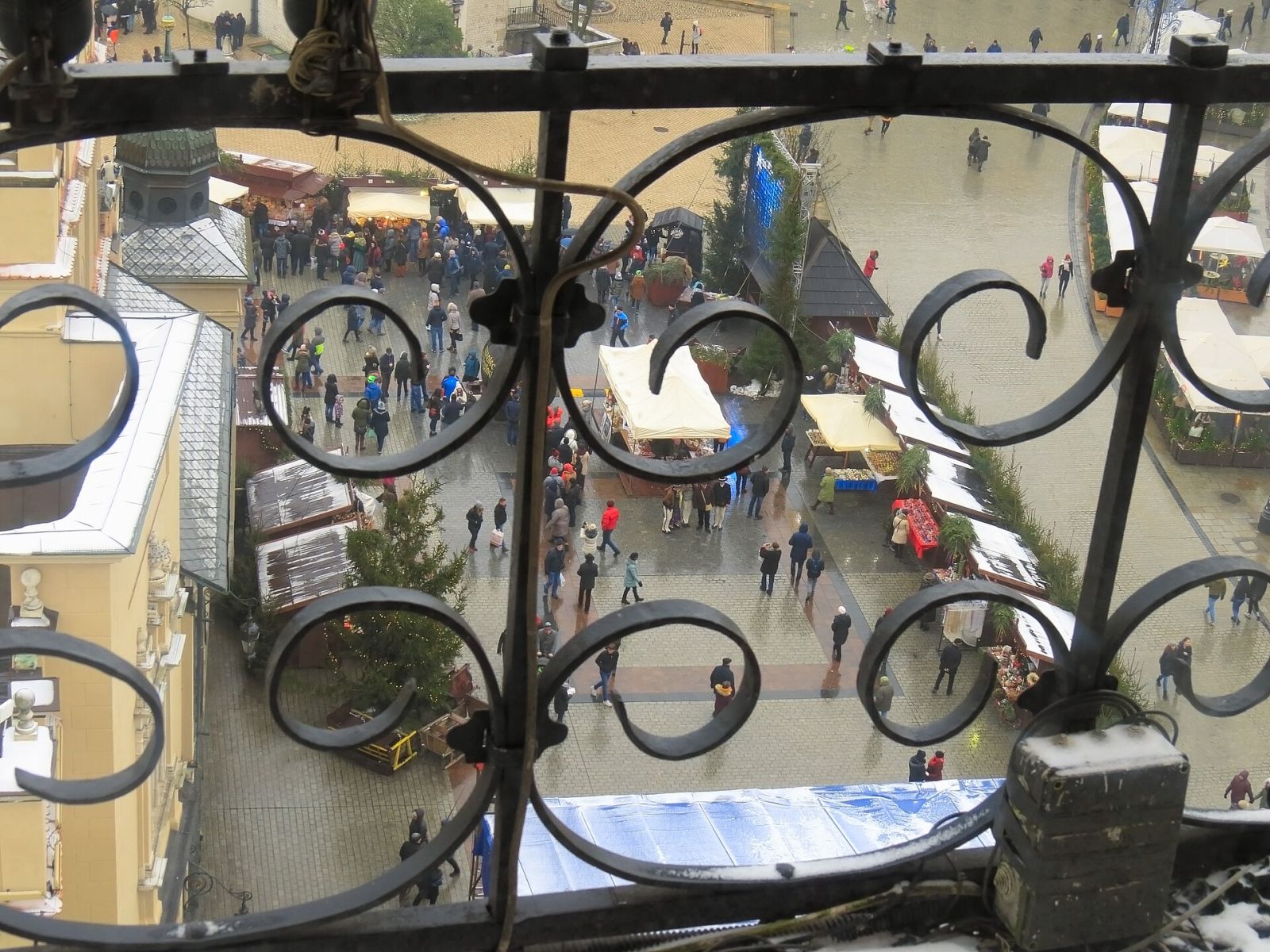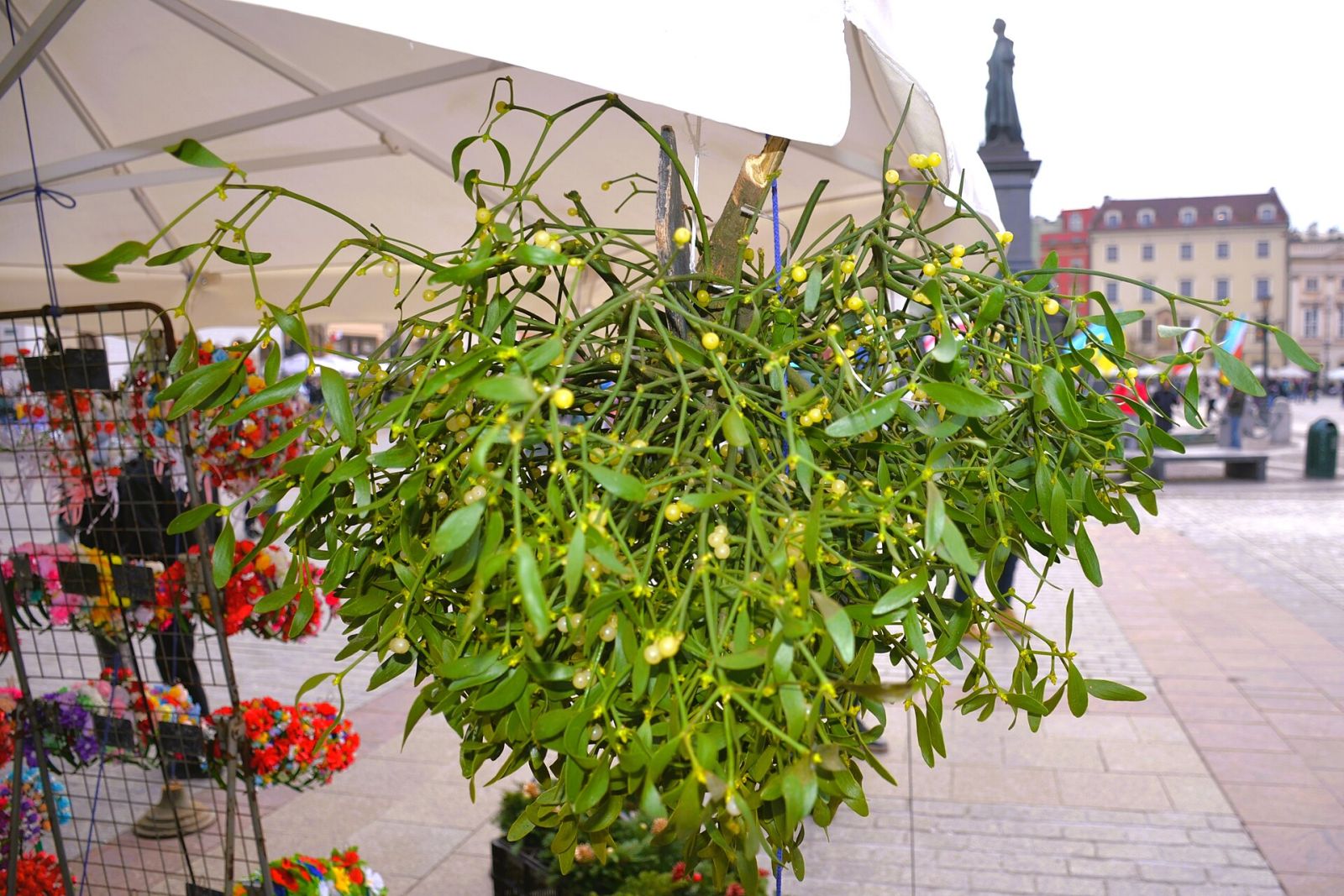


Poland's flagship Christmas market unfolds on Rynek Glowny, the largest medieval square in Europe: four hectares of cobblestones between the Cloth Hall and St Mary's Basilica. The Krakow Christmas market opens in late November and runs until roughly the start of January, and among all the markets on the continent this one wins not on size but on stage design: Gothic towers, the hejnal bugle call sounding from the basilica every hour, and nativity scenes protected by UNESCO. Here is when to go, what to eat, what to bring home and how to plan the trip, including the overland route from Ukraine.
When does the market run?
The classic pattern: opening in the last week of November, usually on the Friday before the first Sunday of Advent, closing in the first days of January. Stalls trade daily from about 10:00 to 20:00, with the food rows staying open later. The city confirms exact dates each year, so verify them on Krakow's official tourism portal before booking. The main tree and the illuminations switch on from day one, so there is no such thing as arriving at a half-ready market.
Now, choosing your week. The first half of December is the smart window: everything is open and the crowd is still human-sized. The weekend before Christmas is peak: half-hour queues at popular stalls and a hunt for cafe seats around the square. The stretch between December 25 and New Year gets busy again, while after January 1 the square empties and the remaining stalls discount their stock. Weekdays always beat Saturdays, mornings beat evenings, though the real magic of the lights obviously starts after 16:00, once darkness falls.
Obwarzanek, grzaniec and the rest of the food
Market eating is done standing up, from a paper plate, and that is half the pleasure. The mandatory program looks like this:
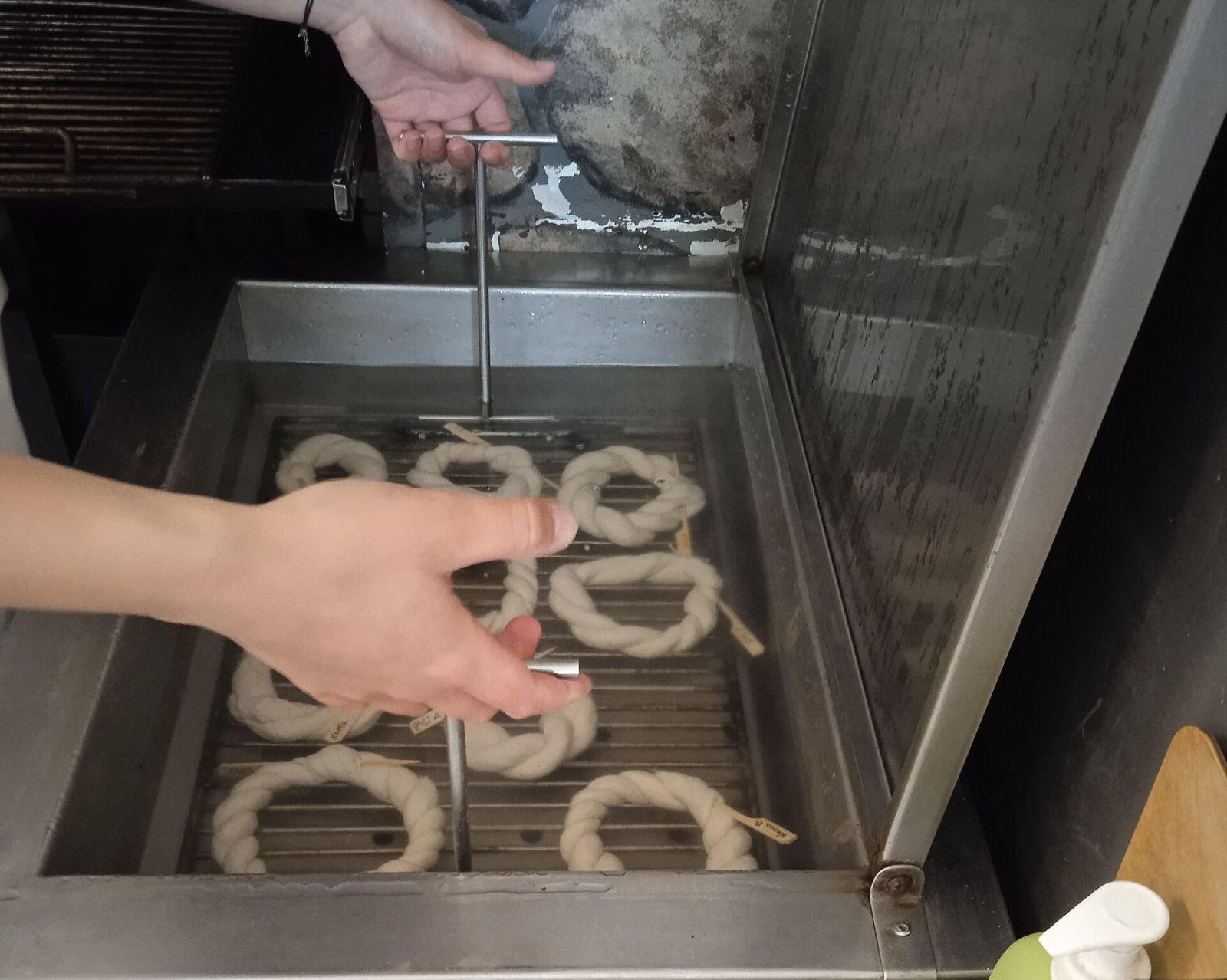
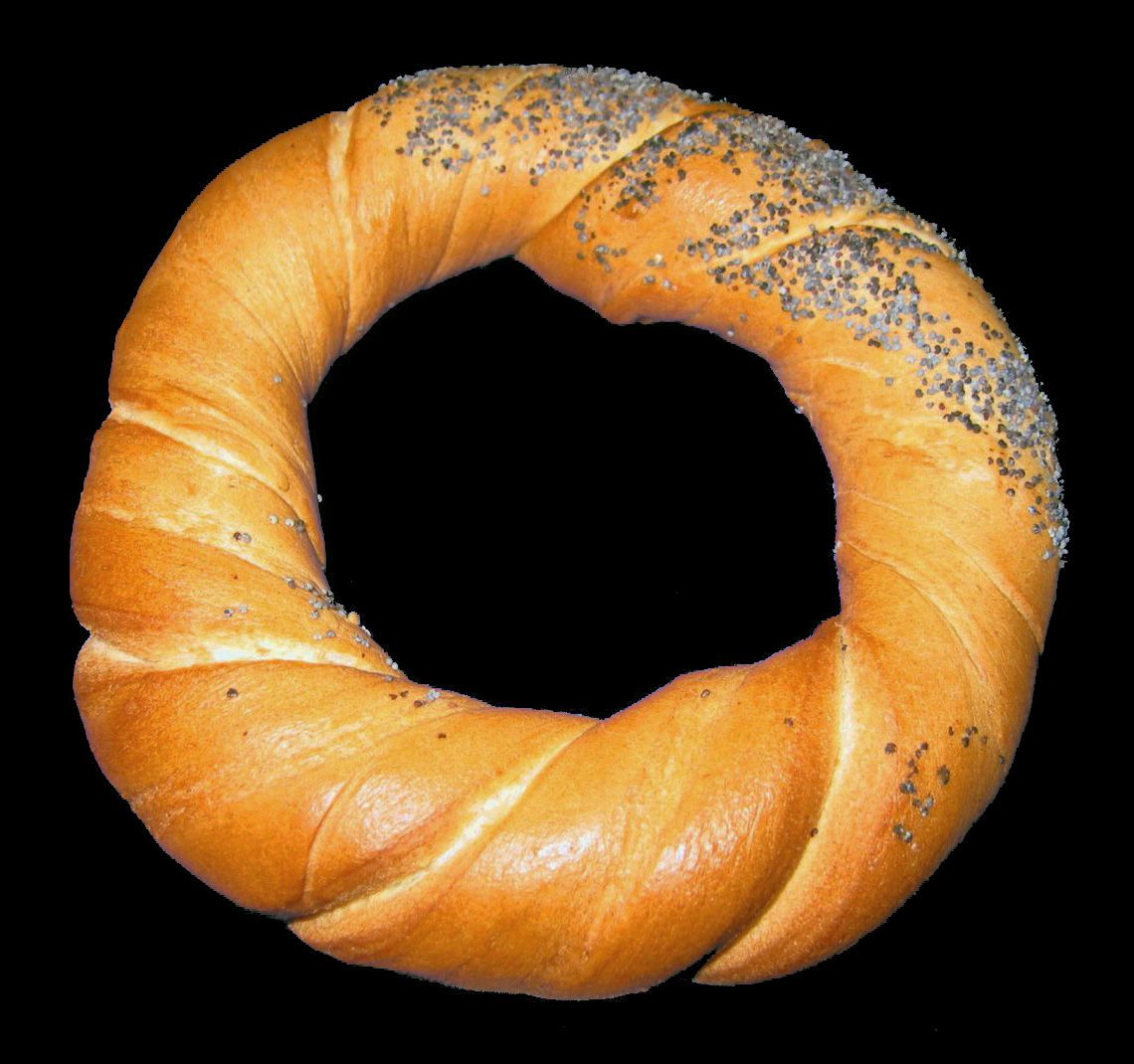
- Obwarzanek: Krakow's ring-shaped bread with EU protected geographical status, boiled before baking like a bagel. It costs around 2-3 zloty from market and street carts; fresh ones crunch, day-old ones turn rubbery, so buy in the morning;
- Grzaniec galicyjski: the local mulled wine, red, spiked with cloves and citrus, poured from big wooden barrels. The mug usually carries a deposit: return it for your money or keep it as a souvenir;
- Oscypek: smoked sheep cheese from the Tatra mountains, another EU-protected product. Grilled and topped with cranberry jam, it is the best possible companion to grzaniec;
- Kielbasa and bigos: sausage straight off the fire and hunter's stew of cabbage and meat, heavy artillery for a frosty evening;
- Pierogi: dumplings with a dozen fillings, from potato-and-cheese classics to duck with plum.
A hot dish runs roughly 20-40 zloty, grzaniec 15-20, and prices creep upward every year, so treat the numbers as approximate. A local tip: the cheapest obwarzanek is not on the square itself but from the blue carts on the adjoining streets.
Szopka: a Christmas genre that exists nowhere else
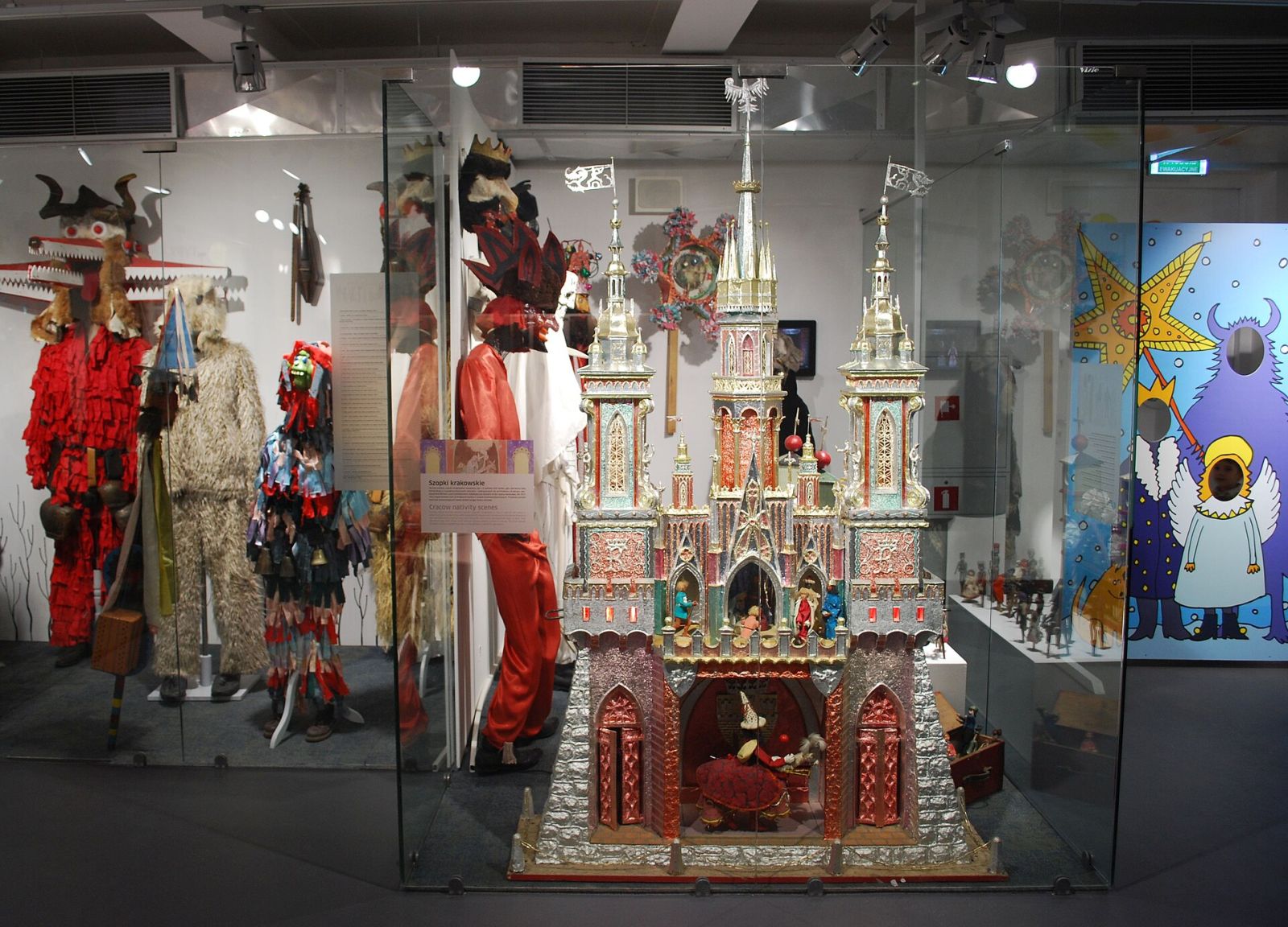
A szopka is a nativity scene, but the Krakow version is its own art form: instead of a Bethlehem stable, craftsmen build multi-story fairy-tale palaces assembled from the towers of St Mary's, Wawel and the Cloth Hall, clad in colored foil that glows like stained glass. The tradition is nearly two centuries old, the szopka competition has run since 1937, and in 2018 UNESCO inscribed Krakow nativity-scene making on its list of intangible cultural heritage, the first Polish tradition to make it.
Timing is everything here. The competition takes place on the first Thursday of December in the morning: makers display their szopkas right beside the Mickiewicz monument on the square, and for a few hours anyone can examine them up close. The works then move to a museum exhibition that lasts until February. If your trip lands in early December, schedule your arrival around that Thursday: the spectacle is unique and completely free. Competition details are published by the Museum of Krakow, which also hosts the exhibition in the Krzysztofory Palace.
What to buy and what to skip?
An honest classification of the market stock:
| Item | Verdict | Price guide |
|---|---|---|
| Hand-painted glass baubles (bombki) | Buy: Polish glass ornaments are the legend of the genre | from 20-30 zloty |
| Miniature szopkas | Buy: the most Krakow souvenir of them all | from 50 zloty |
| Highlander wool and sheepskins | Buy, but haggle and check the quality by hand | slippers from 40 zloty |
| Amber | Careful: genuine Baltic pieces sit next to plastic, buy from stalls with certificates | varies wildly |
| Boleslawiec pottery | Buy if you dare to transport it: the blue-dot pattern is recognized worldwide | mug from 40 zloty |
| Mass-produced magnets and dragon trinkets | Same stuff as any airport, safe to skip | pocket change |
Cards work almost everywhere; cash is only needed at the smallest stalls. One small warning: the prettiest baubles sell out by mid-December, so do not postpone ornament shopping.
What to see around the market?
The market eats your evening, but the day stays free. The minimum set within walking distance: St Mary's Basilica with the Veit Stoss altarpiece (ticketed entry, the altar is opened in the afternoon), the underground museum beneath the square itself, Wawel Castle ten minutes away on foot, and Kazimierz, the former Jewish quarter with the city's best bars and eateries. If snow has fallen, the Planty, the ring of parks around the Old Town, turns into a free Christmas card. On day two or three many visitors head to the Wieliczka salt mine, half an hour by suburban train.
Getting there and where to stay
Krakow's airport receives flights from across Europe, but for travelers coming overland from Ukraine the rail scheme is the most reliable: a train to Przemysl (direct services from Kyiv and Lviv), then a Polish train onward to Krakow, another two and a half to three hours. Buses from Lviv take 5-7 hours depending on the border, with plenty of departures from FlixBus and local carriers alike. Border time is the main variable: build in a buffer and do not plan evening events for arrival day. Polish train timetables and tickets live on the PKP Intercity site.
For accommodation in December one rule applies: book a month or two ahead, because Advent weekends sell out first. Staying inside the Old Town is beautiful but loud and pricey; Kazimierz offers the best balance of cost and atmosphere, and the districts just beyond the Planty save a third of the budget for fifteen minutes of walking.
Is this market worth a dedicated trip?
Yes, and here is the case. Dresden wins on seniority and Vienna on scale, but the Krakow Christmas market wins on context: no other market in Europe stands in the middle of such a square, under a live bugle call and Gothic towers, with its own UNESCO-protected genre of nativity art. Add Polish prices, still gentler than Austrian or German ones, and easy overland access from Ukraine, and you get the most rational Christmas weekend that can be assembled in this part of Europe. Go in early December, aim for the first Thursday of the month, and Krakow will show you everything at once.