

Late on 31 December, at Chion-in temple in Kyoto, seventeen monks swing a log on ropes and drive it into a bronze bell that weighs about 70 tonnes. They will do it 108 times, once for each human desire on the Buddhist list, and for the Japanese this is the most important night of the year. New Year in Japan, Shogatsu, is quiet, family-centred and deeply ritual: instead of a loud party there is a big clean-up, noodles before midnight and a queue at a shrine, while the flashy celebration with lights went to Christmas.
Omisoka: clean everything and finish your noodles before midnight
The last day of the year is called Omisoka, and the run-up starts a week earlier. People do osoji, the great clean: windows get washed, clutter goes out, and every surface ignored since spring gets wiped. The same happens in offices and schools, where staff and pupils do the cleaning themselves. The idea is simple: the god of the year, toshigami, should arrive at a clean house.
On the evening of 31 December people eat toshikoshi soba, buckwheat noodles for crossing into the new year. Long noodles promise a long life, and buckwheat breaks easily, so the year's troubles get cut off along with them. You are meant to finish before midnight, and leaving noodles on the plate is bad luck. Then families watch Kohaku, the NHK song contest in which a red team and a white team have been competing since the 1950s. Straight after it, television switches mood completely and shows snowy temples where the bells are about to ring. The jump from pop stars in rhinestones to the silence of a mountain monastery is very Japanese.
Joya no kane: where you listen to the bell and where you ring it
The most famous joya no kane ceremony takes place at Chion-in, and this is exactly where visitors are most often disappointed: you cannot ring this bell yourself, the monks do it. Even watching is not that easy. In the 2025/26 season the ceremony was a paid event, about 3,000 yen, with advance online booking that opened on 1 December, and the places went very quickly. There are two free options: the live stream, or the daytime rehearsal a few days before Omisoka, which the temple usually holds without booking. Check the 2026 schedule on the Chion-in website.
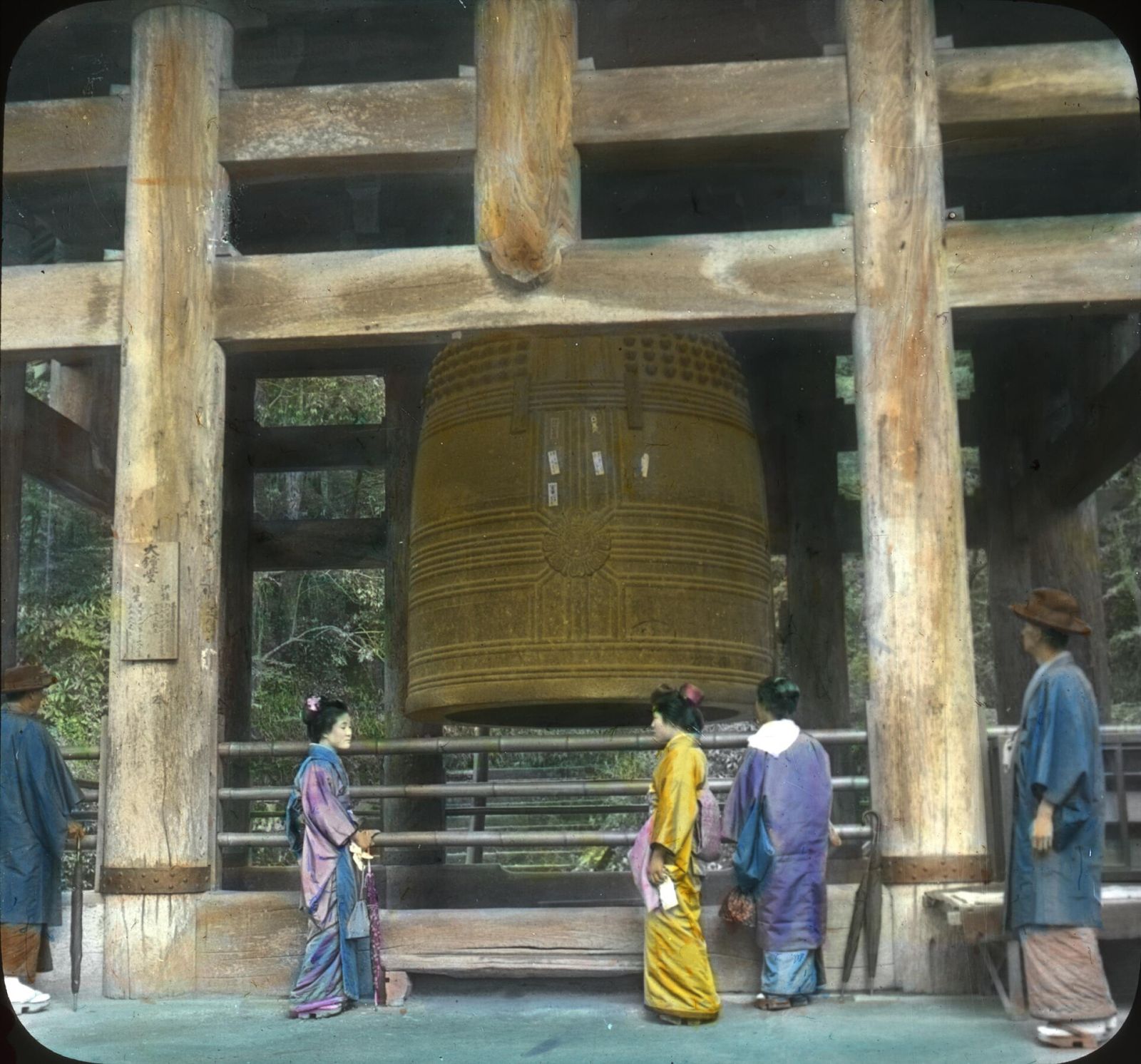
If you want to pull the log yourself, go to a smaller temple. In Kyoto, in recent seasons, Kodai-ji handed out numbered tickets from 22:00 to the first 108 groups, Tenryu-ji did the same closer to midnight, and visitors also rang the bells at Chishaku-in and Eikando. Tokyo offers more choice: Ikegami Honmonji gave out free numbered tickets to 600 people, Higashi Honganji in Asakusa took advance bookings for 108 places, and at Zenpukuji in Azabu-Juban people simply queued from 23:00. At Senso-ji only temple staff ring the bell. The rules change every year, so check the website of your chosen temple in December. Meanwhile, at Yasaka Shrine in Kyoto, okera mairi runs from the evening of 31 December until dawn: people light a rope from the sacred fire and carry the ember home, twirling it so it doesn't go out.
Hatsumode: millions of people in three days
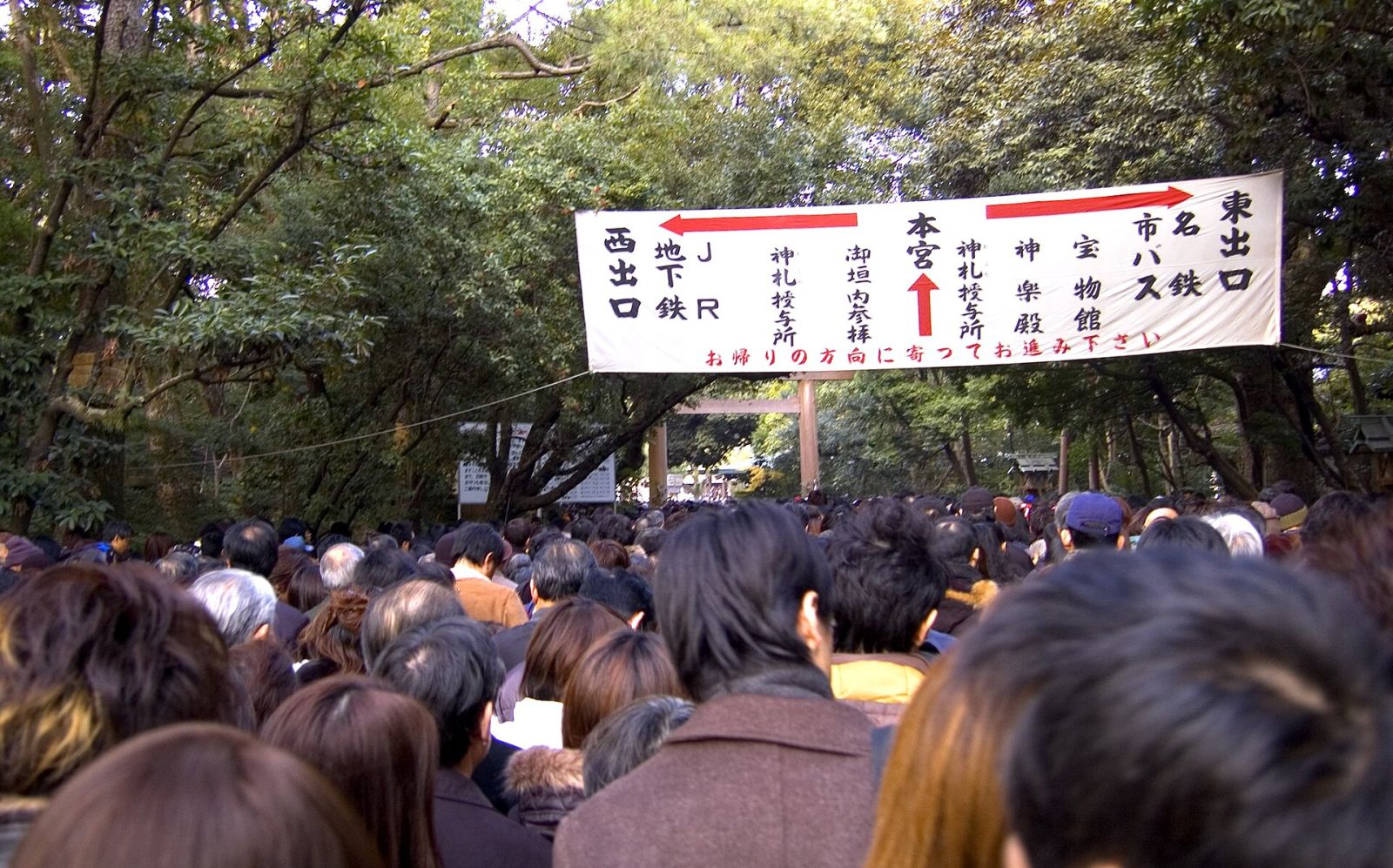
Hatsumode, the first shrine visit of the new year, is something almost the whole country does. The record holder, Meiji Jingu in Tokyo, has in some years received more than 3 million people in the first three days of January, and on the night of 1 January the shrine stays open until morning. The crowd moves in waves: police and volunteers let people through in blocks, and the walk from the gate to the main hall can take an hour. Then comes the routine: a coin in the offering box (five yen is considered lucky because go-en sounds like the word for a bond), two bows, two claps, one more bow. After that, omikuji, a paper fortune. A bad one gets tied to a special rope and left at the shrine, a good one goes home with you.
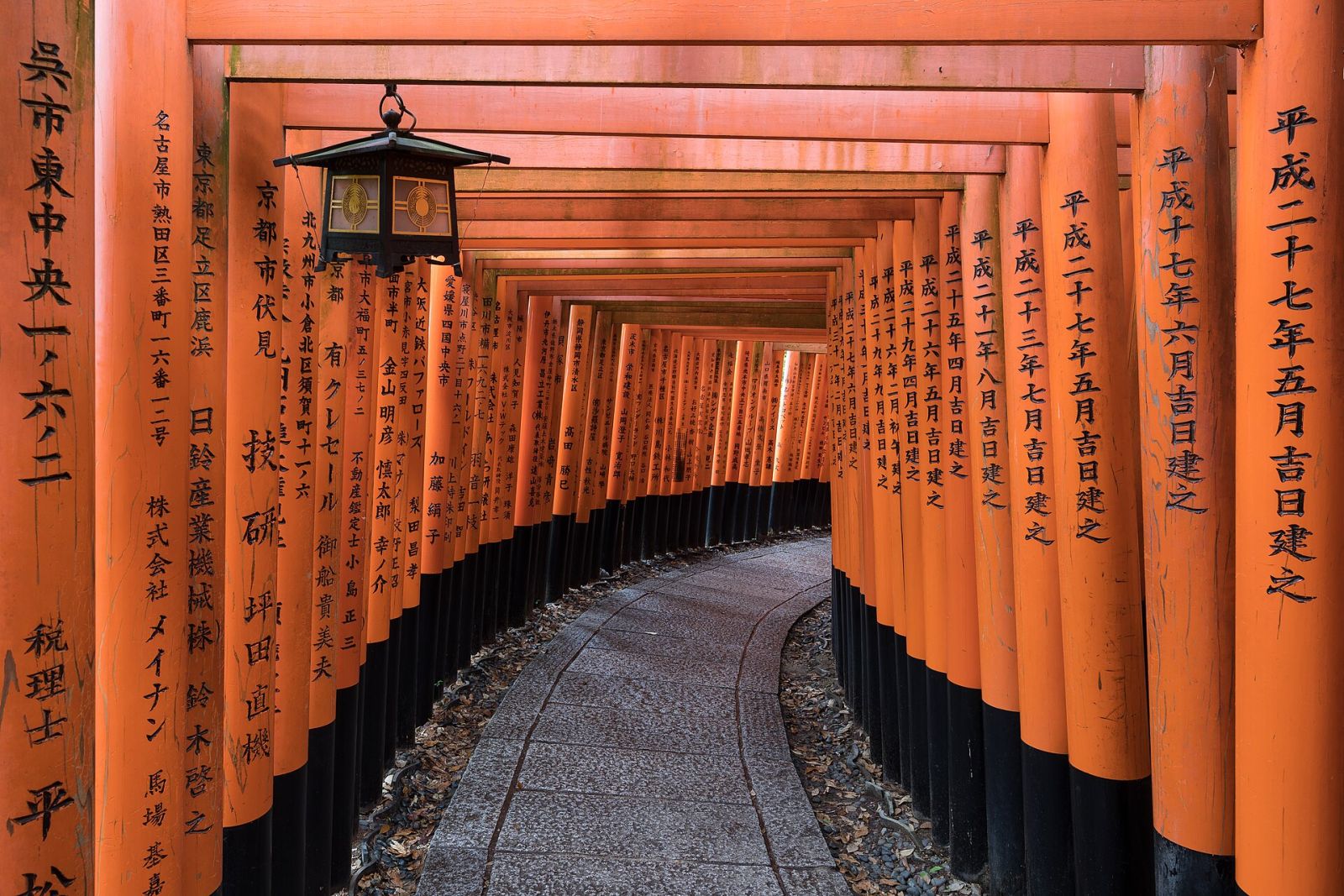
Fushimi Inari in Kyoto, with its tunnels of red torii gates, draws roughly 2.7 million people, and Kawasaki Daishi and Naritasan near Narita airport are also in the top group. The car park at Fushimi Inari closes for these days, so the train is the only way in, and the upper part of the trail is unlit at night. Hatsumode is traditionally done by 7 January, and by 4 or 5 January you can breathe again at the same places. Early birds also catch hatsuhinode, the first sunrise of the year, on the coast or on a mountain.
Kadomatsu, osechi and mochi, handle with care
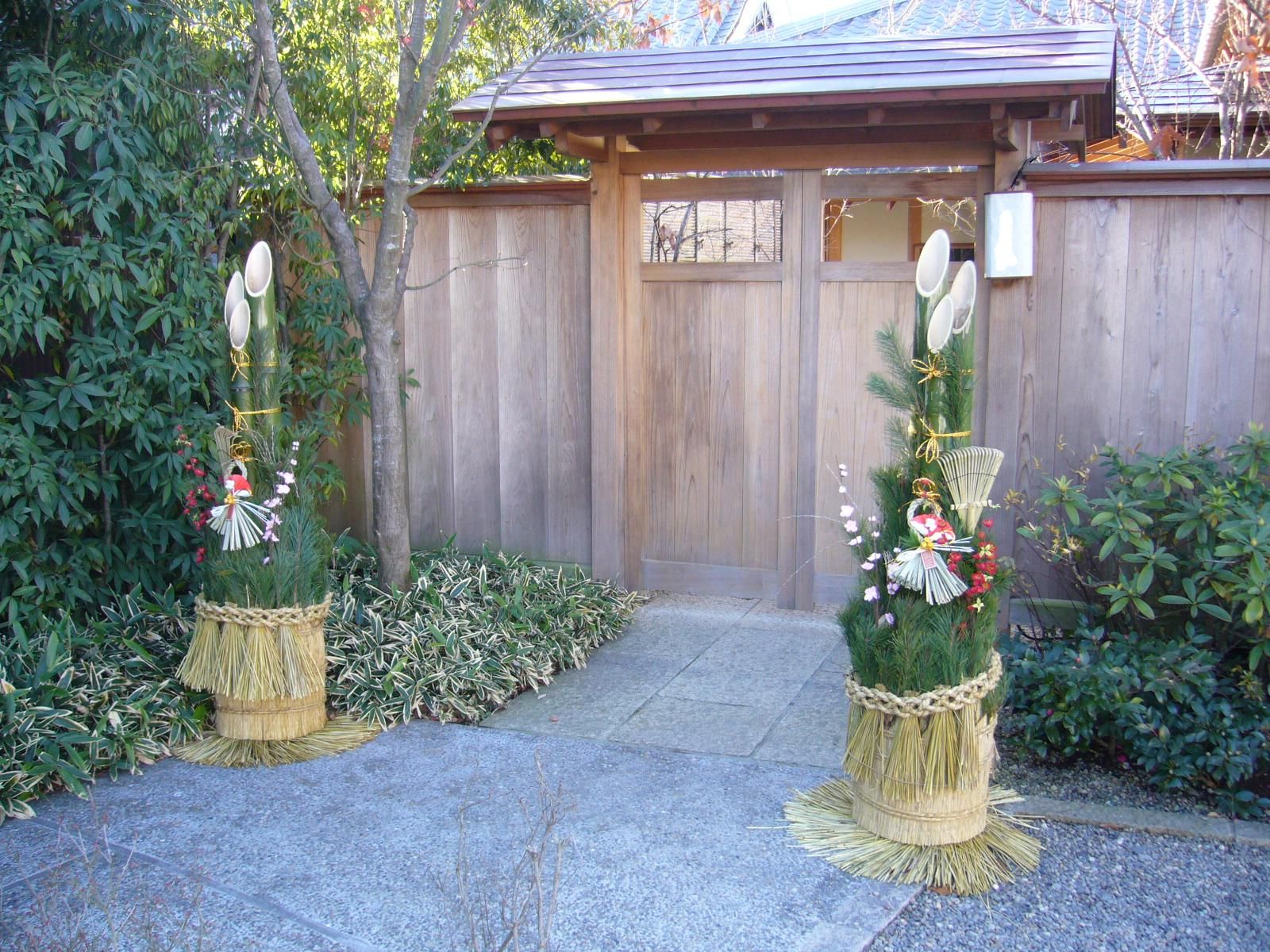
Next to the doors of houses and shops you will see kadomatsu: three diagonally cut bamboo stems with pine branches. This is a temporary home for the toshigami. They go up after 13 December, but not on the 29th, because nine sounds like suffering, and not on the 31st, because a one-night decoration is considered rude to the deity. Nearby there is usually a shimekazari, a braided rope with paper zigzags.
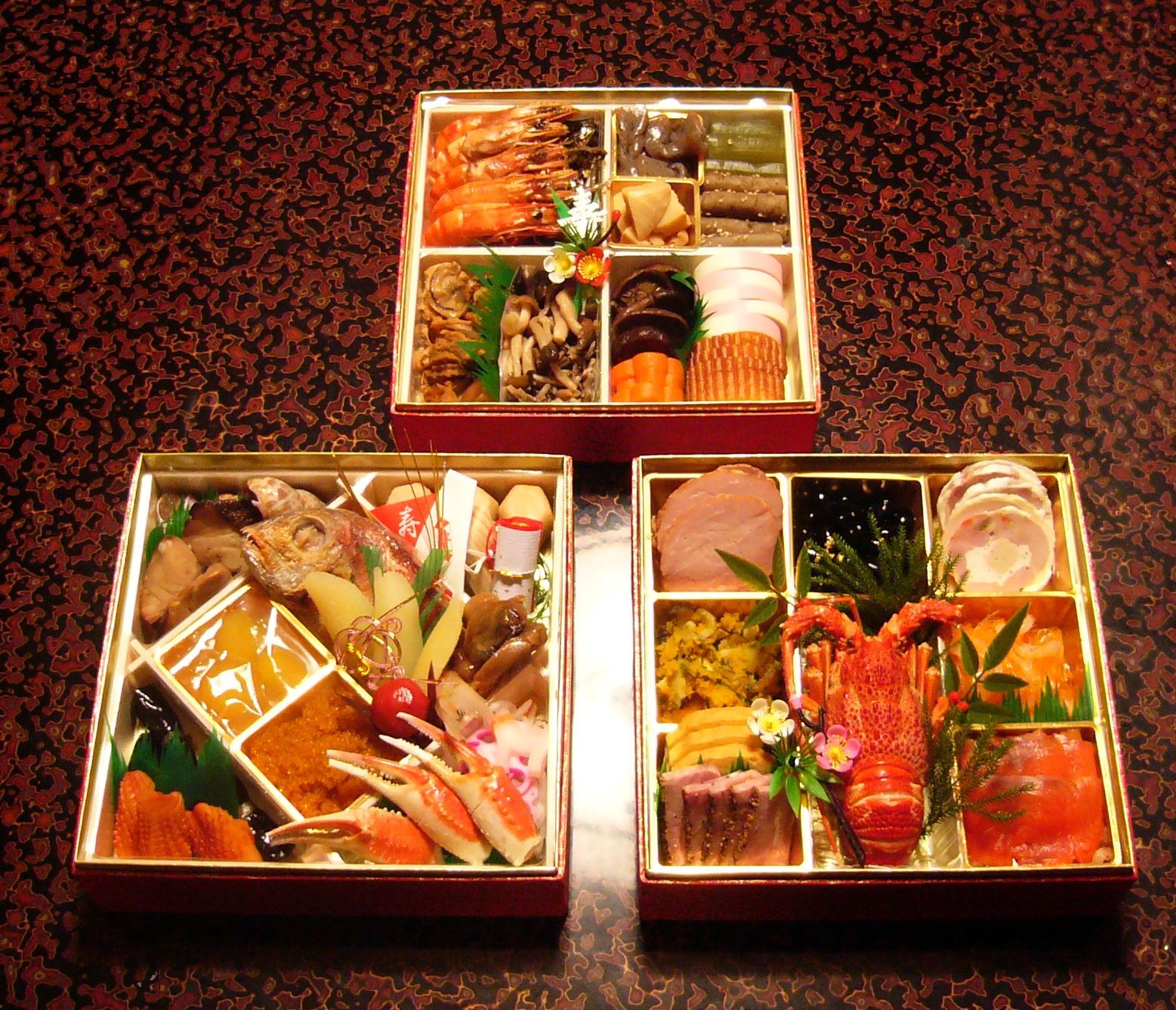
The festive meal is osechi: dishes in stacked lacquer boxes, each with its own meaning. Black beans promise hard work, herring roe many children, kombu seaweed echoes yorokobu, joy, and a prawn with a bent back is a wish to live to grey hair. Osechi is prepared in advance because the kitchen is supposed to rest for the first three days, and department stores take orders for ready-made sets from the autumn. The second must-have dish is ozoni soup with mochi rice cake. Every year Japanese news reminds older people to cut their mochi small, because this sticky cake turns up in the ambulance statistics every January.
Fukubukuro: the bag you don't look into
The first sales of the year start with fukubukuro, lucky bags. A shop fills an opaque bag with goods worth noticeably more than the price of the bag and sells it blind. Some shops start on 1 January, but most Tokyo department stores open with their sales on 2 January, and in Kyoto it is often the 3rd. For the most popular brands people queue overnight. With clothing it is a lottery of sizes, which is why more and more brands show the contents in advance or sell the bags online in December.
What is closed on 1-3 January and how to get home at night
Banks and government offices close roughly from 29 December to 3 January. Many museums take a break on the same days, although some of the big ones run New Year programmes from 1 or 2 January, so check the calendar for each one. Family-run restaurants often close, but chains, shops near stations and 24-hour konbini stay open. In Kyoto, Nijo Castle is closed on 29-31 December, and the Ninomaru Palace inside it stays shut longer, from 26 December to 3 January.
Information on night transport is often out of date on travel sites. In the 2025/26 season, JR East ran all night on six lines in Tokyo, including the Yamanote loop every 10-25 minutes from about 1am to 5am, along with several private railways such as Keisei and Keio. Tokyo Metro and Toei have not brought back overnight trains since the pandemic and run holiday timetables from 30 December to 3 January. In Kyoto, city buses and the subway don't run overnight, and the Keihan railway is the lifesaver. Operators announce their 2026/27 schedules in December. We checked temple and train schedules in late October 2026, so look up the fresh ones before you go. Book shinkansen seats for 28-30 December and 2-4 January early: half the country travels to their parents and back.
And Christmas? KFC chicken and strawberry cake
Christians make up around one per cent of the population, and 25 December is an ordinary working day. Christmas Eve, however, has become a romantic date night, a sort of second Valentine's Day, with illuminations in Marunouchi, Roppongi and Ebisu. The main dish of the evening is fried chicken from KFC, a legacy of a 1974 advertising campaign with the slogan Kentucky for Christmas. Party buckets are ordered weeks ahead, and on 24 December there are queues outside the restaurants. Dessert is Christmas cake: sponge with whipped cream and strawberries, sold even in konbini on pre-order. The funniest part comes on 26 December: overnight the Christmas trees vanish from shop windows and kadomatsu pop up in their place. More festive destinations are collected in our guide on where to go for New Year.
Table: Shogatsu day by day
| Date | What happens | Where to see it | What to keep in mind |
|---|---|---|---|
| 24-25 December | Christmas Eve for couples, KFC chicken and strawberry cake | illuminations in Marunouchi, Roppongi, Ebisu | order KFC sets in advance, the 25th is a working day |
| 26-30 December | osoji, kadomatsu, festive shopping | Ameyoko market in Ueno, Nishiki market in Kyoto | crowds at markets and stations |
| 31 December, evening | toshikoshi soba, joya no kane, okera mairi | Chion-in (watching only), Kodai-ji, Ikegami Honmonji, Yasaka | numbered tickets for the first 108-600 people |
| night of 1 January | first shrine visit | Meiji Jingu, Yasaka, Fushimi Inari | no metro overnight, JR only on a few lines |
| 1-3 January | hatsumode, osechi, ozoni | Meiji Jingu, Fushimi Inari, Naritasan, Kawasaki Daishi | banks, some museums and family restaurants closed |
| from 1-2 January | fukubukuro and first sales | department stores in Shinjuku and Ginza | overnight queues, Kyoto usually starts on 3 January |
The most comfortable plan for a traveller looks like this: arrive before 28 December, see in Omisoka at a small temple with a ticket to ring the bell, and visit Meiji Jingu on 4 or 5 January, when the queue is back to human size. The shrine's holiday hours are published on the official Meiji Jingu website, and it is worth booking your New Year hotel now, because prices in Tokyo and Kyoto shoot up for those nights.