

Egypt has drawn travelers for almost as long as the pyramids have existed.
The ancient Greek writer Herodotus, the spiritual father of travel writers, famously called it the "gift of the river" Nile.
Roman travelers carved graffiti into the pharaonic tombs of the Valley of the Kings, leaving remarks much like the ones you might find today on Yelp or TripAdvisor.
Partner links: booking through them supports the blog at no extra cost to you.
"Intrepid travelers were always around," says Andrew Humphreys, author of "On the Nile: In the Golden Age of Travel" and "Grand Hotels of Egypt: In the Golden Age of Travel."
"But it became a steady stream after the publication of a lavishly illustrated study of the country, prepared by the scholars and artists who accompanied Napoleon's invasion of Egypt in 1798."
"From the 1880s especially, the number of visitors to Egypt surged, as it became a fashionable destination for tourists who had already done Europe and were looking for the next bit of chic."
One side effect of Egypt becoming the next big thing in tourism was the rise of elegant hotels up and down the Nile, virtual palaces that catered to every whim and fantasy of the Victorian traveler.
"Given that only the wealthy could afford to travel, the hotels were almost like private clubs, where people of similar status and upbringing met and mingled, while the local setting added color and spice," Humphreys explains.
The hotels were usually run by Europeans, and often by nationals of other countries as well.
The French stayed in French hotels, the English in English ones, and so on, which gave a certain measure of familiarity and safety in a country that felt very strange and foreign.
"From the safety of balconies and terraces, guests could watch local life unfold with a glass of brandy in hand, serenaded by a string quartet in the corner," Humphreys says.
They were also strategically placed (beside the Nile, on the Mediterranean shore, near the pyramids or ancient temples) to make the most of Egypt's historic setting and its dreamlike landscapes.
After World War II, when the Suez Crisis and the Arab-Israeli wars triggered a slump in Middle East tourism, many of Egypt's grand hotels fell on hard times.
But that decline probably spared many of them from the wrecking ball.
Rather than being torn down and replaced with something more modern, many Victorian and Edwardian buildings survived into the 21st century and were eventually transformed into contemporary hotels that today rank among the most romantic and intriguing places to stay in all of Egypt.
Here are nine historic hotels that managed to make it into the present day:
Mena House, Giza
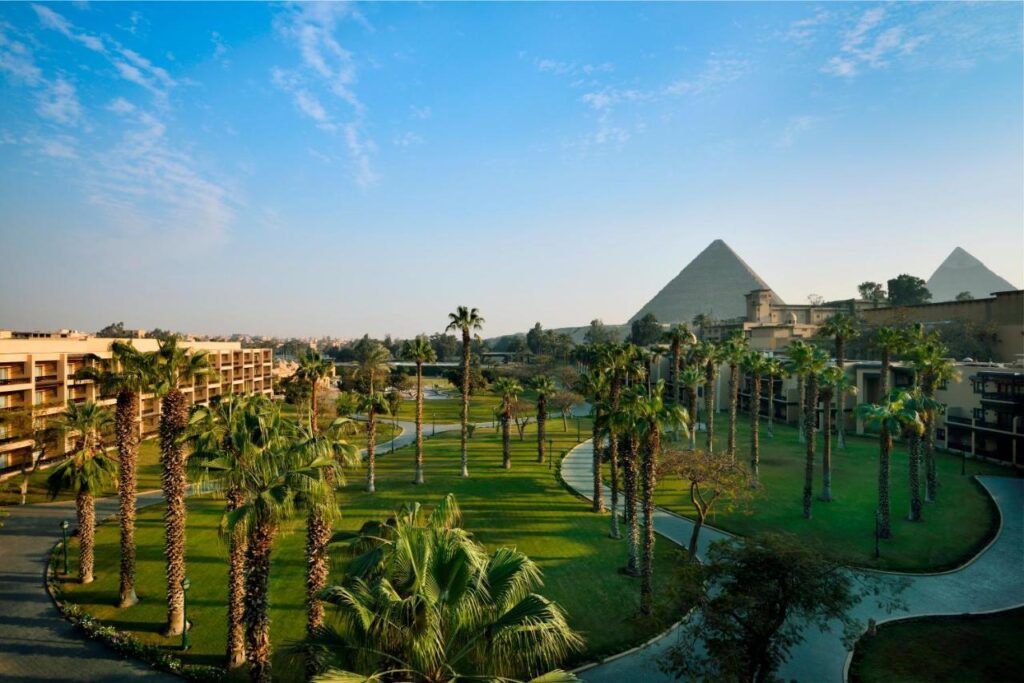
No hotel on the entire planet can claim a more extraordinary setting, right next to the Giza pyramids, with many rooms looking out onto the timeless stone monuments.
Originally built as a royal hunting lodge for the Egyptian khedive Ismail, it was converted into a hotel by an English couple and named after the pharaoh who founded the First Dynasty (Menes).
Opened in 1886, Mena House later added Egypt's first hotel swimming pool and a golf course.
Beyond numerous British royals, the hotel has hosted many celebrities over the years, from Sherlock Holmes author Arthur Conan Doyle to Charlie Chaplin and Frank Sinatra.
Conveniently placed for visits to the Giza pyramids and the new Grand Egyptian Museum, Mena House underwent a major renovation after Marriott took over its management in 2015.
Winter Palace, Luxor
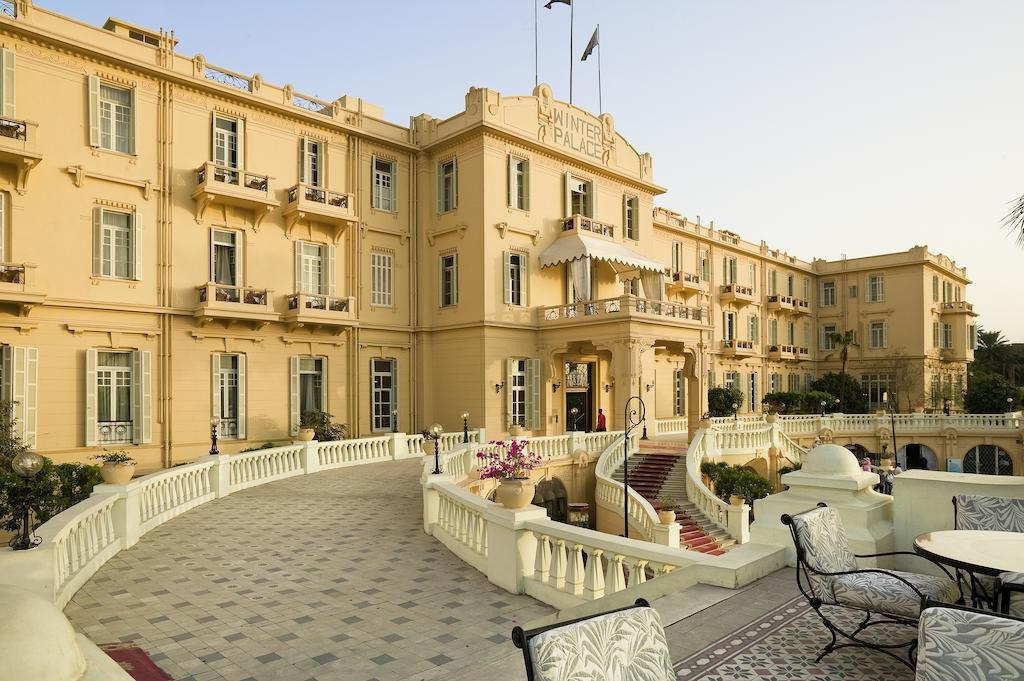
Set on the east bank of the Nile along the Corniche, the Winter Palace is known as the place where Agatha Christie wrote "Death on the Nile" in the late 1930s, and where the world learned of the discovery of King Tut's tomb in 1922.
Designed and styled to evoke a French or Italian palace of the early 20th century, the hotel has kept its regal aura: grand corridors and spacious lounges, lush tropical gardens and French restaurants.
The Winter Palace is a few minutes' walk from Luxor Temple and the Luxor Museum, and makes an excellent base for visiting Karnak Temple and the Valley of the Kings.
Cecil Hotel, Alexandria
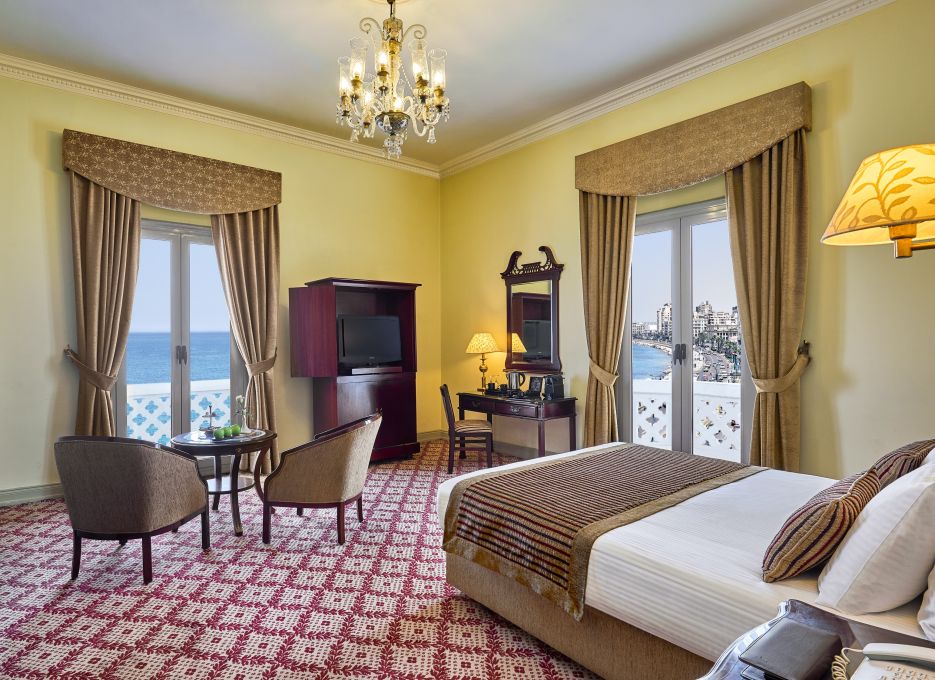
By the time writer Lawrence Durrell published "The Alexandria Quartet" in the 1950s, the Cecil was already the grande dame of the city's waterfront.
But those classic tales of romance and soul-searching on the wistful Mediterranean shore brought the hotel even greater fame.
Opened in 1929 by a French-Egyptian Jewish family, the Cecil became a place where singer Josephine Baker, sculptor Henry Moore and writer W. Somerset Maugham stayed during their visits to Alexandria.
During World War II, the British secret service coordinated anti-Nazi espionage from one of the Cecil's rooms.
The hotel's plush Monty Bar is named after British Field Marshal Bernard "Monty" Montgomery, who was also a guest here during the war.
Since 2014, the Cecil has been managed and restored by the luxury Steigenberger Hotels & Resorts group from Germany.
Windsor Hotel, Cairo
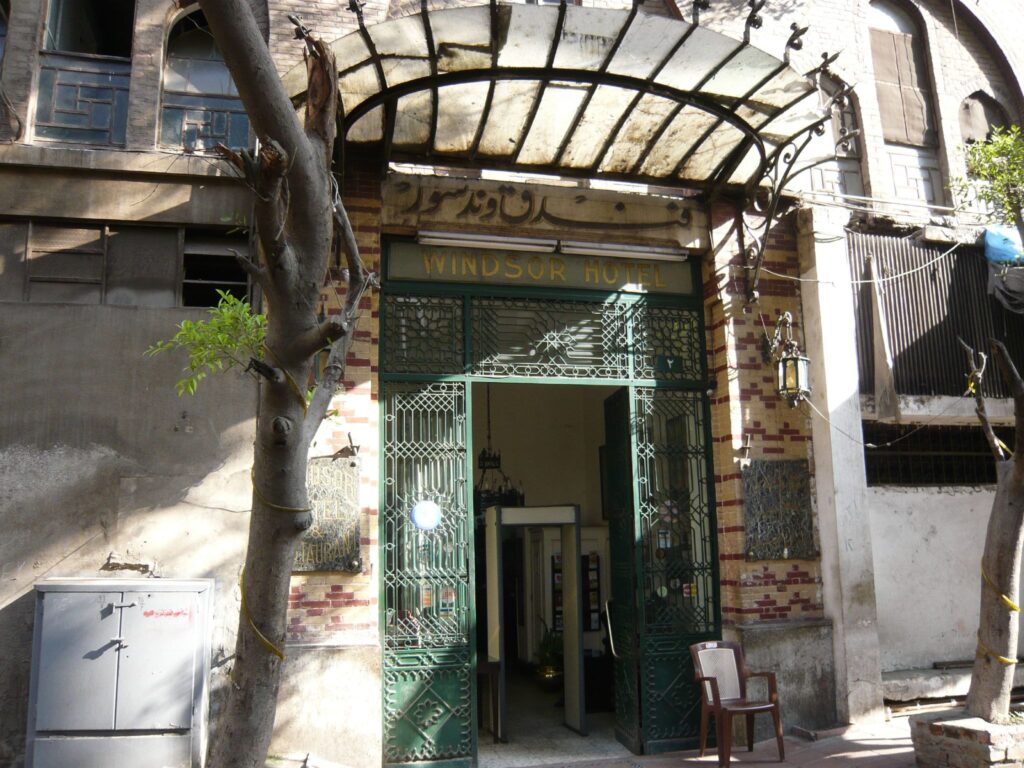
Rather than starting life as a place for people to eat and sleep, the Windsor was originally built in 1893 as a Turkish bath for Egypt's royal family.
The six-story building in the heart of old Cairo later served as a British army officers' club before being converted into a hotel.
"It's a time capsule," writes Andrew Humphreys. "Not just of Cairo, but of a very particular vanished world of steamer trunks, Baedekers and gin-and-tonic sunsets."
That is especially true of the Windsor's famous Barrel Bar. The reception desk looks like something out of a 1930s film, and the rooftop terrace is a sunny refuge from the noise and bustle of central Cairo.
The hotel is still owned and run by the family of William Doss, who bought it in 1962.
Over the years, the Windsor has served as an atmospheric backdrop for a number of films and television shows, including "Legend of the Lost Tomb" (1997) and "Around the World in 80 Days with Michael Palin" (1989).
Auberge Fayoum
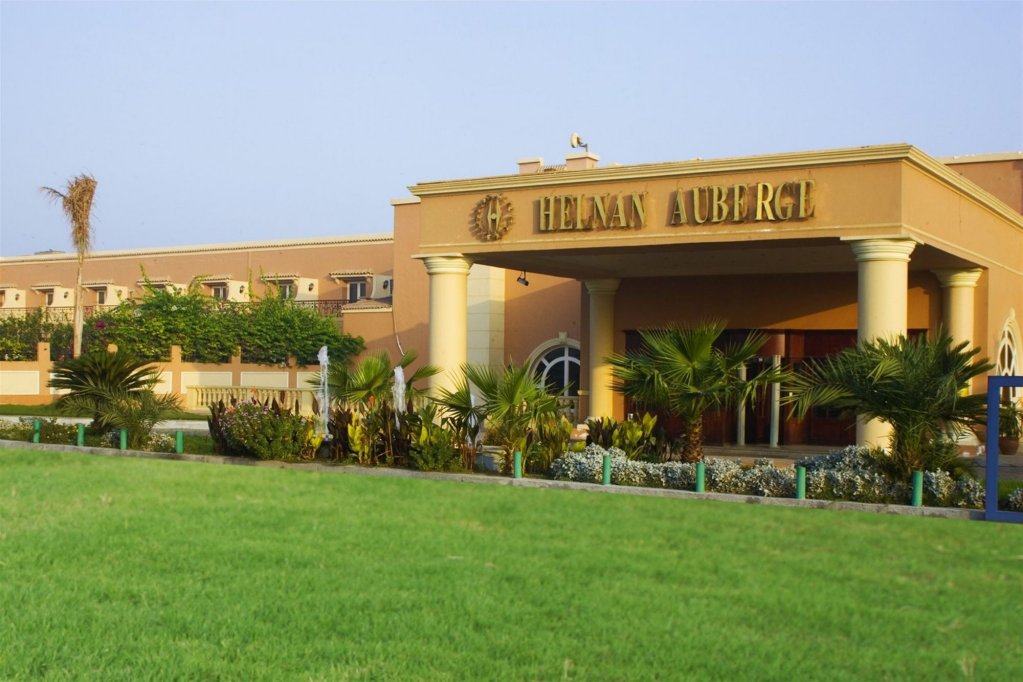
In the Fayoum Oasis, some 100 kilometers south of Cairo on the western edge of the Nile Valley, the lush greenery of this historic resort hotel spreads out along the water.
Opened in 1937 as a hunting lodge and lakeside retreat for Egypt's King Farouk, this sprawling waterfront complex became a filming location for many of the country's early black-and-white films, as well as a stage for global diplomacy.
Most notably, in 1945 it hosted a meeting between British Prime Minister Winston Churchill and Saudi Arabia's monarch Abdulaziz ibn Saud that helped lay the groundwork for the postwar order in the Middle East.
The Auberge Fayoum, with its full-service spa and lotus-flower-shaped lakeside pool, has been renovated in recent years by the Danish-Egyptian company Helnan International Hotels.
Old Cataract Hotel, Aswan
If there is any establishment that can rival Mena House and the Winter Palace for the title of Egypt's most romantic hotel, it is the Old Cataract in Aswan.
Perched on rocky cliffs above the Nile, the rust-colored building looks out over Elephantine Island and the constant stream of felucca sailboats gliding up and down the river, best watched while sipping cocktails or afternoon tea on the riverside terrace.
A pastiche of Middle Eastern and North African styles, the Old Cataract shows off Moorish arches, Persian carpets, mashrabiya windows, Nubian massages in a lavish spa and an indoor pool that once captivated an ancient Egyptian queen.
The Old Cataract has hosted plenty of modern royalty, from Princess Diana to Queen Noor of Jordan.
In addition to its many services and amenities, the hotel offers limousine excursions to Abu Simbel, the Temple of Philae or even down the Nile to Luxor.
Villa Belle Epoque, Cairo
Although the Villa Belle Epoque bills itself as Egypt's first boutique hotel, its architectural roots reach back to the 1920s, when it was built as a private residence in the fashionable new suburb of Maadi.
About a half-hour drive from Tahrir Square by car, or 40 minutes by metro, the villa has an outdoor pool and sun terraces in a garden of fruit trees. The cafes, coffeehouses and boutiques of chic Road 9 in Maadi are just a short walk away.
You can also dine at the Acacia restaurant, which serves fusion dishes and modern Middle Eastern classics.
Windsor Palace, Alexandria
The Windsor Palace, located not far from the Cecil Hotel, is another early 20th-century property devoted to British colonial influence in Egypt on either side of the First World War.
Many of its grand public rooms, adorned with bright chandeliers and hand-painted ceilings, still bear the names of British monarchs.
And the setting of the high-ceilinged guest rooms will undeniably carry you back to Edwardian times.
The Windsor Palace features the open-air Blue Harbor Roof Cafe, which offers panoramic views over the bay, the Citadel of Qaitbay and the Mediterranean Sea.
Cairo Palace, Cairo
Although it is now the Marriott Cairo Hotel & Omar Khayyam Casino, longtime Egyptians still fondly call this elegant riverside hotel by its old name, the Cairo Palace.
It really was once a royal palace, opened in 1869 on Zamalek Island by order of the khedive Ismail as a guesthouse for the distinguished visitors attending the opening of the Suez Canal that same year.
Designed by German and Austrian architects, the hotel offers an eclectic mix of Moorish arches and French Empire-style furniture.
Over the years, the hotel has hosted countless royal events, from birthdays to wedding banquets.
That continued until the early 1960s, when the property was seized by President Nasser's government and converted into a hotel.
Since the 1970s, Marriott Corp. has run the palace with flair, restoring many of its rooms to their original splendor.