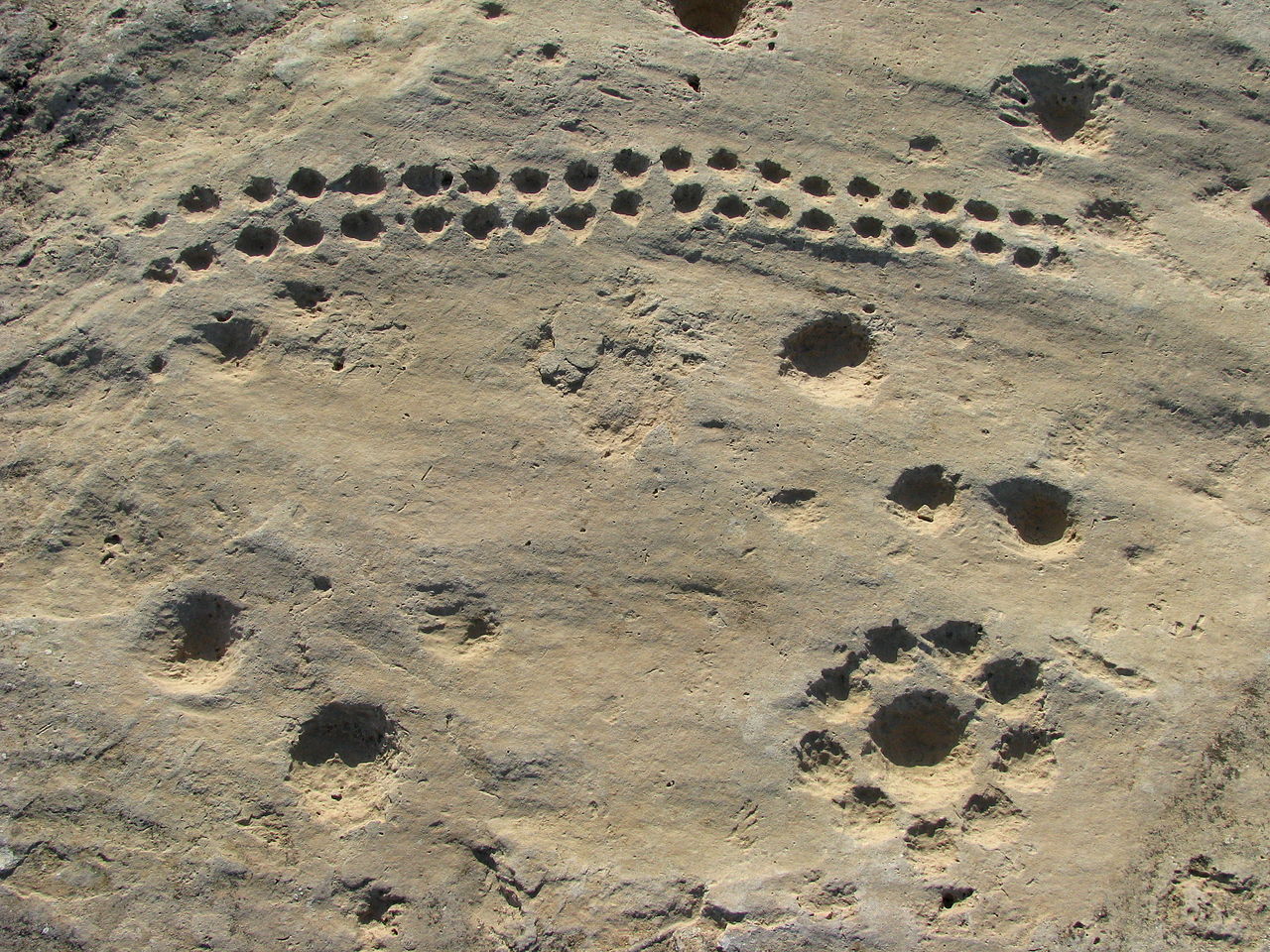


Some emerge from the soft rock like reptiles basking in the sun. Others are puzzling hollows that resemble an ancient board game played all over the world. And a few are downright baffling.
In a windswept desert corner along the northeastern coast of Qatar, among the sand dunes of a barren wilderness, lies Al Jassasiya, the largest and most important rock art site in the Gulf country.
Here, people many centuries ago used a series of low-lying limestone outcrops as a canvas on which they carved the symbols, motifs and objects they observed in the world around them.
Partner links: booking through them supports the blog at no extra cost to you.
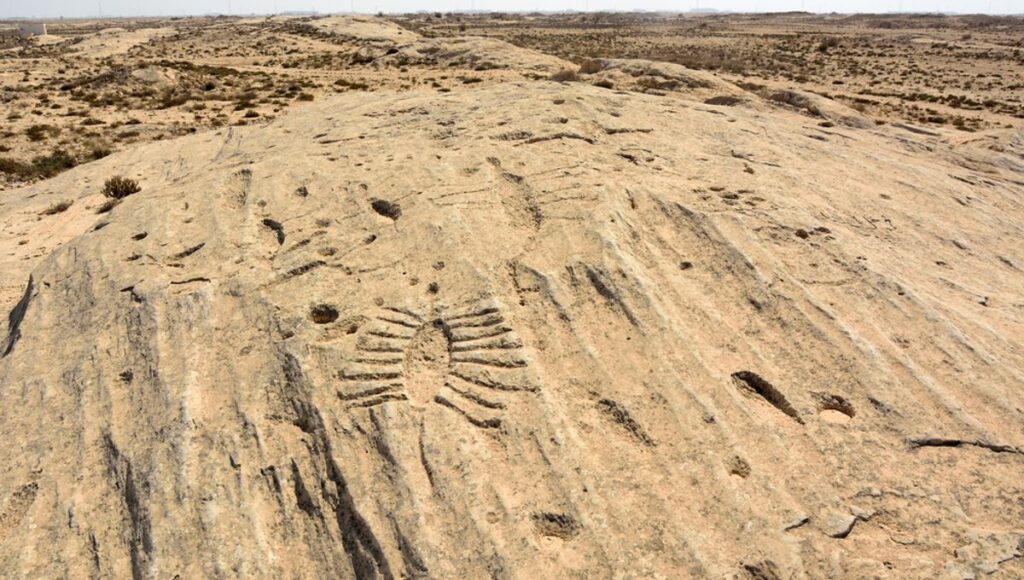
In all, archaeologists have identified around 900 rock carvings, or "petroglyphs," at Al Jassasiya. Most are enigmatic cup-like marks laid out in various patterns, including rows and rosettes, along with striking depictions of sailing ships, usually seen from above but also drawn in linear profile, among other symbols and signs.
"Although rock carvings are widespread across the Arabian Peninsula, some of those at Al Jassasiya are unique and are not found anywhere else," says Ferhan Sakal, head of excavation and site management at Qatar Museums, speaking about the petroglyphs of ships seen from a bird's-eye view.
"These carvings show a high degree of creativity and keen observation [on the part] of the artists who made them," he said. "And also [abstract] thinking, because they could not have seen a dhow (a traditional ship) from above."
Cup Marks
There are around 12 remarkable petroglyph sites in Qatar, located mainly along the country's coast, though some can even be seen right in the center of Doha, in the Al Bidda Park area above the Corniche, a popular waterfront promenade.
Al Jassasiya, set about an hour's drive north of Qatar's ultramodern capital and near the old pearling port of Al Huwaila, was discovered in 1957. Over six weeks in late 1973 and early 1974, a Danish team led by archaeologist Holger Kapel and his son Hans Kapel carried out a survey, carefully cataloguing the entire site in photographs and drawings.
Of all the single figures and compositions documented, more than a third are cup marks in a variety of configurations, shapes and sizes.
The most striking design features two parallel rows of seven holes, leading some to believe they were used to play mancala, a board game popular in many parts of the world since ancient times, in which two players drop odd and even numbers of small stones into the hollows.
Others dispute this theory, pointing out that some of the holes at Al Jassasiya are too small to hold stones, while others sit on slopes, an impractical choice that would cause the pieces to roll out.
Other suggestions include the use of the cup formations for divination, for sorting and storing pearls, or as a system for tracking time and tides.
Game Theory
So what were they really for, and what do they mean?
"That's a very hard question to answer," admitted Sakal, who is also not a fan of the board game theory. "We have no direct clues about the motifs used at Al Jassasiya," he said.
"In my opinion, they may have had a ritual meaning and a function that is very old, so old it cannot be explained ethnographically."
But just how old? "We really don't know," Sakal admitted, explaining that petroglyphs, and rock art in general, are very difficult to date.
"There are wild hypotheses about the age, ranging from the Neolithic to the late Islamic period," he added. "Personally, I think that not all of the rock carvings were made at the same time."
Decades ago, one scientific study of nine different petroglyphs at Al Jassasiya found no evidence that they were more than a few hundred years old, but the researchers concluded that further study was needed, including the development of new methods specific to carvings in limestone.
While experts cannot say for certain when the Al Jassasiya petroglyphs were created, or by whom, they all agree that the most intriguing, and unusual, are the depictions of boats.
These works provide valuable insight into the types of vessels used in the thriving fishing and pearling industries (which for centuries were the backbone of Qatar's economy), as well as their various components.
Most of the boats seen from above are typically shaped like a fish, with pointed sterns and rows of oars carved with a pointed metal tool.
They contain several details, such as intersecting ribs and holes that likely mark the placement of masts and stem posts.
In some cases, a long line running from the stern depicts a rope ending in either a traditional Arabian anchor (a triangular stone anchor with two holes) or a European one (a metal anchor with a long shank and two curved arms, first used in the region around seven centuries ago).
A Journey to the Afterlife
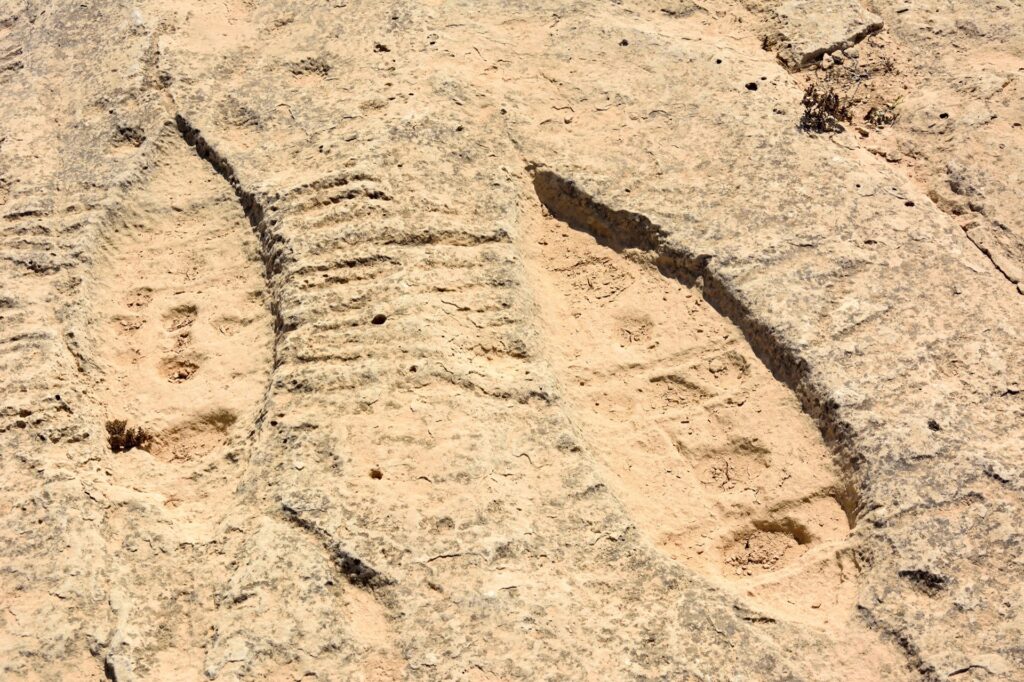
"On some of the boats the oars are not arranged in parallel, as they should be when rowing, but point in different directions," write Frances Gillespie and Faisal Abdulla Al-Naimi in the book "Hidden in the Sands: Uncovering Qatar's Past."
"This is how they looked when the boats were anchored on the pearl banks, with the oars left in place so the divers could cling to them and rest each time they surfaced."
Experts say they can only guess why Al Jassasiya has such a high concentration of ship carvings compared with other coastal petroglyph sites in Qatar.
"Ships played an important role in the beliefs of ancient peoples, who saw them as a symbolic means of passing from this world to the next," note Gillespie and Al-Naimi.
Both the Babylonians and the ancient Egyptians believed the dead traveled to the afterlife by ship. Greek myths told of the ferryman Charon, who carried the souls of the dead across the river Styx to the underworld in prehistoric times.
Whatever the reason, visitors should remember to bring water, wear a hat and apply sunscreen as they wander among the carvings and ponder their meaning.
There are no shaded areas within the fenced-off site, so the best time to visit is at dawn and sunset. Al Jassasiya lies south of a popular beach, so a trip there can easily be combined with some time by the sea.