

Shypit Waterfall is a cascade about 14 metres high on the slopes of the Borzhava meadows, near the village of Pylypets in Zakarpattia. The fastest way to reach it: by train to Volovets station, then by minibus or taxi to Pylypets, and from there a couple of kilometres uphill to the stream itself. The best time to come is spring, in May or early June, when the snow is melting and the water runs at full force.
Below are the specifics: the exact logistics from the station, how much the entrance and the chairlift cost, in which months the flow is genuinely powerful, and when you will see a thin trickle and feel let down.
Where exactly is Shypit Waterfall located?
Administratively this is the Zakarpattia region, the village of Pylypets (after the 2020 reform, Khust district; in older sources you will come across Mizhhirya). The waterfall lies at the foot of Mount Hymba, part of the Borzhava meadow massif. The stream runs down as a mountain brook from the high slopes and breaks against the rocks in several steps, and locals speak of five cascades.
The name speaks for itself. The water does not roar like the large lowland rapids, but rather hisses and whispers among the stones in the forest (Shypit comes from the word for hissing). This is not the tallest or the most powerful waterfall in Ukraine, but one of the easiest to visit: you can get here without gear or mountaineering skills, and doing it with children is realistic too.
How tall is Shypit Waterfall and why is the figure misleading?
The stated height of Shypit Waterfall is about 14 metres. But the number is misleading here, because this is not a single sheer wall of water but a series of cascades scattered in steps down the slope. So visually it looks more like a turbulent mountain brook running down a wooded slope than a classic vertical curtain.
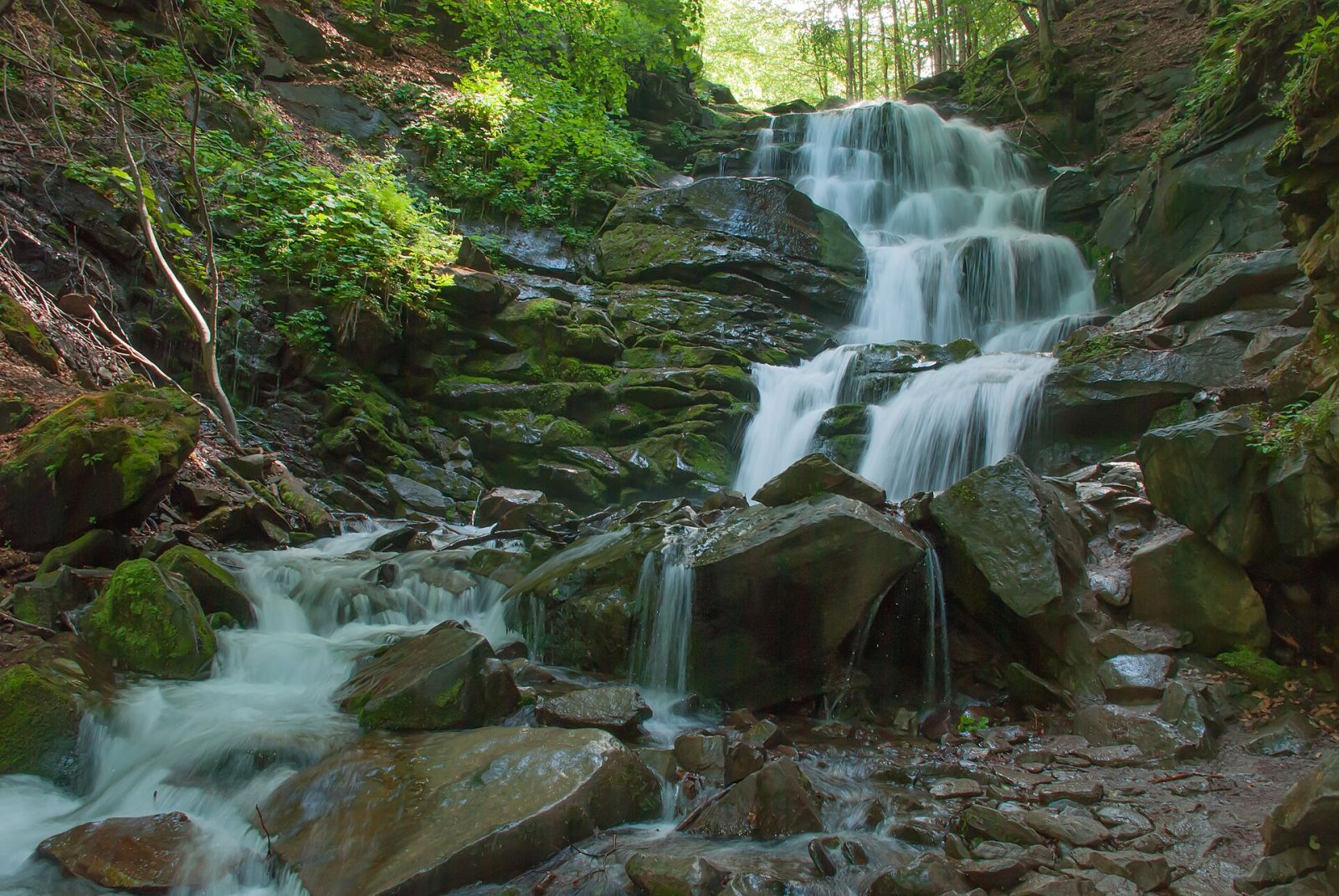
Because of this, the impression Shypit makes depends heavily on the season. At high water the cascades merge into one continuous, powerful flow. In a drought a thin thread of water runs between the stones, and those same 14 metres work against you: stretched out along the slope, they fail to impress.
How do you get to Shypit Waterfall?
The anchor point for every route is Volovets railway station. Trains on the Lviv, Mukachevo and Kyiv, Chop lines pass through it, so you can get here from most large cities without switching to a car across the whole of the Carpathians. From Volovets to Pylypets is roughly 13 kilometres as the crow flies and about 16 by road.
| From | How | Approximate |
|---|---|---|
| Kyiv, Lviv, other cities | Train to Volovets station | By the Ukrzaliznytsia timetable |
| Volovets, Pylypets | Scheduled bus or minibus Volovets, Mizhhirya; taxi | 13 direct, ~16 by road |
| By your own car | Road to Mizhhirya, turn off to Pylypets | paved road to the village |
| Pylypets, waterfall | On foot or by car to the parking, then on foot | a few kilometres |
From the village to the stream itself
In Pylypets people usually leave the car in the parking area beside the market zone with souvenirs and food. From there a simple path along the brook leads to the waterfall, and it is easy to walk in a few minutes. The route is gentle, no special footwear is needed, though after rain the stones near the water can be slippery, so trainers with a decent tread are worth having.
Entry to the waterfall grounds is charged, but the sum is symbolic. Over different years sources quote anywhere from 10 to a few dozen hryvnias per person. This is a case where there is no point in memorising the exact figure in advance: check the current rate on site, because it changes every season.
When should you go to catch Shypit at high water?
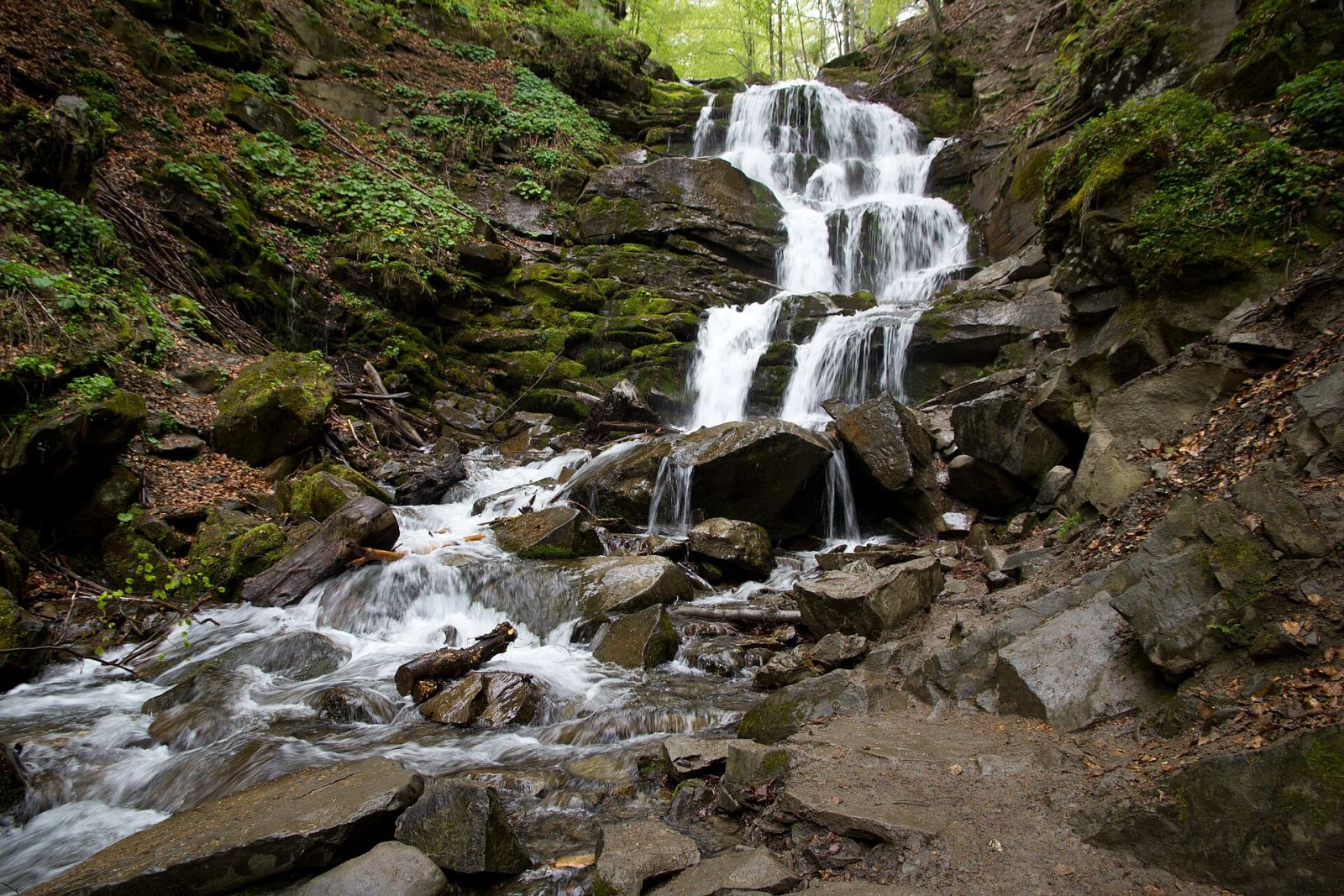
This is the key question of the trip, and the answer does not match the logic of a beach tourist. The most beautiful Shypit is not in summer, when it is warm, but in spring, when the snow melts on the meadows and feeds the flow. The second good window is autumn during the rainy season.
| Season | The water | Who it suits |
|---|---|---|
| Spring (May, June) | Highest water, snow melting | Those coming for the waterfall itself |
| Summer | The flow weakens, often a thin trickle | Those who care more about the mountains and the chairlift |
| Autumn | High water again in the rain | Lovers of the colourful forest without crowds |
| Winter | Partly freezes, never fully | Skiers, for whom the waterfall is a bonus |
An honest downside: at the height of summer, when Pylypets is at its busiest, the waterfall looks at its most modest. If you have seen photos of a mighty white flow online and are heading for it in August, be ready for the gap between the picture and reality. That is why May wins over July here, despite the worse weather for tanning.
What to do nearby, besides the waterfall?
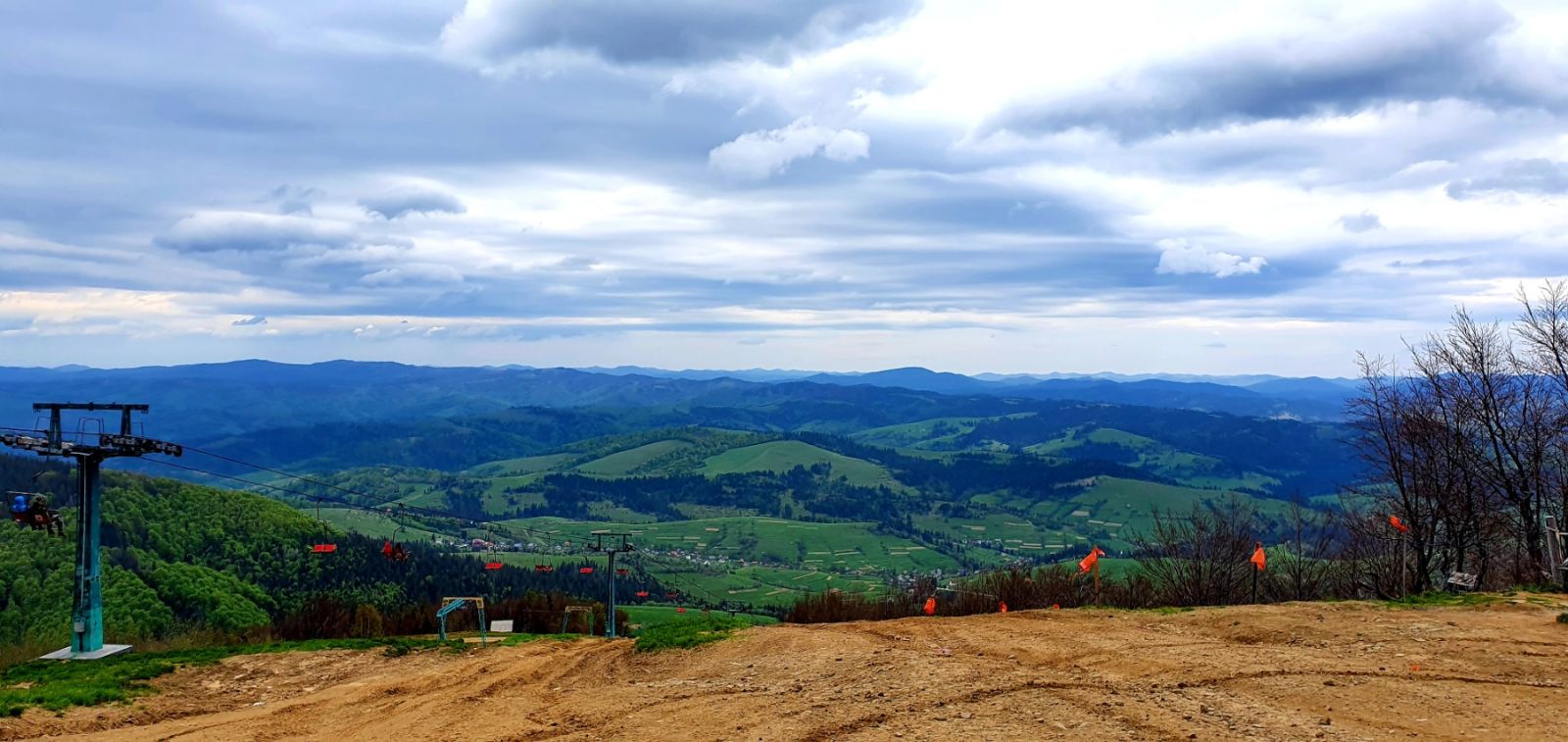
Shypit itself is more of a half day than a full day, so it makes sense to pair it with Mount Hymba. A chairlift, one of the longer ones in Zakarpattia, takes you to the summit, and the ride up takes about a quarter of an hour. From the top the Borzhava meadows open up, and in winter skiers ride here, because Pylypets is a ski resort at the same time.
Prices for the chairlift, like the waterfall entrance, are quoted differently over the years, roughly a few dozen hryvnias for a one-way ride and a little more for a return. Before your trip it is best to confirm the chairlift price on site or at the hotels in Pylypets, because the rates are updated every season.
The village itself is full of guesthouses and small hotels, so Pylypets is convenient to use as a base for two or three nights: one day for the waterfall and Hymba, another for longer routes across the meadows.
What should you know about the Shypit festival?
A long-standing tradition of informal gatherings is tied to the waterfall. Back in the 1990s travellers, musicians and bards gathered near Shypit, and these meetings grew into a summer open-air festival. It is classically tied to July, and to Kupala Night in particular, when performances with local colour are held by the water.
A caveat is needed here. The date and format of the festival differ every year, and the crowd itself has a specific reputation for being free-spirited and noisy. If you are coming for the quiet of the mountains and a clean shot without a crowd, it is better to avoid the festival days. But if you want exactly that gathering atmosphere, check the exact dates before setting off, because there is no official fixed calendar here.
Who might not like Shypit?
Honestly about the downsides. For those expecting Grand Canyon scale it will be too little: 14 metres in cascades is intimate beauty, not a spectacle that takes your breath away. Those who come solely in summer and only for the water also risk disappointment because of the shallow flow. And those who dislike organised spots should know about the market zone with souvenirs and grilled meat by the entrance; wild solitude is not what this place is about.
But if you treat Shypit as a pleasant part of a wider route through Zakarpattia, rather than as the sole goal, it almost always delivers. Especially in combination with the chairlift up Hymba and a night at a guesthouse.
Planning your first trip, pick May and set aside a whole day for Pylypets with the chairlift. Been here before and want a fresh angle, come in autumn in the rain, when the forest blazes with colour, there are few people, and the water runs full once again.