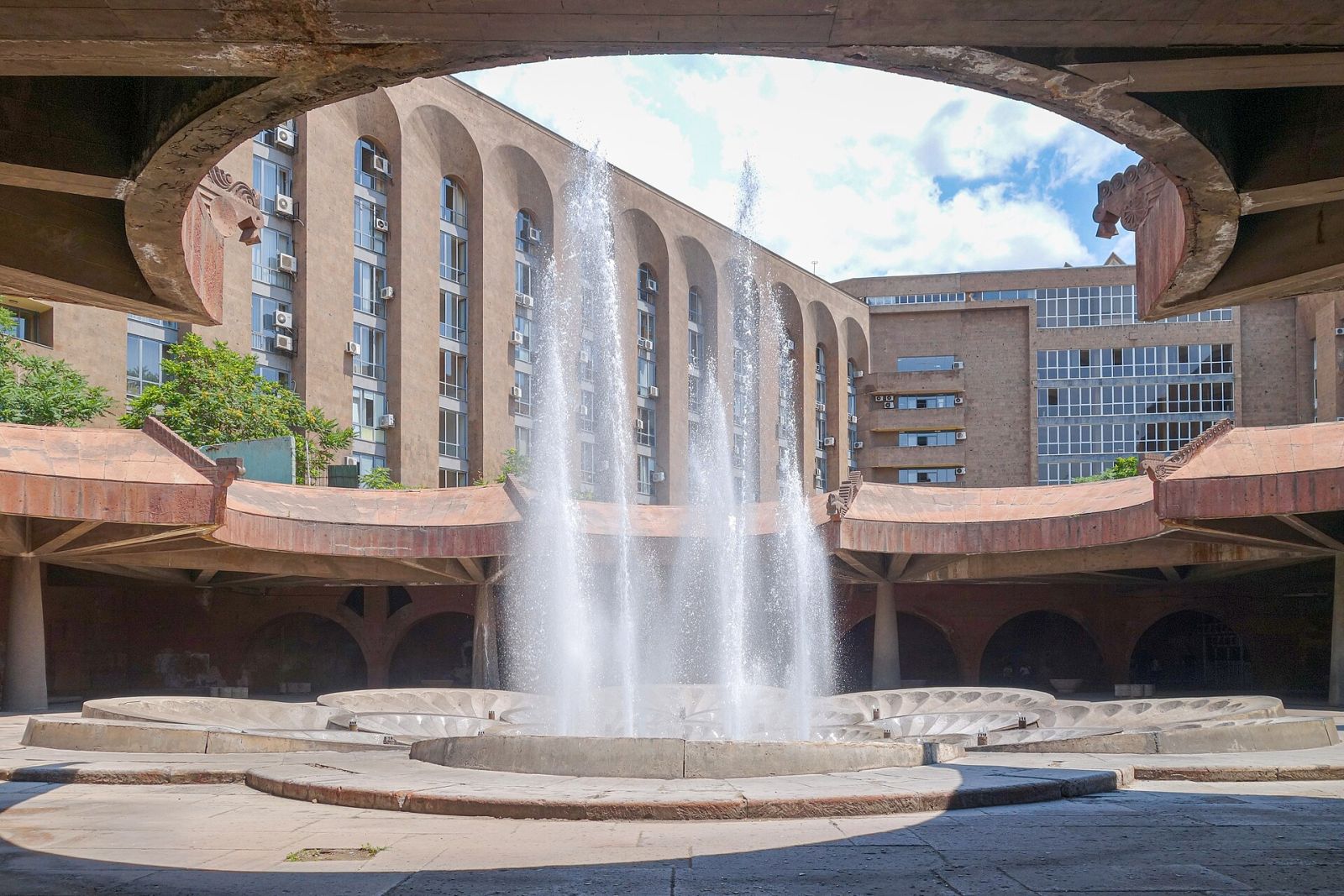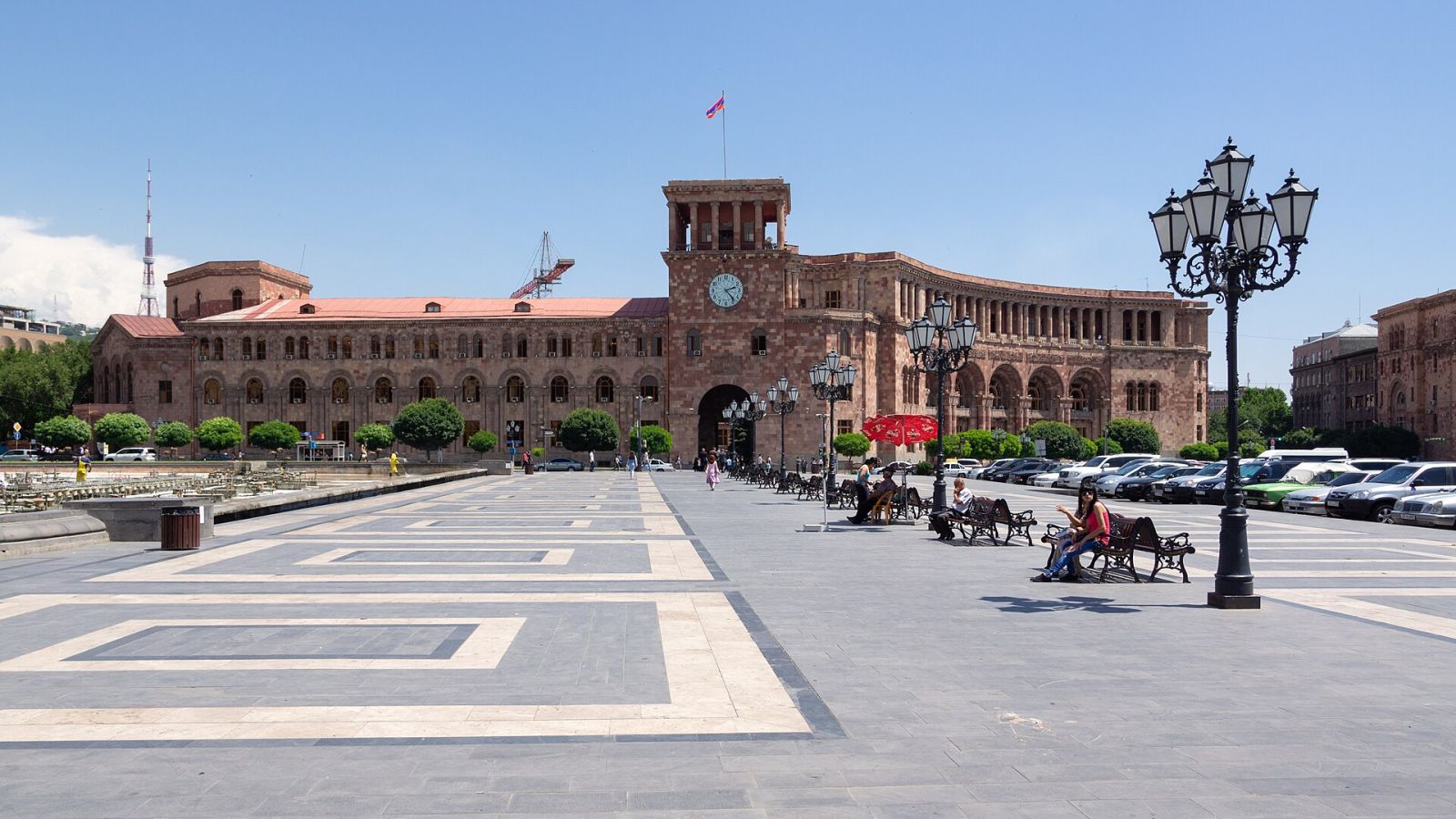


The essentials of Armenia travel fit into three facts: most visitors, including Ukrainians, EU and US citizens, enter visa-free for up to 180 days a year, the local currency is the dram, and the country is reached either by a connecting flight or overland through Georgia.
How to get there?
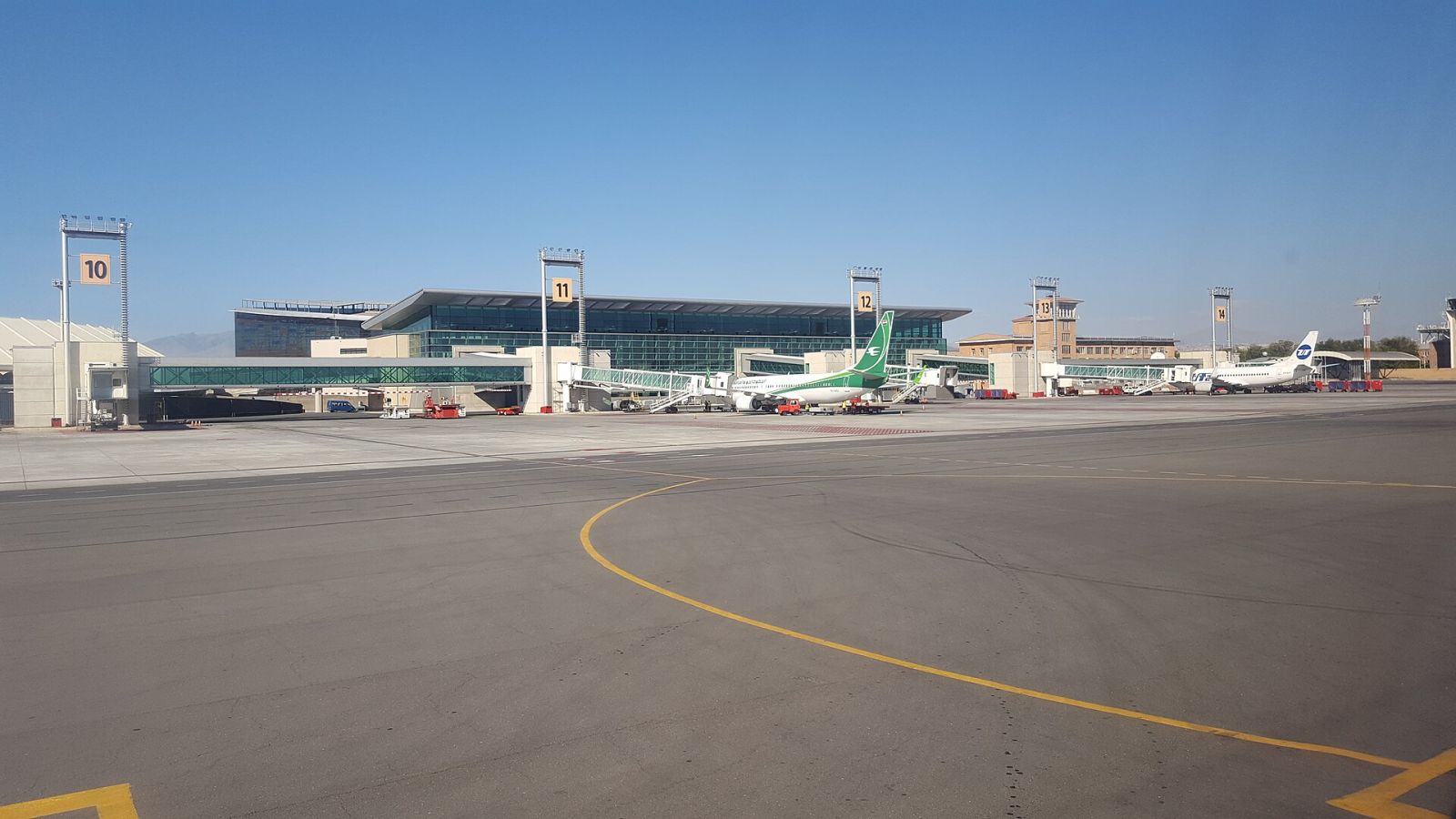
Yerevan's Zvartnots airport has direct connections across Europe and the Middle East, with both legacy carriers and low-cost flights from hubs like Warsaw, Vienna, Chisinau and Bucharest. For travelers starting in Ukraine, where the airspace remains closed, the trip means a bus or train to a neighboring country first, which stretches the journey to a day or more. The overland alternative runs through Georgia: get to Tbilisi, then take a marshrutka minibus, a bus or the overnight Tbilisi-Yerevan train, 5-9 hours depending on the option. The Georgia-Armenia border crossing is straightforward with a passport.
Zvartnots sits 12 km from central Yerevan. A ride-hailing taxi costs a few dollars and is the easiest choice: an airport bus exists, but with luggage at night it is a questionable pleasure.
Visas and documents
Citizens of Ukraine, the EU, the UK, the US and many other countries need no visa for stays up to 180 days per year on an ordinary passport. Rules get adjusted occasionally, so verify the current terms on the Armenian MFA website before the trip. Nobody asks for insurance at the border, but getting a policy is smart: healthcare for foreigners is paid, and mountain roads and activities add risk.
Money: the dram, cash and exchange
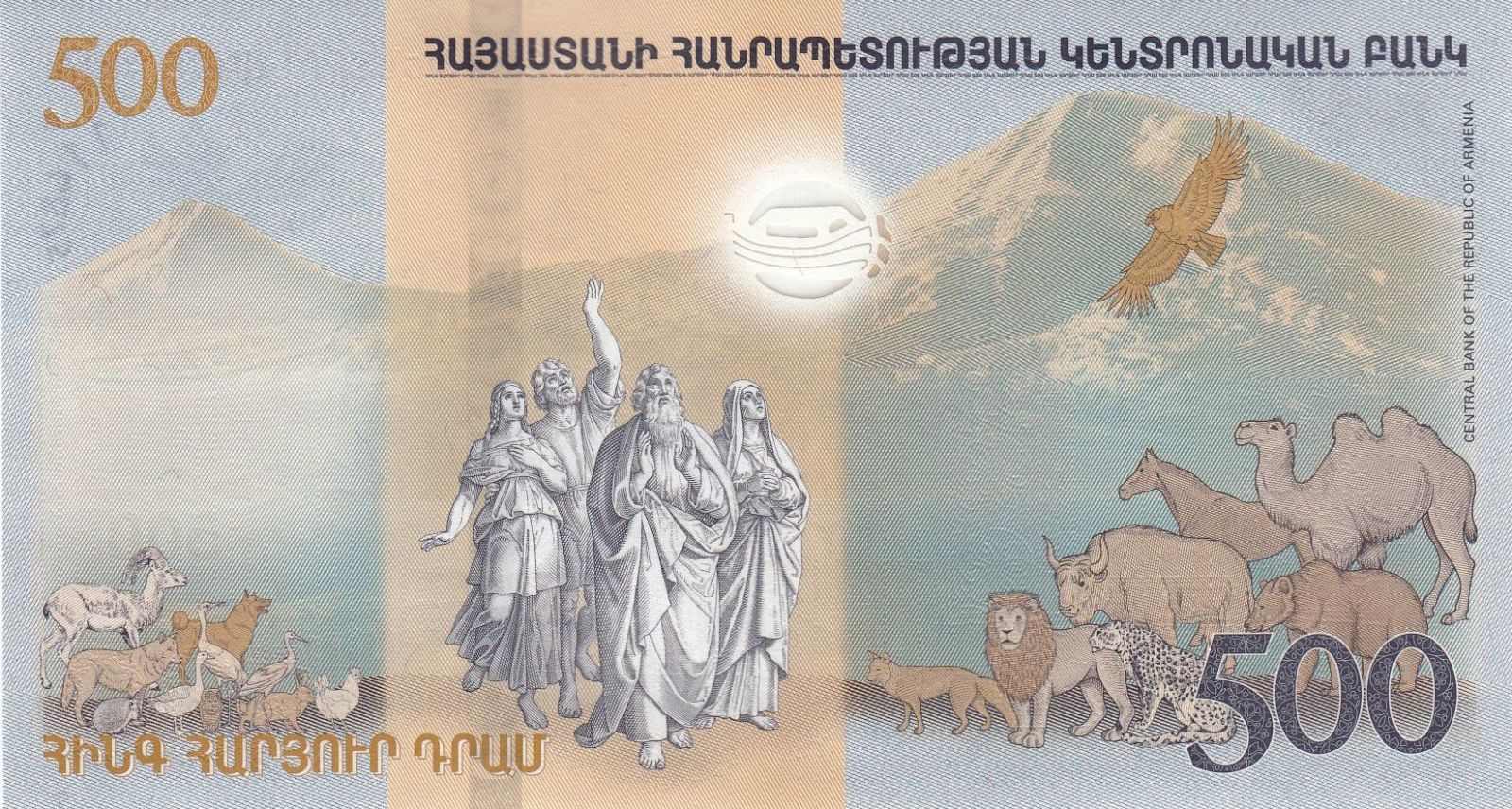
The national currency is the Armenian dram (AMD). The rate floats, one dollar buys roughly four hundred drams, check the exact figure before exchanging. All payments happen in drams, dollars and euros are not accepted at the till.
- Exchange: Yerevan's exchange offices offer the best rates, they are everywhere and stay open late. Dollars and euros change without problems.
- Cards: accepted almost everywhere in Yerevan, Visa and Mastercard both work. Step outside the capital, into markets or roadside cafes, and you enter a cash world. Simple rule: card in the city, cash for the road.
- ATMs: present in every town, fees depend on your bank, and frequent small withdrawals eat more than one larger one.
Budget benchmarks: a frugal Yerevan day with a hostel, canteen meals and transport fits into $30-40, a comfortable one with a restaurant dinner and a tour runs $70-100.
Transport: marshrutkas, taxis and rental cars
Intercity public transport rests on marshrutkas, shared minibuses. They are cheap and frequent on popular routes, Sevan, Dilijan, Gyumri, but timetables are theoretical, departures often happen «when full», and comfort is spartan. They fan out across the country from Yerevan's bus stations, and most tickets cost a few dollars.
The main hack for getting around is ride-hailing apps. Two dominate: GG, the homegrown Armenian service, and Yandex Go, which is ubiquitous here. To be candid: travelers who avoid Russian services on principle should install GG, it fully covers Yerevan and the bigger cities and handles intercity rides too. A trip across central Yerevan costs $1-3, and there is no need to haggle with meterless street cabs, just order through the app.
A rental car is the most convenient way to see the country: international and local agencies operate at the airport and in town, from roughly $30-40 per day. Main roads are decent, but switchbacks, fog on the passes and livestock on the highway call for an unhurried driving style. Foreign licenses, including Ukrainian ones, are accepted.
When to go, and what about the altitude?
Armenia is a country of sharp seasons, and the timing changes the whole experience.
| Season | Weather | Best for |
|---|---|---|
| May-June | +20…+28C, everything green | a first visit, hiking, Ararat photos |
| July-August | up to +38C in Yerevan, pleasant in the mountains | Sevan and Dilijan, the capital only in the morning |
| September-October | +18…+25C, dry | wine, fruit, the most stable weather |
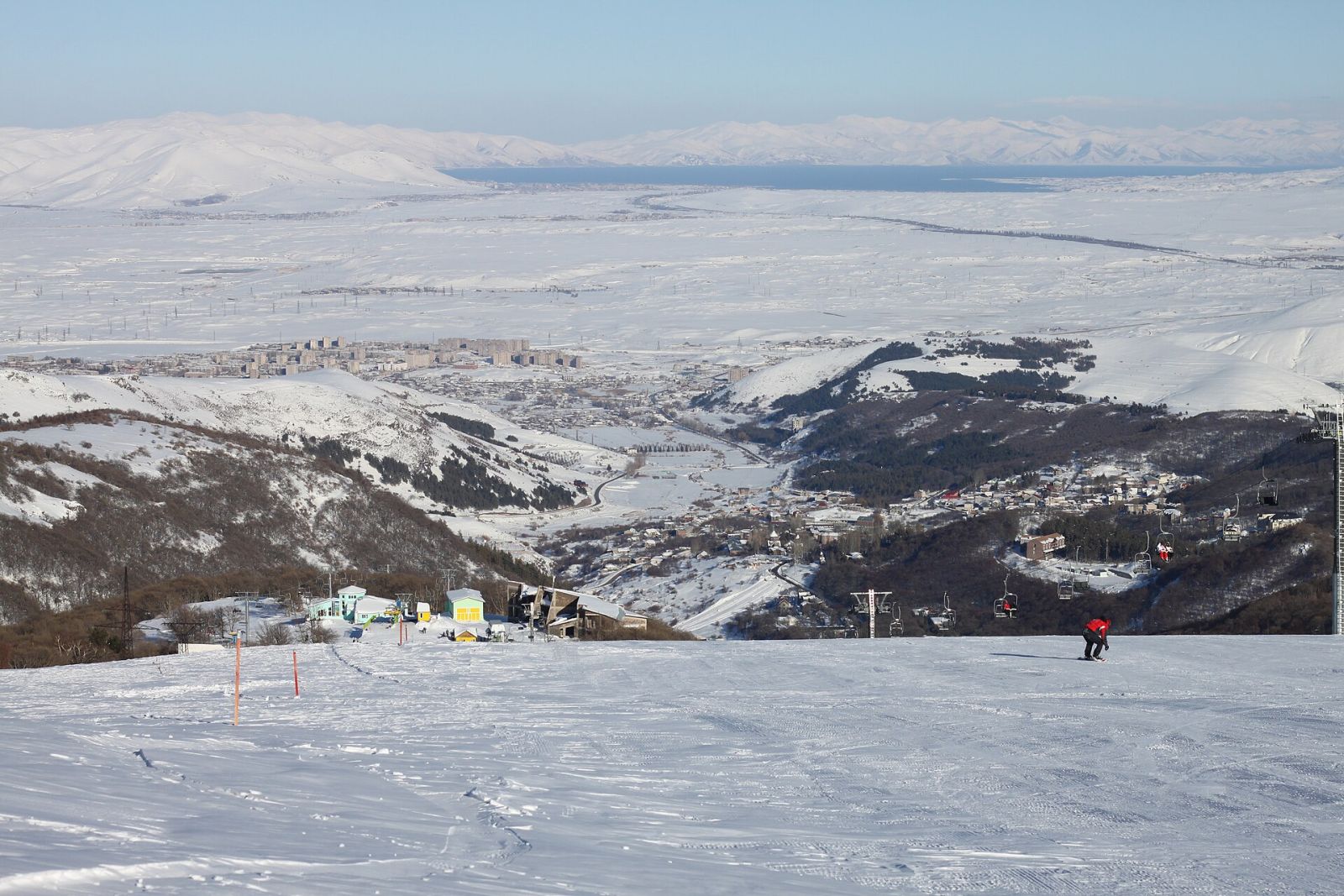
| November-March | around zero in Yerevan, snow in the mountains | skiing in Tsaghkadzor, the crispest Ararat views |
Now for the thing most guides skip: altitude. Yerevan sits at about 1,000 meters, Sevan at 1,900, Tsaghkadzor and several passes above 2,000. This is not the Himalayas and classic altitude sickness is off the table, but the first days can bring shortness of breath on stairs, faster fatigue and sun sensitivity, since UV at altitude is far more aggressive. The practical takeaway: sunscreen even under clouds, more water, less brandy on the first evening. In winter add sharp temperature swings: +10C in the midday sun, below freezing after dark, so pack layers accordingly.
How safe is it?
Everyday safety in Armenia is genuinely high: street theft and tourist scams are rare, walking Yerevan at night feels calm, and streets stay busy until late. Drivers are hot-blooded, which makes traffic the most realistic daily risk: pedestrian crossings do not always command respect here.
The border areas deserve a separate note. Because of the conflict with Azerbaijan, stretches along the eastern and southeastern border remain sensitive: closed zones are marked, military posts are in place, and tourist routes steer around them. Every stop on the classic circuit, Yerevan, Garni, Geghard, Sevan, Dilijan, Khor Virap, Tatev, Goris, lies far from the problem areas and is visited without restrictions. Check the current situation before venturing into unusual districts in the far east of the country; for a standard itinerary this is unnecessary.
Connectivity and small practicalities
- SIM card: local operators Viva, Ucom and Team sell tourist packages with tens of gigabytes for $5-10, registered against your passport, with counters right at the airport.
- Languages: Armenian is official, Russian is widely understood, English works in Yerevan among younger people and in tourist spots, less so in the countryside.
- Sockets: European standard, no adapter needed for EU plugs.
- Water: pulpulak drinking fountains dot all of Yerevan, the water is safe, no need to buy bottles.
- Tipping: restaurants often add a 10% service charge to the bill, check before adding more, nothing extra is expected.
The honest summary: Armenia is one of the easiest countries in the region for independent travel. Half a year of visa-free stay, app-based taxis for pocket change, safe streets and compact geography forgive almost any planning mistake. The only parts that need attention are flight logistics and cash for the regions, and both are solved in a single evening of preparation.