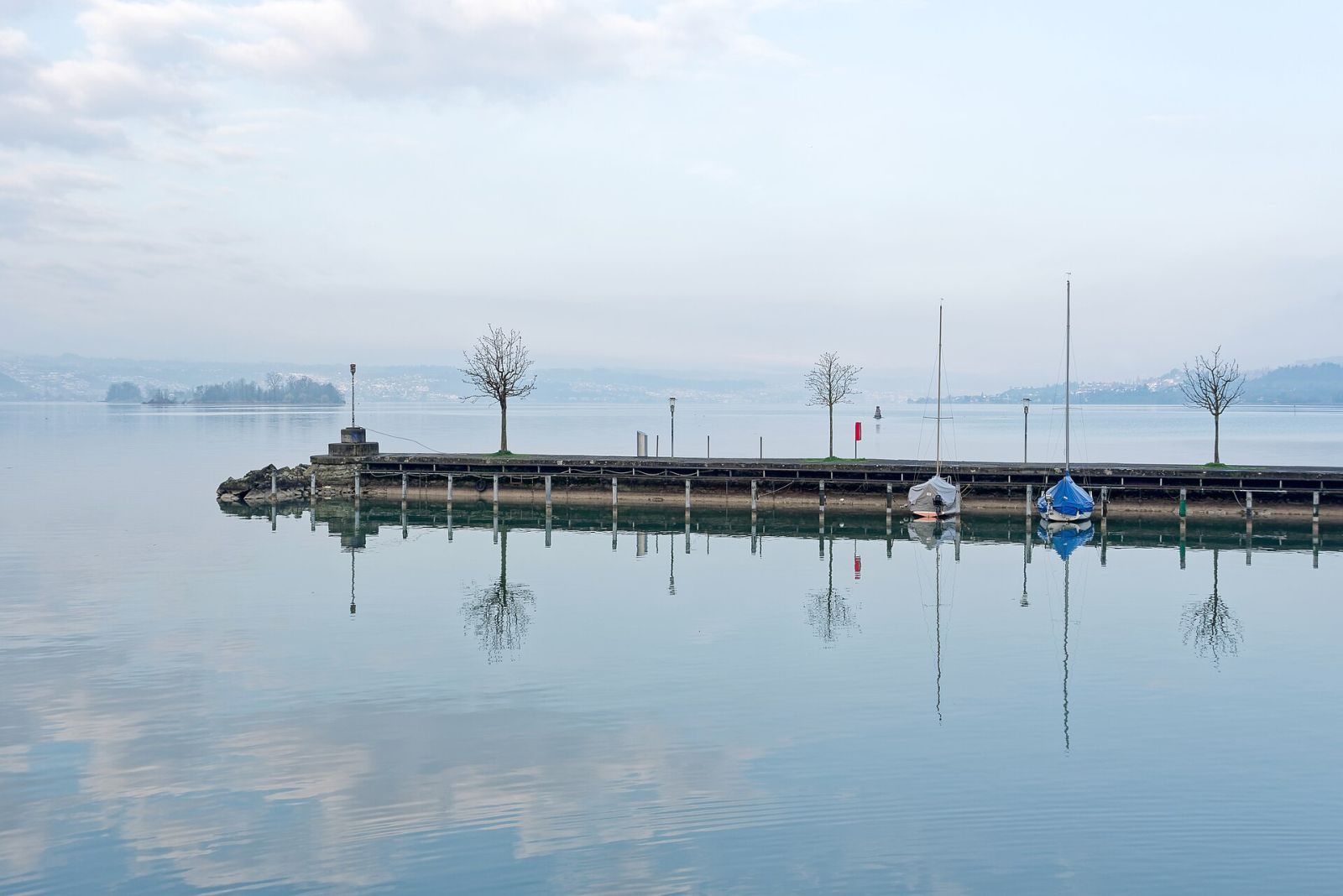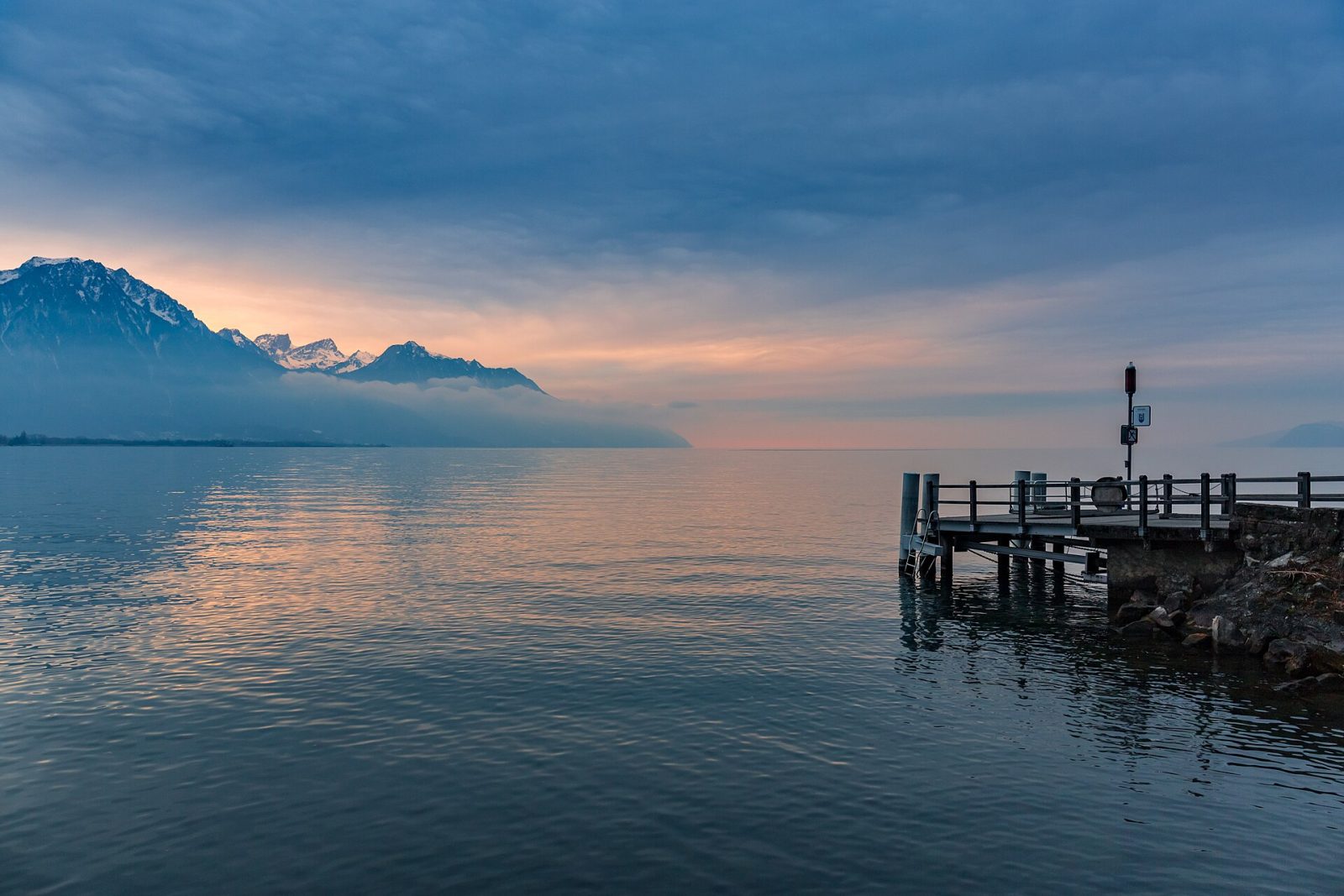


There are really only five big lakes of Switzerland worth setting aside a day, or three, for, and they sit so conveniently that half a day by train separates the far ends. The largest, Lake Geneva, curves in a huge crescent and is shared with France; the most turquoise, Thun and Brienz, look as if someone lit the water from within. What sets them apart isn't the scenery so much as the reason to go: some come for a fountain and a castle, others for a mountain over the water, others just to swim inside the city limits.
Here are the five that actually cover most of what travellers ask about. For each one I'll say where it is, what it does well, and what's wrong with it, because none of them is perfect.
Which lake to pick, and how do they differ?
If you're short on time, read the table and cut the rest right away. Each of these Swiss lakes pulls its own kind of holiday, and trying to grab all five in a weekend means spending it in a train carriage.
Partner links: booking through them supports the blog at no extra cost to you.
| Lake | Region | What makes it unique | Best for |
|---|---|---|---|
| Geneva (Léman) | Geneva, Vaud | Jet d'Eau fountain, Château de Chillon, Lavaux vineyards | Those after cities, castles and wine |
| Lucerne | Central Switzerland | Mount Pilatus, the country's historic heart | Lovers of mountains and old towns |
| Zurich | Zurich | Swimming right in the city, easy logistics | Those passing through Zurich |
| Thun and Brienz | Bern, Oberland | Turquoise water, Interlaken between them | Photographers, Alps lovers |
| Lugano | Ticino | Palms, Italian mood, warmth | Those wanting Switzerland gone south |
Geneva: a fountain, a castle and miles of vineyards
Lake Geneva, or Léman, is the largest freshwater body in Western Europe, and a full third of it belongs to France, so the opposite shore is often already another country. Its trademark is man-made: the Jet d'Eau, that jet of water firing some hundred and forty metres straight up off the Geneva waterfront. It started as a pressure valve for a hydraulic plant and became the city's symbol, visible practically from a plane.
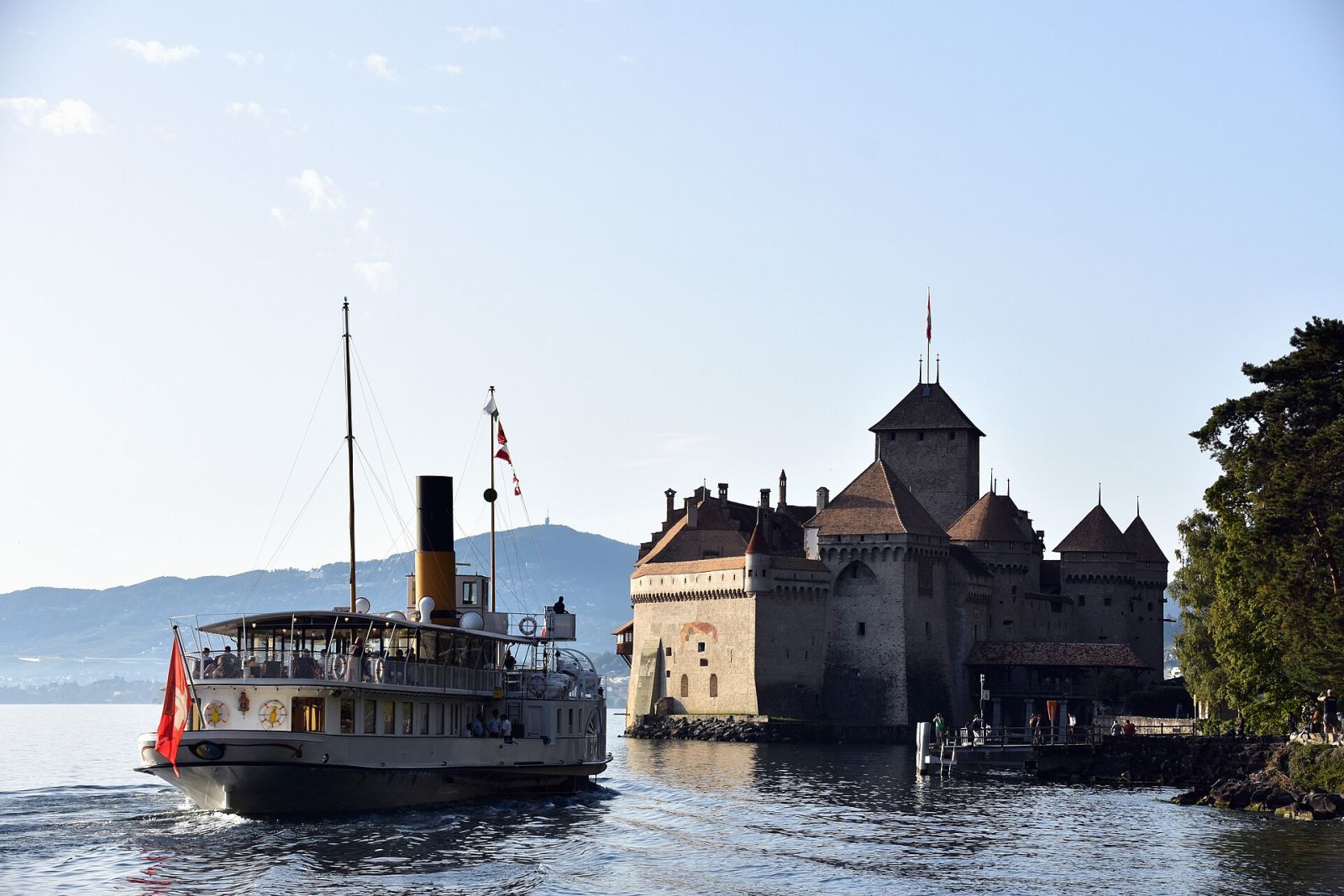
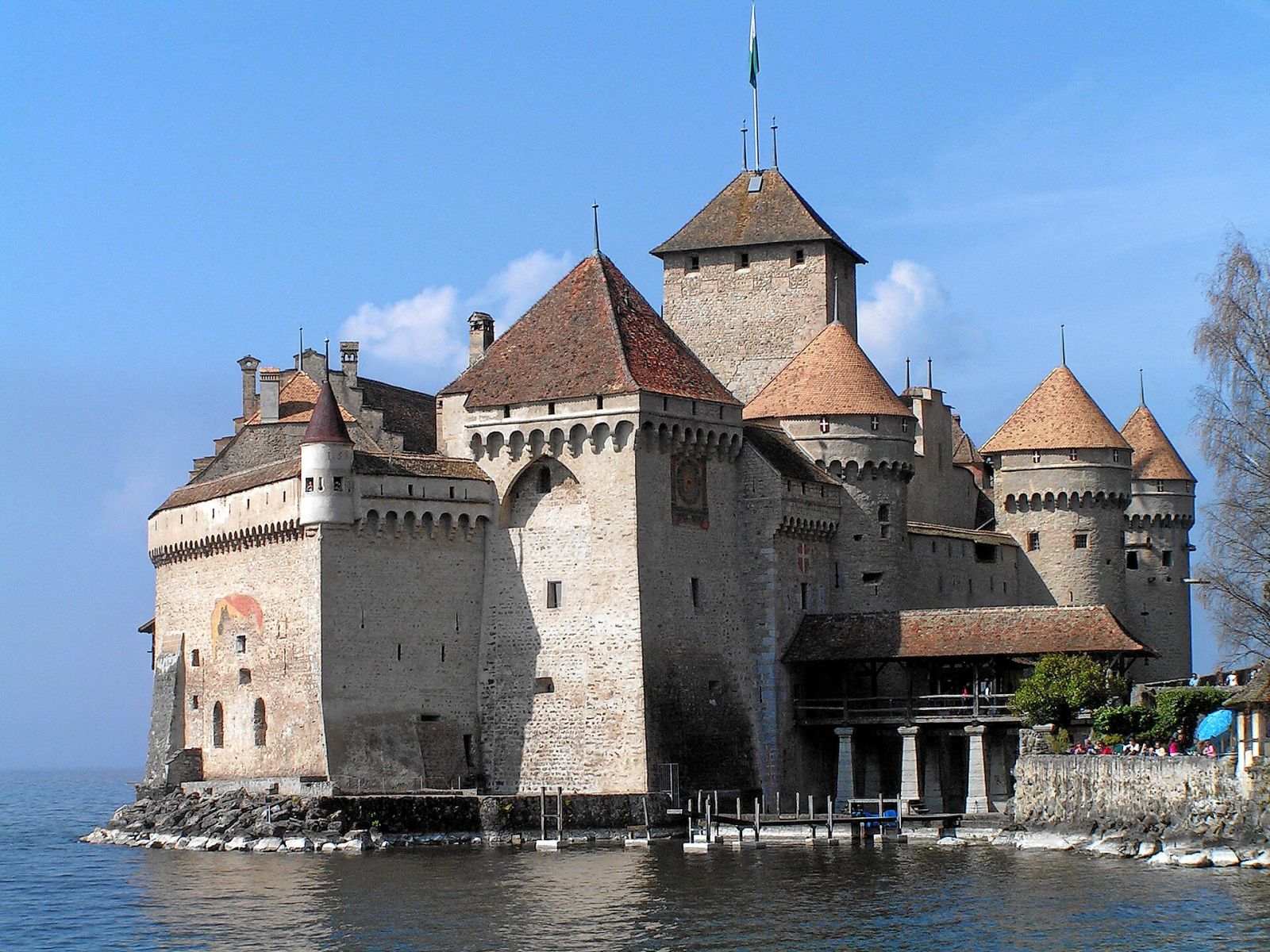
But the lake is far more than one fountain. At the eastern end, near Montreux, Château de Chillon rises straight out of the water, the very castle that inspired Byron and still tops the list of the country's historic sights. Between Lausanne and Montreux stretch the terraced Lavaux vineyards, a UNESCO site, with the train running right above the water past rows of vines. The honest downside: this is the pricey, formal side of Switzerland. Geneva and Montreux bite hard on cost, and the lake water is cool, so swimming here is more symbolic than real.
Lucerne: Mount Pilatus over an old town
Lake Lucerne, also called Vierwaldstättersee, has a quirky, jagged shape with several arms and is widely rated the most scenic in the country. This, legend says, is where Switzerland itself began, with three cantons swearing their alliance on the Rütli meadow. The town of Lucerne in the northern corner is lovely on its own: the wooden Kapellbrücke with its tower, an old-town core, painted facades.
The main reason to come stands over the water. It's Mount Pilatus, reached by the steepest cog railway in the world, with gradients up to 48 per cent. The classic "Golden Round" trip is built exactly this way: a boat across the lake to Alpnachstad, the cog railway up, and a gondola and cable car down to Kriens. On a clear day the summit gives you dozens of alpine peaks. The catch is predictable: it all costs real money, and Pilatus loves to hide in cloud, so several times a week the summit hands you nothing but a wall of milk. Check the mountain webcam before you go up.
Zurich: the lake city folk actually swim in
Lake Zurich is long and narrow, reaching southeast from the city, and its main virtue is down to earth: people genuinely swim here, and they do it right inside Zurich. Free lawns and paid bathing areas line the shores, and the summer water is clean enough that locals drink it from the tap without a second thought. For a traveller in Zurich for a day or two, it's the simplest way to see a Swiss lake without a separate excursion.
The scenery here is calmer than the alpine kind: gentle green hills, commuter towns, yachts. Along the "Gold Coast" on the sunny side stand the country's priciest houses. You can board a boat and drift slowly down the lake, getting off, say, at Rapperswil with its castle and rose gardens. The downside is obvious to anyone after drama: there are no big mountains right over the water, and next to Lucerne or Thun this lake reads as pleasant rather than striking.
Thun and Brienz: turquoise on either side of Interlaken
These two lakes come as a pair, because between them, on a narrow neck of land, sits Interlaken, and the town's name literally means "between the lakes". Both are fed by glacial meltwater, and it's the fine rock particles that give the water that incredible turquoise people bring cameras for. Thun is bigger and more built up, with a castle in the town of Thun; Brienz is smaller, wilder and, to my eye, even brighter in colour, especially by the Giessbach falls that drop right to the shore.
Interlaken between them is the main gateway into the Bernese Oberland, the launch point for Jungfrau, Grindelwald and dozens of trails. So the lakes double as the handiest base for the mountains in general. Both can be crossed by boat, and the shores are tied together by trains and roads, so combining them is easy. The catch is that Interlaken has long turned into a tourist hub, busy and far from cheap in summer, and the turquoise itself is fickle: on a grey day or late in autumn the water dulls and much of the magic drains away.
Lugano: a Swiss lake with an Italian soul
Lugano lies south of the Alps, in the canton of Ticino, and this is nearly Italy already: people speak Italian, palms grow along the promenades, and lunch runs longer than up on the stern German-speaking north. Part of the lake even crosses onto the Italian side of the border. The mountains drop steeply to the water, and the town of Lugano, with its parks, squares and funiculars, keeps a reputation as a warm, faintly glamorous resort.
People come here for a different pace and the country's mildest climate. Two viewpoint mountains rise over the town, Monte Brè and San Salvatore, both served by funiculars, and the views from the top over the lake and distant snow-capped peaks are worth the ride. Nearby hides the village of Gandria, easier to reach by boat than by car. The downside is the same as everywhere else: Switzerland isn't cheap even on its relaxed southern flank, and Lugano sits off to the side of the big alpine hits, so people come for the lake itself less often than as part of a wider Ticino trip.
When to go?
The best window is June, September and early October. The warm lakes are already (or still) fit for a swim, the mountain cable cars are running, and the crowds aren't as dense as at the height of summer. July and August give you the warmest swimming and the full run of activities, but that's also when prices and queues peak, especially in Interlaken and at Pilatus.
| Season | The weather | The catch |
|---|---|---|
| April, May | Fresh, snow melting | Cold water, but green and empty |
| June, September | Warm, clearer skies | The best balance, ideal for most |
| July, August | Warm water, all open | Busy and pricey, book well ahead |
| October onward | Damp, cable cars closing | Autumn colour, but peaks often in cloud |
How to get there?
The logistics here are nearly foolproof, and that's half the charm. Swiss Railways link all five lakes, and the trains run with a precision you get used to fast. For Geneva you fly into Geneva; for Zurich and Lucerne it's easy via Zurich; for Thun and Brienz you head to Interlaken via Bern; for Lugano you go south through the Gotthard tunnel. Between the cities there's a direct connection everywhere, or just one change.
On the lakes themselves regular boats run, at once transport and attraction. The Swiss Travel Pass covers most of these sailings and the trains together, so if several lakes are on your list it often pays for itself. Exact fares, timetables and cable-car hours change every season, so check the current details on the operator's or the mountain's site before you travel.
The takeaway is simple. Take Geneva for the fountain, the castle and the vineyards, Lucerne for Pilatus and the old town, Zurich for an effortless swim, Thun and Brienz for turquoise and a gateway to the Alps, and Lugano for southern warmth. For a single trip the smartest move is to pick one lake as your base and not chase them all at once.