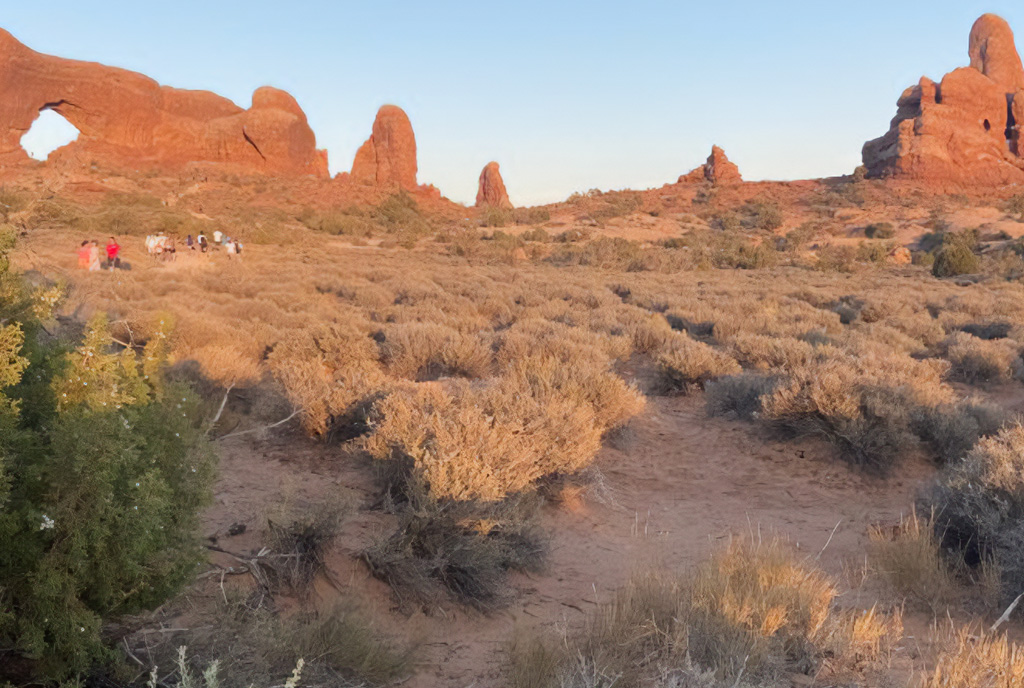


Picture driving across the country to visit one of the most breathtaking national parks in the United States, only to find it is too crowded to get in.
That is exactly what happened to Eliza Brandenburg of Greenville, South Carolina, when she and her family arrived at Arches National Park in southeastern Utah in late June. She had her kids out the door by 7:30 in the morning.
"We got there, and we were literally just a few minutes late. The park was closed," Brandenburg said.
Partner links: booking through them supports the blog at no extra cost to you.
Arches was already full. The group would have had to wait for plenty of other visitors to leave before they could enter, a delay that was not part of their road trip itinerary.
"We really can't wait three to five hours just to try to get in and maybe not make it, and then miss our next stop. So we just have to keep moving," she said. "I almost cried. I won't lie."
Arches is one of a number of popular national parks in the United States dealing with overcrowding at the height of summer, in a year when leisure travel is expected to rebound to near pre-pandemic levels.
The surge of visitors is forcing the park to temporarily close its gates almost every day. And frustrated visitors are not the only consequence of the crowds. The environment is taking a hit too, and so is the local community.

Managing the Crowds
Since October 2020, visitation at Arches National Park has climbed steadily, up as much as 70% in some months compared with previous years, according to the National Park Service.
On several days this week, the park started turning visitors away by 8 a.m. In past years, Arches would occasionally turn people away on weekends. Now it happens almost daily.
"2021 is going to be the busiest year on record," said Angie Richman, chief of interpretation for Arches and Canyonlands National Parks.
The same is likely true for other popular national parks. "We expect it to be one of the busiest summers on record," said Jenny Anzelmo-Sarles, a lead spokesperson for the National Park Service.
Yellowstone National Park saw a 50% jump in visitation over Memorial Day weekend compared with 2019, she said, and Yellowstone and Grand Teton both had their busiest April and May on record. Great Smoky Mountains National Park set visitation records every month this year.

Anzelmo-Sarles noted that the big spikes are mostly at the 12 to 15 most popular national parks. She encourages visitors to explore lesser-known parks across a system that includes more than 400 parks, seashores, historic sites and much more.
Timed-entry reservations are one possible fix for a crowded Arches, Richman said. Yosemite and Glacier National Park are among the major national parks that rolled out reservation systems during the pandemic to manage visitor entry.
But the idea worries some business owners in nearby Moab, Utah.
Kent Green, owner of Moab Cowboy Country Offroad Adventures, said he is concerned that requiring reservations for the local national parks could discourage visitors from making the trip to Moab.
"I wouldn't be nearly as busy. Most [visitors] come here to see the national park, but because access to the national parks is limited, we've gotten busier, because people are looking for alternatives for a family outing," Green said.

Come Prepared and Flexible
Visitors who can't get into Arches often head to neighboring Canyonlands National Park or opt for recreation on public lands outside the national parks, managed by the Bureau of Land Management.
The coronavirus pandemic introduced new visitors to public lands and camping, said Nicollee Gaddis-Wyatt, a field manager for the Bureau of Land Management in Moab. But the heightened interest has also put a strain on these recreation areas.
"Everything fills up very, very quickly. And that's where we're seeing a lot of the problems," she said.
"People are new to this, to recreating on public lands, and they don't quite understand what that means... it's not a hotel."
The influx of visitors is creating problems inside Arches National Park too.
"We're seeing a lot of first-time visitors, people who have never hiked before. We're seeing a lot of dogs on the trails, drones in the park. We're seeing a lot more trash in the park... and we're really seeing graffiti," said Richman, the interpretation manager at Arches.
Educating visitors is important, the National Park Service, the Bureau of Land Management and some local business owners agree. Coming prepared with plenty of water and the right footwear, treating archaeological sites with respect by not touching them, and packing out your trash and waste when you leave are all important reminders.
Planning ahead matters too, especially when it comes to booking lodging, said Anzelmo-Sarles of the National Park Service. Lodging at both hotels and campgrounds in and around the most popular national parks is either fully booked or nearly fully booked through Labor Day, she said.
Campground reservations across the National Park system are up 73% compared with 2019.

Not Just the Tourists
It isn't only tourists pushing some local areas to the brink. The pull of stunning scenery has drawn remote workers and second-home buyers, driving up home and rental prices in Moab.
That means some of the would-be stewards of the land, the rangers and land-management staff, can't afford to live in the area.
"It's hard for us to hire people, because there's nowhere affordable for them to live," said Gaddis-Wyatt of the Bureau of Land Management. She lives 55 miles away in Monticello, where it's cooler and quieter, she said, but that makes for a brutal commute.
"A lot of people have left the community because they can't afford to live here," said Rachel Moody, a real estate agent with Berkshire Hathaway.
That translates into staffing shortages both in town and inside the park.
Lining up all the resources needed to meet demand is something major national parks across the country are wrestling with, Anzelmo-Sarles said, but America's national parks are glad to welcome visitors.
"We're really excited that as more Americans get vaccinated and travel, they're exploring their national parks and public lands. And the rangers are there to welcome them, it just may take a little longer for people to get in or to find the services they're looking for," she said.
Gaps in resources and overcrowding could tip the fate of America's wild spaces in the balance.
"Hopefully, you know, we can manage it," said Richman of Arches National Park, "so that people can still come here and enjoy the natural sounds and the natural scenery, without feeling like it's just too crowded."