


Twenty-nine years ago, on November 9, 1989, something extraordinary happened.
After decades of a city and a nation split in two, the Berlin Wall came down amid a wave of revolution that swept through communist Eastern Europe.
In an instant, Berlin, Germany and the wider world were changed for good. Germany's largest city was about to be reunited, and so was the entire country.
Partner links: booking through them supports the blog at no extra cost to you.
The shockwave from that moment eventually reached Moscow, toppled the Soviet empire and ended the communist rule that had governed Russia since the days of the First World War.
Jubilant Berliners tearing down the wall with hammers, shovels and even their bare hands rewrote the global order in one astonishing night.
And the event changed the world of travel, too.
Before long, an entire new region of travel possibilities opened up for people in the West and around the globe. Young travelers today, enjoying trips to Budapest, Prague, Krakow and other cities across Eastern Europe, can scarcely imagine these popular and welcoming destinations as the grim, hard-to-reach (if not impossible-to-reach) places they once were.
And who could have guessed that the great symbol of the Cold War, a utilitarian, hastily thrown-up structure meant to keep East Berliners locked inside the communist half of the city, would one day become a tourist attraction?
What to See
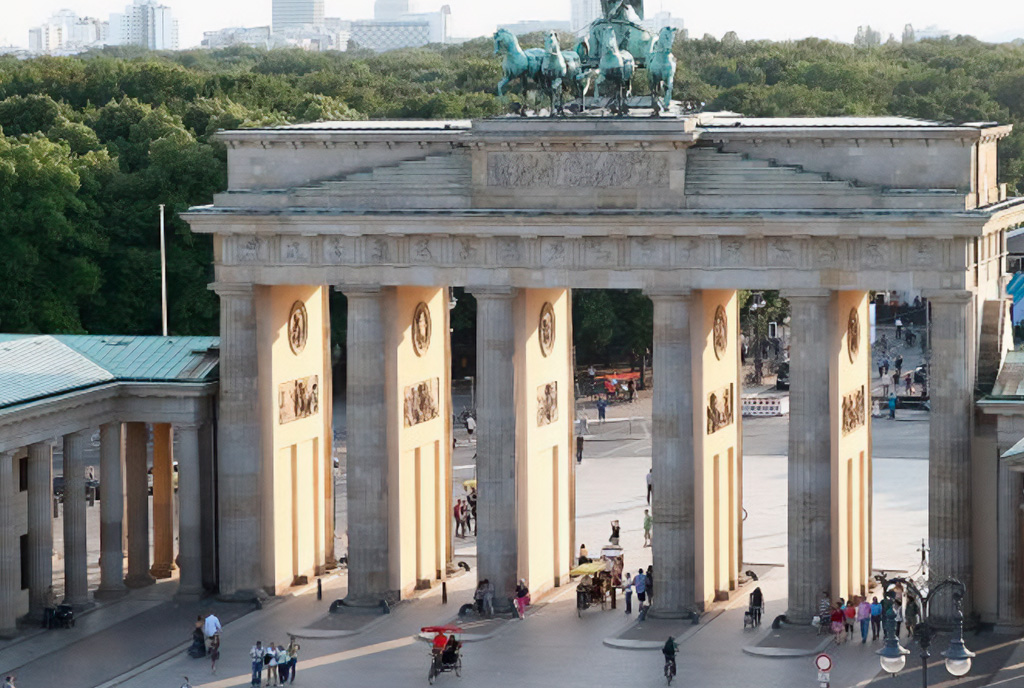
Decades later, the few surviving remnants of the Berlin Wall and the traces it left behind hold real historical, and even entertaining, interest. Here are a handful of the many wall-related sites worth seeing in Berlin:
Brandenburg Gate: A fine place to begin your historical tour is the Brandenburg Gate, whose story reaches far beyond the communist era, back to Napoleon, who carried off the statue crowning the gate during his military campaign across Europe in the early 1800s. (France later returned it.)
The gate was the famous backdrop for U.S. President Ronald Reagan's memorable 1980s challenge to the Soviet Union to "tear down this wall." Once a symbol of oppression, it now stands as a symbol of the city, embodying free movement and hard-won prosperity. And it makes a great spot for a selfie.
Brandenburg Gate: Pariser Platz, 10117 Berlin, Germany
East Side Gallery: Here you can see more than 100 large-scale murals painted on one of the few surviving stretches of the wall. The artworks give visitors a vivid sense of the joy and hope that swept over Berlin and all of Germany at the time.
East Side Gallery: Muhlenstrasse 3-100, 10243 Berlin, Germany; +49 30 2517159
Old St. Hedwig Cemetery: The wall respected neither the living nor the dead. You can still see a section of it that ran right alongside Berlin's oldest Catholic cemetery. Beside the wall, you'll find intriguing mausoleums that date back much further in time.
Old St. Hedwig Cemetery: Smetanastrasse 36-54, 13088 Berlin, Germany; +49 30 9253145
Berlin Wall Memorial: This somber spot is a memorial to the people who died trying to cross into West Berlin, and it may be the best place to see what the wall looked like in the late 1980s and to take in the atmosphere of a divided city.
Berlin Wall Memorial: Bernauer Strasse 111, 13355 Berlin, Germany; +49 30 467986666
Checkpoint Charlie: This is the name Westerners gave to what was probably the most famous border crossing between East and West Berlin. Sharp-eyed James Bond fans may recognize it from the film "Octopussy."
Checkpoint Charlie: Friedrichstrasse 43-45, 10117 Berlin, Germany
Wall Bike Tours: On a nice Berlin day, you can trace the path of the wall by bike. You can pick up maps, rent a bike and set off on your own, or you can experience it with a tour operator.