

The best beaches in Montenegro fit into a stretch of roughly 60 kilometres between Budva and Ada Bojana, yet the contrast between them is bigger than between some entire countries. The northern end offers fine pebbles under cliffs and glass-clear water; south of Ulcinj you get 12 kilometres of dark volcanic sand and shallows where the sea warms up like bathwater. So the real question is not whether to go, but which end to pick: a family with a toddler and someone chasing quiet coves will head in opposite directions.
Here are the five key spots from north to south: Mogren and Jaz near Budva, Sveti Stefan, Petrovac, Velika Plaza and Ada Bojana. Plus an honest word about crowds, because in July and August they are no joke.
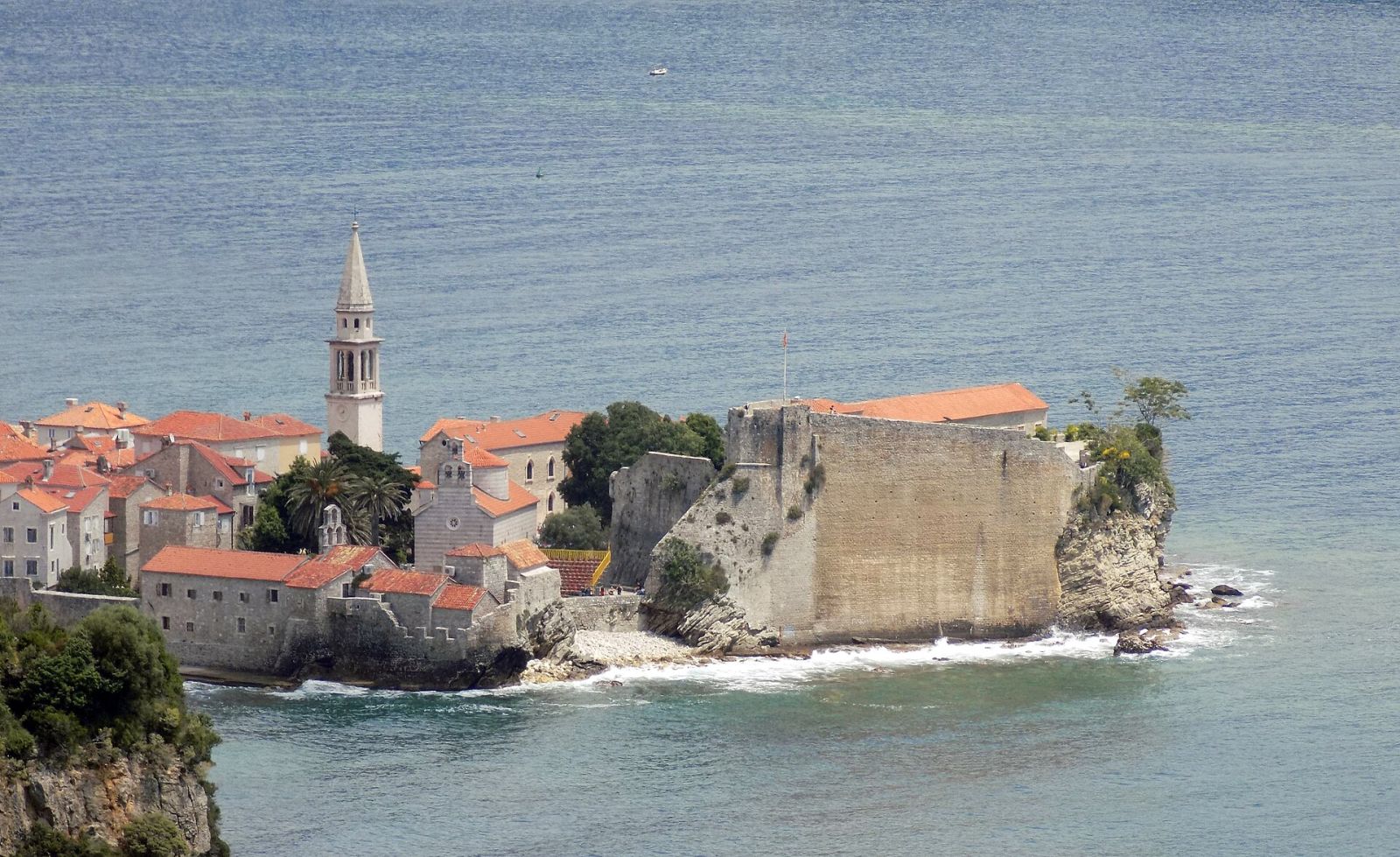
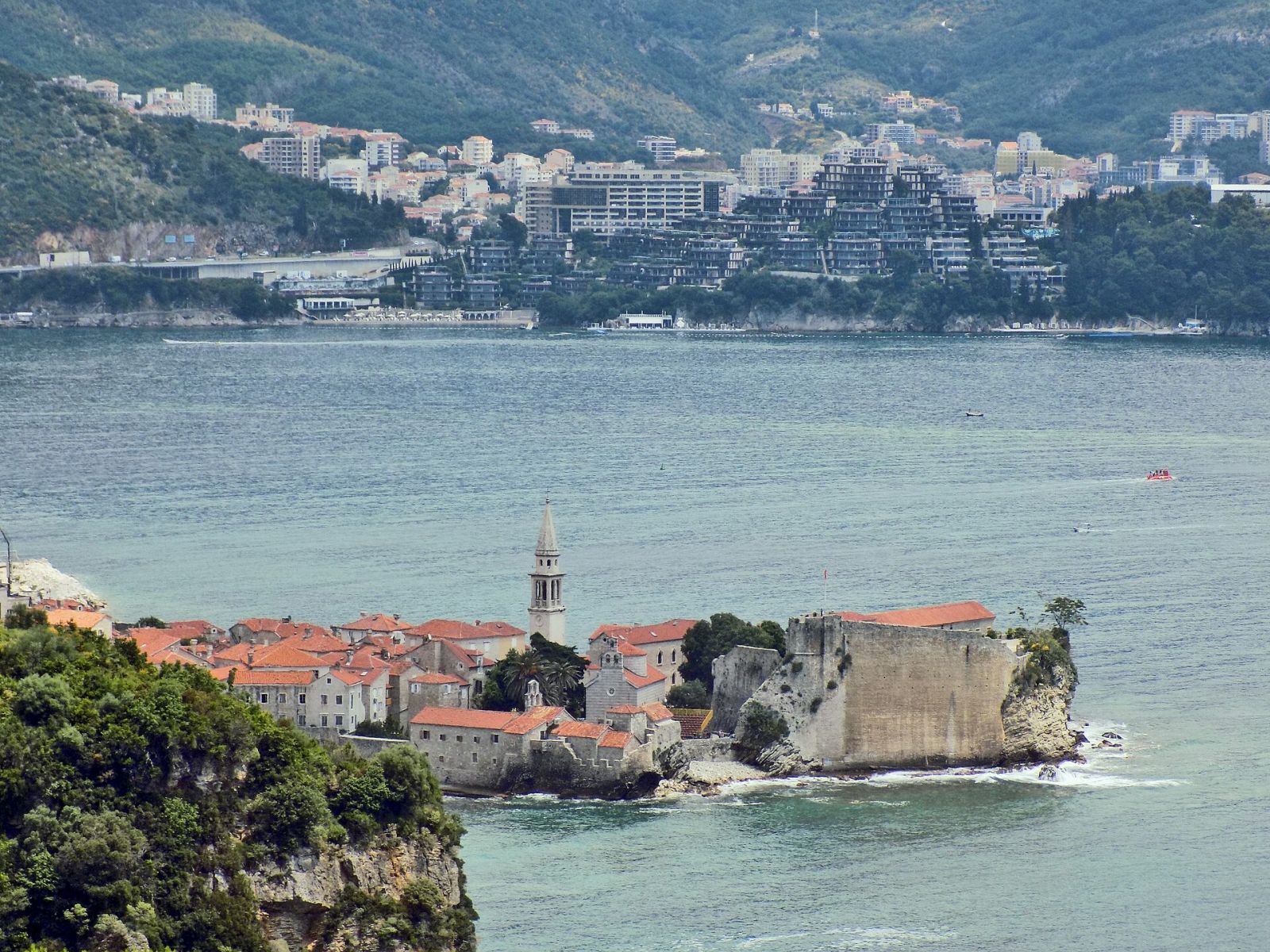
Mogren and Jaz: the beaches next to Budva
Mogren hides just behind Budva's Old Town. It is a ten-minute walk: the path passes the ballerina statue, hugs the cliff and drops you at the first of two coves. Mogren I and Mogren II are linked by a short tunnel cut through the rock. The surface is fine pebble mixed with sand, and the water stays clean almost year-round because the coves are sheltered from the wind. The view of the cliffs and Sveti Nikola island makes up for the squeeze.
And a squeeze it is. The beach runs maybe three hundred metres across both coves, and in season the sunbeds are gone before ten in the morning. One more catch: after heavy rain the access path sometimes closes due to rockfall, leaving you with the town beach as plan B.
Jaz sits over the hill on the opposite side of Budva, about three kilometres from the centre. This one is a wide horseshoe over a kilometre long, pebble mixed with sand, backed by the field where the Rolling Stones and Madonna once played. There is far more room than at Mogren, the water runs slightly cooler in the open bay, but you can actually park a car here and escape Budva's dense construction. For a day trip out of town it is probably the smartest pick.
Sveti Stefan: the postcard with a catch
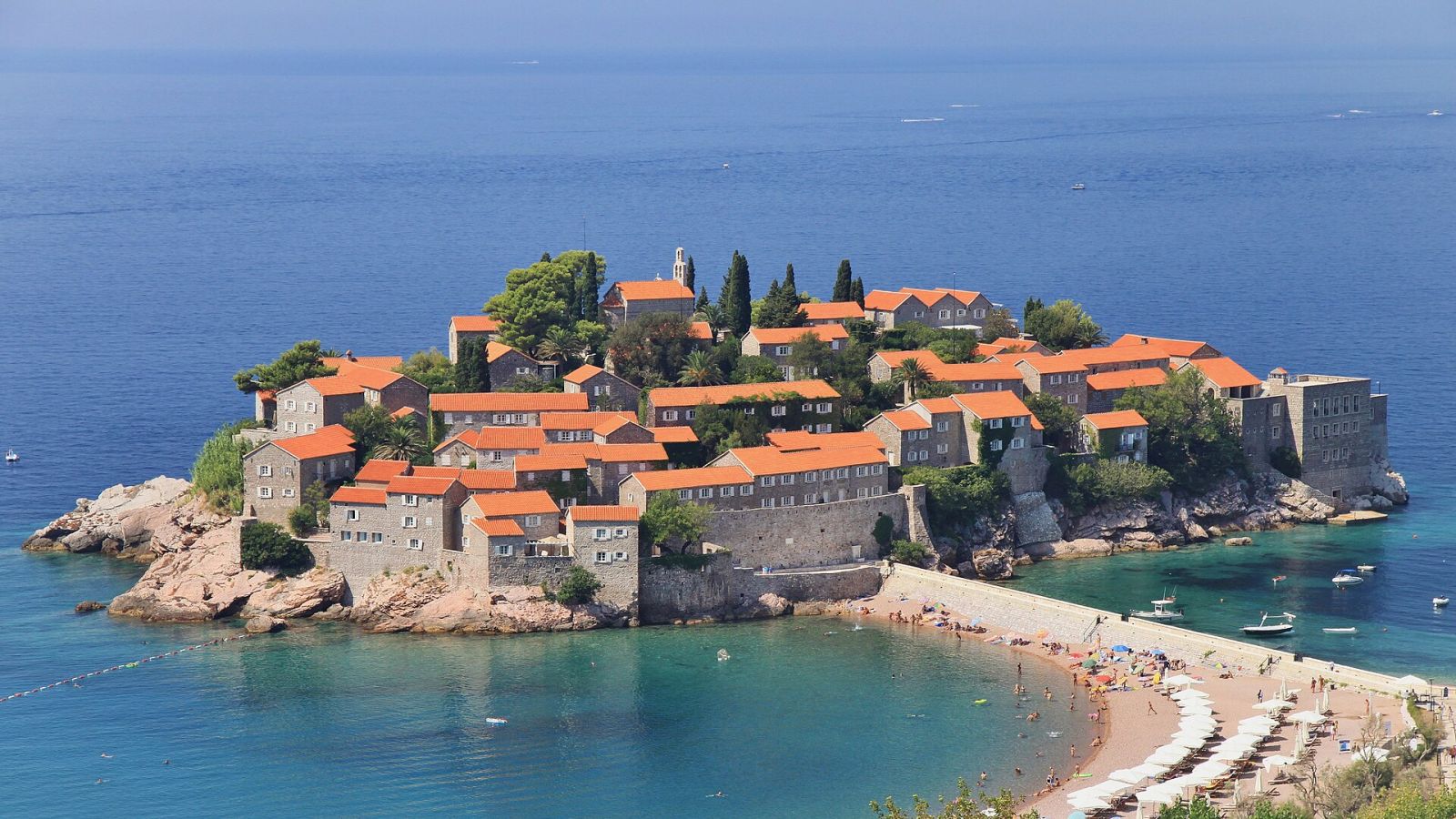
Sveti Stefan is recognised even by people who cannot place Montenegro on a map: a tiny islet of terracotta roofs tied to the shore by a narrow isthmus. The thing to know is that the island itself is a hotel, closed to outsiders. You come not onto the island but to it: for the beaches on either side of the isthmus and for that famous shot from the switchback road above.
The beaches here are pinkish fine pebble, and the water is ridiculously clear. The Aman hotel on the island reopened in 2026, but the Sveti Stefan beach and the neighbouring King's Beach remain public, with part of the shore taken up by pricey sunbeds at resort rates. The Queen's Beach in Milocer Park, however, is for hotel guests only. Crowds are thinner than in Budva, but so is the entertainment: Sveti Stefan is about the view and the calm, not the parties.
Petrovac: the slow-holiday option
Petrovac lies between Budva and Bar and collects everyone who finds Budva too loud. The town is compact: a promenade, the Venetian fortress of Kastio on a rock, pine trees right up against the sea. The beach is fine reddish pebble and sand, and the entry into the water is gentler than on most pebble beaches in the country, which is why families with kids keep coming back.
A fifteen-minute walk along a cliff path brings you to Lucice, a smaller and prettier cove than the main strand. Both get busy in season, but without the Budva madness. Nightlife is modest: a handful of restaurants on the promenade, and that is it. If you need clubs, Budva is down the road.
Velika Plaza: 12 kilometres of sand beyond Ulcinj
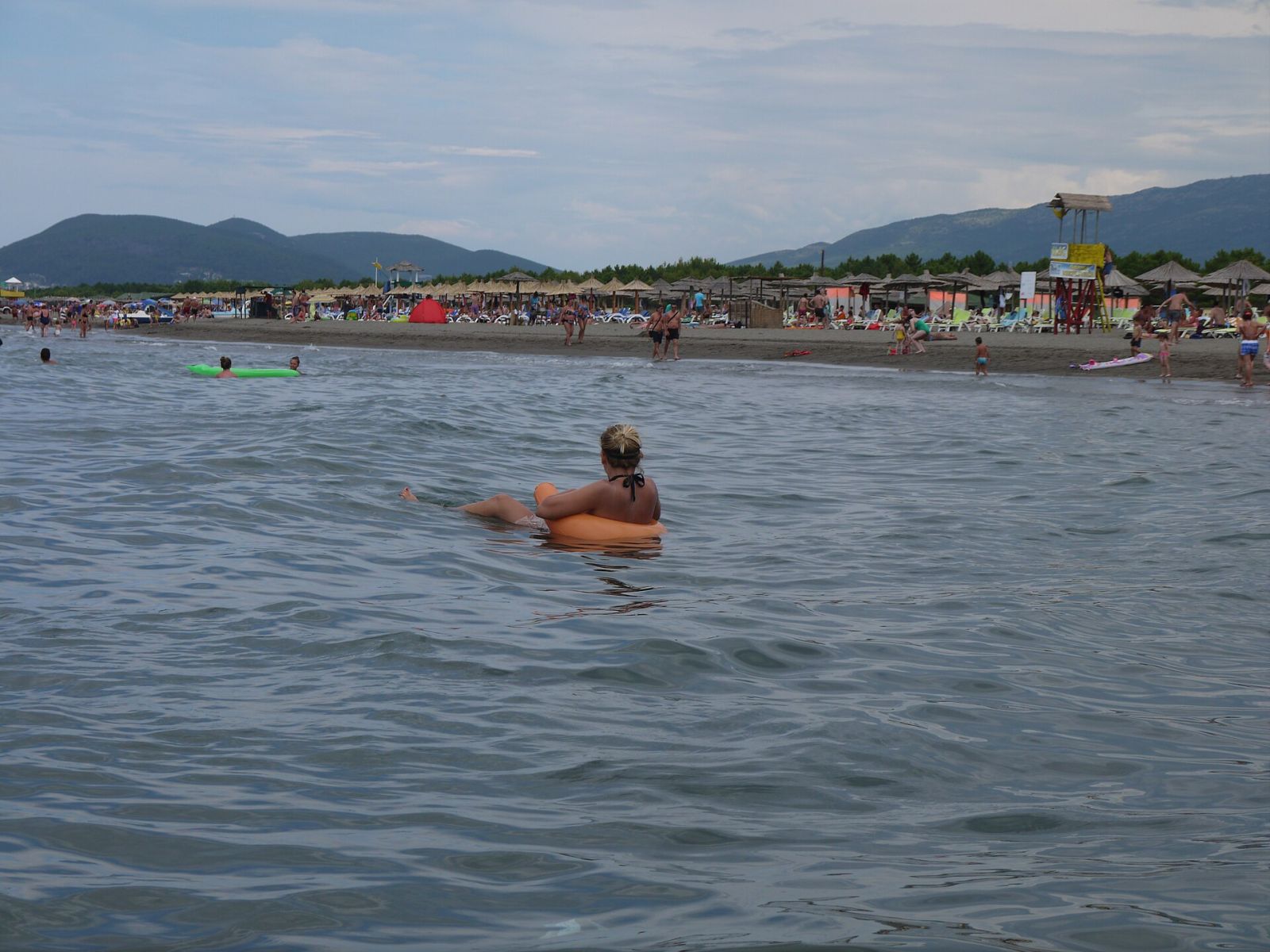
Past Ulcinj the coastline changes completely. Velika Plaza, or Long Beach, is a strip of dark sand roughly 12 kilometres long, the longest beach in the country. The water stays shallow for dozens of metres: an adult has to hike out to actually swim, but children get endless safe splashing, and the sea here is the warmest on the whole coast.
The shallows and a reliable afternoon wind have turned this into the Adriatic's main kitesurfing spot: kite schools cluster at the southern end, and after lunch the sky fills with canopies. The sand is dark and volcanic, so it gets scorching hot; flip-flops are non-negotiable. Facilities are scattered: sections with bars and sunbeds alternate with completely wild kilometres where your nearest neighbour is a hundred metres away. Even in mid-August you can genuinely find space here, which is more than Budva can claim.
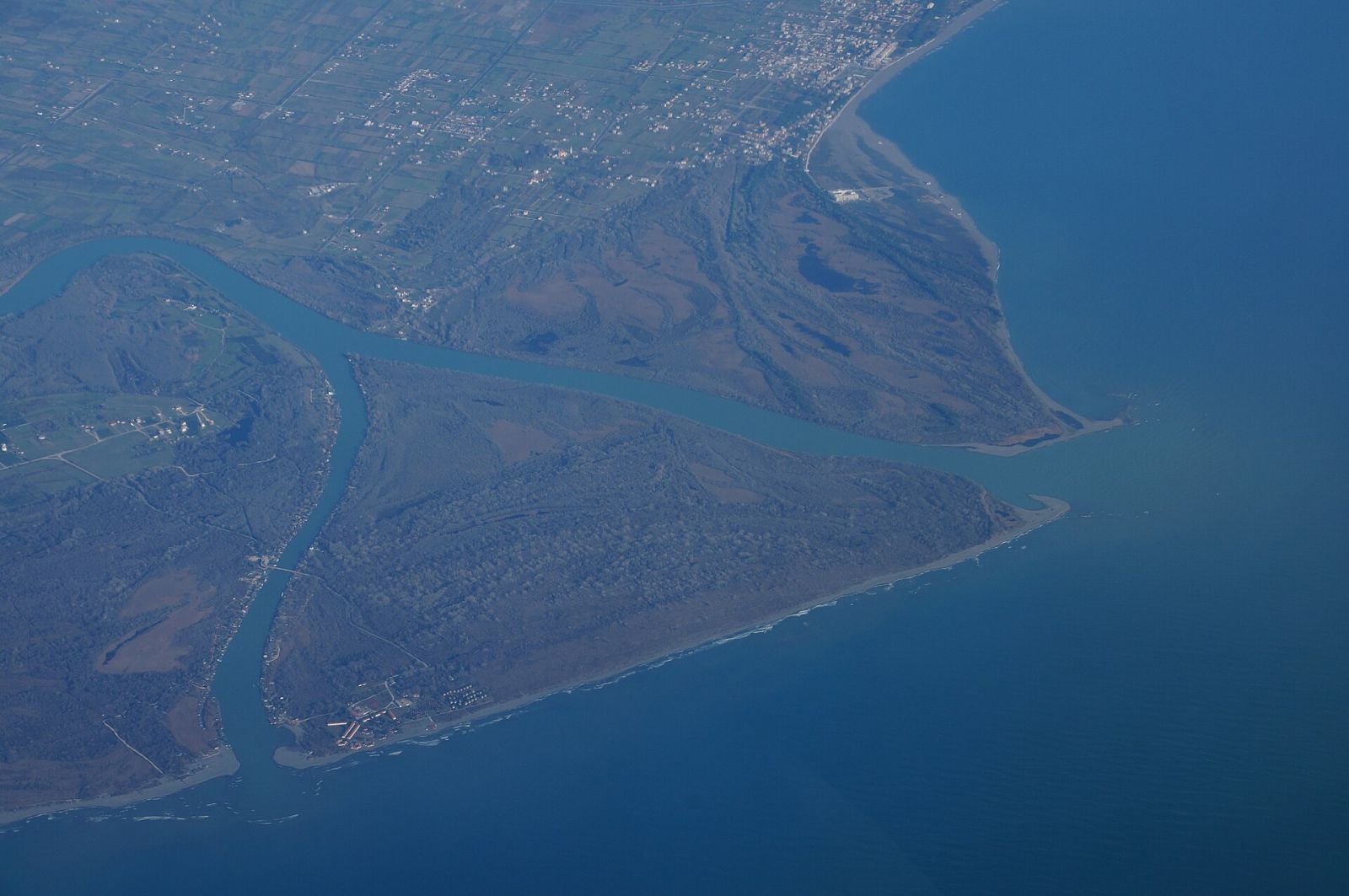
Ada Bojana: an island in a river delta
Ada Bojana is a triangular island right on the Albanian border, wedged between two arms of the Bojana River and the sea. It comes with a personality: a naturist resort has operated here since the 1970s, so part of the island beach is traditionally FKK, something worth knowing before the trip rather than on arrival. There are regular clothed sections too, along with kite schools on the seaward side.
The best non-touristy reason to come is the fish. Restaurants on stilts line the river arms, fitted with old-fashioned fishing lift nets, and you will not find a fresher catch anywhere on this coast. The sand is the same dark, fine stuff as on Velika Plaza; the water can get murkier where the river meets the sea, which is the honest downside.
Pebble or sand: how the beaches compare
| Beach | Surface | Water entry | Crowds in season | Best for |
|---|---|---|---|---|
| Mogren | fine pebble and sand | gets deep fast | very packed | anyone staying in Budva |
| Jaz | pebble and sand | moderate | busy but roomy | a day trip from Budva |
| Sveti Stefan | pink pebble | gets deep fast | moderate | views, calm, couples |
| Petrovac | reddish pebble and sand | gentle | moderate | families, slow holidays |
| Velika Plaza | dark sand | very shallow | plenty of space | kids, kitesurfers, elbow room |
| Ada Bojana | dark sand | shallow | plenty of space | naturists, kitesurfers, fish restaurants |
The rule of thumb is simple: north of Bar means pebbles and transparent water, south means sand and shallows. Jellyfish and sea urchins show up near rocky sections, so on pebble beaches swimming shoes are basic kit, not a luxury.
When to go, and how bad are the crowds?
The swimming season runs June through September. The sea is about 22C in June and up to 26C in August, and August is also peak crowd time: Budva starts to feel like a rush-hour tram, with sunbed and accommodation prices at their highest. July is marginally easier, but only marginally.
September offers the best balance: the sea holds 24-25C early in the month, and the crowds thin out noticeably after the first week. June suits anyone who tolerates brisk water and wants to save money, since accommodation costs visibly less than in August. October is a lottery; only the hardy still swim.
A practical note: most visitors, including EU, UK and US passport holders, enter Montenegro visa-free for up to 90 days; check the current entry rules before travelling on the official Montenegrin government portal. The easiest way to move between beaches is a rental car: coastal buses exist, but in season the seaside road clogs up badly, so budget extra time.
The bottom line: go to the Budva - Petrovac stretch for postcard views and clear water, and to Velika Plaza and Ada Bojana for warm shallow sea and space. With a week and a car, the smartest move is not to choose at all: 60 kilometres of road let you see both Montenegros in a single holiday.