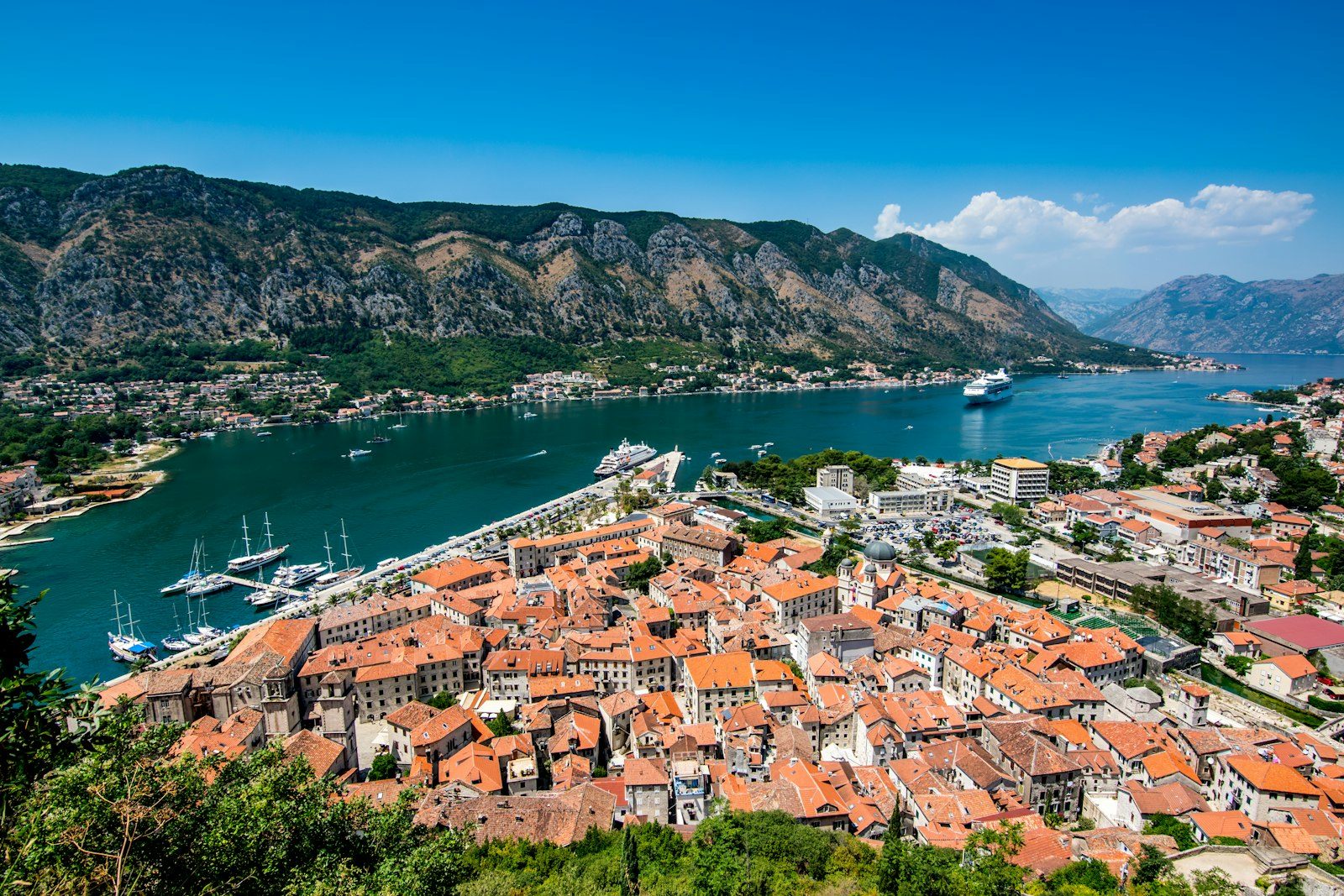


No, a visa for Montenegro is not required for Ukrainian citizens. With an international passport you enter as a tourist and stay for up to 90 days within every 180, with no consulate visit and no application form. It is the simplest entry to the Adriatic still open to Ukrainians as of 2026.
Below is where the nuances hide inside all that simplicity: how long those 90 days actually run, why a Schengen visa has nothing to do with it, and what to do about a layover in Europe along the way.
How long can you stay in Montenegro without a visa?
The rule reads as 90 days within 180. In practice this means the system counts not a single trip but the sum of all your days in the country over half a year. You come for three weeks in summer, then return in autumn for another month: both stretches add up into one limit.
Partner links: booking through them supports the blog at no extra cost to you.
Once the 90 days are used up, you have two options. Either leave and wait for the 180-day window to free up days again, or apply for a temporary residence permit (boravak) on the spot, if you plan to spend the winter or work remotely beyond the season.
Visa-free travel covers tourism, family visits, business meetings and short events. It does not cover official employment, study or relocation: those require a separate permit, and visa-free entry is no substitute for it.
Do you need a Schengen visa for Montenegro?
No. And this is the main misconception that trips up even seasoned travelers.
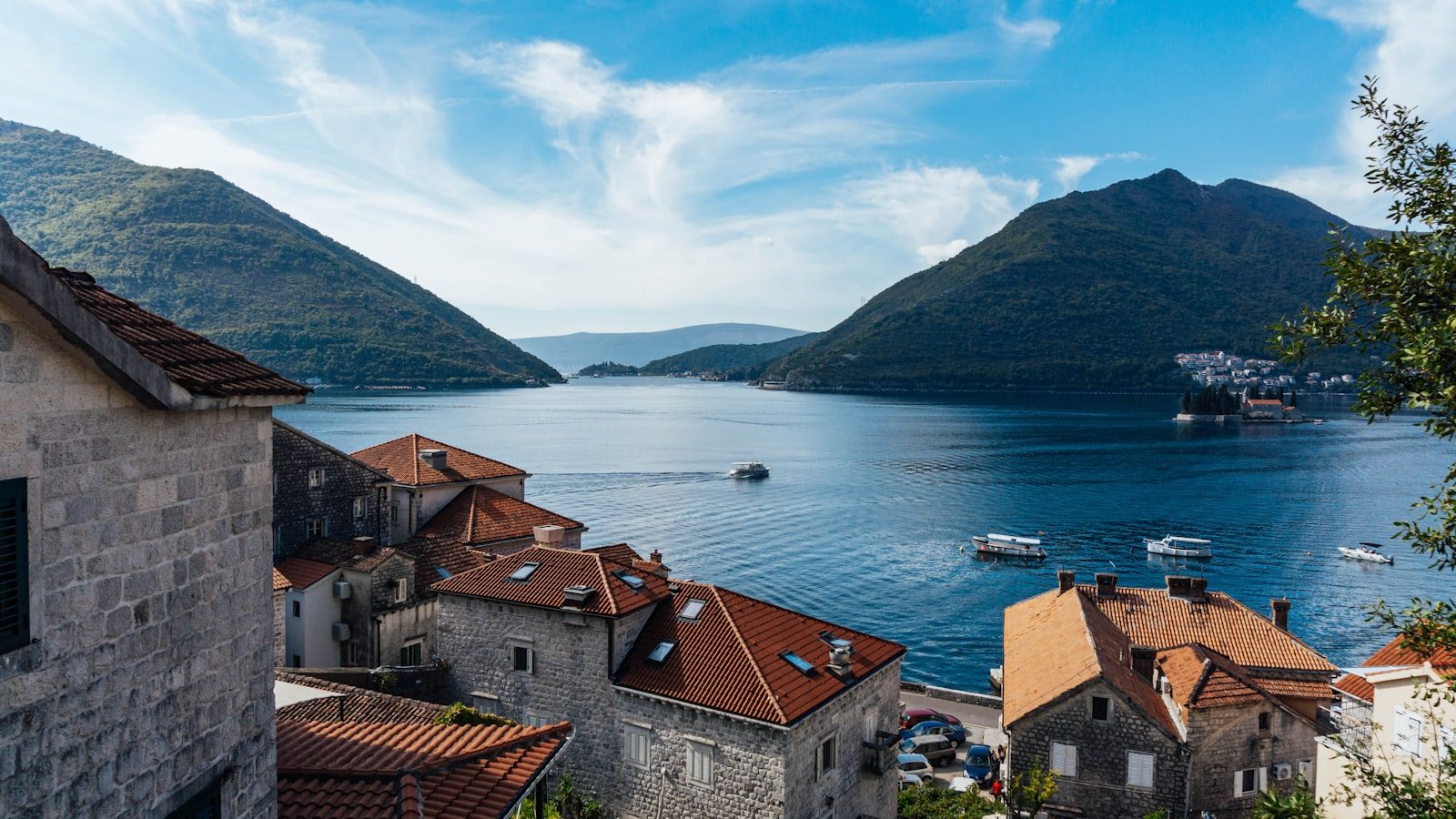
Montenegro belongs to neither Schengen nor the EU. It has its own entry regime. Your valid Schengen visa is not needed for Montenegro. And the reverse holds too: the days you spend in Montenegro do not eat into your Schengen 90/180 limit. For anyone alternating the Balkans with Europe, this is a handy way to stretch your overall time on the continent.
There is a flip side to this autonomy. If your passport does not grant visa-free entry to Montenegro directly, but you hold a valid Schengen, American, British or Irish visa, you will be admitted for up to 30 days. Ukrainians usually have no need for this rule: we already have full visa-free access for 90 days, which is broader than that exception.
What to show at the border
A border officer is entitled to ask why you are traveling and how you will support yourself. Formally there is no fixed minimum of funds, but be ready to prove that the trip is covered. Here is the basic set that clears up most questions.
| Document | Why and the details |
|---|---|
| International passport | Biometric, valid for at least 3 months after your planned departure. Some carriers and websites require a 6-month buffer, so if your validity is short, check before you fly |
| Return or onward ticket | Proof that you are not staying for good |
| Accommodation booking or invitation | A hotel, apartment or the host's address |
| Proof of funds | A card, cash, a statement. There is no exact figure, the benchmark is the general European one |
| Medical insurance | Legally not always mandatory for entry, but without it treatment is expensive, so always bring it |
The 24-hour registration: the small thing people forget
Every foreigner in Montenegro must be registered at their place of stay within 24 hours of entry. It is that same white card that tourists only learn about once they arrive.
If you are staying in a hotel or in official apartments, the front desk handles the registration and you need do nothing. The trouble starts with private housing and staying "with friends": in that case you or your host register you at the local police or a tourist organization. Missing the card on departure can, in theory, mean a fine, so keep the confirmation, especially if you switch between several addresses.
EU transit: when a layover complicates everything
There are currently no direct flights to Montenegro from Ukraine, so almost everyone travels with a connection. And this is exactly where the trap lies, one people confuse with a visa to Montenegro itself.
A Ukrainian biometric passport grants visa-free access to Schengen for short trips, so an air connection at a European airport passes without a separate transit visa. But two conditions are critical: you do not leave the transit zone and you do not change airports. Flying from one Paris airport to another means stepping into Schengen, and that already counts as a full entry under EU rules.
The alternative for those without a biometric passport is transit through Serbia. It sits outside Schengen and outside the EU, and Ukrainians enter and transit on a valid international passport (visa-free for up to 90 days within 180). Whether entry on a domestic passport is possible is worth confirming on the official resource of the Serbian or Ukrainian foreign ministry before the trip. Belgrade has long worked as a Balkan hub toward the Adriatic coast.
| Situation | Is a visa required |
|---|---|
| Entering Montenegro as a tourist, up to 90 days | No, visa-free |
| Air connection at an EU airport, without leaving the transit zone | No (with a biometric passport) |
| Connection with an airport change within a Schengen city | Yes, entry into Schengen under the general rules is required |
| Transit through Serbia | No, on a valid international passport (visa-free for up to 90 days) |
| Work, study, staying beyond 90 days | Yes, a residence permit |
The key points in brief
If you are traveling for the first time and on holiday, a valid biometric passport and an accommodation booking are enough: a visa for Montenegro will not be needed, and 90 days easily cover any vacation. But if you plan to stay for the winter or to work, allow time for the residence permit well in advance, because visa-free travel is no help here.
Visa rules and document requirements change, so right before your trip verify the current conditions on the official resources of the Ukrainian foreign ministry and the government of Montenegro.