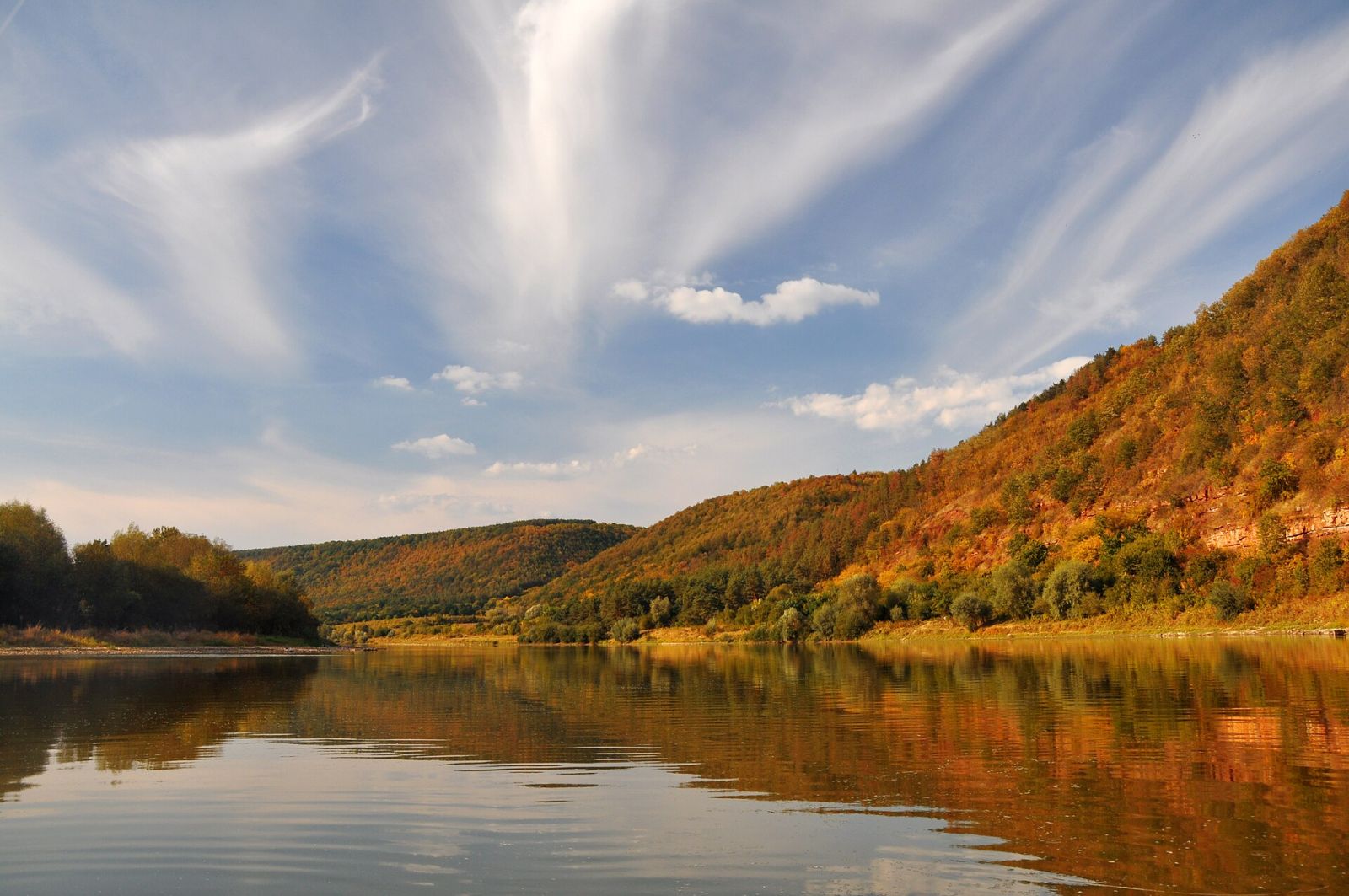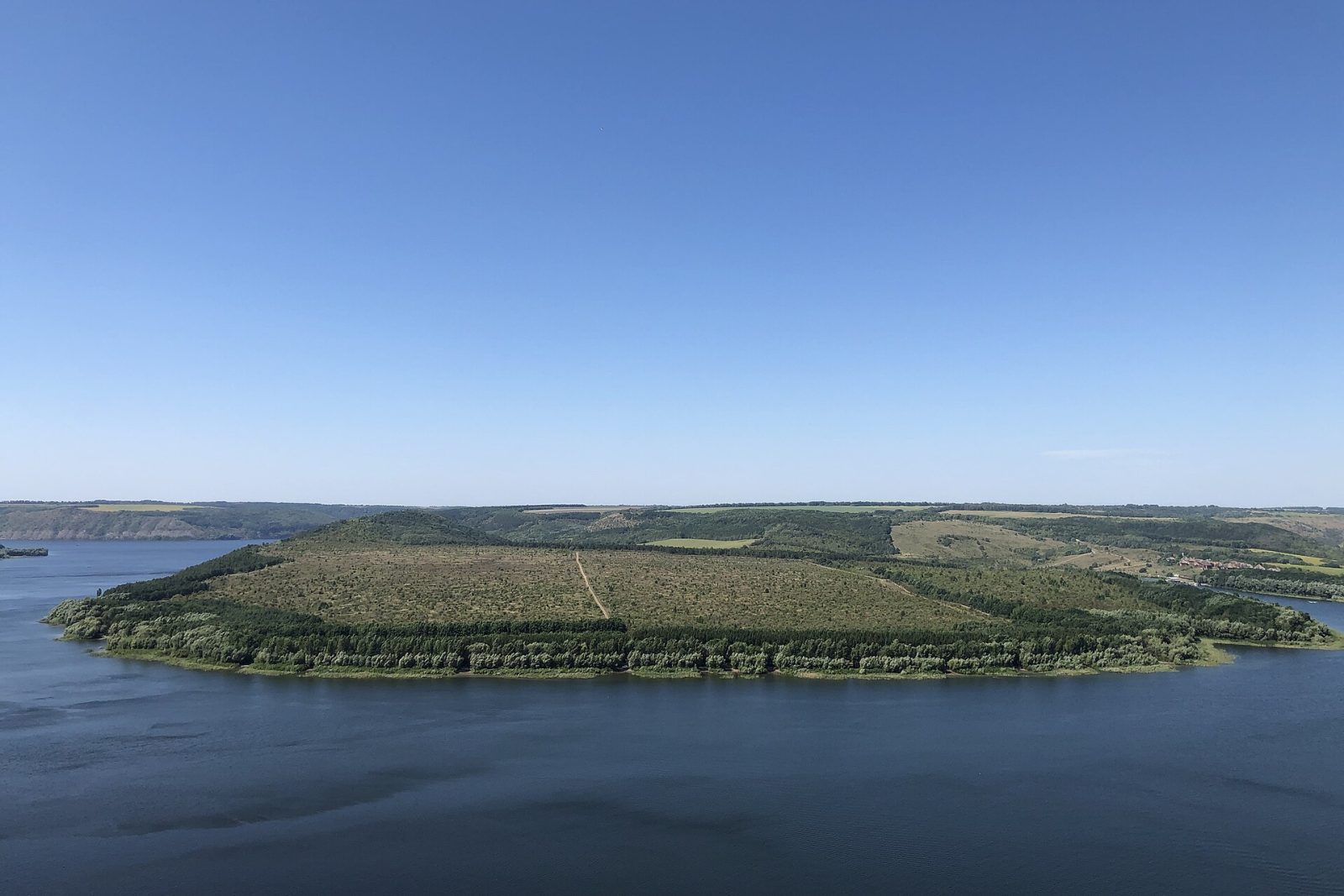


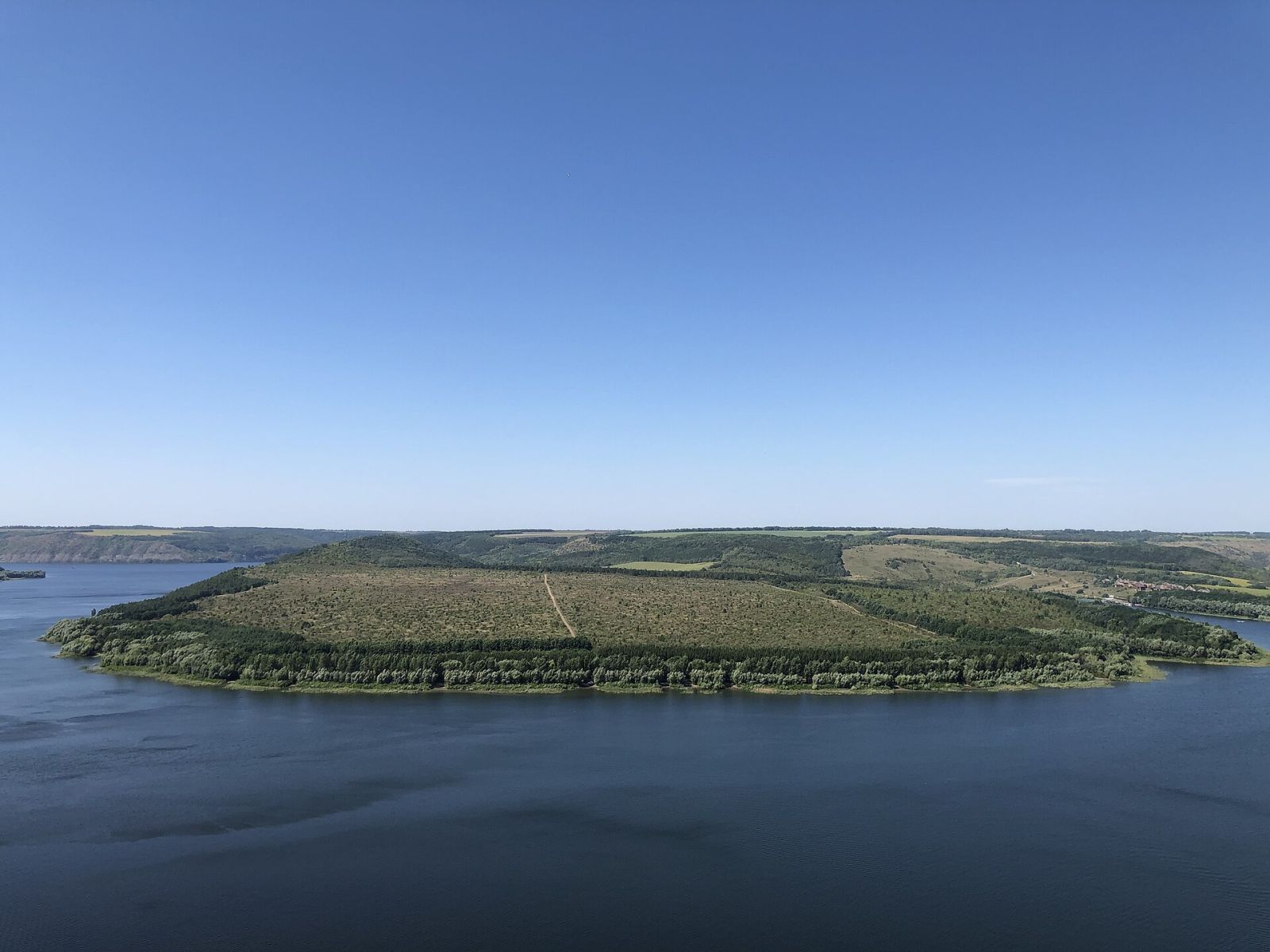
Bakota is a former village on the Dniester that no longer physically exists: in 1981 it was drowned by the reservoir of the Dniester hydroelectric dam, and today a wide, quiet bay of turquoise water sits in its place among steep Podillia slopes. The main thing first, so there are no illusions: you will not find a village of houses here, it is under the water. People come for something else, for the panorama of the bay from above, the cliff monastery with its cave cells, and the feeling of an abandoned place that nature has quietly taken back.
Geographically, Bakota lies at the edge of Khmelnytskyi Oblast, in the Kamianets-Podilskyi district, inside the Podilski Tovtry National Park. This is the point where the Dniester spreads out especially wide and the banks rise as steep, wooded hills. It is exactly this mix of water, height and silence that puts the place among the most beautiful natural spots in western Ukraine.
What happened here: a village that went underwater
The story is short and not a cheerful one. In the late 1970s construction of the Dniester hydroelectric station began, and several villages inside the future reservoir zone were doomed to flooding. Bakota was the largest and the oldest of them. People were resettled, and the houses, orchards, cemetery and old road were all slowly covered by water. The reservoir filled by the early 1980s, and the land that had been called a village for a thousand years became the floor of a bay.
Here is the counterintuitive detail people often miss. The original Bakota was far older than many towns in the region: the first mentions reach back to the times of Kyivan Rus, the 11th century, and a settlement on these slopes existed even earlier. So what lies underwater is not just a Soviet-era village but a place with very deep roots. Because of that, many visitors leave with a mixed feeling: the view is stunning, the subtext is sad.
The cliff monastery: the main reason to come
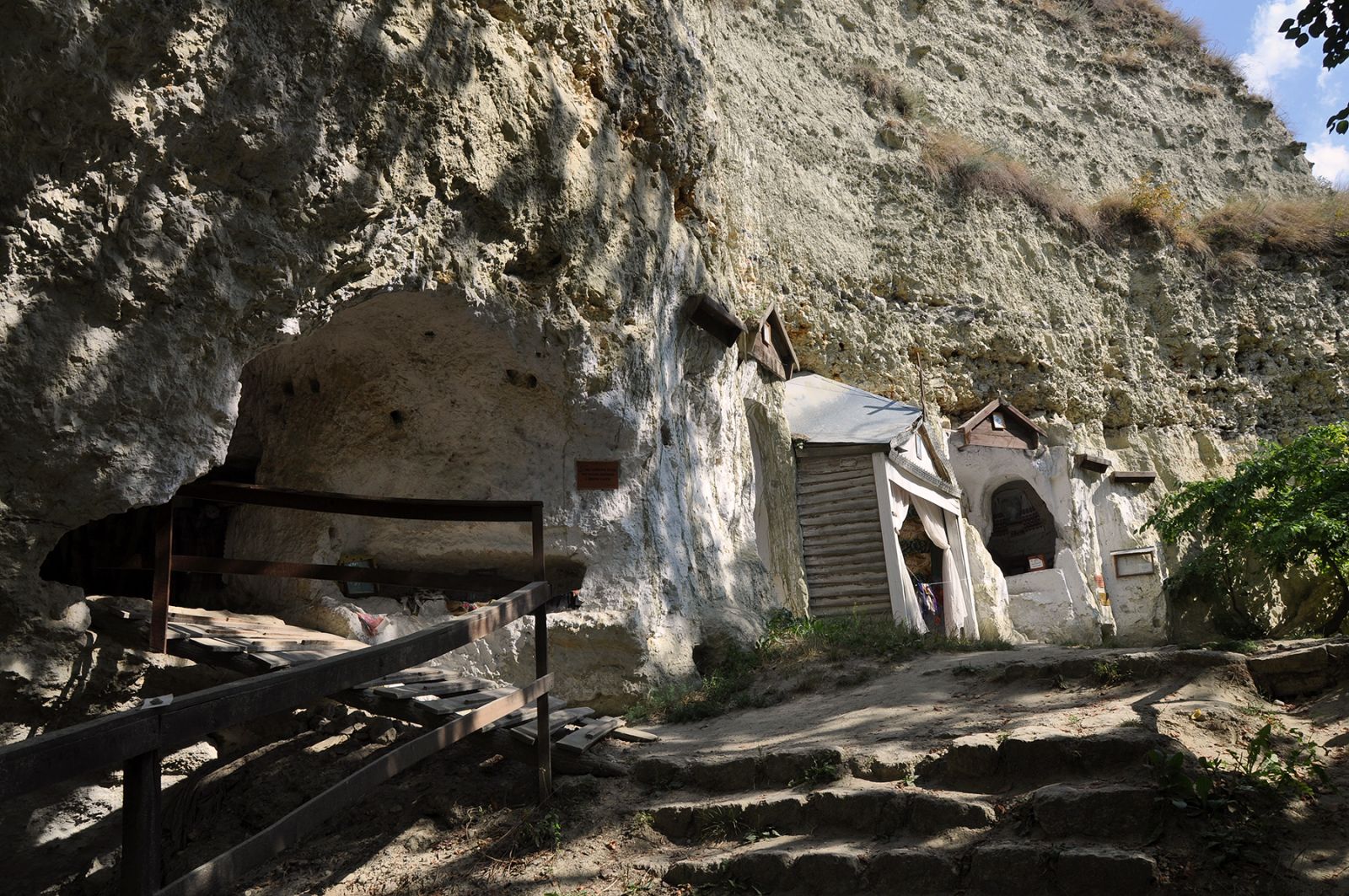
The most valuable thing to survive above the water is the St. Michael's cliff monastery on the slope of White Mountain. Monks carved cave cells and an underground church straight into the limestone rock around the 11th century, and it was the monastery, not the village, that made Bakota famous long before any dam existed. The caves worked as a spiritual centre for centuries, then were abandoned, buried by a landslide, and only in the 20th and 21st centuries were they gradually cleared and partly restored.
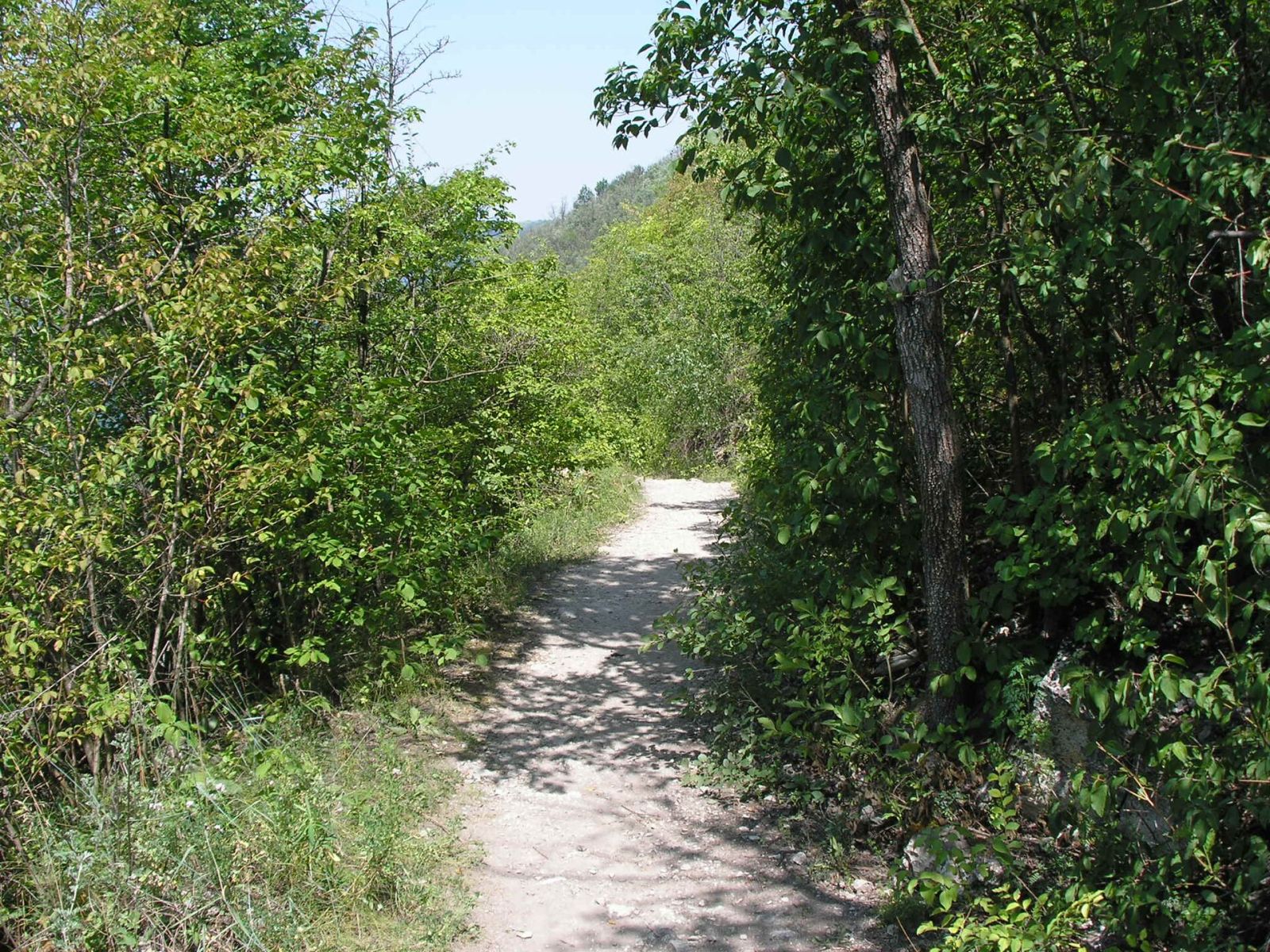
Today a footpath and wooden stairs climb the slope to the cells. Inside it is dim and cool, with niches cut into the stone, spots for icons and a spring nearby. This is not a museum with tickets and a cloakroom, but rather a quiet, prayed-in place under open sky. Treat it accordingly: pilgrims come here, and loud drone photo shoots over people's heads feel out of place.
What people actually come for
Honestly, the main magnet is the view from above. From the upper point over the monastery you get that postcard panorama: the wide arc of the bay, turquoise water, the far bank under forest and no sign of any big city. On a clear day it is one of the strongest views in all of Podillia. The second magnet is the water itself: people swim in the bay, fish, and paddle out on boats and SUP boards.
| What to see | Why it matters | How long |
|---|---|---|
| Viewpoint above the bay | The main panorama: the wide arc of the Dniester from above | 20-40 min |
| St. Michael's cliff monastery | Cave cells and an underground church in limestone | 30-60 min |
| Shore and swimming in the bay | Calm water, small beaches, easy swimming | as you like |
| Boat or SUP trip | The bay from the water, angles you cannot reach from shore | 1-2 hrs |
How to get to Bakota
Here you have to accept the main inconvenience: there is almost no public transport straight to Bakota, and the last stretch of road is unpaved and turns to mud after rain. The most convenient base is Kamianets-Podilskyi, about 50 kilometres away. From there the easiest option is a car or a local guide. The second reference point, closer in, is the town of Stara Ushytsia: from there the bay is quite near, and some routes start exactly there.
| From | Distance and road | How to go |
|---|---|---|
| Kamianets-Podilskyi | about 50 km, roughly 1 hour | Car or tour; the last stretch is unpaved |
| Stara Ushytsia | about 10-15 km | Nearest landmark; car, then on foot to the slope |
| Khmelnytskyi | about 100 km, roughly 1.5-2 hours | Car via Kamianets or Stara Ushytsia |
A car is almost the only realistic option here. Without one your plan comes down to an organised tour from Kamianets, or a taxi to Stara Ushytsia followed by the walking part. Satnav sometimes sends you down false field tracks, so follow the signs to the monastery and ask locals. Wear shoes you don't mind scrambling uphill in: after rain the slope is slippery.
When to go?
The best season runs from May to September. Late spring brings greenery and a full reservoir, summer means swimming and boats, early autumn gives golden leaves on the slopes and the best light for the panorama. People come in winter too, but the road gets harder and the whole appeal, warm water and greenery, is gone. The worst time is the off-season mud period, when the dirt road turns to porridge.
As for time of day. For the panorama from the heights, the best light comes in the afternoon, closer to evening, when the sun lights up the far bank and the water. Morning is good for silence and empty paths: on summer weekends the place draws a fair crowd, and at dawn you will have the bay almost to yourself.
A few honest warnings
Bakota is wild nature, not a groomed resort. There is no developed infrastructure: expect a bare minimum of cafes, toilets and bins, so bring water, a snack and a bag for your own rubbish. Swimming in the bay is pleasant, but the bottom and banks are stony and steep in places, so wade in carefully. And remember the status of the place: much of the territory is the Podilski Tovtry National Park, where rules apply on fires, tents and behaviour.
And the last point, the one that matters most for the mood. Bakota stays a place with a double bottom, literally and figuratively. You come for the beauty, and you stand above a drowned village with a thousand years of history. It is exactly this pairing, the lightness of the view and the weight of memory, that makes Bakota not just another photo spot but a place you want to return to and stay silent in.