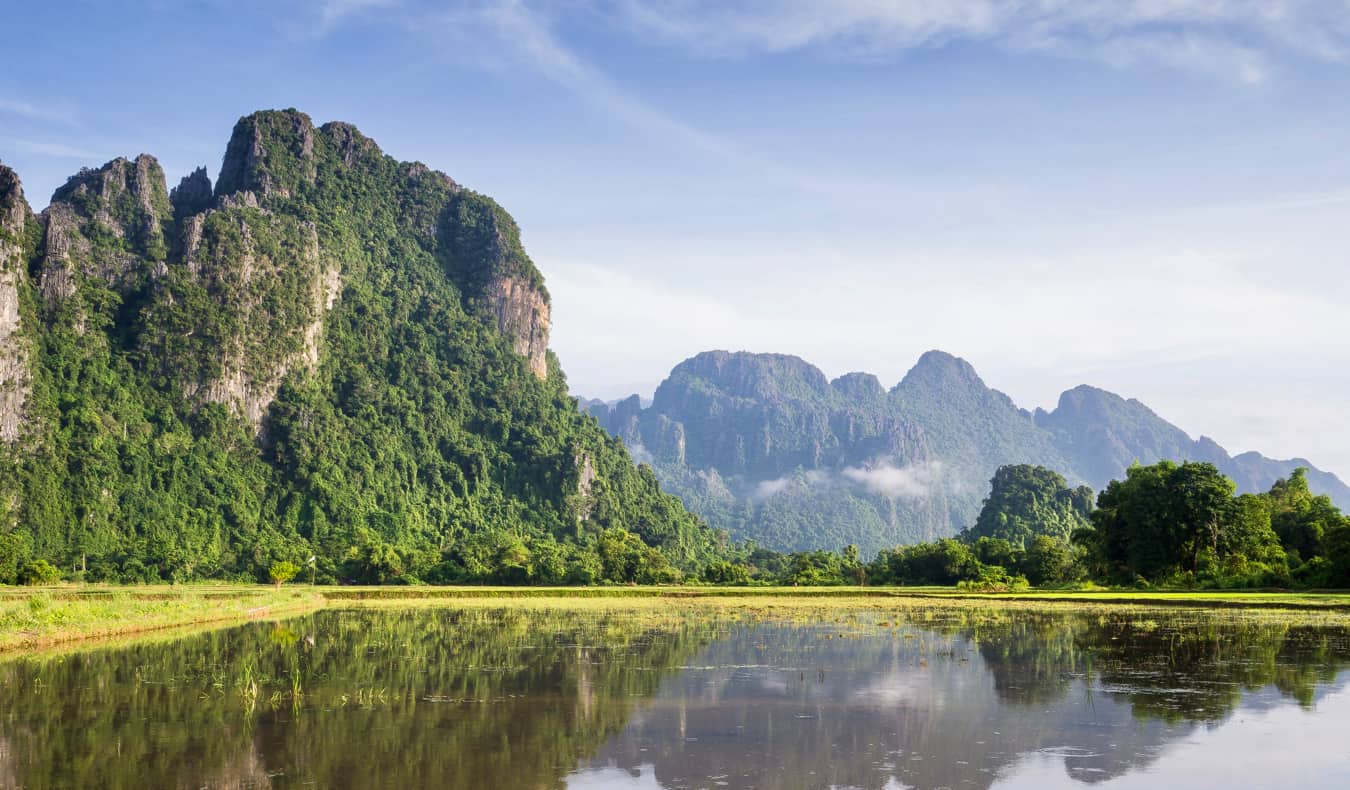


Like the spine of a sleeping dragon, dramatic limestone mountains rise above the lush rice paddies of central Laos.
And right at the heart of it all, you'll find Vang Vieng.
"Vang Vieng sits in a perfect spot, halfway between Vientiane and Luang Prabang," says Inthy Deuansavanh, president of Green Discovery, a tour company based in Vientiane.
Partner links: booking through them supports the blog at no extra cost to you.
"If the authorities manage the activities, keep the river clean and control the noise, this place has a bright future and will enjoy the benefits of tourism for a long time to come."
Vang Vieng, reimagined
Set on the banks of the Nam Song River, this rural town can feel wonderfully laid-back today. But Vang Vieng has lived through a turbulent 15 years, morphing from a farming community into a capital of hedonistic partying after Western travelers "discovered" it in the late 1990s.
Excessive drinking, drugs, litter, concrete construction and even fatal accidents took a heavy toll on the local community.
But in 2012 the story of Vang Vieng changed completely, when the government shut down most of the problem bars and party spots and repositioned the town as an eco-paradise.
MandaLao: Is this the most responsible elephant sanctuary in Laos?
Since then, a renewed Vang Vieng has risen from the ashes of its former excesses.
The town is once again a hub for adventure travel, serving up a full menu of adrenaline-fueled experiences.
Pan-Asian tour operators such as Khiri Travel and Grasshopper Adventures have discovered Vang Vieng too, and some of their tailor-made soft-adventure and cycling tours pass through town on a regular basis.
Stefan Scherer, general manager of Khiri Travel in Laos, sees huge potential in the area around town.
"The scenery here is stunning, with hundreds of caves, little villages and blue lagoons, many of them still waiting to be discovered," he says.
Down the river
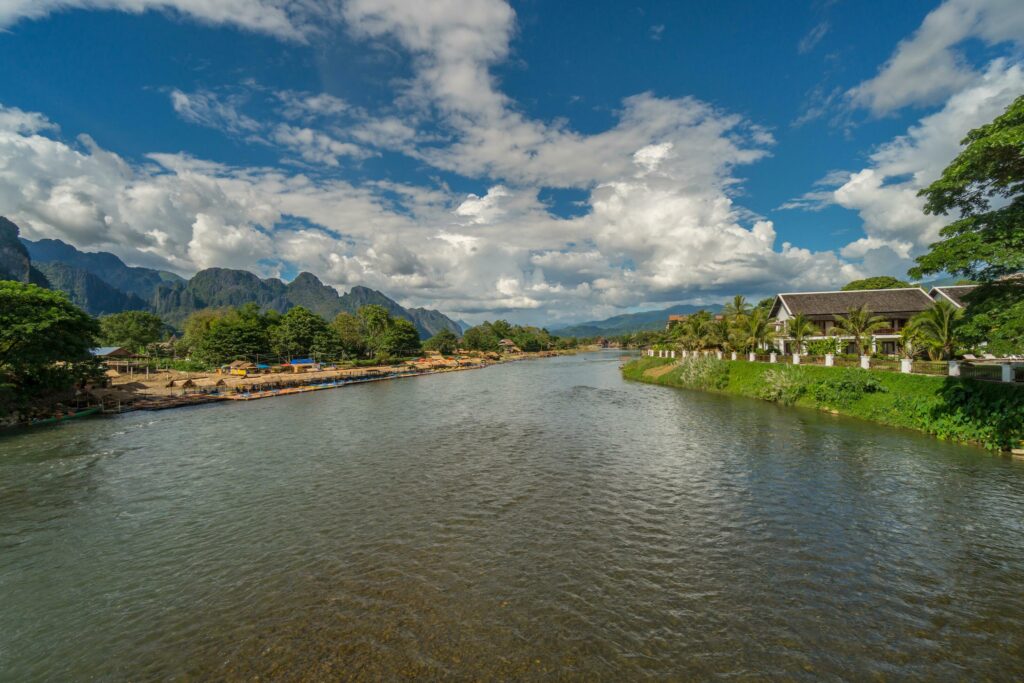
While Vang Vieng has closed the dangerous water slides that once lined the riverbanks, one thing hasn't changed: a relaxing tubing trip down the river is still the most popular outdoor pastime around.
Sitting in an old inner tube and drifting down the Nam Song into town, beer in hand, is the quintessential open-air outing on any Vang Vieng itinerary.
Travelers who want a more active river experience can rent one of the many kayaks or rafts in the afternoon and take in the spectacular sunsets against the mist-shrouded hills.
Hit the road
On the western side of the Nam Song, a 15-mile (25-kilometer) loop of dusty roads leads travelers to ethnic-minority villages, pastures grazed by water buffalo, a handful of caves, viewpoints and a string of so-called Blue Lagoons, known locally as bee.
These pools are numbered one through five, and the further you go, the more peace and quiet you'll find.
Visitors can hire a tuk-tuk for the short 7-kilometer trip out to the lagoons.
Rewarding climbs
Those craving a thrill in the air can try their hand at zip-lining. Several tour companies in Vang Vieng run trips.
In the dry season, from November through March or April, Vang Vieng offers some of the most spectacular rock-climbing and trekking opportunities in Southeast Asia.
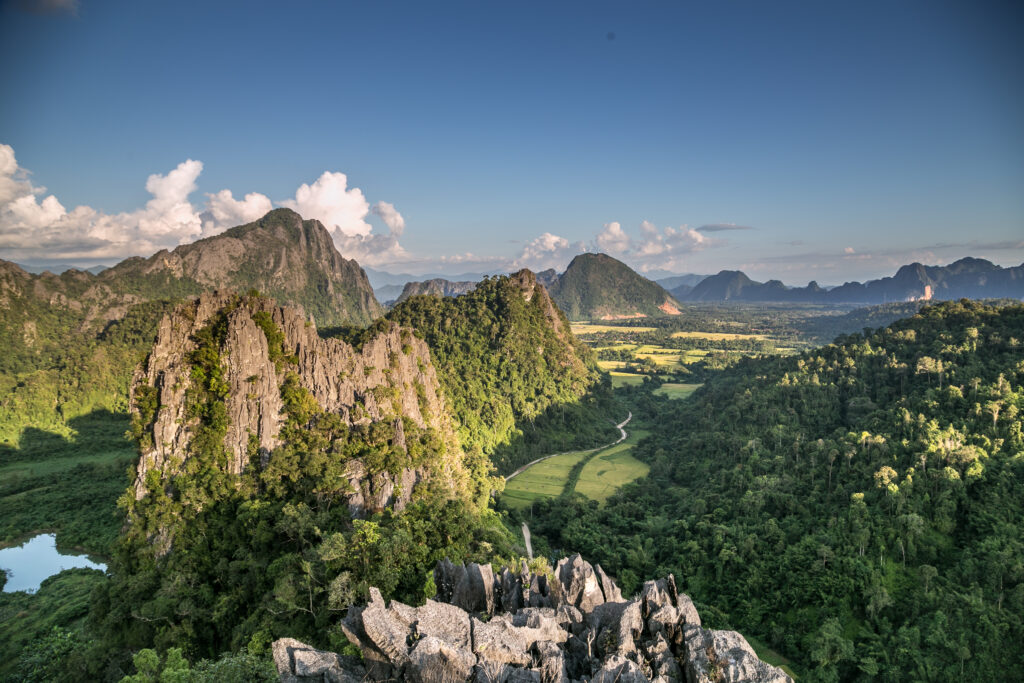
A short but steep climb up Pha Ngern, one of the region's highest peaks, rewards you with incredible sunrise and sunset views.
Standing on the wobbly 360-degree viewing platform, soaring above the valleys and rock formations, is every bit as dizzying as the sweat-soaked climb through dense forest, up rickety wooden ladders and over giant boulders.
Anyone after a more relaxed view of this breathtaking landscape can hop into a hot-air balloon for a ride over the picturesque countryside.
Eerie caves
Caves are another popular way to get active.
The rock formations and countless caves on the western bank of the river are best reached by mountain bike, though many tourists now prefer to travel by ATV or motorbike.
Some caves hold Buddhist artifacts, while others once sheltered locals from roving raiders.
At Tham Pha Daeng you can even take a dip in your own private lagoon.
At sunset, hundreds of bats pour out of this cave and others into the night.
Chilling tales of travelers getting lost in the pitch-black darkness are plentiful, so it's essential to bring a guide, water and a good flashlight.
Where to stay
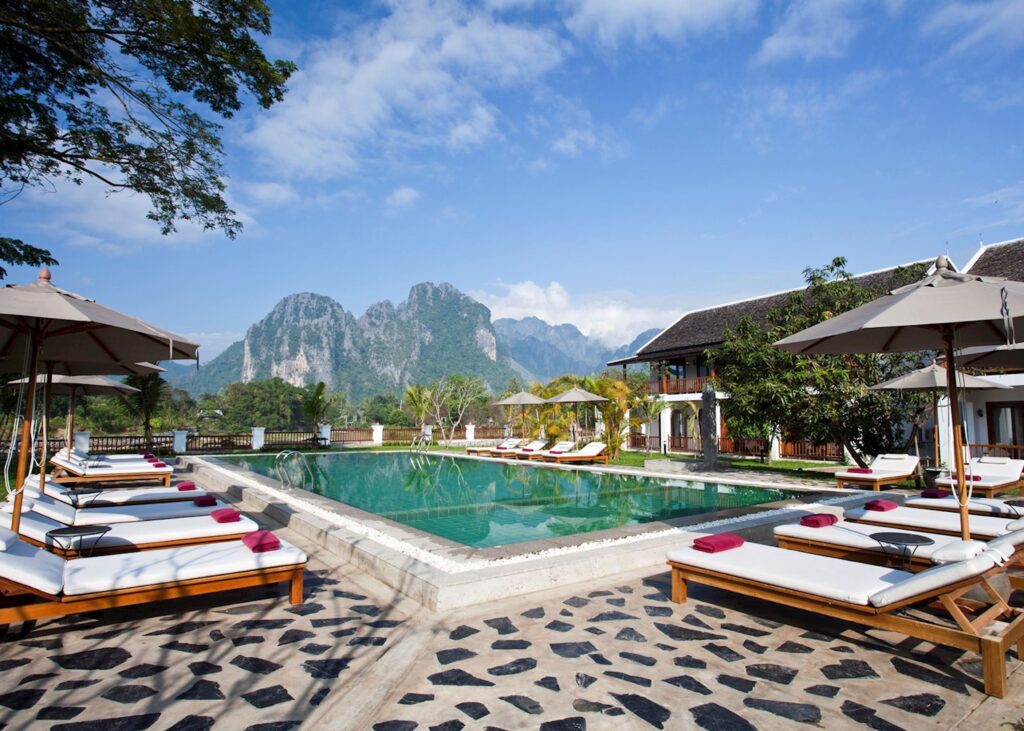
To make the most of the scenic landscape, agritourism hotels have sprung up as an alternative to the standard guesthouses.
An agritourism pioneer, the Organic Farm offers overnight stays for travelers who care about health and good food.
The farm's owner, Thanongsi Sorangkoun, known as Mr. T, once worked in the forestry department in Vientiane before returning in 1996 to Vang Vieng, where he was born.
"Back in the late '90s, travelers came here looking for organic food without MSG, and that got me thinking about opening a farm."
"Then foreign volunteers started coming, staying for free in exchange for work. I wanted to show the locals that you can make money without destroying the environment by using organic farming methods. Now we make excellent goat cheese and grow plenty of mulberry trees."
For those not ready to commit to farm life, the Riverside boutique hotel is another quality option.
This elegant French resort, set on the banks of the Nam Song, brings local flavor with design touches drawn from Laos's many ethnic minorities.
It also has a lovely pool, a charming spa, fantastic views of the surrounding peaks and a range of high-quality local tours developed in partnership with Green Discovery.
Meanwhile, the upscale Thai hotel chain Amari recently opened its own property in town. Amari Vang Vieng offers more than 150 rooms, most of them with river views.
Getting there
Vang Vieng lies between the Laotian capital, Vientiane, and Luang Prabang, both of which have international airports served by direct flights from regional cities.
You can arrange a taxi, minivan or bus to Vang Vieng from either city. Travel time ranges from 3.5 to 5 hours.