

In short, here is what to see in Sicily: Palermo with its street markets, the active volcano Etna, Taormina's Greek theatre above the sea, Syracuse with the island of Ortigia, the Valley of the Temples at Agrigento and the Norman cathedral of Cefalu. This is the largest island in the Mediterranean, 250 kilometres east to west, so one week realistically covers either the east coast or a Palermo-plus-east combination with a transfer. As for Greek temples, more of them survive here, and in better shape, than in Greece itself; that is not a turn of phrase but Agrigento's claim to a world record.
Palermo: markets, Norman mosaics and the Capuchins
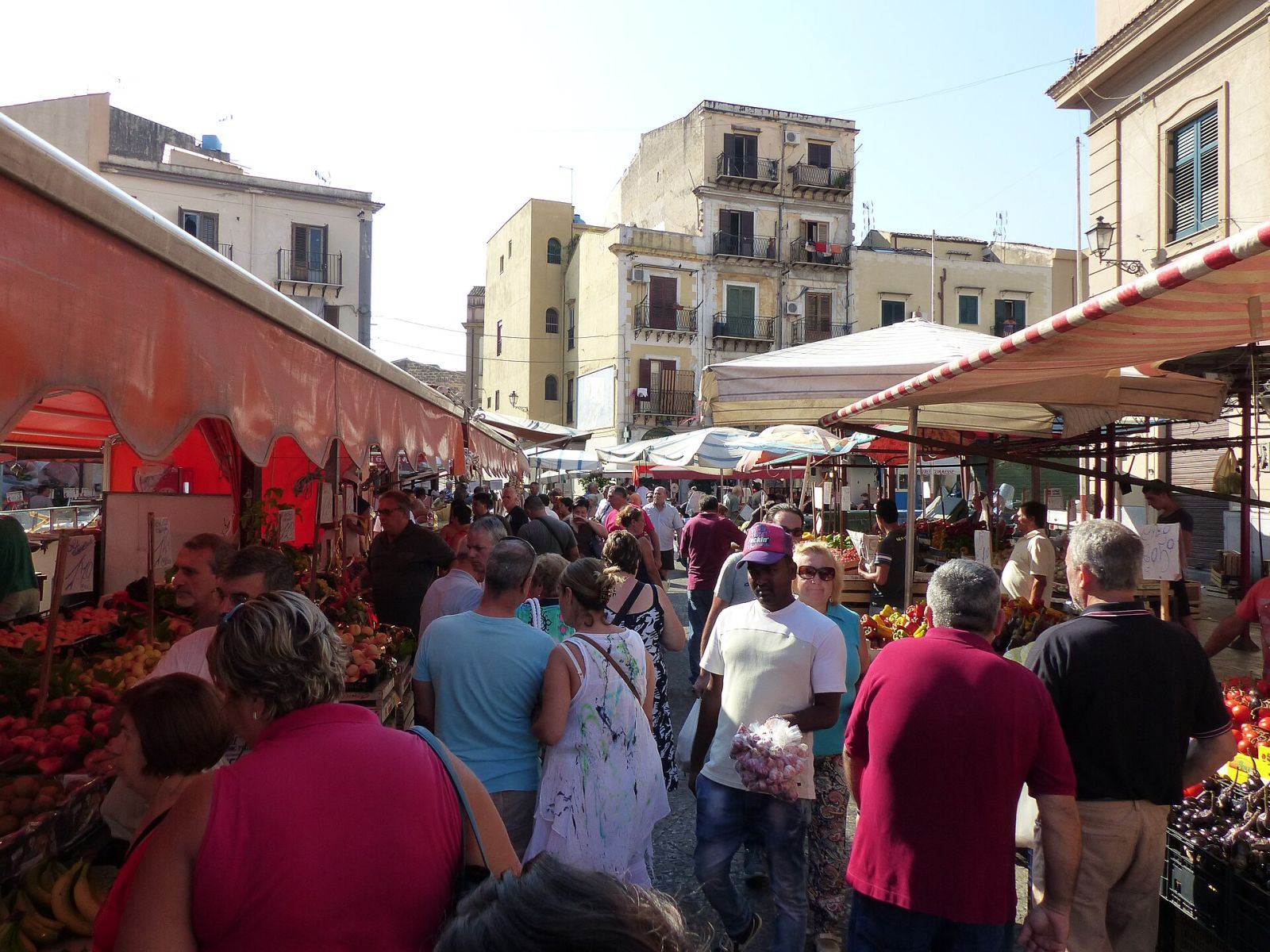
Palermo is loud, scuffed and charming all at once, and the affection rarely arrives in the first hour. Start with the markets: Ballaro and Capo are an Arab bazaar in the middle of Europe, all shouting vendors, swordfish stacked on ice and street food you cannot walk past. Try panelle (chickpea fritters), arancini and, for the brave, pani ca meusa, a bun stuffed with veal spleen, local fast food since the 15th century.
Among the sights, the Palatine Chapel in the Norman Palace stands alone: Byzantine gold mosaics under a carved Arab ceiling, commissioned by Norman kings. That blend of cultures is Sicily's formula in one room. Add Monreale cathedral half an hour away, where mosaics cover six thousand square metres of wall, and the Capuchin catacombs with several thousand mummies in their niches, a sight not for everyone but impossible to forget. Palermo with Monreale needs two full days.
Etna: how do you climb an active volcano?
Etna is Europe's highest active volcano at roughly 3,350 metres, and the figure floats because the mountain keeps rebuilding its own summit through eruptions. Visitors have two scenarios. Budget: drive up to Rifugio Sapienza at 1,900 metres, walk the Silvestri craters and head back. Full: cable car plus 4x4 shuttles to the 2,900-metre zone, and the summit craters only with a licensed volcanological guide, which is a requirement, not a suggestion. Check current activity and access rules on the Etna Park website before you go: after major eruptions the upper zone closes.
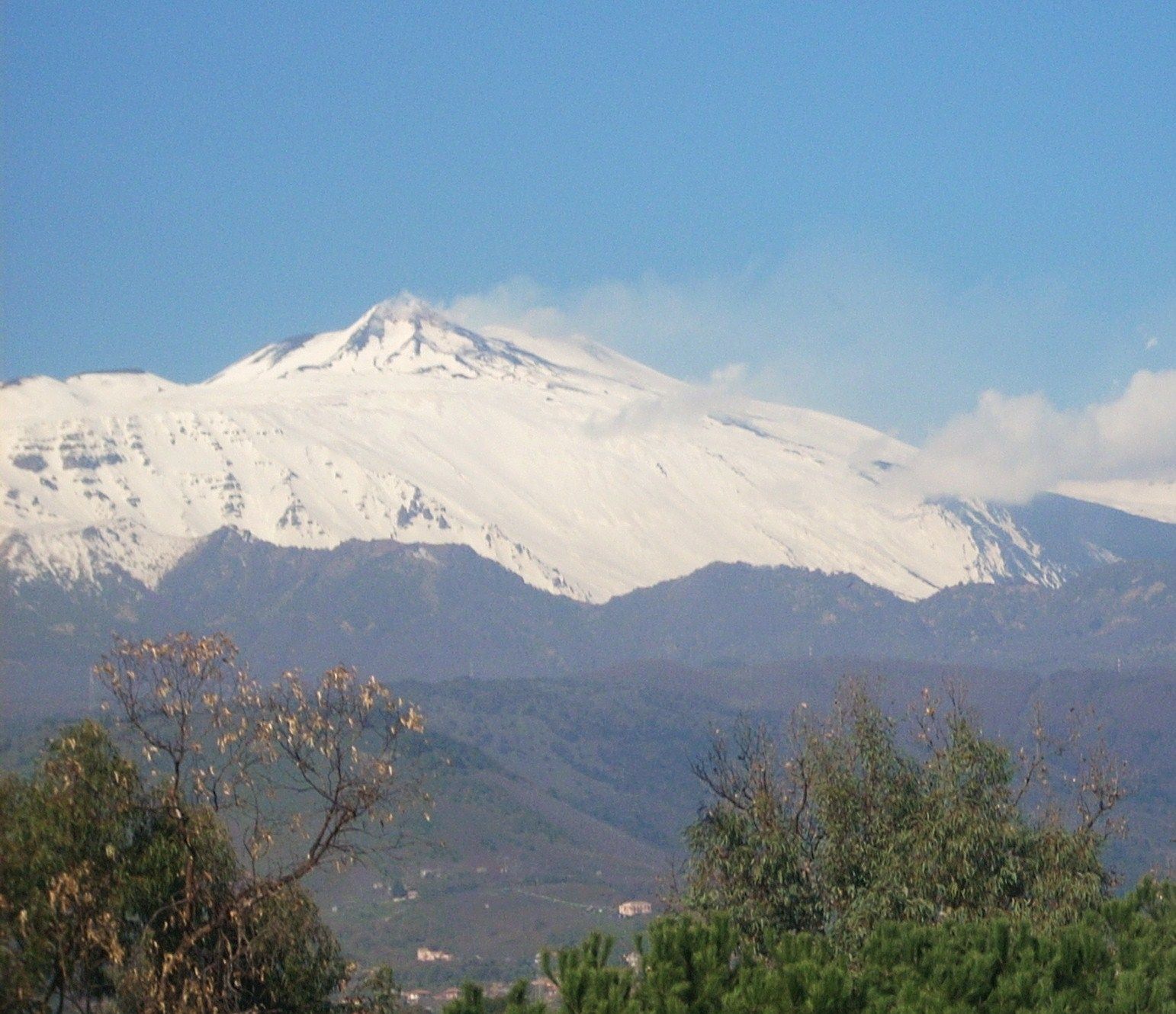
The practicalities are simple. Even in August it is 10°C and windy up top, so a windbreaker and closed shoes are mandatory, and the black lava dust destroys light-coloured footwear for good. Eruptions are a tourist genre of their own here: when Etna performs, evening lava-watching tours sell out instantly. And yes, Catania airport periodically shuts down because of ash, so build that risk into your connections.
Taormina: a theatre with the world's best backdrop
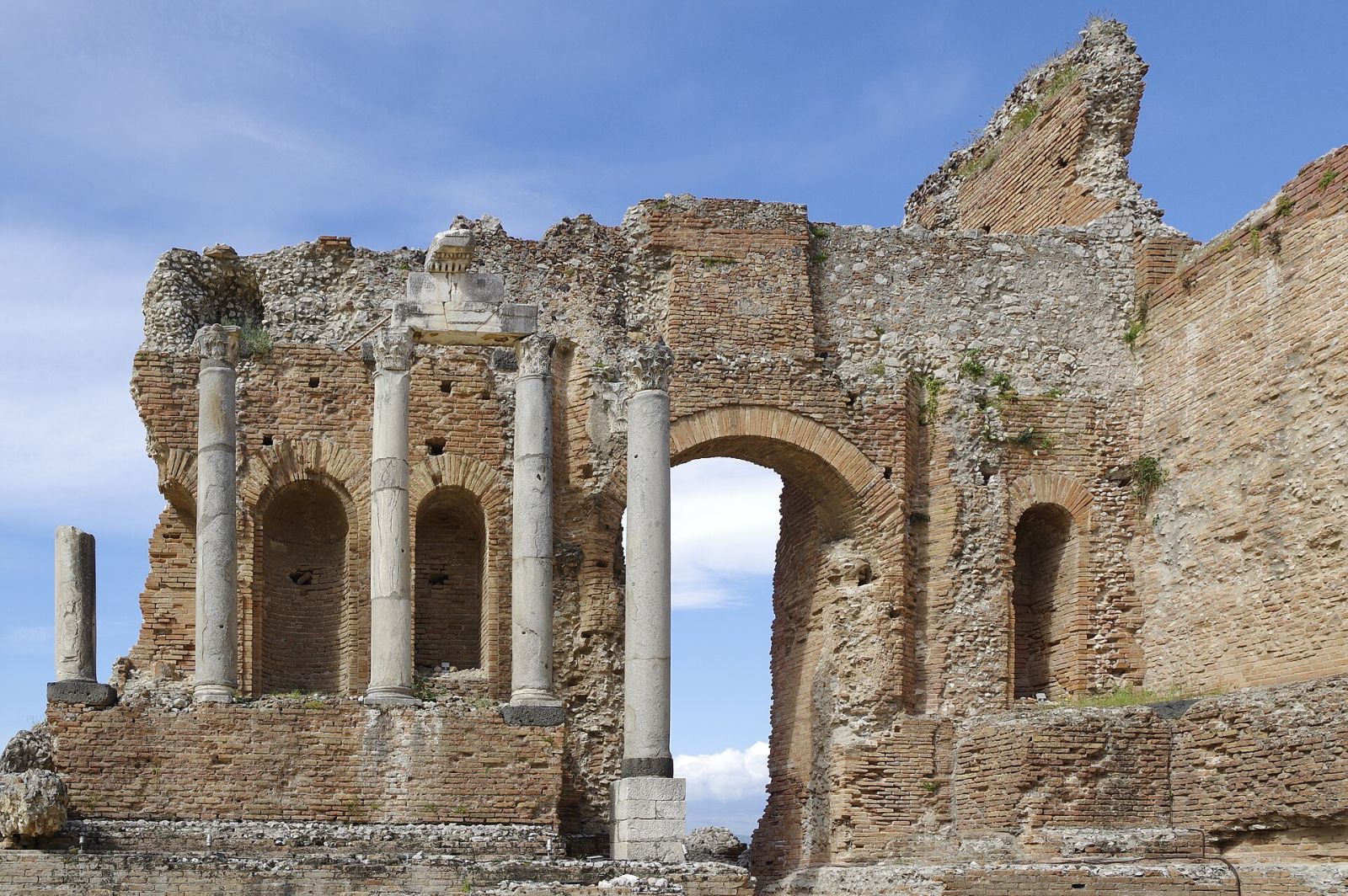
Taormina is resort classic with the prices and crowds to match, but the Greek theatre forgives it everything: a 3rd-century BC stage opening straight onto the sea and a smoking Etna. No architect ever designed a better backdrop. Beyond the theatre there is Corso Umberto for the evening passeggiata, the Villa Comunale gardens and a cable car down to Isola Bella, a tiny islet on a sandbar that the tide alternately joins to the shore and cuts off. Half a day to a day is enough; accommodation here is the island's priciest, so many stay in neighbouring Giardini Naxos or Letojanni instead.
Syracuse and Ortigia: where the Greeks left the most
In antiquity Syracuse disputed with Athens the title of the greatest city in the Greek world, and the legacy matches. The Neapolis archaeological park holds a Greek theatre seating 15,000, where classical drama is still staged every spring, a Roman amphitheatre and the Ear of Dionysius, an artificial cave with acoustics so sharp a whisper carries dozens of metres. The eavesdropping-tyrant legend was invented by Caravaggio, but the name stuck.
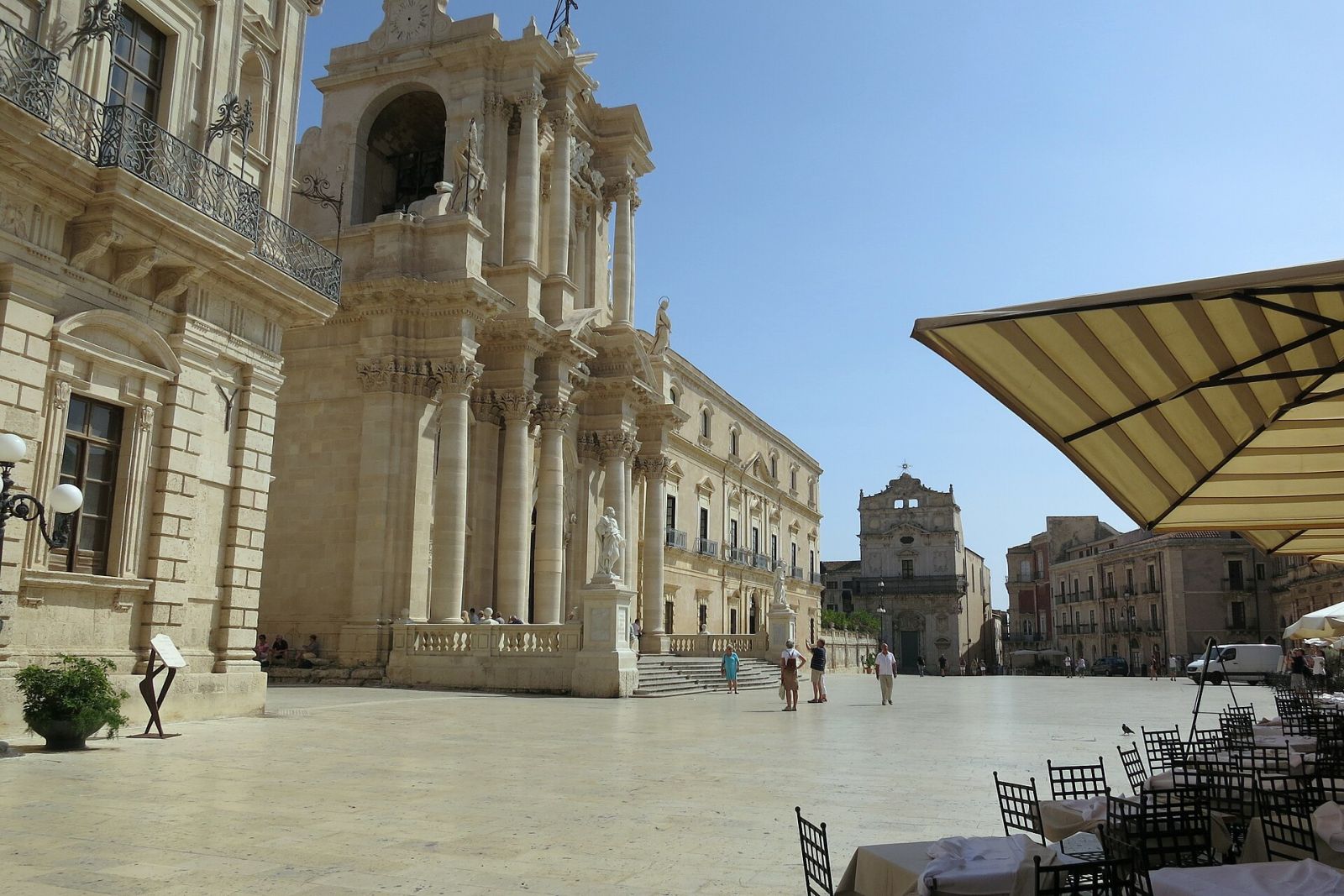
The old town sits on the island of Ortigia, joined to the rest of Syracuse by two bridges, and it is Sicily's most atmospheric historic centre: the Baroque Piazza del Duomo with a cathedral built directly into the columns of a Greek temple of Athena (the columns are visible inside and from the street), the Arethusa spring with wild papyrus and a morning fish market. Stay the night here: Ortigia in the evening, its Baroque floodlit and the day-trip groups gone, is a different city. One full day minimum, better two.
Agrigento: the Valley of the Temples
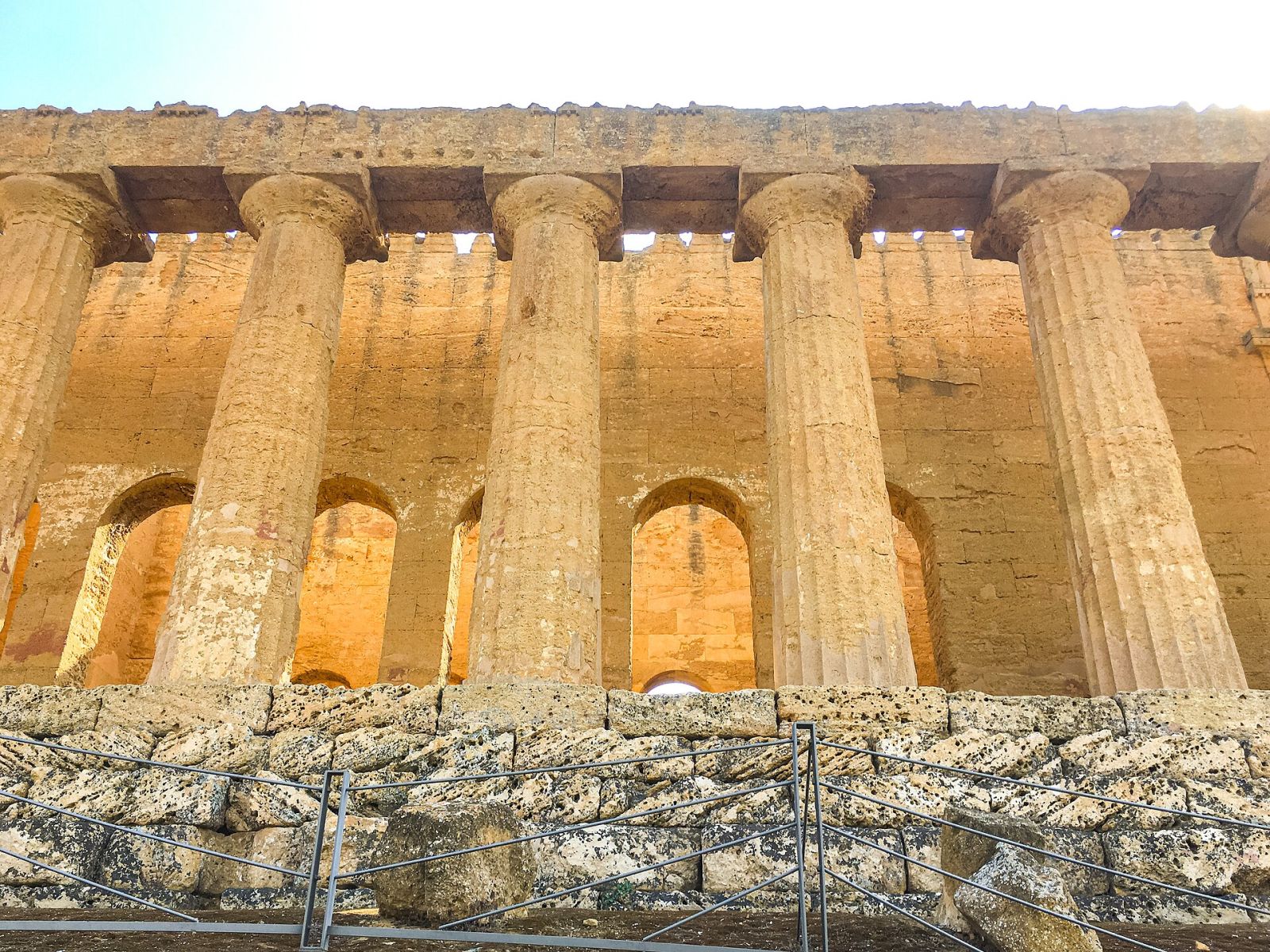
The Valley of the Temples is actually a ridge above the sea, lined with the temples of Greek Akragas. The Temple of Concordia survives almost intact, one of the two or three most complete Doric temples anywhere, flanked by the temples of Juno and Heracles and the toppled giant of Olympian Zeus with its eight-metre stone atlantes. The park is large, kilometres of open sun with no shade, so in summer go at eight in the morning or in the evening: the park regularly opens late with floodlighting, and Concordia in yellow light hits harder than by day. Check hours and tickets on the park's official site. Half a day plus the drive covers Agrigento.
Cefalu: a beach beneath a Norman cathedral
Cefalu, an hour by train from Palermo, combines what usually forces a choice: a proper sandy beach and a serious monument. Its 12th-century Norman cathedral, with the Christ Pantocrator mosaic in the apse, is UNESCO-listed together with Monreale and the Palatine Chapel. Above the town looms La Rocca; the hour-long climb pays out with a view over terracotta roofs and the bay. Old lanes, the medieval washhouse, an evening aperitivo on the seafront: Cefalu is the perfect closing chord of the route or a day trip from Palermo.
The 7-10 day itinerary
| Days | Base | Programme |
|---|---|---|
| 1-2 | Palermo | Markets, Palatine Chapel, Monreale, catacombs |
| 3 | Cefalu | Cathedral, La Rocca, beach, evening transfer east |
| 4 | Taormina | Greek theatre, Isola Bella, passeggiata |
| 5 | Etna | Guided ascent or the Silvestri craters, evening in Catania |
| 6-7 | Syracuse | Neapolis, overnight on Ortigia, morning market |
| 8-9 | Agrigento | Valley of the Temples in the evening hours, drive back to Palermo |
| 10 | Palermo | Departure, or a spare day on the San Vito lo Capo beach |
For 7 days, compress the plan by dropping Agrigento or Cefalu. A car in Sicily is strongly advisable: trains link the coasts but slowly, and intercity buses sometimes beat the railway. Local driving style is chaotic; in Palermo and Catania avoid taking the wheel into the centre at all, and ZTL zones apply just as on the mainland. Park in guarded lots and leave nothing visible in the car.
When to go, and what is the sirocco?
The sweet spots: May, early June, September and early October. The sea is warmest in September at 26°C. July and August are honestly hard: 35°C in the shade is the norm, the stones of ancient ruins bake, and August adds the peak of Italian holidays with matching prices and traffic.
Sicily's special factor is the sirocco, a hot wind out of the Sahara. It arrives several times a season, pushes temperatures to 40°C and beyond, fills the air with fine rust-coloured dust and lasts one to three days. On sirocco days rebuild your plans: museums and cathedrals instead of open-air ruins, the sea instead of city walks. Forecasts catch it well, so watch the weekly wind. Winter on the island is mild at 15°C by day, an underrated cheap season for a sightseeing route without beaches; just note that Etna's upper slopes are under snow and part of resort Taormina sleeps until spring.