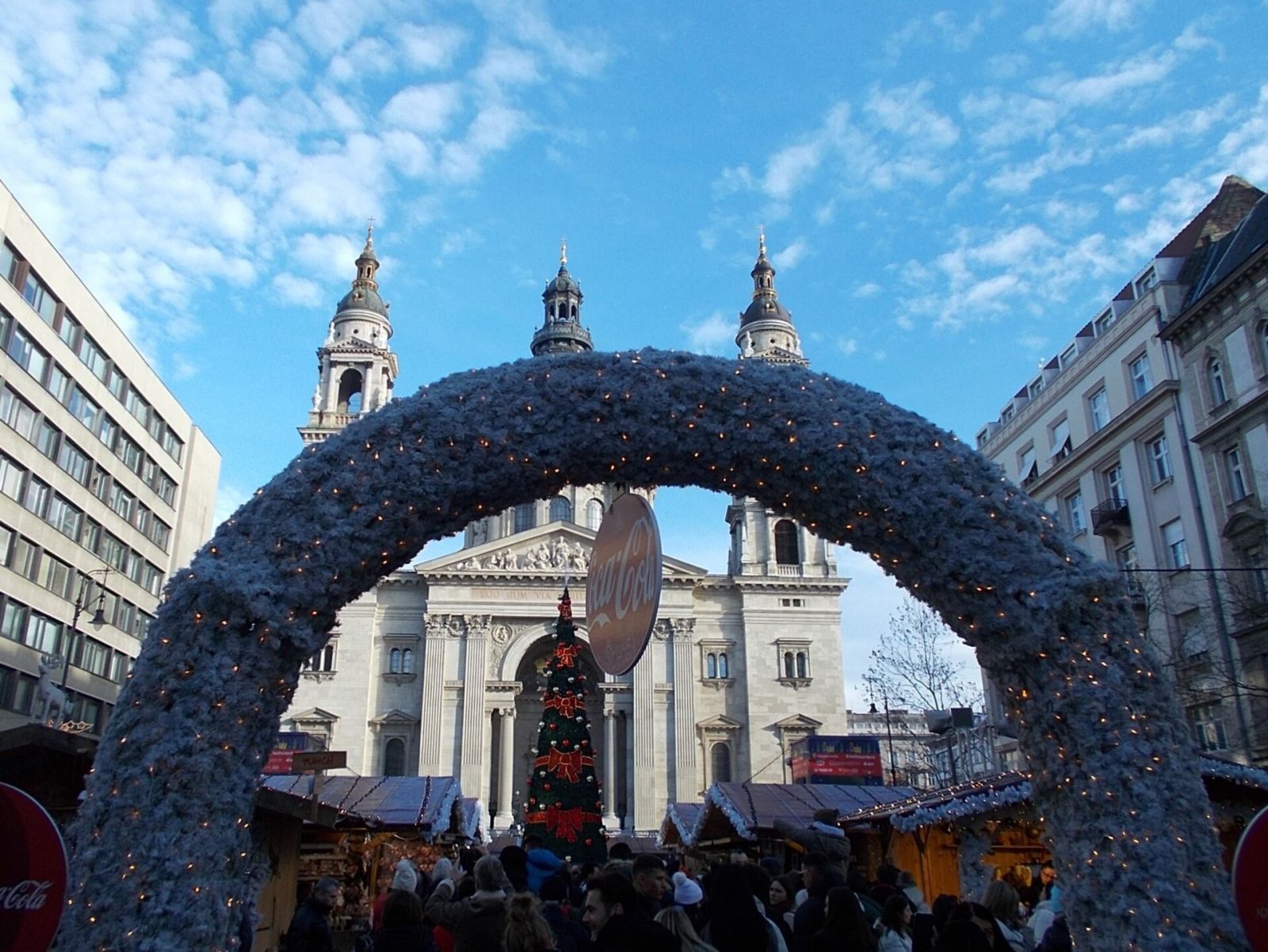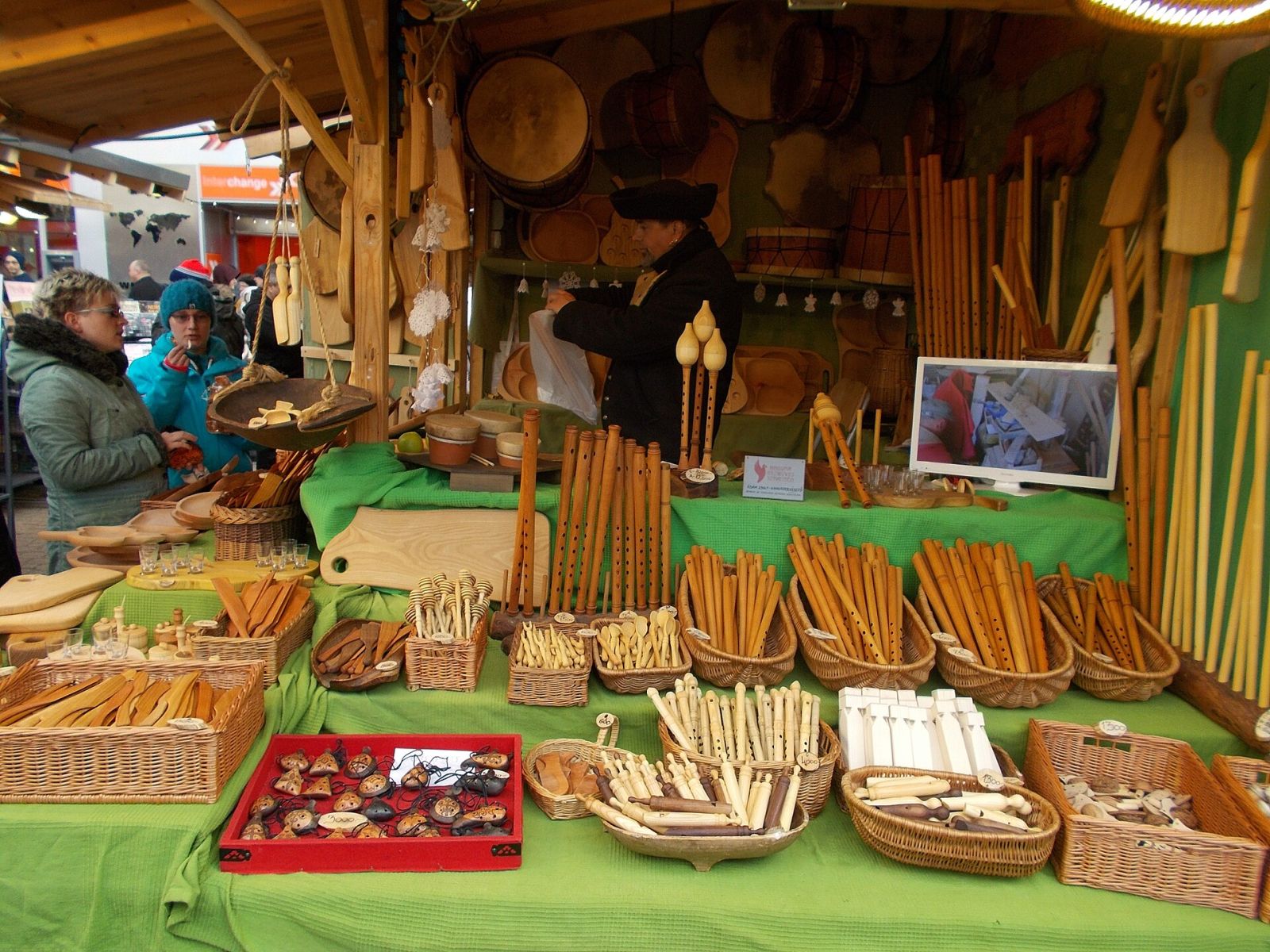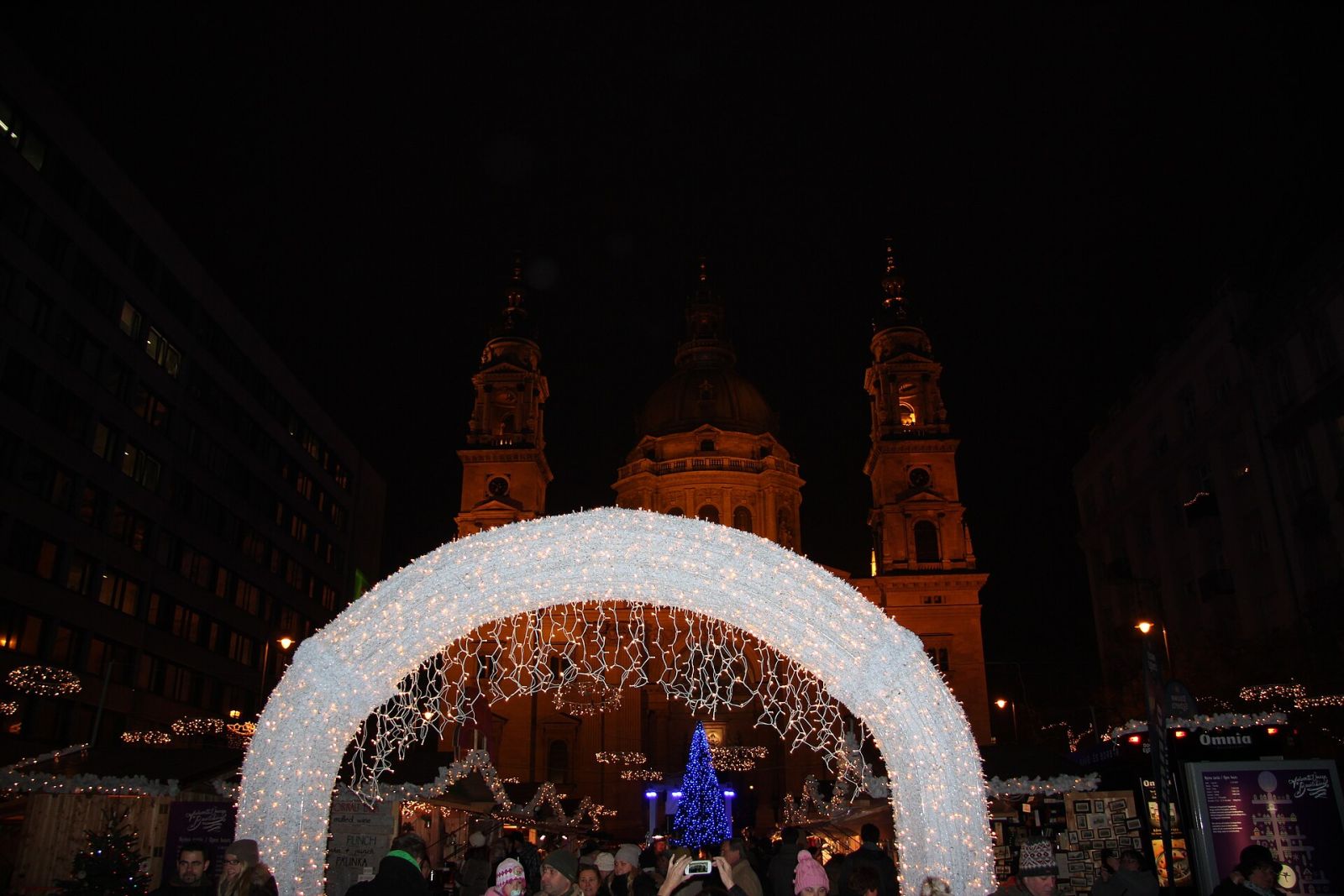


The Budapest Christmas markets rank among Europe's best year after year, and the market at St. Stephen's Basilica has won the title of the continent's best Christmas market several times in the European Best Destinations vote. The season runs long: the first wooden huts open in mid-to-late November, and the main squares keep going until December 31 or January 1. And Budapest holds one card Vienna and Prague cannot match: after the market you can warm up not in a hotel lobby but in an open-air thermal bath.
The market at St. Stephen's Basilica: a light show on the facade
The season's headline act is the square in front of St. Stephen's Basilica. This market is more compact than its neighbor on Vorosmarty Square but more theatrical: every evening, usually every half hour after dark, a 3D light show is projected onto the basilica's facade, several minutes of animation covering the entire church, free of charge. The crowd packs in tight, so take a spot in the center of the square about ten minutes before it starts.
The second signature here is the ice rink circling the Christmas tree in the middle of the square: small, built more for photos than for sport, and exactly right for kids. Around it run the craft stalls, and the handmade share is traditionally higher here than anywhere else in town: ceramics, leather, hand-painted tree ornaments. Prices match the setting, this is the most expensive market in the city, but also the most atmospheric.
Vorosmarty Square: the classic
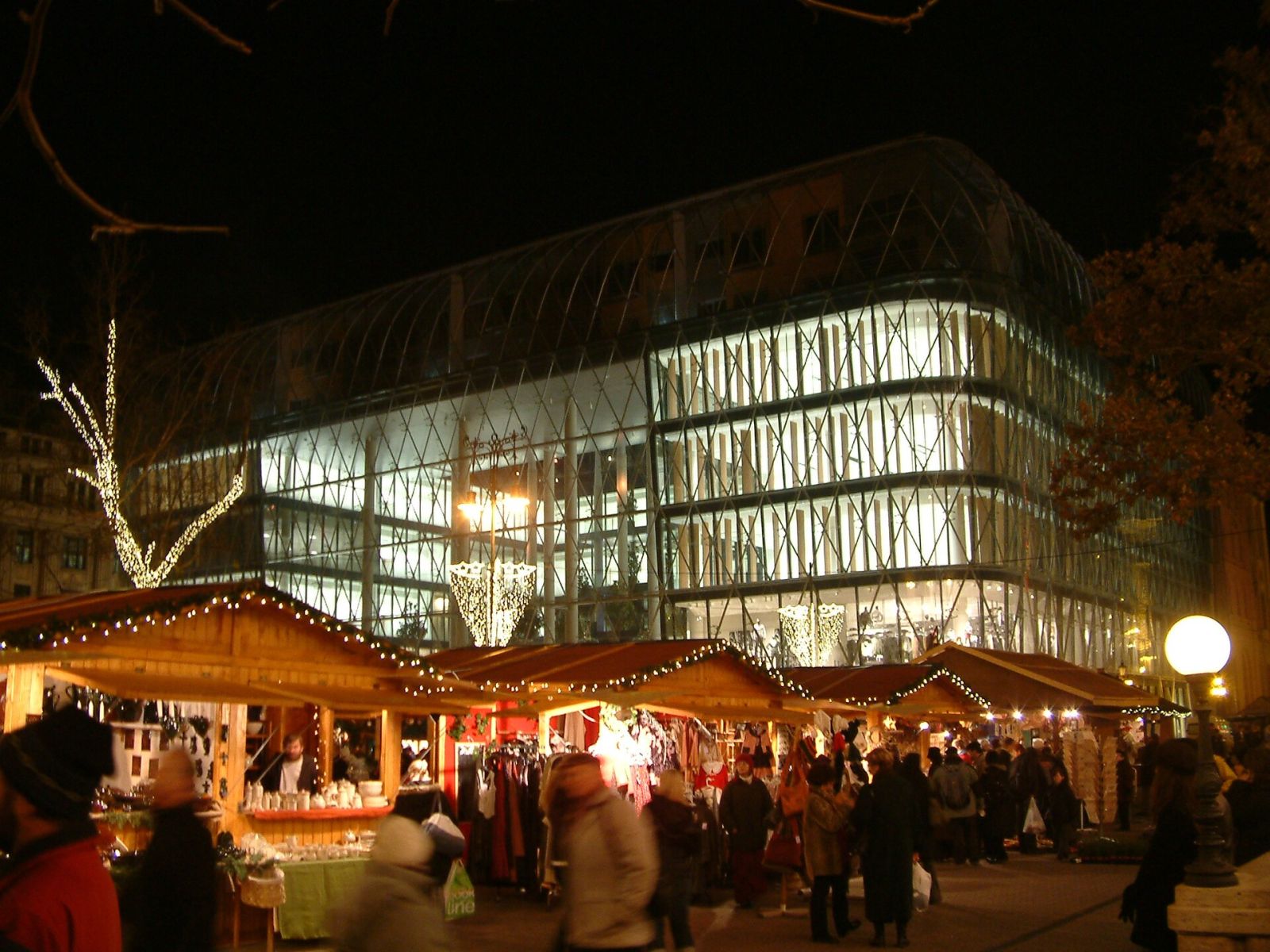
The market on Vorosmarty Square, the city's oldest and largest, has run since the early 2000s and fills the whole square in front of the Gerbeaud confectionery. The format is classic: wooden chalets, a stage with live music in the evenings, long food rows where everything is cooked in front of you, goulash in bread bowls, sausages, roasted chestnuts. Vendors must meet artisan criteria, so mass-produced trinkets are nearly absent, the organizers police this.
The basilica and Vorosmarty sit a seven-minute walk apart along Zrinyi Street, and that route, an illuminated pedestrian street lined with festive installations, ties the evening together: two markets in a single outing.
When to go: dates and the season's rhythm
Exact dates shift slightly each year, so verify them on the official tourism portal budapestinfo.hu before booking. The overall frame has been stable for years.
| Period | What is open | What to expect |
|---|---|---|
| Mid-to-late November | both main markets open | minimal crowds, everything already lit |
| December 1-23 | full swing, basilica show nightly | peak atmosphere, packed weekends |
| December 24-26 | some stalls closed or on short hours | the quietest days, a half-empty city |
| December 27 - January 1 | markets wind down, New Year program | busy again, peak hotel prices |
The sweet spot for atmosphere versus crowds: late November and the first two weeks of December, on weekdays. On Saturday evenings you do not walk between the stalls so much as drift with the current.
What to eat: chimney cake, mulled wine and goulash in bread
Food is half the point of the trip, and a few items are non-negotiable.
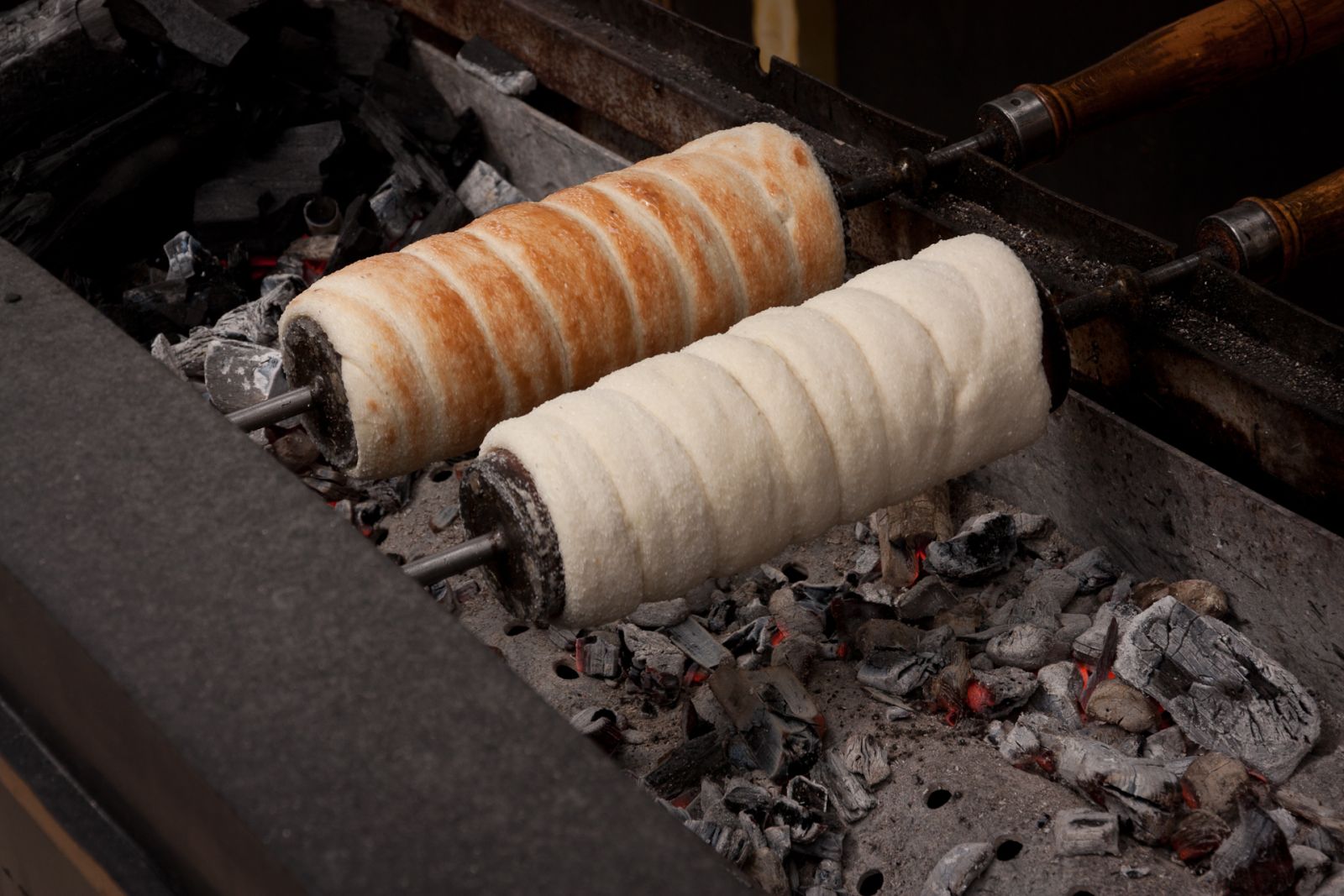
- Kurtoskalacs: the chimney cake, dough wound around a wooden spit and roasted over coals until the sugar caramelizes into a crackling crust. Cinnamon sugar is the classic, walnut is excellent too. Buy one being spun in front of you, not a reheated one.
- Forralt bor: Hungarian mulled wine, red or white, often made with local wines. It comes in a souvenir mug with a deposit: return the mug and get your money back, or keep it as a souvenir.
- Goulash in a bread bowl: thick and filling, one portion comfortably counts as dinner.
- Langos: fried flatbread with garlic, sour cream and cheese, Hungary's defining street food.
- Warm cherry liqueur and palinka: for anyone who finds mulled wine too gentle, though treat palinka with respect, its strength is routinely underestimated.
An honest word on budget: market food in Budapest has become noticeably pricier in recent years, and a portion of goulash or langos on the main squares costs about as much as lunch in a decent restaurant nearby. An evening for two with food and mulled wine easily reaches 40-50 euros. Cards are accepted practically everywhere, some stalls are cashless entirely.
Thermal baths in winter: the perfect pairing
Budapest is the only European capital with such a roster of working thermal baths, and winter is their best season. Szechenyi is the famous one: vast outdoor pools at +36…+38C with steam rising into the frost, and that exact contrast, hot water, cold air, floodlit baroque facades, produces the definitive winter image of Budapest. Rudas wins on its 16th-century Ottoman bath hall and a rooftop panorama pool overlooking the Danube. Art nouveau Gellert has been closed for renovation since October 2025, with reopening not expected before 2028, so leave it off your winter plan. Buy tickets online in advance, holiday-season slots sell out, and give a bath at least half a day.
Tips that actually save money and nerves
- Arrive at the markets before 5 pm: you can taste and browse without queues, then stay on for the basilica's 3D show after dark.
- Deposit mugs for mulled wine: unless you collect them, return them, two mugs over an evening add up to the price of another drink.
- Hot food works best shared, one portion for two lets you sample more of the menu.
- The cheapest way around town is a 72-hour travel pass or the Budapest Card, single metro tickets eat more on a busy schedule.
- Book December hotels 4-6 weeks ahead, and earlier still for New Year week: accommodation prices peak then.
- Dress as if for a mountain walk: standing on a square with a mug of wine chills you far faster than walking does.
The bottom line is simple: winter Budapest works like a double ticket, thermal water and architecture by day, market lights and cinnamon in the air by night. Plan at least three days: two evenings for the basilica and Vorosmarty, half a day for a bath, and you will still have time to walk to the Parliament building, which looks its best all year under December floodlights.