

Macedonian food rests on three pillars: roasted peppers, beans and wine from the Tikves valley. This is the heartiest, most honest cooking in the Balkans: no fine-dining pretensions, just wood-fired ovens, clay pots and portions that make dinner optional. A meal at a decent tavern costs a fraction of what you would pay across the border in Greece, and often tastes better for it.
Tavce gravce: the national dish, no contest
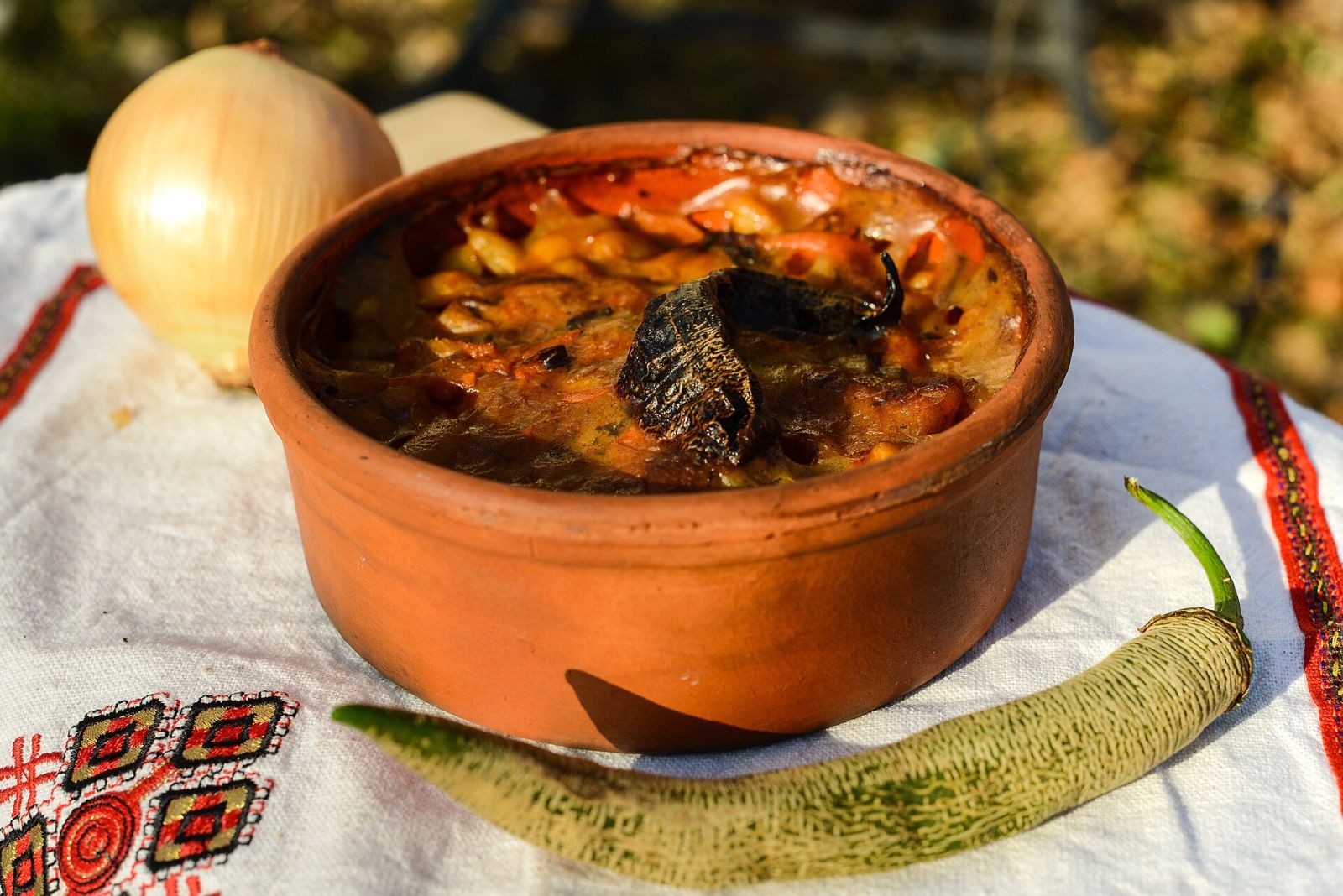
If North Macedonia has one gastronomic symbol, it is tavce gravce, baked beans in an earthenware skillet (the "tava" that gave the dish its name). Large white beans from the Tetovo region are stewed with onion, sweet paprika and dried mint, then baked until a caramelized crust forms. It arrives in the same clay dish, so hot that for the first five minutes all you can do is inhale. There are meat-free versions and versions loaded with sausage or ribs. Order fresh bread alongside: the sauce demands mopping, and a spoon will not do the job alone.
Ajvar: the pepper spread that smells like autumn
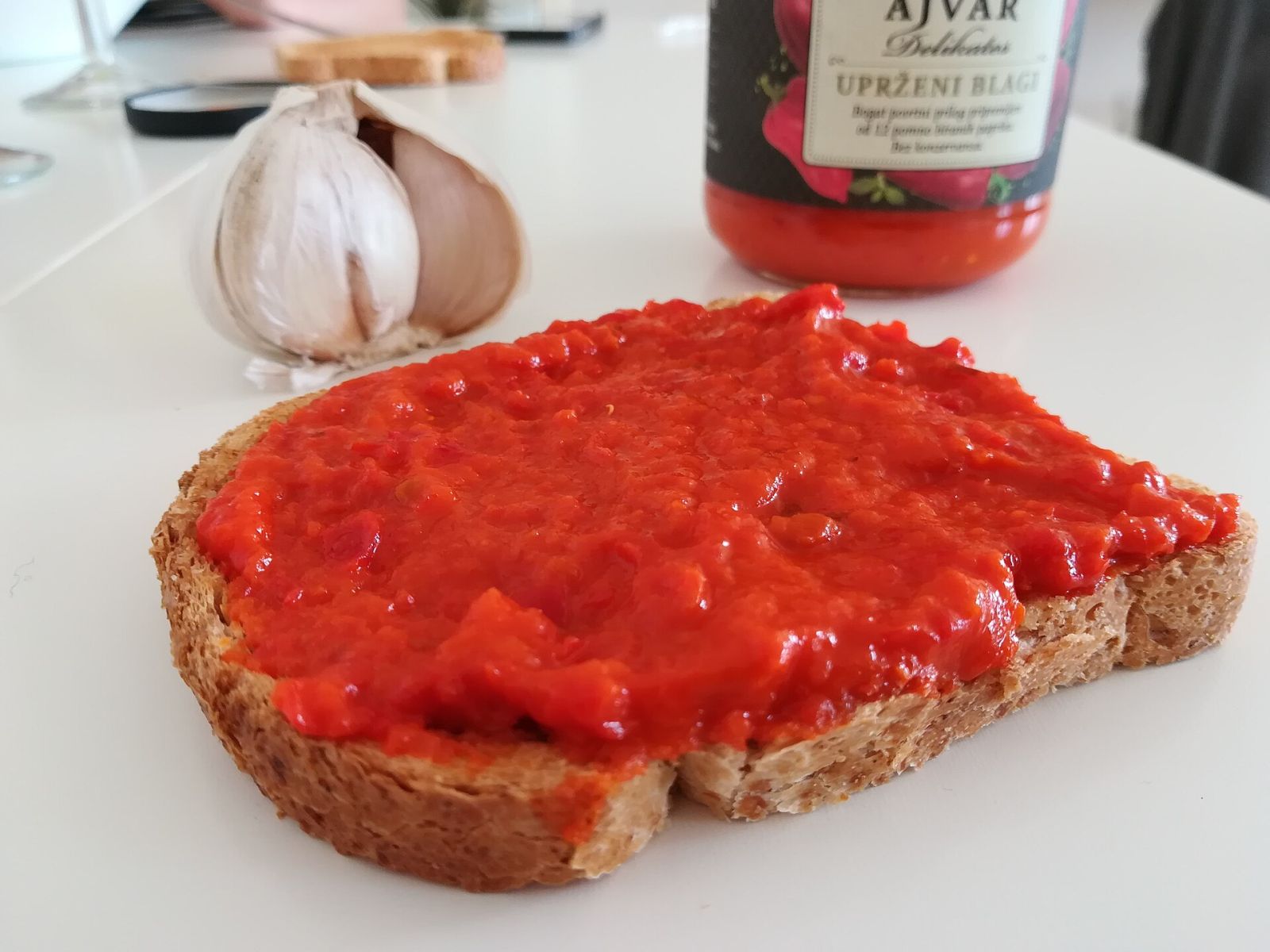
Ajvar, a thick relish of fire-roasted red peppers, is not merely a condiment here but a family ritual. In late September courtyards across the country fill with smoke: peppers are roasted by the crate, peeled by hand, ground and simmered for hours in cauldrons. The best ajvar is homemade, so if anyone offers you "ours, from the village", say yes immediately. Restaurants serve it with meat, cheese or simply bread. Know the difference: blag is mild, lut is hot. A jar of ajvar also happens to be the best edible souvenir the country makes; it survives a suitcase far better than wine.
Shopska salad and sirene: how every table starts
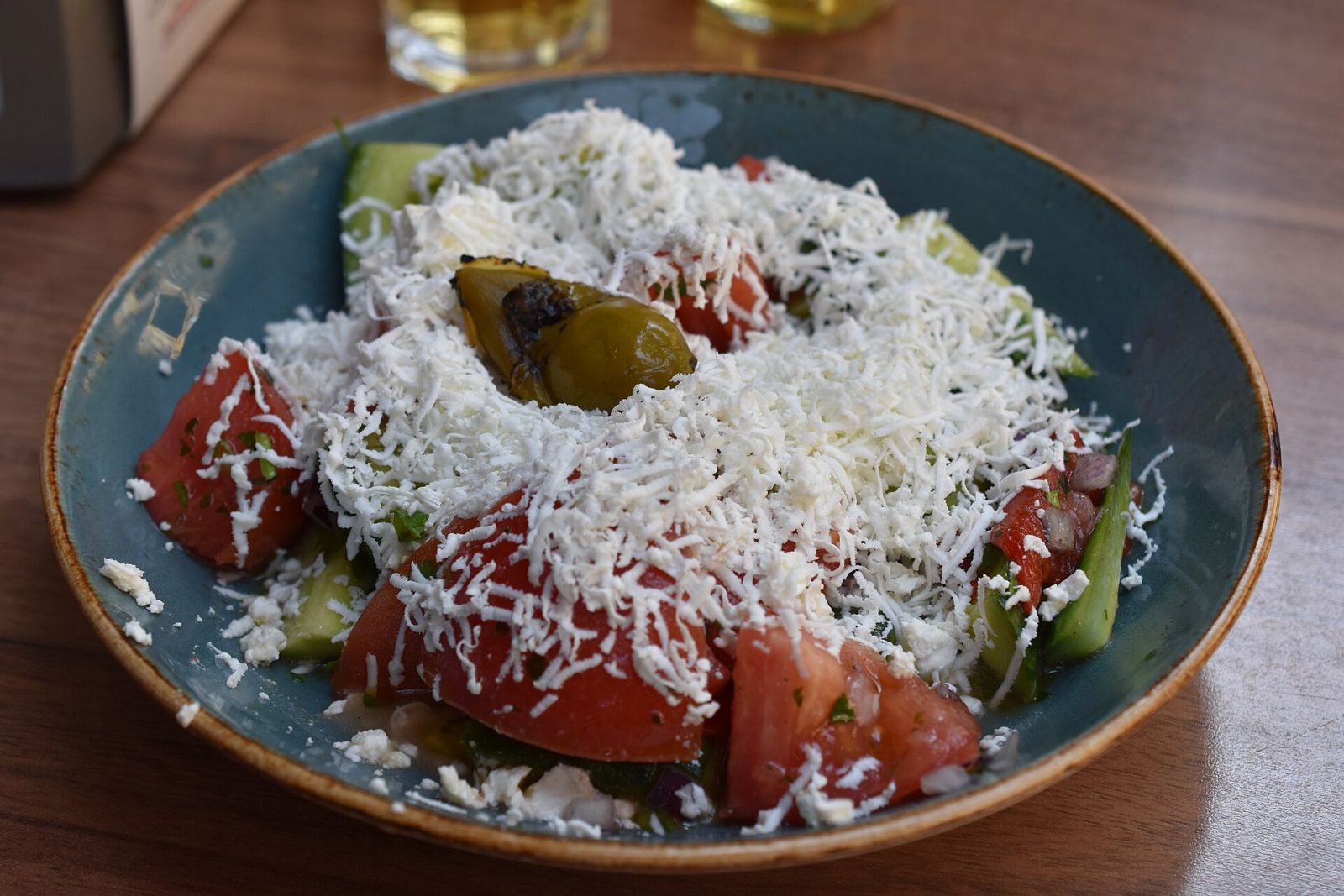
No dinner begins without shopska salad: tomatoes, cucumbers, onion, sometimes roasted pepper, all buried under a snowdrift of grated white sirene cheese, similar to feta but softer. It looks simple and works flawlessly, especially in summer when Macedonian tomatoes hit their peak. The usual companion is rakija, grape or plum brandy: locals sip it slowly over conversation, using the salad as the chaser. It is a whole aperitif culture, and you should surrender to it.
Pastrmajlija: the Macedonian "pizza" that predates pizza
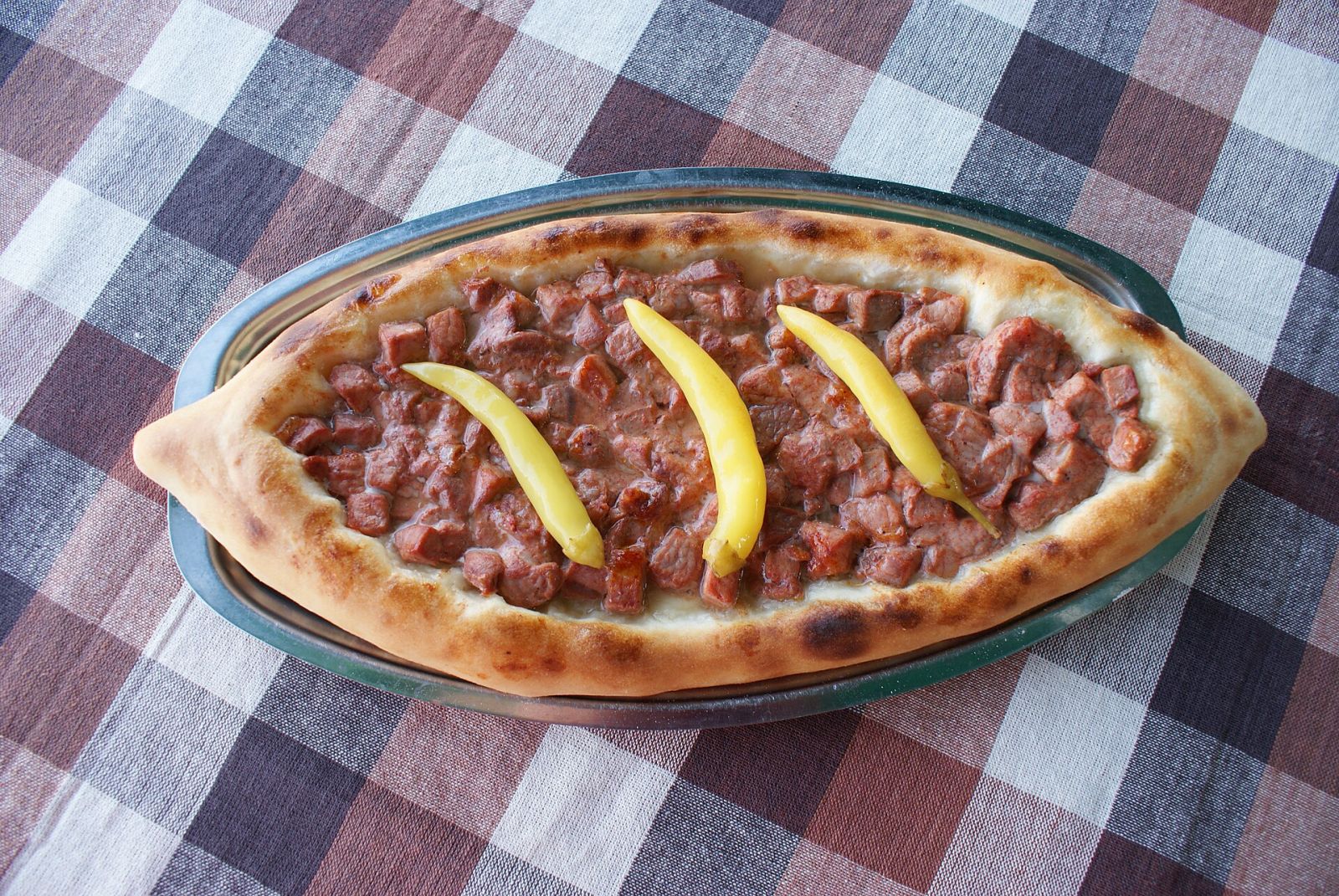
Pastrmajlija, an oblong boat of dough topped with cubes of marinated pork and often a cracked egg, is the country's favorite fast food and the pride of the town of Stip, which throws an entire festival in its honor. The dough is thin in the middle and puffy at the edges, the meat bakes to a crisp. Dried hot peppers are optional; add them carefully, because the local "lut" does not joke around. The price is laughably low, and one boat makes a full lunch.
Ohrid trout: a delicate subject
Honesty is required here. The Ohrid trout, an endemic species found nowhere else on Earth, was the region's star delicacy for decades, and it was nearly fished out. Commercial fishing of the wild trout is therefore banned, and the "Ohrid trout" on restaurant menus is almost always farm-raised, often in water from the same lake basin. That is a reasonable compromise: the flavor is close, and the lake gets a chance to recover. Just do not go hunting for "the real wild one under the counter": demand for poached fish is exactly why the ban still exists. Farmed trout grilled with lemon and chard remains a superb dinner on the Ohrid waterfront.
What else belongs on your table?
- Pleskavica and kebapi: Balkan grill classics, ten little kebapi with raw onion and somun flatbread.
- Selsko meso: "village meat" stewed with mushrooms and smoked pork in a clay pot.
- Pindjur and malidzano: ajvar's cousins, the first with tomatoes and peppers, the second with eggplant.
- Burek: flaky pastry with cheese or meat, the workman's breakfast, always with drinking yogurt.
- Zelnik: a village pie of thin dough filled with spinach, leek or nettles, best hunted at markets.
- Turli tava: a vegetable and meat stew baked in the same clay tava, the dish of late summer.
- Mastika: a strong anise spirit, the local answer to ouzo and raki.
- Skopsko: the country's flagship beer, an honest lager built for grilled meat.
Sweets and coffee: the Ottoman legacy in a cup
Coffee here means Turkish coffee: fine grounds, a copper cezve, sediment at the bottom and absolutely no hurry. Once you order, plan to sit for half an hour minimum; a quick takeaway cup in the Old Bazaar borders on impolite. Alongside it come tulumba, crisp syrup-soaked pastry tubes, or baklava, which in Macedonia is denser and less sweet than the Turkish version. A local phenomenon of its own is trilece, a milk-soaked sponge cake served even in kebab joints. And in Skopje's Old Bazaar you can still find boza, a thick, faintly sweet millet drink fermented in huge glass barrels: the taste is an acquired one, but try it at least once, because this is a living Ottoman tradition several centuries deep.
Tikves wines: why they deserve your attention
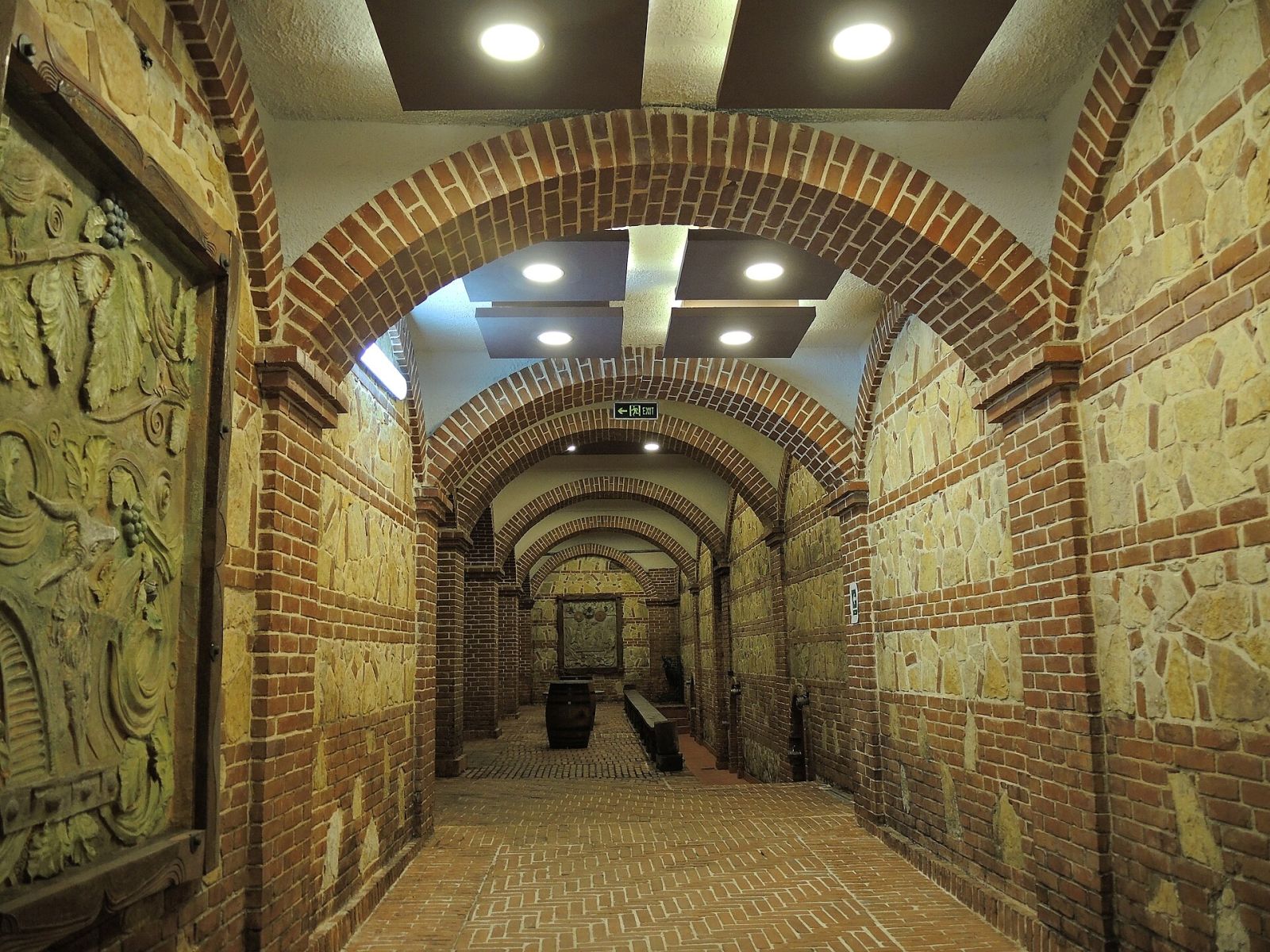
The Tikves valley in the center of the country, around the towns of Kavadarci and Negotino, is the largest wine region not just of North Macedonia but of all the former Yugoslav lands, blessed with more than 270 sunny days a year. The key grapes: vranec, a powerful red that produces dense, almost black wines, and temjanika, an aromatic white from the muscat family. The Tikves winery in Kavadarci has been running since 1885 and ranks among the largest in Southeast Europe; tasting tours can be booked on the official website. A bottle of solid vranec at a supermarket costs about as much as a coffee in Switzerland, so bring home more than one.
How much does eating out cost?
| Dish | Where | Approximate price |
|---|---|---|
| Tavce gravce | tavern (kafana) | 150-250 denars (2.5-4 euro) |
| Pastrmajlija | bakery, fast food | 150-300 denars |
| Grilled trout | restaurant in Ohrid | 500-800 denars |
| Shopska salad | anywhere | 120-200 denars |
| Glass of Tikves wine | restaurant | 100-200 denars |
Prices are approximate, so check current menus before you travel, but the order of magnitude holds: a full dinner for two with wine rarely passes 25-30 euro.
Where to eat all of this?
Look for the word "kafana": a traditional tavern with a grill, live music in the evenings and a menu that makes zero concessions to tourists. In Skopje the most atmospheric kafanas hide inside the Old Bazaar; in Ohrid, walk two streets back from the waterfront and prices instantly drop by a third. The golden rule: if the place is full of local families at Sunday lunch, you have found the right address. Macedonian food needs no gastronomic guidebooks, only an appetite.